
Sometimes you just want Windows to shut down. But instead of shutting down quickly, the system seems to ponder, blocked by running processes, background services, or open apps. However, for decades there’s been a simple yet powerful command that can shut down Windows cleanly in no time at all, and that’s shutdown.exe.
Whether you want to shut down your PC immediately, schedule a restart in 60 minutes, or automatically send your laptop to sleep after watching a movie, with a few short commands, you can take full control.
In this guide, we’ll show you how to reliably shut down Windows 11 and 10 using the command line, PowerShell, or shortcuts, including practical examples, timer tricks, and remote options for professionals.
Don’t worry. The commands are easy to remember, work on any computer, and are safe (as long as you use them correctly).
Attention: Options with /f close apps without saving. You should therefore only use this parameter if data loss can be ruled out.
1. The basic command
The shutdown.exe program has been around since Windows XP and still works reliably and quickly across Windows 10 and Windows 11.
Compared to clicking “Shut down” in the user interface, this command gives you full control. You can specify when the PC shuts down, whether it should restart, switch to hibernation mode, or just log off the user. This is useful for scripts, scheduled tasks, or simply when you’re in a hurry.
Shut down immediately (without countdown)
shutdown /s /t 0→ This shuts down Windows immediately, without prompting and without waiting.
Shut down in 60 seconds (with message)
shutdown /s /t 60 /c "Shutdown in 60 seconds - save work!"→ Windows displays a message window with a countdown and a comment. This is useful if you want to give other users on the network (or yourself) a little extra time or important information.
Cancel shutdown
shutdown /a→ If you change your mind, use /a (for abort) to stop the current shutdown process.
Parameter cheat sheet:
| Parameters | Effect | Example/Note |
| /s | Shuts down the PC | shutdown /s /t 0 |
| /r | Restarts the PC | shutdown /r /t 0 |
| /l | Logs off the current user | No admin required |
| /h | Puts the PC into hibernation mode | Saves battery, saves status |
| /hybrid | Combines shutdown & quick start | Quick start on next boot |
| /t | Countdown to action (0-315360000 = 365 days) | shutdown /s /t 60 |
| /f | Forces the closing of apps | Data loss possible |
| /c ““ | Shows comment in the notification window | Max. 512 characters |
| /p | Immediate switch-off without countdown | Services may be skipped – higher risk. |
| /sg | Prepare apps for the next start | For log-in scenarios |
| /fw | Starts the UEFI/BIOS on the next boot | Only in combination with /r |
Tip: For clean shutdowns without the risk of data lost, you generally shouldn’t use /f. This lets Windows close open apps normally, which usually takes only a few seconds longer but helps prevent losing unsaved work.
2. Restart and hybrid shutdown
Sometimes you don’t just want to switch off the PC, but restart it straight away or start it up more quickly the next time it boots. There are simple commands for that as well.
Restart immediately
shutdown /r /t 0→ The system is shut down immediately and restarted straight away. This is useful after a driver or Windows update.
Hybrid shutdown: Actively use quick start
shutdown /s /hybrid /t 0→ With hybrid shutdown, Windows saves specific system states on the hard drive, similar to hibernation. The next time the system starts, it reloads this data and therefore boots much faster.
Note: If fast startup is activated in the power options, Windows already uses hybrid mode during a normal shutdown /s. The /hybrid switch simply ensures that this mode is active regardless of the power settings. Although hybrid mode is enabled by default, it can cause issues on dual-boot systems or with certain drivers. In such cases, it is better to use a classic shutdown:
shutdown /s /t 0 /fullHibernation: Save energy, keep session
shutdown /h→ This causes Windows to save the current memory contents to the hard drive and turn off completely. The next time it’s turned on, it continues directly and seamlessly. Programs, windows, and tabs appear as before.
Summary: Which option?
| Target | Command |
| Install updates and restart | /r |
| Quick start on next boot | /hybrid |
| Save battery & keep session (laptop) | /h |
3. Shortcut and key combination: One-click shutdown
Windows can also shut down quickly without using the command line. One way to do this is with a desktop shortcut:
- Right-click on the desktop. New → Shortcut.
- Enter the following as the target: shutdown /s /t 0
- Assign a name, for example, “Switch off PC.”
- Optional: You can change the icon by right-clicking the shortcut. Properties → Shortcut → Other Icon → Select the power icon.
- Optional: Assign a keyboard shortcut, such as Ctrl + Alt + S.
Tip: Use the “Run: Minimized” option so the command starts discreetly in the background without showing a window.
4. Shutdown with a timer
Whether you’re streaming, downloading, or working at night, it can be useful for Windows to shut down automatically after a set period.
Example: Switch off in one hour
shutdown /s /t 3600 /c "PC will switch off in 60 minutes"→ The countdown runs in the background, and a message window informs you of the remaining time.
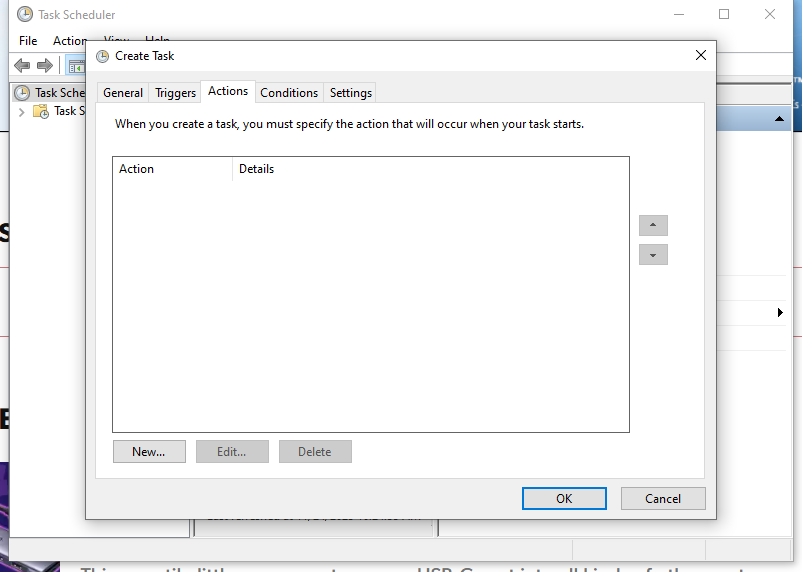
Automatic shutdown via task scheduling
Foundry / Ashley Biancuzzo
- Open the Task Scheduler.
- Select Action → Create task → Tab: Trigger → New and set a time.
- Switch to the Actions tab and click on New:
- Program/Script: shutdown
- Add arguments: /s /t 0
- Save and you’re done.
→ This shuts down Windows automatically at fixed times.
5. PowerShell alternatives
PowerShell offers its own cmdlets for shutting down, which are neatly integrated, easier to read, and can be used remotely. To do this, start PowerShell with Win R → “powershell” → Enter
Shut down PC locally
Stop-computerPerform a restart
Restart-computerRemote shutdown (same domain, remoting enabled)
Stop-Computer -ComputerName PC123 -ForceImportant note: PowerShell remoting must be enabled to run remote commands:
Enable-PSRemoting -ForceFirewall rules and group policies must also allow the remoting. This is often disabled in home environments but is typically enabled in company networks.
6. Remote shutdown with shutdown.exe
You can also use the classic command prompt to shut down other computers in the network, as long as you’ve got the necessary rights and permissions.
shutdown /m \RECHNERNAME /s /t 0The following prerequisites must be met:
- Both PCs are in the same LAN or domain
- The remote registry is active
- Windows Firewall allows incoming RPC connections
- The executing user has administrator rights on the target computer
Note: In home networks, this function is often blocked or requires additional configuration, so PowerShell remoting is usually simpler and more secure.
7. Typical stumbling blocks & solutions
Even the most reliable commands can fail if Windows blocks them. Here are some common problems and their solutions:
- The message: “Apps are preventing shutdown“
Solution: Wait until processes have finished properly. You should only use /f in an emergency. - Updates are blocking the shutdown
Solution: Complete the Windows update first or use /r /t 0 directly to restart immediately. - Hybrid shutdown causes boot problems (e.g. dual boot)
Solution: Temporarily disable Fast Startup in the power options to test. - The laptop turns on by itself
Solution: Check wake timers or USB devices (Power Management → Allow this device to wake the computer). - Command requires administrator rights
Solution: Run Command Prompt or PowerShell as an administrator (right-click → “Run as administrator.”)
8. Switch off the system
For quick copying and pasting, you’ll find useful commands for the command line here:
| Effect | Command |
| Switch off PC automatically after 2 hours (film night): | shutdown /s /t 7200 /c “Automatic shutdown in 2 hours” |
| Safe restart after driver or Windows update: | shutdown /r /t 0 |
| Cancel countdown if you want to continue working: | shutdown /a |
9. FAQ: The most important answers
How do I shut down Windows immediately by command?
→ shutdown /s /t 0
How do I restart at a specified time?
→ shutdown /r /t
How do I activate hibernation?
→ With shutdown /h
How do I switch off another PC in the network?
→ With shutdown /m \RECHNERNAME /s /t 0
Can I cancel the countdown again?
→ Yes, with shutdown /a
What does /f do?
→ Forces all programs to close, but be careful because data loss is possible!
How do I create a one-click shutdown?
→ Desktop shortcut to shutdown /s /t 0 Keyboard shortcut (optional).
Conclusion
Whether using the command line, PowerShell, or a shortcut, you can shut down Windows faster and more reliably than via the Start menu with the right command. Timers and remote options make it easy to control your system automatically or manage multiple devices.
For most users, the classic shutdown /s /t 0 command is perfectly adequate. Those who want more control will find a small but powerful toolbox in the parameters of shutdown.exe and PowerShell cmdlets–ideal for technology enthusiasts, administrators, or anyone who prefers not to wait for a slow shutdown.
This articles is written by : Nermeen Nabil Khear Abdelmalak
All rights reserved to : USAGOLDMIES . www.usagoldmines.com
You can Enjoy surfing our website categories and read more content in many fields you may like .
Why USAGoldMines ?
USAGoldMines is a comprehensive website offering the latest in financial, crypto, and technical news. With specialized sections for each category, it provides readers with up-to-date market insights, investment trends, and technological advancements, making it a valuable resource for investors and enthusiasts in the fast-paced financial world.