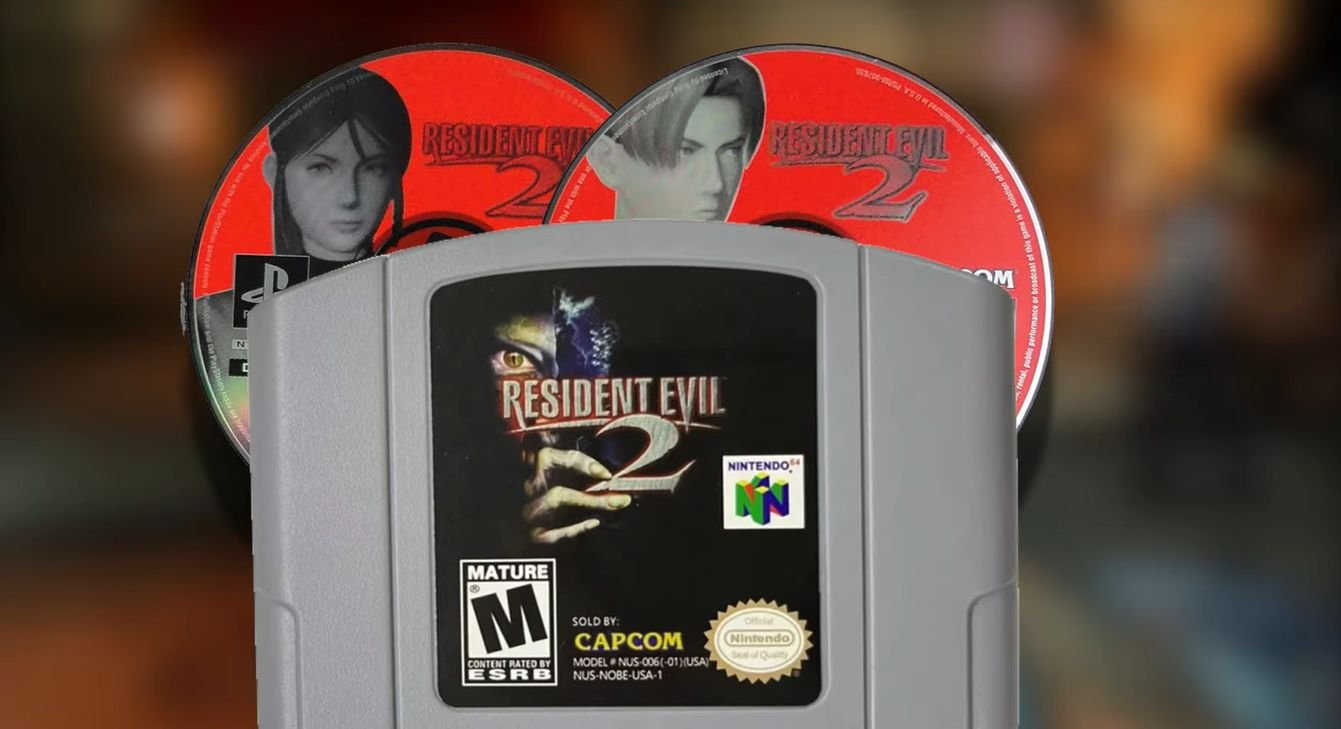
Originally released for the Sony PlayStation in 1998, Resident Evil 2 came on two CDs and used 1.2 GB in total. Of this, full-motion video (FMV) cutscenes took up most of the space, as was rather common for PlayStation games. This posed a bit of a challenge when ported to the Nintendo 64 with its paltry 64 MB of cartridge-based storage. Somehow the developers managed to do the impossible and retain the FMVs, as detailed in a recent video by [LorD of Nerds]. Toggle the English subtitles if German isn’t among your installed natural language parsers.
Instead of dropping the FMVs and replacing them with static screens, a technological improvement was picked. Because of the N64’s rather beefy hardware, it was possible to apply video compression that massively reduced the storage requirements, but this required repurposing the hardware for tasks it was never designed for.
The people behind this feat were developers at Angel Studios, who had 12 months to make it work. Ultimately they achieved a compression ratio of 165:1, with software decoding handling the decompressing and the Reality Signal Processor (RSP) that’s normally part of the graphics pipeline used for both audio tasks and things like upscaling.
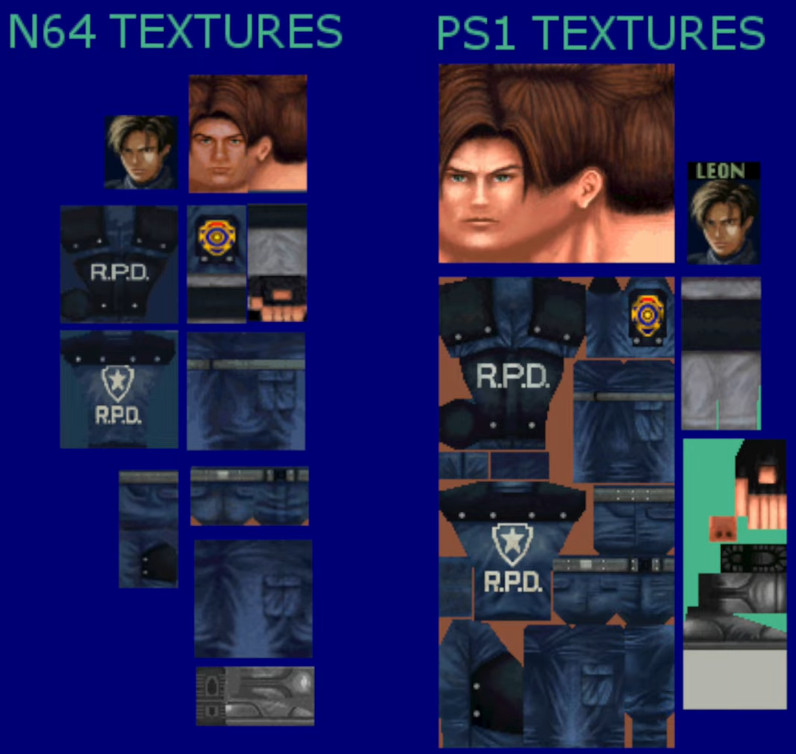
In the video you can see the side by side comparisons of the PS and N64 RE2 cutscenes, with differences clearly visible, but not necessarily for the worse. Uncompressed, the about fifteen minutes of FMVs in the game with a resolution of 320×160 pixels at 24 bits take up 4 GB. For the PS this was solved with some video compression and a dedicated video decoder, since its relatively weak hardware needed all the help it could get.
On the N64 port, however, only 24 MB was left on a 64 MB cartridge after the game’s code and in-game assets had been allocated. The first solution was chroma subsampling, counting on the human eye’s sensitivity to brightness rather than color. One complication was that the N64 didn’t implement color clamping, requiring brightness to be multiplied rather than simply added up before the result was passed on to the video hardware in RGB format.
Very helpful here was that the N64 relied heavily on DMA transfers, allowing the framebuffer to be filled without a lot of marshaling which would have tanked performance. In addition to this the RSP was used with custom microcode to enable upscaling as well as interpolation between frames and audio, with about half the frames of the original dropped and instead interpolated. All of this helped to reduce the FMVs to fit in 24 MB rather than many hundreds of MBs.
For the audio side of things the Angel Studios developers got a break, as the Factor 5 developers – famous for Star Wars titles on the N64 – had already done the heavy lifting here with their MusyX audio tools. This enables sample-based playback, saving a lot of memory for music, while for speech very strong compression was used.
Also argued in the video is that the N64 version is actually superior to the PS version, due to its superior Z-buffering and anti-aliasing feature, as well as new features such as randomized items. The programmable RSP is probably the real star on the N64, which preceded the introduction of programmable pipelines on PC videocards like the NVIDIA GeForce series.
This articles is written by : Nermeen Nabil Khear Abdelmalak
All rights reserved to : USAGOLDMIES . www.usagoldmines.com
You can Enjoy surfing our website categories and read more content in many fields you may like .
Why USAGoldMines ?
USAGoldMines is a comprehensive website offering the latest in financial, crypto, and technical news. With specialized sections for each category, it provides readers with up-to-date market insights, investment trends, and technological advancements, making it a valuable resource for investors and enthusiasts in the fast-paced financial world.