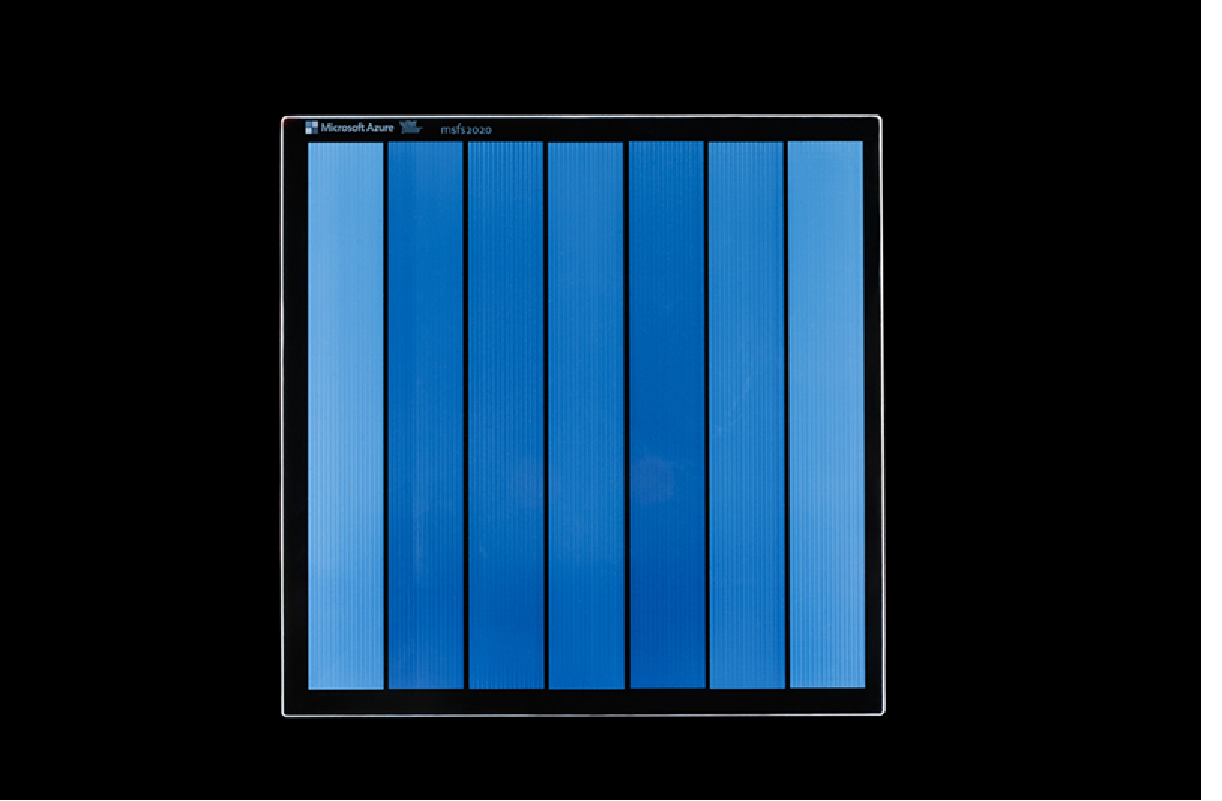
Microsoft just announced a breakthrough in its push to commercialize Project Silica, its effort to etch data into glass as an archival medium: The company has successfully made the etching technique work with the type of glass used in oven doors.
Previously, Project Silica used a special type of fused glass, good enough for research work but not for bringing the Silica technology to the mainstream. Now, Microsoft has made it work with borosilicate glass, the type of glass found in Pyrex containers.
Silica otherwise remains the same. The goal has always been to store data “permanently,” in a medium that won’t degrade over time. Or close to it, anyway: The stated goal is to store data for over 10,000 years, and the company has previously tested it by etching movies like Superman into glass as a way to store them. A similar test archived music for future generations, too.
Otherwise, even “archival” storage media can suffer from degradation. “Bit rot” can occur in everything from hard drives to recorded media like DVD-ROMs and rewritable optical media. Microsoft first experimented with encoding data into DNA, and then moved to Silica in 2019. Project Silica encodes data holographically into glass just 2mm thick, and still does — now, the glass being used is much more commercially available.
While Microsoft said that the research phase of Silica is over, it didn’t indicate that production would begin. Microsoft said in a blog post that it will “consider learnings” from what it has discovered. Microsoft published its results in a new article in Nature.
Microsoft also added that it has made advances in actually writing the data. Rather than use the polarization of the glass to encode the data, Microsoft can now use what it calls “phase voxels” — using the phase change of the glass instead. Many more of these voxels can now be written in parallel, Microsoft added. If polarization voxels are used instead, Microsoft said that it had found a way to simplify the writing process to just a pair of pulses.
Finally, Microsoft said that it had applied machine learning to optimize symbol encodings, and to better identify how data could “age” within the glass.
Of course, our descendants 10,000 years from now will need to be able to actually read the data. Let’s hope that Silica glass doesn’t end up as some archival Zip drive from the 21st century.
This articles is written by : Nermeen Nabil Khear Abdelmalak
All rights reserved to : USAGOLDMIES . www.usagoldmines.com
You can Enjoy surfing our website categories and read more content in many fields you may like .
Why USAGoldMines ?
USAGoldMines is a comprehensive website offering the latest in financial, crypto, and technical news. With specialized sections for each category, it provides readers with up-to-date market insights, investment trends, and technological advancements, making it a valuable resource for investors and enthusiasts in the fast-paced financial world.