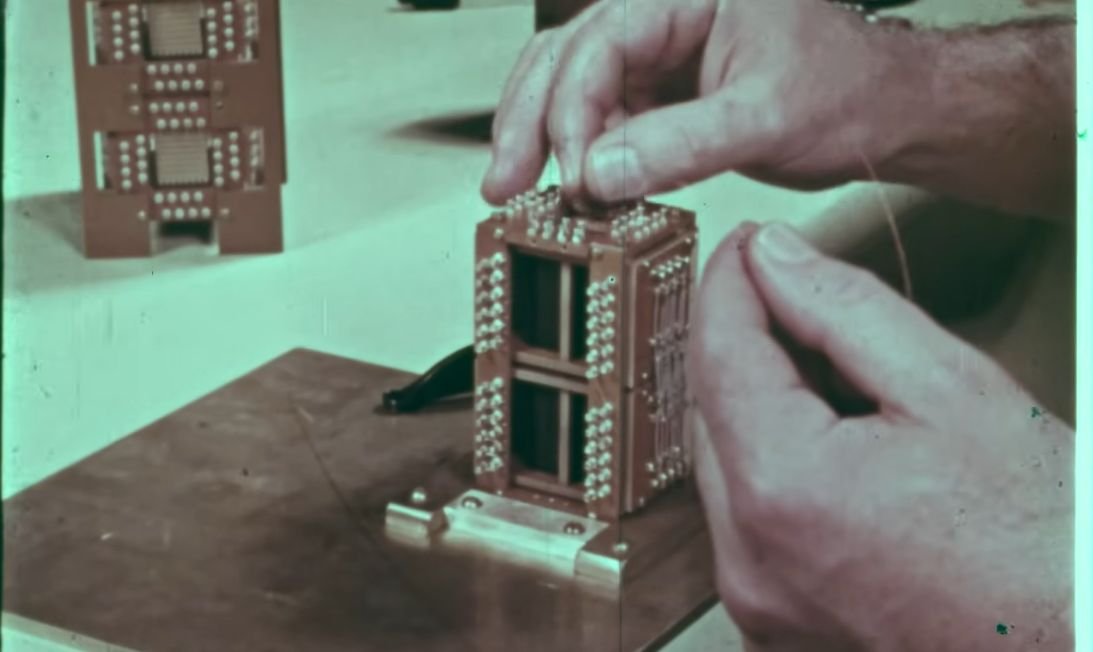

Although digital computers are – much like their human computer counterparts – about performing calculations, another crucial element is that of memory. After all, you need to fetch values from somewhere and store them afterwards. Sometimes values need to be stored for long periods of time, making memory one of the most important elements, yet also one of the most difficult ones. Back in the 1950s the storage options were especially limited, with a 1959 Bell Labs film reel that [Connections Museum] digitized running through the bleeding edge of 1950s storage technology.
After running through the basics of binary representation and the difference between sequential and random access methods, we’re first taking a look at punch cards, which can be read at a blistering 200 cards/minute, before moving onto punched tape, which comes in a variety of shapes to fit different applications.
Electromechanical storage in the form of relays are popular in e.g. telephone exchanges, as they’re very fast. These use two-out-of-five code to represent the phone numbers and corresponding five relay packs, allowing the crossbar switch to be properly configured.
After these types of memory, we move on to magnetic memory, in the form of well-known magnetic tape that provide mass storage in relatively little space. There is also the magnetic drum, which is much like a very short and very fast tape and provides e.g. working memory. This is what e.g. the Bendix G-15 uses for its clock signal and working memory, while magnetic tape and punched tape are used for application and data storage.
Next we cover magnetic-core memory, which stores a magnetic orientation in its ferrite rings or on a ferrite plate. This is non-volatile memory, but has low bit density and performs destructive reads, preventing its use beyond the 1970s. Today’s NAND Flash memory has significant overlap with core memory in its operating principles, both in its advantages and disadvantages.
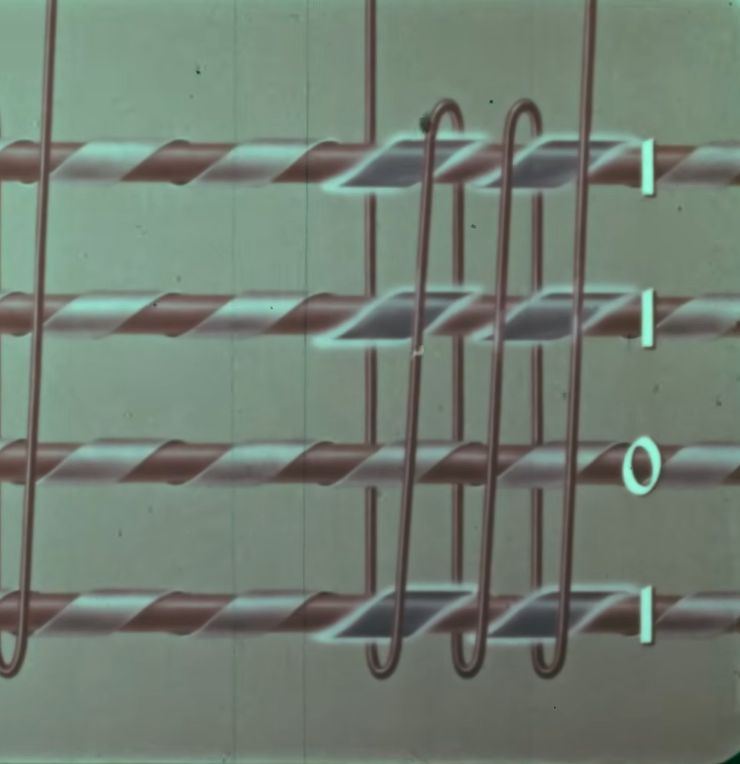
An interesting variation on core memory is Twistor memory, which saw brief use during the late 1960s and early 1970s. Invented by Bell Labs, it was supposed to make for cheaper core-like memory, but semiconductor memory wiped out its business case, along with the similar bubble memory. An interesting feature of Twistor memory was the ability to add write-inhibit cards containing permanent magnets.
Fascinatingly, a kind of crude mask ROM is also demonstrated, before we move on to the old chestnut of vacuum tubes. Demonstrated is a barrier-grid tube, which uses electrons to create an electrostatic charge on a mica surface. This electron beam is also used to read the value, which is naturally destructive, making it somewhat similar to core memory in its speed and functionality.
Finally, we get the flying-spot store system, which is a type of optical digital memory. This is reminiscent of optical disc systems like the Compact Disc, and a reminder of all the amazing breakthroughs that we’d be seeing over the next decades.
Perhaps the best part about this video is that it shows the world as it sidled still mostly unaware towards these big changes. Memory storage was still the realm of largely hand-assembled, macro-sized devices, vacuum tubes and chunky electromechanical relays. Only a few years after this video was released, we’d see semiconductor technology turn the macro into micro, by the 1970s nerds would be fighting over who had the most RAM in their home computers, and CD-ROMs would set the world of computer storage and home game consoles ablaze by the 1990s with literally hundreds of MBs of storage per very cheap disc.
This articles is written by : Nermeen Nabil Khear Abdelmalak
All rights reserved to : USAGOLDMIES . www.usagoldmines.com
You can Enjoy surfing our website categories and read more content in many fields you may like .
Why USAGoldMines ?
USAGoldMines is a comprehensive website offering the latest in financial, crypto, and technical news. With specialized sections for each category, it provides readers with up-to-date market insights, investment trends, and technological advancements, making it a valuable resource for investors and enthusiasts in the fast-paced financial world.