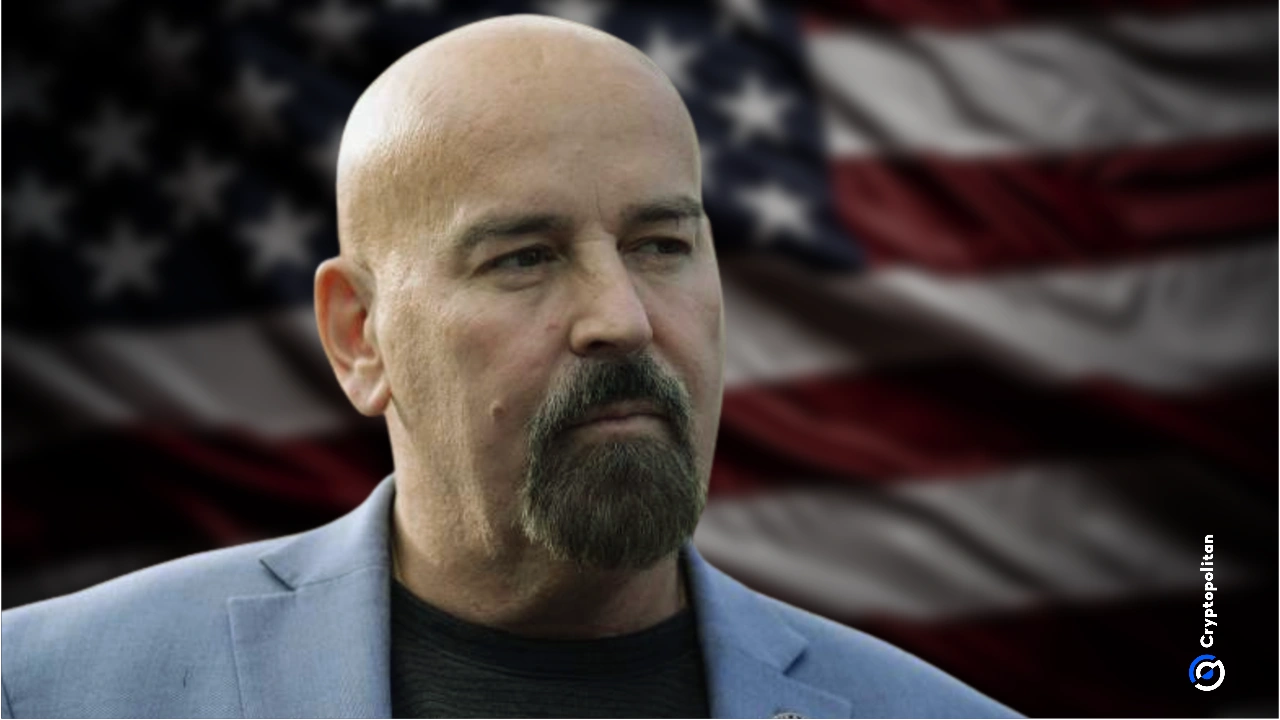
U.S. Senate candidate John E. Deaton raised concerns about regulatory uncertainty in the United States, saying that financial markets can’t endure another enforcement-driven approach.
In a post on X, he highlighted remarks by Brad Garlinghouse during an interview with Maria Bartiromo, in which the Ripple CEO stressed that only legislation can prevent a return to past regulatory practices.
“American companies and our financial markets cannot afford to experience Gensler 2.0. And the only way to guarantee that we don’t – is by passing legislation,” Deaton noted. Deaton stated that the existing regulatory guidance is tenuous without formal laws. He cited actions by Paul S. Atkins and other regulators, saying policy direction can change rapidly through administrative changes.
Lawmakers push to finalize rules and reduce uncertainty
Pressure is mounting in Washington as the Senate and industry work to hammer out the proposed market structure bill, colloquially known as the Clarity Act. According to Garlinghouse, conversations with policymakers indicate that progress is underway, even though the negotiations remain complex.
At the same time, ongoing debates around stablecoin provisions continue to help shape negotiations. Banking representatives and crypto firms are also divided over whether stablecoins should provide yield to users. These disagreements have slowed the consensus-building process, although stakeholder involvement has intensified.
Deaton pointed to the economic effects of regulatory enforcement in the crypto industry. He mentioned the legal costs incurred by businesses such as Ripple, Coinbase, Kraken, Grayscale, and Gemini.
Garlinghouse also raised similar concerns. He cautioned that regulatory actions must not have a political motive and that laws on digital-asset legislation must be impartial and uniform. He further reiterated that the industry cannot sustain a repeat of the policies associated with Gary Gensler. Further noting, “We can’t afford another Gary Gensler situation.”
Political shifts could reshape crypto oversight direction
Political developments continue to play a major role in driving future regulation. Deaton said a change in Senate control could put Elizabeth Warren in a stronger role in banking oversight. Such a change, he suggested, could lead to tighter regulatory oversight of digital assets.
Meanwhile, discussions at the White House involving crypto executives, banking representatives, and regulators continue to focus on resolving key disagreements under the Clarity Act. Reports indicate that Donald Trump has urged stakeholders to move the legislation forward, while warning banks against stalling progress.
Garlinghouse said he was optimistic the bill would eventually pass. He said that recent discussions with policymakers have given great confidence in the possibility of reaching an agreement. He also pointed out that it’s clear legislation would not change Ripple’s operations in any significant way but would bring certainty for the wider financial system.
There’s a middle ground between leaving money in the bank and rolling the dice in crypto. Start with this free video on decentralized finance.
This articles is written by : Nermeen Nabil Khear Abdelmalak
All rights reserved to : USAGOLDMIES . www.usagoldmines.com
You can Enjoy surfing our website categories and read more content in many fields you may like .
Why USAGoldMines ?
USAGoldMines is a comprehensive website offering the latest in financial, crypto, and technical news. With specialized sections for each category, it provides readers with up-to-date market insights, investment trends, and technological advancements, making it a valuable resource for investors and enthusiasts in the fast-paced financial world.