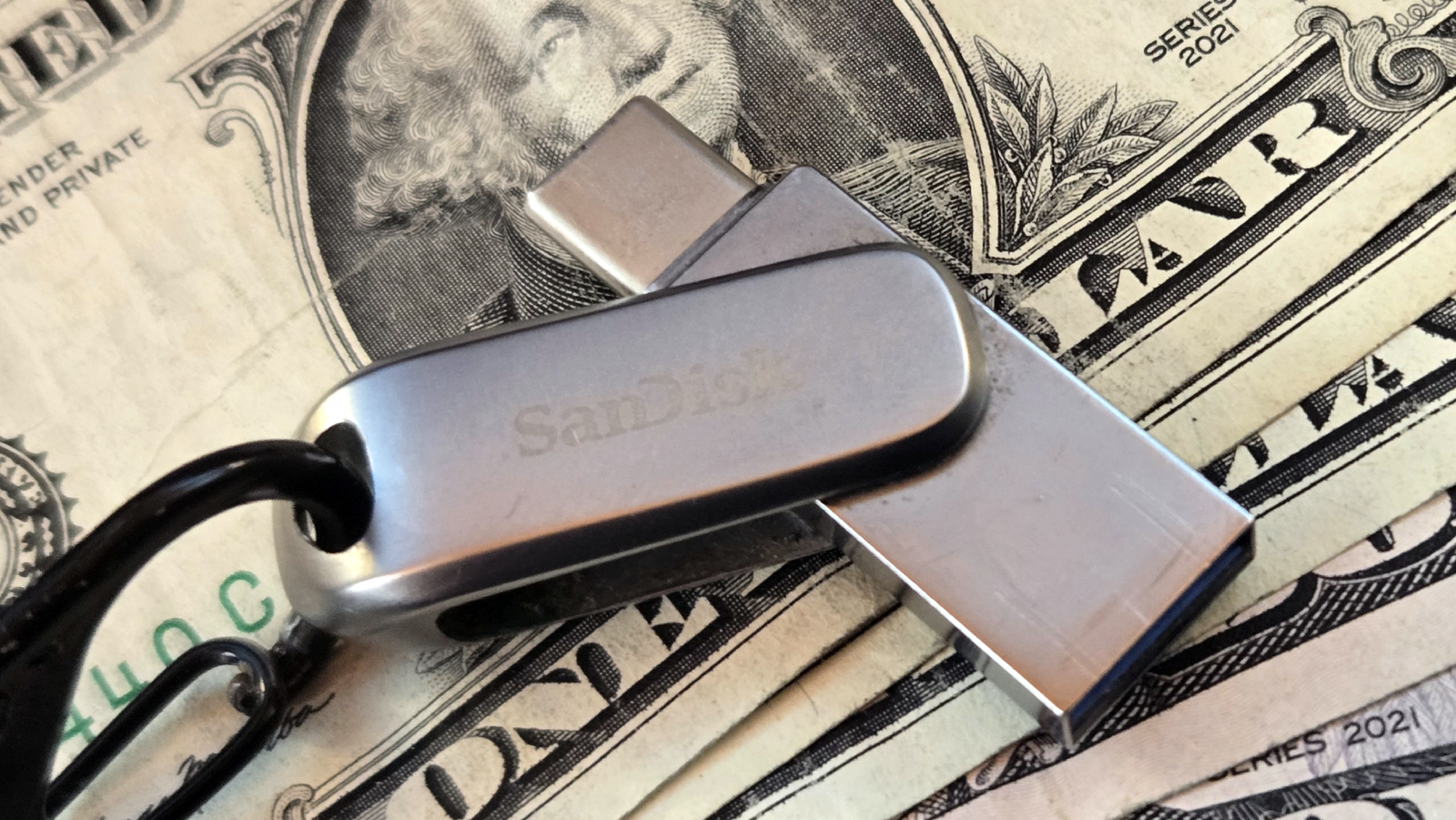
RAM and storage are expensive now. You know that. They’ve been going crazy for months, and though some data points indicate that the prices may have peaked, others show just the opposite. But the woes are spreading beyond computers, game consoles, phones, and any other finished product with chips inside. Now even basic USB flash drives and storage cards are shooting up.
About five months ago, PCWorld ran a story about ways to add storage to a laptop without breaking out a screwdriver to install a new SSD. The first MicroSD card mentioned in that article is a 512GB Samsung card that the author said he’d bought for under $50 USD. Now that same card can only be found from third-party Amazon sellers at $120. A 512GB USB-A flash drive, nothing fancy, now starts at $80 — exactly double what it cost at its highest point in 2025.
I set up a bit of informal testing, and searched Amazon for a USB-A drive, USB-C drive, SD card (standard size), and MicroSD card, each at 64GB for basic needs, 128GB for a bit more breathing room, 512GB for big jobs, and 1TB for “plug it in and never think about it again” convenience. Amazon isn’t the only store on the internet, of course, but it has the most easily accessible third-party price tracking tool, CamelCamelCamel. I compared today’s price with exactly one year ago. Here are the results, linking to the relevant Amazon listings if you want to check my work.
| Drive type | 64GB 2025 | 64GB 2026 | 128GB 2025 | 128GB 2026 | 512GB 2025 | 512GB 2026 | 1TB 2025 | 1TB 2026 |
| USB-A | $13 | $23 | $17 | $30 | $37 | $80 | $90 | $153 |
| USB-C (1, 2) | $15 | $24 | $19 | $29 | $45 | $78 | $110 | $150 |
| SD card | $14 | $35 | $20 | $48 | $60 | $110 | $125 | $259 |
| MicroSD card | $11 | $16 | $18 | $38 | $39 | $107 | $109 | $200 |
As you can see, every single one of these drives has gone up in price significantly in the last year, some by more than double. The culprit is, presumably, the same memory and storage production issues that are affecting consumer-level components and finished devices, like the Microsoft Surface computers that recently got a gigantic price increase, or game consoles that have gotten more expensive years after introduction, an unprecedented shift.
Not all of these cards are at their all-time high prices, according to CamelCamelCamel, with some seeing similar short-term spikes farther back than 2025. But the broad trend seems very clear: Even the less expensive options for adding removable storage to a device are being priced out.
I’m assuming that these devices spend less time on shelves than RAM and storage that can cost much more, at least under normal circumstances, so they’re even more vulnerable to the current production crunch. I wouldn’t be surprised if vendors like Samsung, SanDisk, et al. start offering lower capacities as a means to keep low-priced options available. After all, if you’re just moving PowerPoint files around an office or getting a few photos over to your family via sneakernet, you don’t need terabytes to do it.
That won’t help anyone who really needs those high-capacity cards to put in DSLR cameras, Steam Decks, et cetera. I hope you’ve got a few of them hiding in a drawer somewhere.
This articles is written by : Nermeen Nabil Khear Abdelmalak
All rights reserved to : USAGOLDMIES . www.usagoldmines.com
You can Enjoy surfing our website categories and read more content in many fields you may like .
Why USAGoldMines ?
USAGoldMines is a comprehensive website offering the latest in financial, crypto, and technical news. With specialized sections for each category, it provides readers with up-to-date market insights, investment trends, and technological advancements, making it a valuable resource for investors and enthusiasts in the fast-paced financial world.