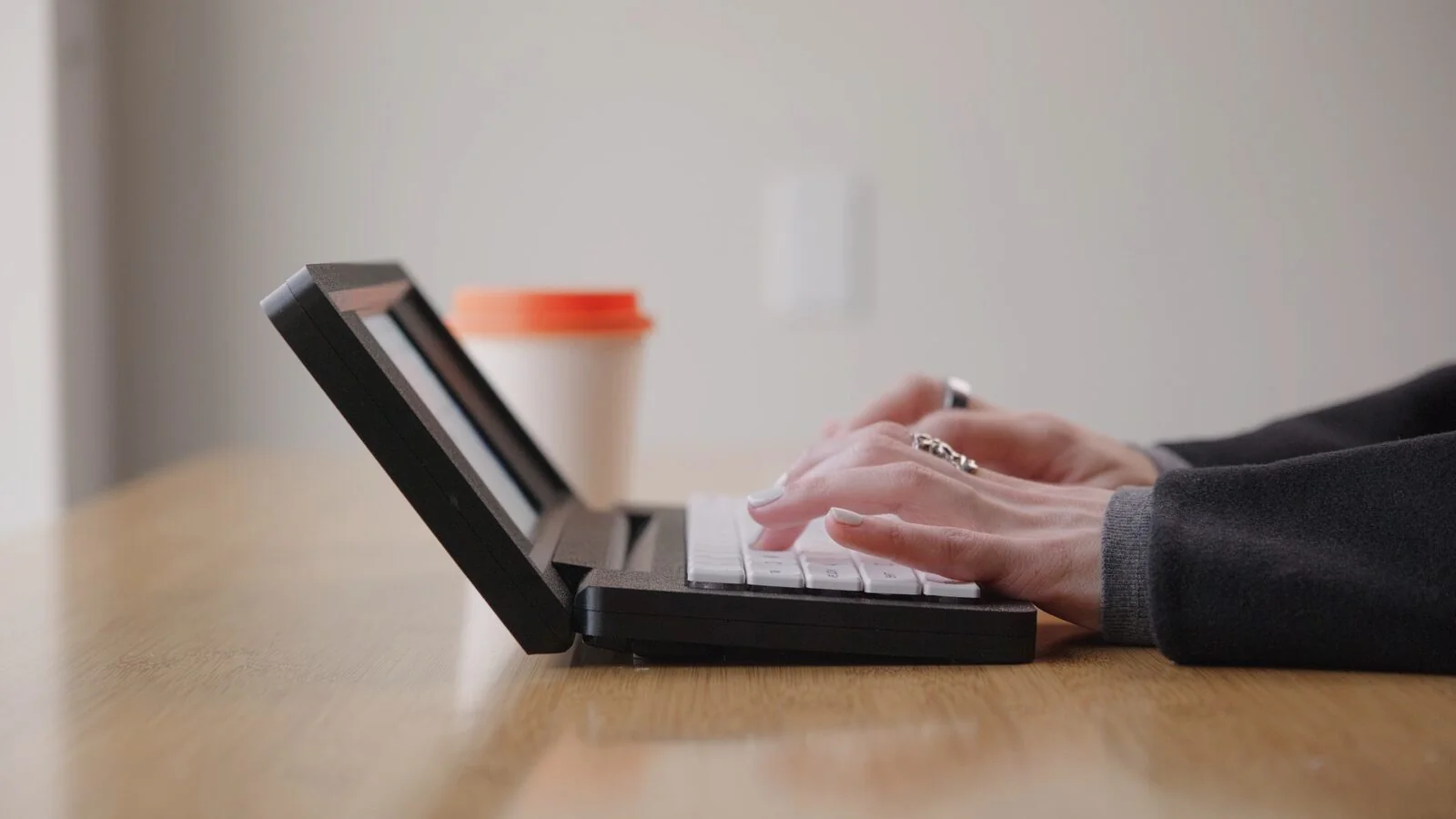
A massive, triple-screen desktop with cutting-edge performance is great for covering tech news. But it’s also detrimental to focus — two windows of text, one of office chat, one of videos, and a dedicated tablet for notifications is a bit of information overload. That’s why I’ve been looking into writerdecks.
These are offshoots of the quasi-fictional “cyberdeck,” with a bit of DNA from old-school word processor devices or digital typewriters. They’re single-purpose writing machines, in the same way that a Kindle e-reader is just for reading.
I’ve tried out the KingJim Pomera and the Astrohaus Freewrite Traveler, and found things to love and loathe about both of them. I love the mini laptop form factors, and the keyboard from the Traveler, but hate its limited, locked-down software. The Pomera is much more capable (and isn’t asking for a subscription), but its tiny keyboard is a pain, especially for someone so focused on typing.
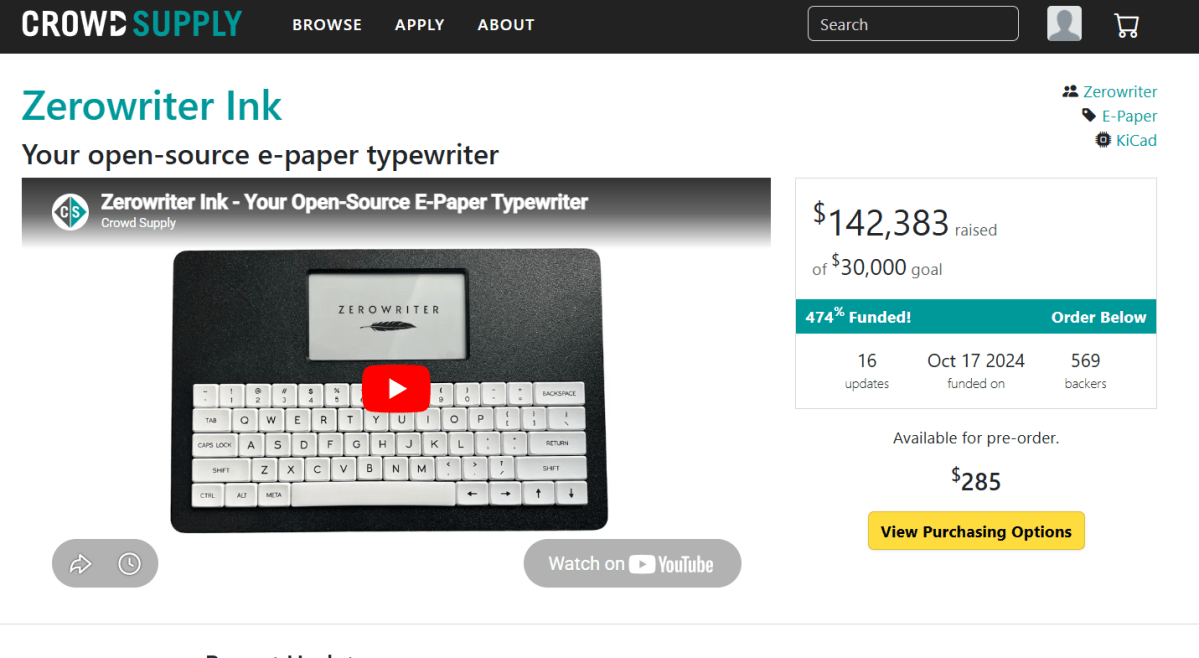
A new device from an indie designer seems tailor-made for me and my specific gripes. The ZeroWriter Fold is an evolution of the original ZeroWriter Ink design, which took inspiration from devices like the Alphasmart and the Freewrite with its e-ink screen, but uses a full mechanical keyboard and software built from the ground up for the modern day. The Fold is, essentially, the same device, with a laptop-style form factor.
Adam Wilk, the Canadian designer behind the ZeroWriter Fold, kindly answered a few of my questions ahead of the Kickstarter launch.
Adam, you’ve had one very successful crowdfunding campaign for a writer gadget design, with over $100,000 raised to produce and send it out to your backers. And you’re closing in on your second. What got you into the cyberdeck/writerdeck space?
I guess it goes way back. I started a business in my 20s where I made handmade leather journals. That was kind of my first taste of entrepreneurship. I did that for about two and a half years. So I’ve always been really into writing as a hobby, and I thought I was going to do it professionally for a long time.
It was just kind of a fun way I could explore that while also figuring out how to be an entrepreneur, and pay the bills and stuff. That work led me into e-commerce, which I’d been doing on and off. When COVID came around, I suddenly had a lot more time on my hands.
As did a lot of us, I guess! I was kind of in a place where I could explore my hobbies more, so one of the things that was always in the back of my head is, yeah, there’s this community of people who use writing tools. And everything I read online was “Why doesn’t something exist that’s less than $700 or whatever crazy price?”
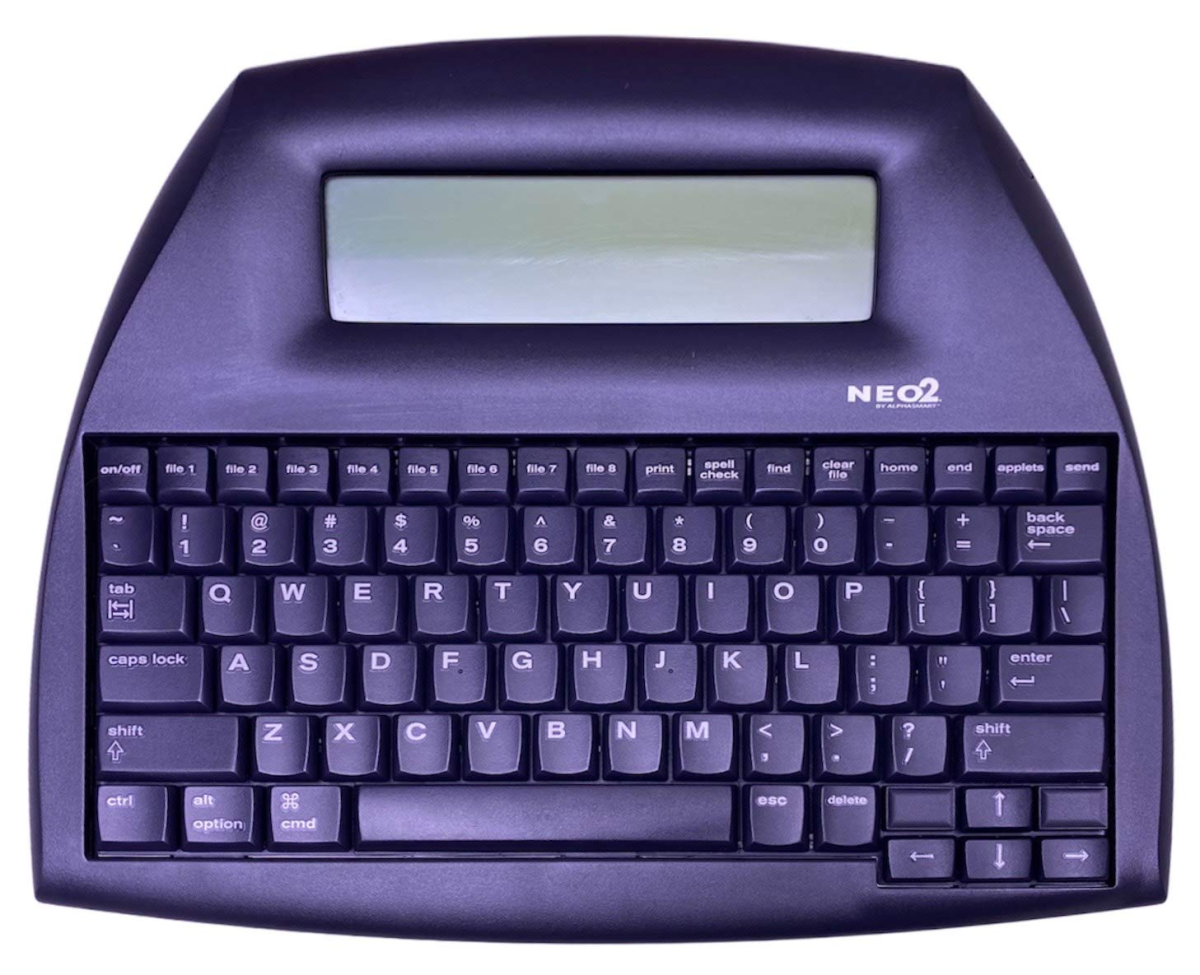
Alphasmart
And there are niche options like the Alphasmart Neo, I got one for myself off eBay. And I loved the thing, it was awesome, except one day the internal battery died on me. I lost thousands of words, I was furious about it.
Even at the time I thought paying sixty bucks for this thing was crazy. (And now they’re triple that, it’s wild!)
And I’m not a programmer or developer by trade. But when COVID came around, I started a project, very simple and beginner-friendly, and I put it up on YouTube. I took an e-ink display from China and a Raspberry Pi keyboard, put it all together, and added a nice case to it.
I made that project and it got really popular. I put it up on Reddit, and a bunch of news aggregators picked it up. I was getting messages from people asking me if they could buy one. At the time I was like, you know, it’s not something I would sell, because it’s just something I hobbled together. But I knew there was an appetite there to do something more commercial, so I started looking into that.
And that’s what led me to my first real prototype and project with Crowd Supply, which is what you saw there, and that was a big level up. Basically what I wanted was something to replace that Alphasmart Neo back in 2015, if it was made today.
How did you get started with 3D CAD and gadget design? And do you have any formal background in engineering or software?
I’ve always considered myself a bit of a jack-of-all-trades, Renaissance type. And honestly, I’m not really a designer by trade at all.
I know Tinkercad pretty well, so I kind of just dove into that because it was the easiest thing to get started with. And, quite literally, anybody could use Tinkercad if you play around with it enough. There are tons of great tutorials online.
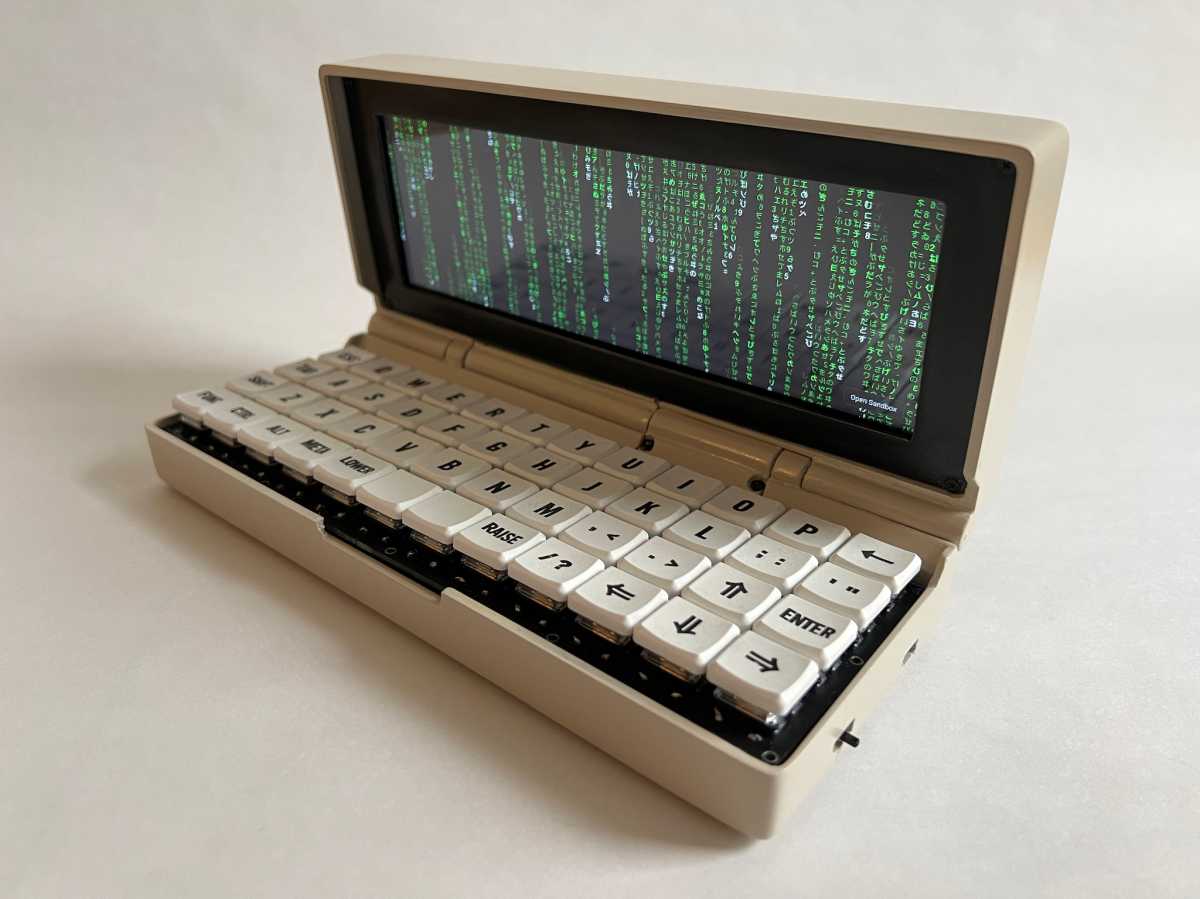
Penkesu custom Raspberry Pi laptop
So actually, I took somebody’s model for a design, the Penkesu Computer, modified their STL file to fit what I was building with the display I was using, just by trial and error and a lot of measuring by hand. That was good enough for me to get to the prototype phase, and learn a lot along the way.
That’s when I called in reinforcements and real designers, to help me turn it into something that looks a little more together and clean and professional.
You said you started with the Alphasmart. Have you tried any of the more modern commercial designs, like the Freewrite Traveler?
I actually haven’t tried any of the Astrohaus stuff. I’m obviously super familiar with it, because they’ve basically created this whole category for us.
But I have used the Pomera, so I have a DM30 and it’s one of my favorite devices. The DM30 is the whole reason I decided I was going to go into e-ink, which I’m really glad I did.
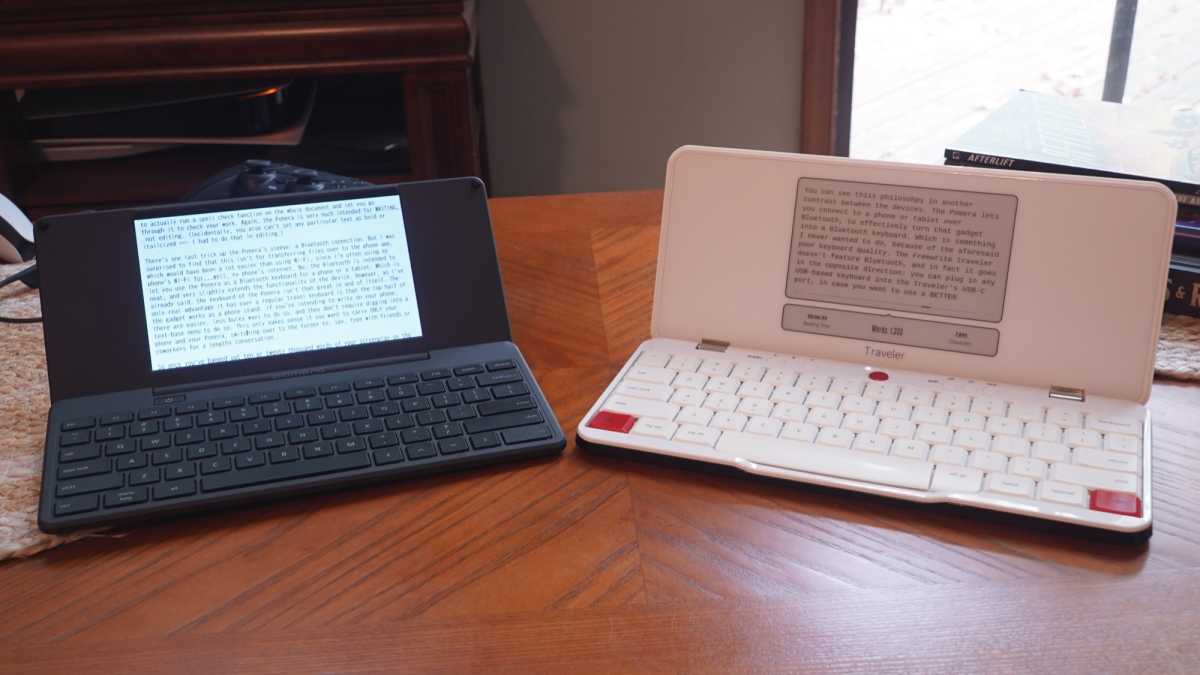
Michael Crider/Foundry
I got that thing and I was just mystified by how they did it, because it was relatively clean and performed really well! And at the time e-ink was not at all like that, it was super slow. So it was this challenge that was interesting to tackle. I’m familiar with most of them, but I’ve actually never used an Astrohaus product, which is maybe embarrassing to admit.
Not at all! There’s a lot of reasons to avoid them, that I think I outlined in my review. For all the positives that the design has physically, there’s a lot of reasons to not like the software and the company, and just the vibe, at least for me.
I’ve learned the people who are part of the writerdeck community… they are extremely passionate. Which is awesome! They love this niche of devices because it speaks to their hobby and they just want fair and reliable stuff.
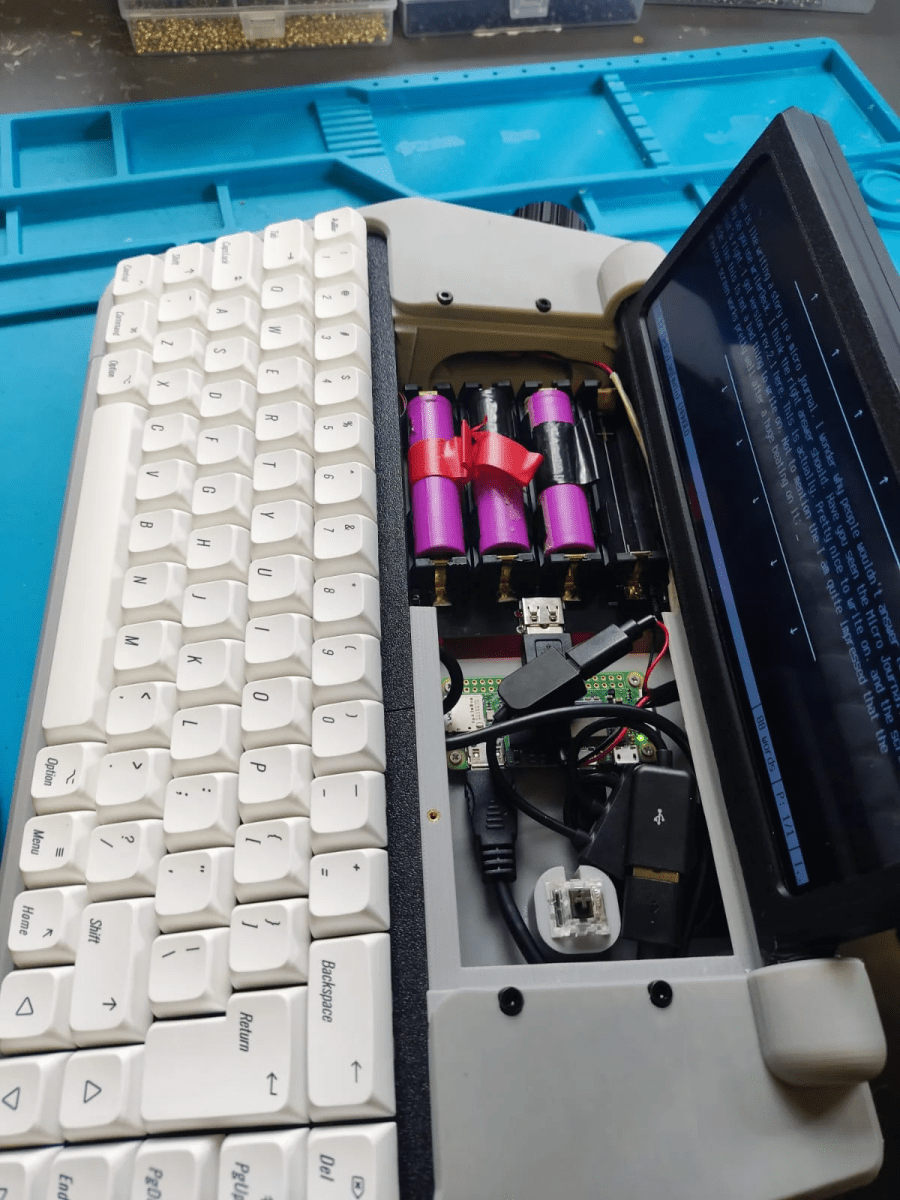
An earlier revision of the Micro Journal 2.1, showing the Raspberry Pi Zero 2 W, batteries, and wiring.
So I do hear a lot of experiences and you know, that’s maybe not the not the way I would run a business.
Speaking about the Fold: What are your goals with this particular design? Especially keeping in mind what you’ve changed from the original ZeroWriter Ink.
So this design [the ZeroWriter Ink], the idea was I wanted to prove the market a bit. And make sure that people wanted somebody to live in this space. So my approach was, hey, I’m going to take a design and I want to make something good, but I want to make it simple. So the actual insides of it are simple: keyboard, battery, display, in a thin enclosure.
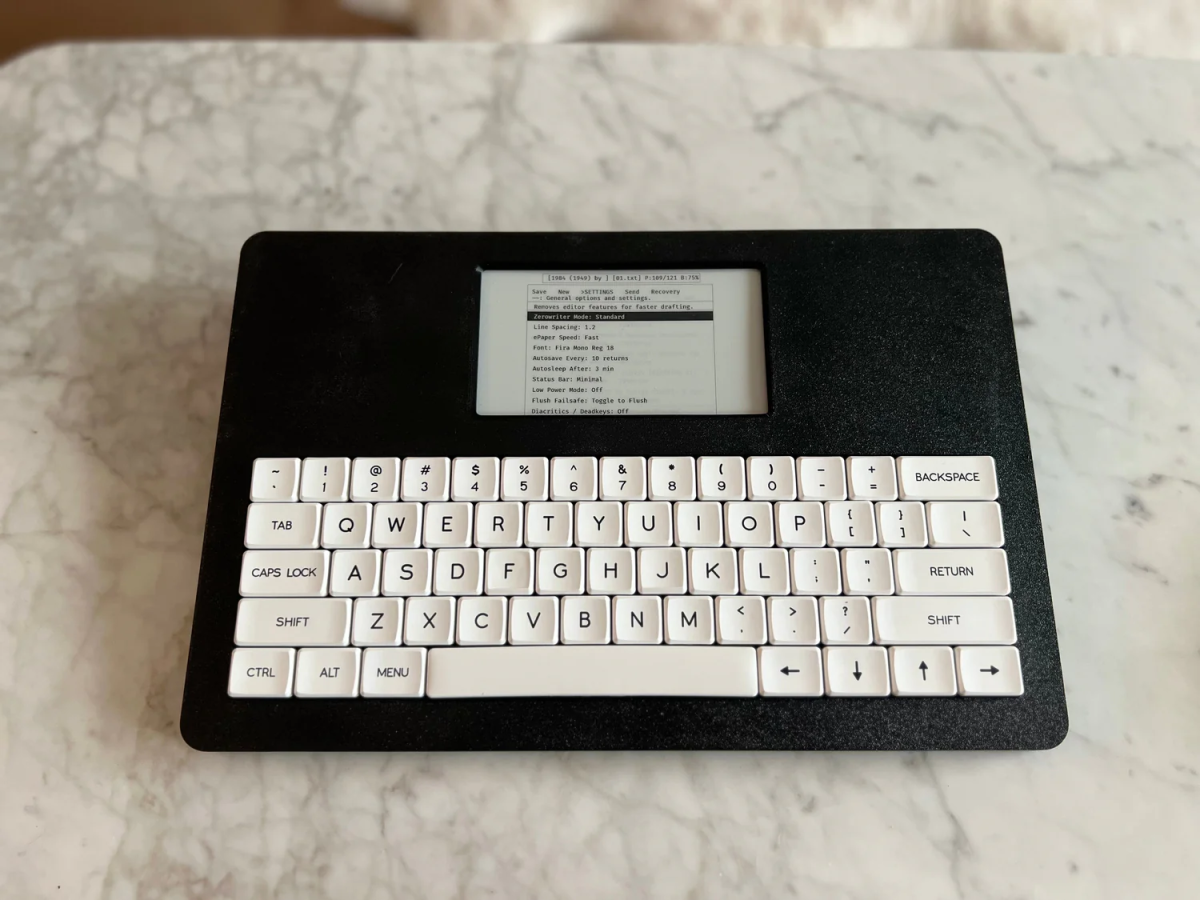
So, and I did that and people like it, it’s great we’re 75 percent through fulfillment now… The whole idea with [the ZeroWriter] is yeah, I want to get this out, people could use it. I could collect feedback, I could learn more about what people want, learn more about turning this into a business instead of a project.
The clamshell design with the Fold is the more fully realized idea. I guess that’s how I’d put it. The [ZeroWriter] Ink was a more grassroots kind of partnership with the indie hardware company in Croatia, and through an indie distributor, Crowd Supply. Undertones of hacky and DIY, and those things are all awesome and important to me. But in the back of my head, I don’t want this to be seen as the hacker’s device, you know? I’m making something for writers.
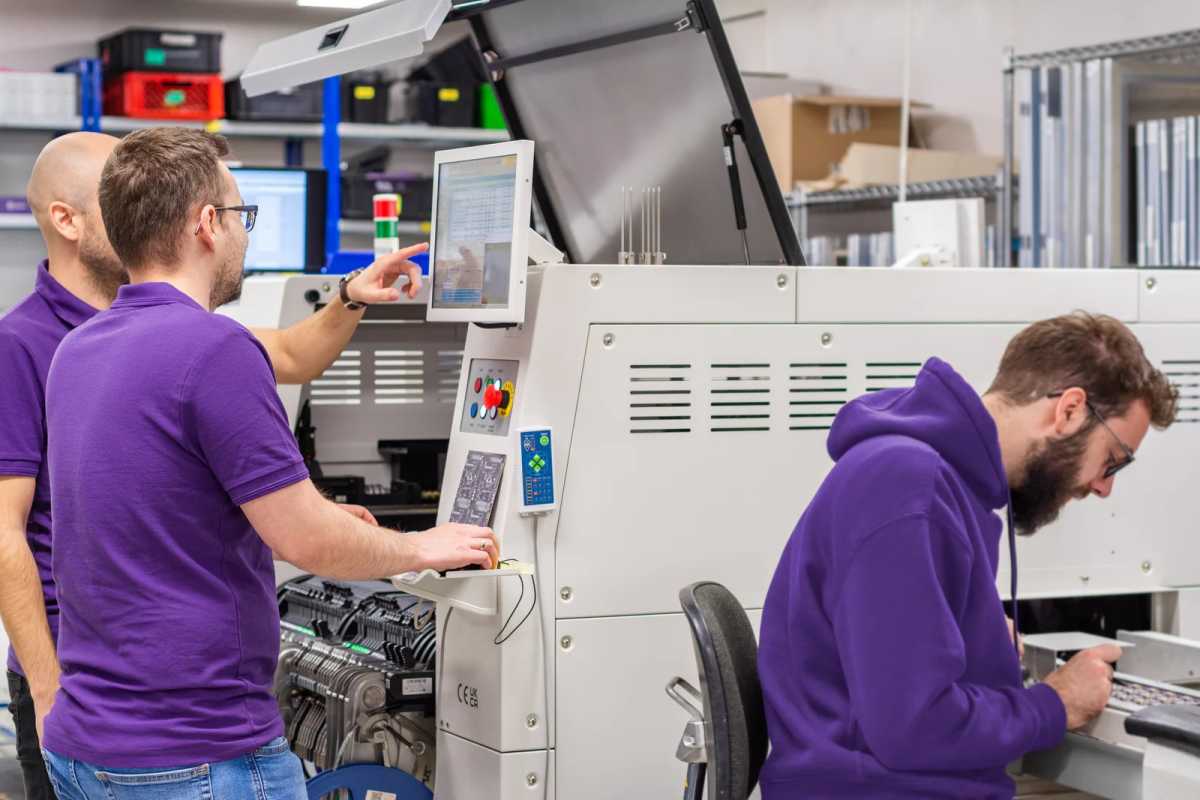
Soldered device assembly, based in Croatia
To me, the Fold is more of that, but realized. You can look at it, you can tell instantly what it is. It looks like a laptop that acts like a laptop. It’s purpose-built for writing. It looks a little bit more professional, it has features people have been asking for that I wasn’t able to deliver with the first one. Stuff like the built-in front light, proper USB support, like what you’d expect. Plug it into a computer, drag your files over and that kind of stuff, which I wasn’t able to pull off the first time.
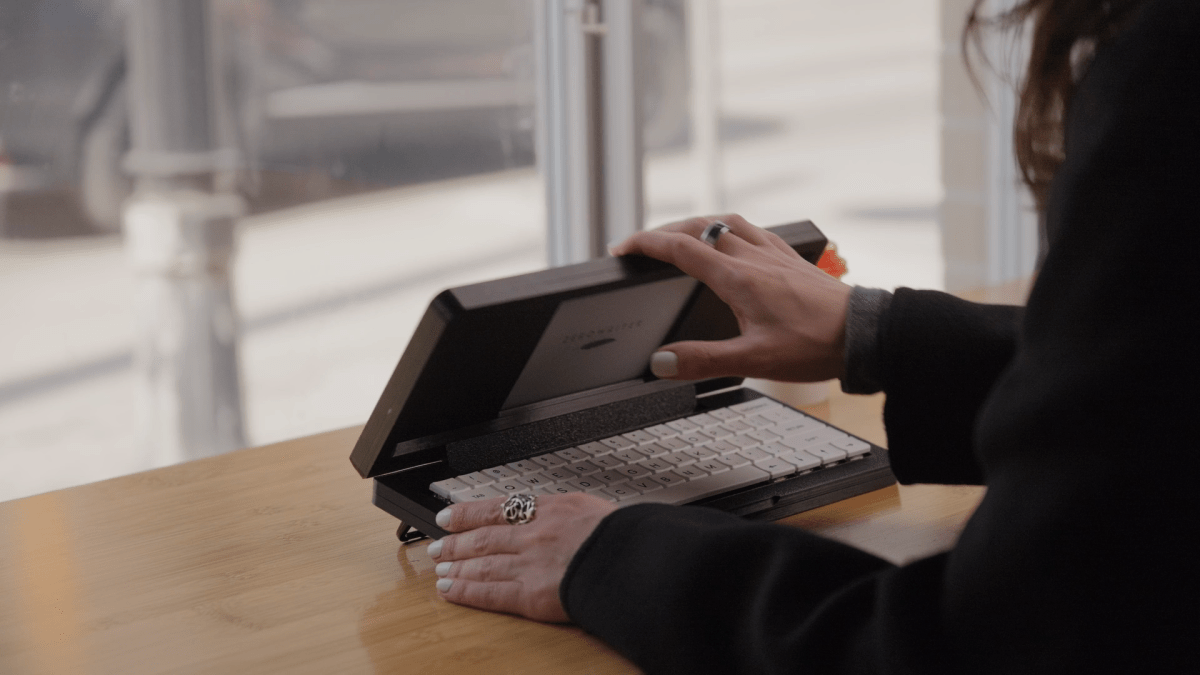
ZeroWriter
Honestly, it’s not a big secret. But if you literally take this device [the Ink], and fold it in half, you get pretty close to what I have.
And I mean, that makes a lot of sense. For what at least 25, sometimes 30 to 35 years, people have been very used to writing specifically on a laptop form factor. Even for people who are used to like sitting at a desktop like I am right now. The laptop feels extremely natural for writing and is so versatile.
Yeah! And I work in marketing. But one of the things I’ve noticed with the Ink is that I take it with me everywhere. I use it in public all the time, coffee shops, travel. The first one I built specifically for vacation… and it was actually pretty funny. I was taking it through international airports and guys were looking at it weird as they put it through the scanners.
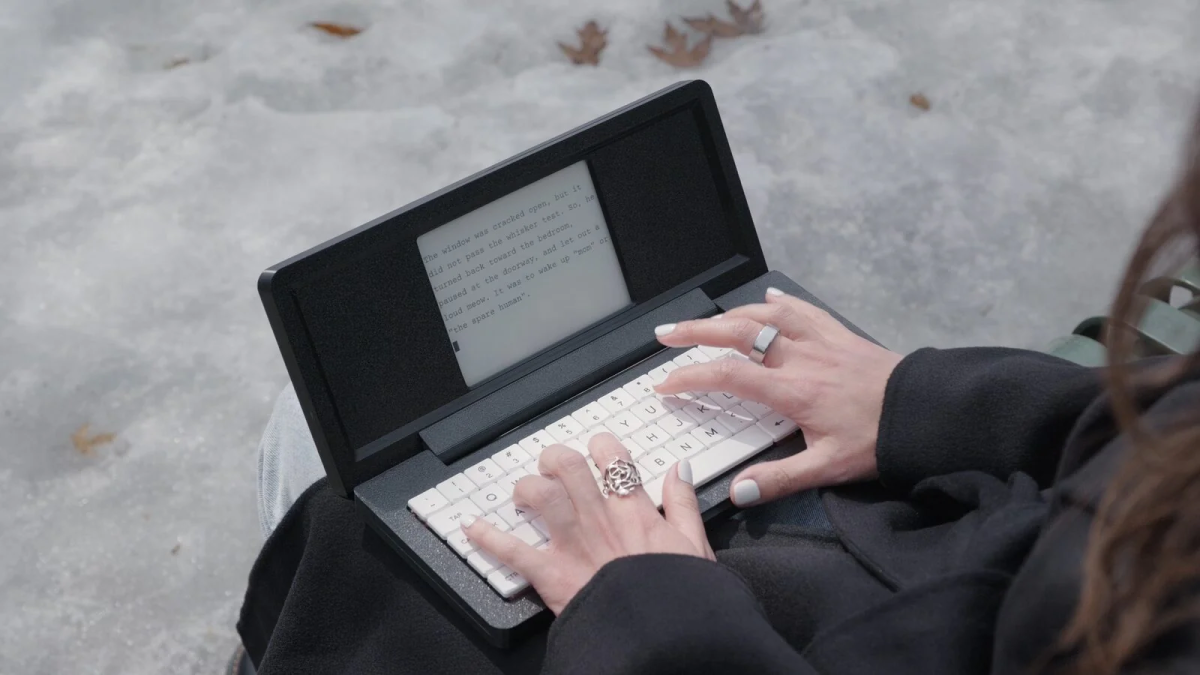
The difference between the two is, maybe a handful of times, people would comment on it, ask about it, strike up a conversation. With the Fold, it’s like every single time I take it somewhere, it catches their eye. They know what it is instantly. And as a marketer, from a business angle, [I think] yeah, okay, this is what people want. If everyone kind of understands that just by a glance over the shoulder. Then, yeah, I’m doing something right.
It seems very much like you’re approaching both of these devices as something that first and foremost you want for yourself. So specifically, what is it that you’ve built into these devices for yourself that you couldn’t find elsewhere?
The price is definitely a big part of it. But the biggest thing to me is I wanted something reliable. Something that’s instantly available, that’s one of my favorite parts of the Pomera DM30 or the Alphasmart Neo, these single purpose devices that you just press a button and you’re not waiting for anything to start up, just instant on and you’re going.
That kind of experience was critical to me — the major problem I had with Raspberry Pi and doing it that way is it’s a whole computer. It has extra junk you don’t need [for writing], Linux, a browser, all that.
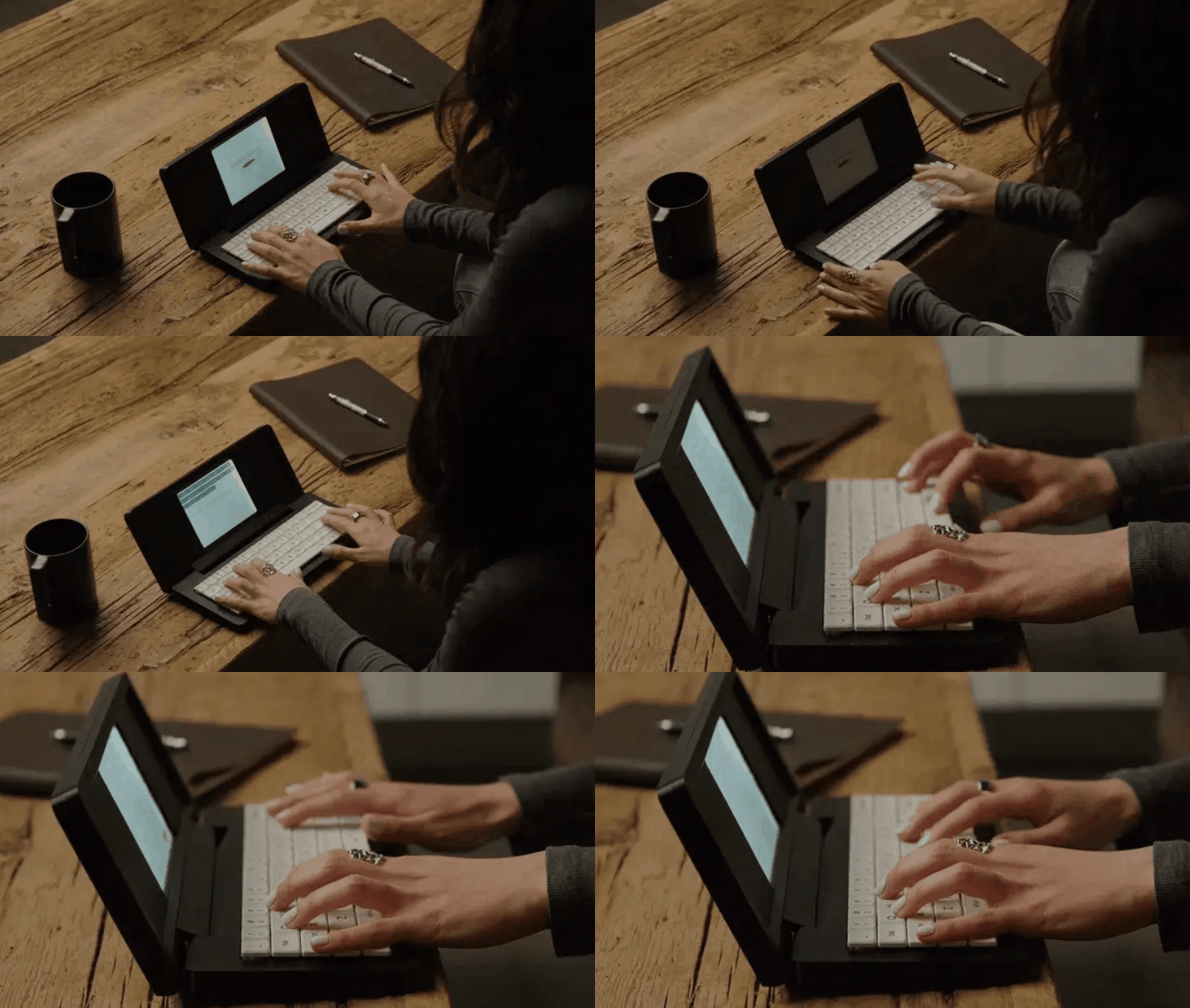
I wanted instant on, I wanted e-ink, mechanical keyboard was a huge part of it, I’m not a fan of chiclet keyboards or scrunched-up keyboards. The whole reason I couldn’t get used to the DM30, even though I love it, is the keyboard is a pain in the ass to use.
I had the exact same response to it [Pomera DM250]. I love almost everything about it, except for the size of the keyboard.
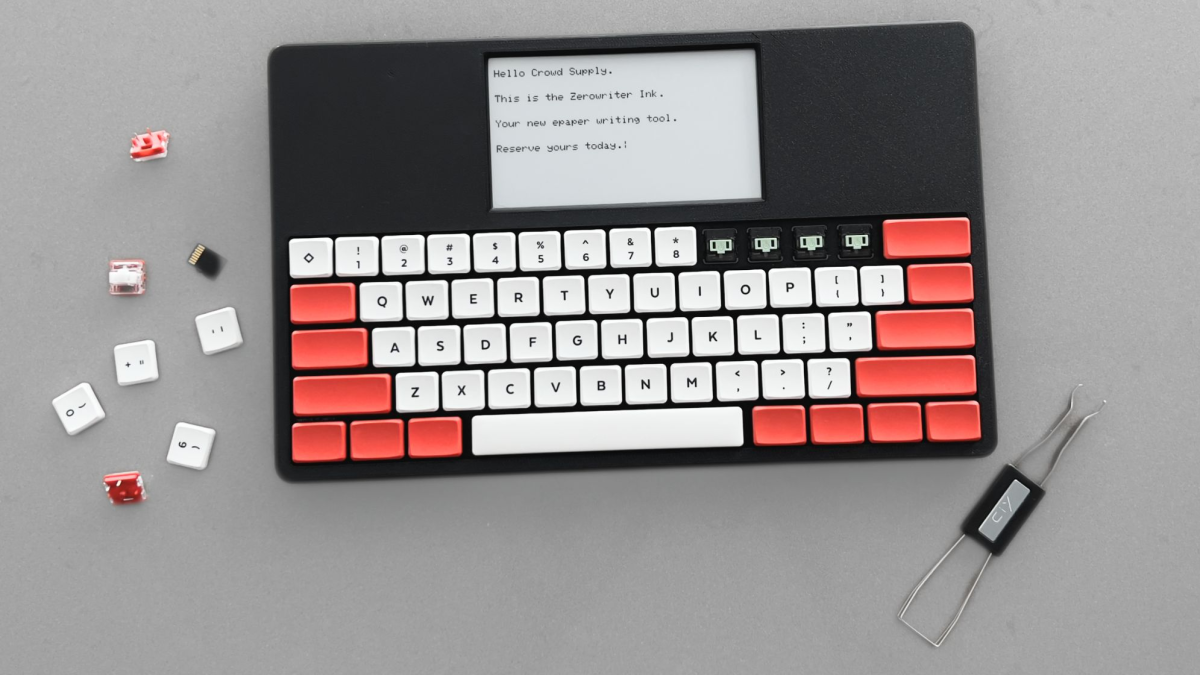
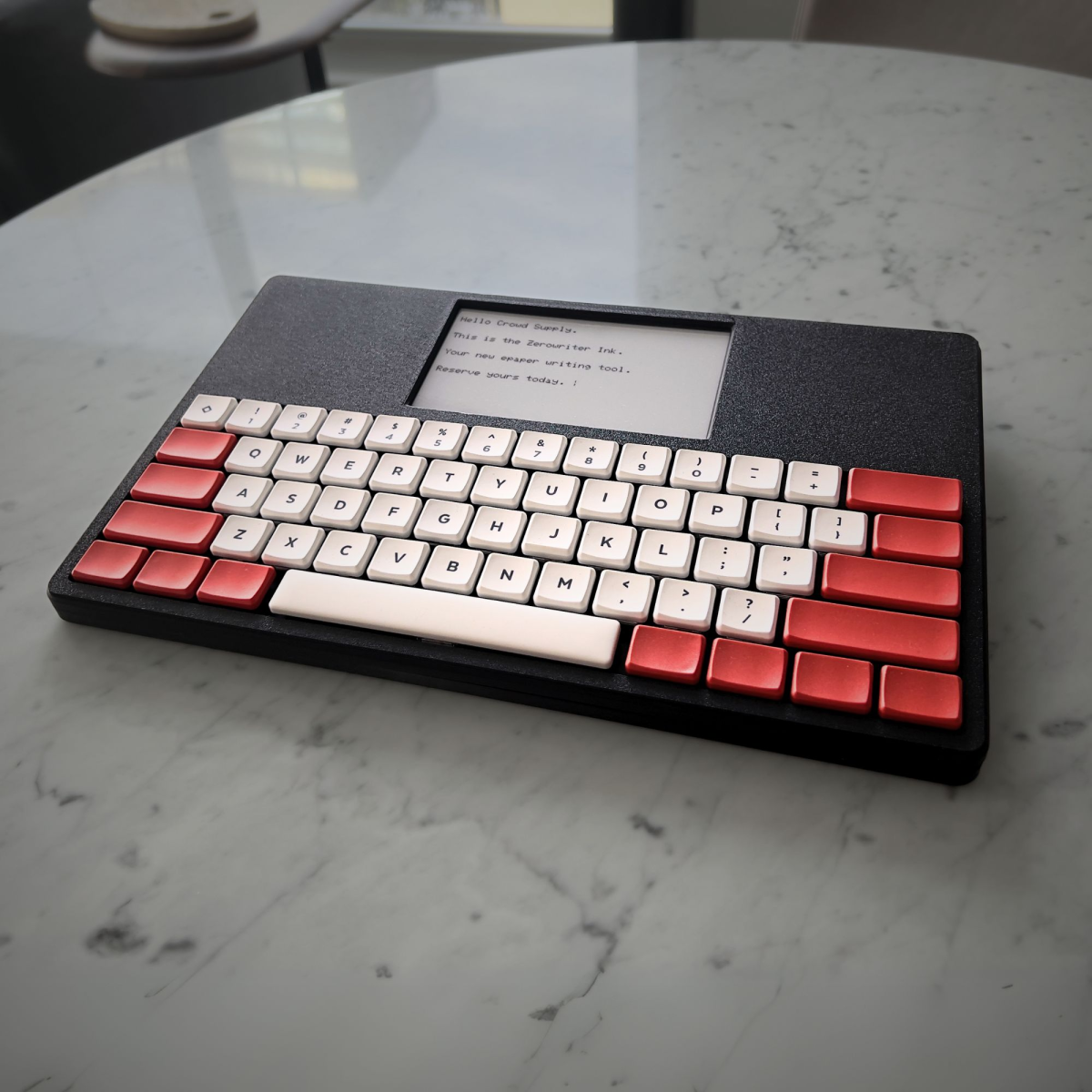
Yeah, some people can make that compromise, I can’t. So I started with a custom keyboard PCB, a 60 percent, I found what I think are the best low-profile keycaps to keep it clean and small. And then it was important to me that it was hot-swappable, so if you wanted to switch your switches out, go crazy and build your own. I wanted to make sure people could do that because it’s fun, and it makes a big difference for typing as well.
So those were the big things, there was nothing that hit all those check boxes, that was in any reasonable ballpark price. And on top of that, there’s a bigger opportunity here, long-term to change how people do hardware companies. I don’t want to totally veer into that conversation, but I feel like you can build a hardware company now, by being much more open, you can be building with your community.
I have hundreds of people I talk to, everyone from programmers, developers, e-ink specialists, PCB people, people who write erotica, it’s a crazy world that collides. That is a very different way to build a business! And I see it, it’s so close, I can just do this full-time and commit, and build this.
This is my whole thesis, you can make a hardware company, you don’t need to get 10,000 patents and try to sue your competitors into oblivion. And at the end of the day, I have a pretty big advantage by operating this way and by keeping my team small and agile, and trying to do as much as I can in-house and with good partners, and passing along the savings.
The other thing is really important: There’s this big move towards connected devices so and that’s everything from like subscription products to AI integrations to whatever comes next. So to me it’s important, especially for any device you use for a hobby, you really need to have trust in it again, an extremely high amount of trust.
I hope in five years, ten years, 20 years, that becomes standard, for hardware companies is just being a little bit more open with how you are using people’s data, what you’re doing behind the scenes. I’m not interested in storing or grabbing anybody’s words.
Can you describe how you’re assembling and fulfilling both the original devices and your plan for the Fold? Any challenges that you didn’t anticipate?
So we did the [ZeroWriter Ink] Crowdfunding in winter 2024, and it is now 2026, still fulfilling. It took about a year longer to finish than I had expected. Which always sucks. There’s not really any nice way to put it, I think I do have some good excuses considering the state of the world, and, ah, international trade.
But I’m happy that we’ve kind of seen through it, and made great relationships and partners. I’ve worked with Soldered in Croatia primarily for this, they made the e-ink panel for the ZeroWriter Ink, getting really good.
Right now it’s an assembled in Croatia product, they do almost everything. I send them bits and pieces and they put it together, ship it down to Texas where it gets distributed across the world. And it’s been good, especially for what I had in mind for this product, with a simpler design, get feedback, build a community, all that good stuff.
With the Fold, I am looking to switch it up a bit. I’ve learned a lot in the last year or two, I feel like part of what I want to do with hardware and building a hardware company differently is that I want to have a little more control with assembly. Some people might roll their eyes, but, it’s hard to do this stuff and have a contractor be the one to put it in a box and ship it out with your name on it.
I personally want to see it, I want to write a message on every one that goes out. I want to make sure the keyboard works, I want to make sure every switch is installed correctly. I want to know to a high degree that this thing’s going to be okay when you open it up. And my partners are great and everyone’s done a very good job, but I can do a better job, and I will do a better job.
So my approach is to go that way, which means building more in Canada, building more locally and providing jobs for people in Ottawa. Probably nothing too crazy, but I do hope that I can revitalize this sector in the city a little bit. Because we used to be a hardware town back in the day.
I want to make sure that people get the experience that I have in my head, and the best way to do that is doing a little bit more under my own roof. Not literally my own roof, my partner would kill me!
So you are assembling the Fold in Canada?
Yes, I will, last leg assembly in Canada. It will still very much be an international project. So as you can imagine and there are PCBs that come from all over, a lot of parts come from China, the keyboard comes from Singapore. I have contractors who help with software and development from all over the place. Europe in particular, New York.
And the Canadian manufacturing helps with the enclosures, and then yeah, I think what we’ll do is have a good old assembly warehouse, and do the last leg, put everything together, do all the testing. Do very thorough testing.
It sounds like you’re going to be able to do pretty much all of the quality assurance yourself, is that the plan?
Either myself or my home manager, who I trust to hold it up to the standard that I have.
Everyone says you only get 1 1st impression, I feel like I kind of get two first impressions. Because the Ink was great, and the first impression has been very good. But this is my first consumer release that I think is going to get me over that hurdle, where I’ll have thousands of units in distribution. So yeah, my second first impression is now, to be as good as possible.
Tell me about the software situation, how you planned it and developed it. Any changes with the new model?
Software-wise, I built it from the ground up. And in layman’s terms, it’s not quite from scratch, but it’s as close to scratch as you can get. And the whole idea was, I just wanted something that just did writing, just did more processing.
The original idea was something closer to what Astrohaus does, literally just if you type words come on the screen, you can delete some words, but you can’t do much for editing. You can’t do much for managing documents. You have a lot of limits. Which was fine.
One of the reasons that it took longer than I planned is that I decided after how successful the campaign was, I didn’t want to just put out what I thought was good enough. I thought, hey, you know, under $150,000, and 600 people are expecting something better than this. I took the time to build it out.
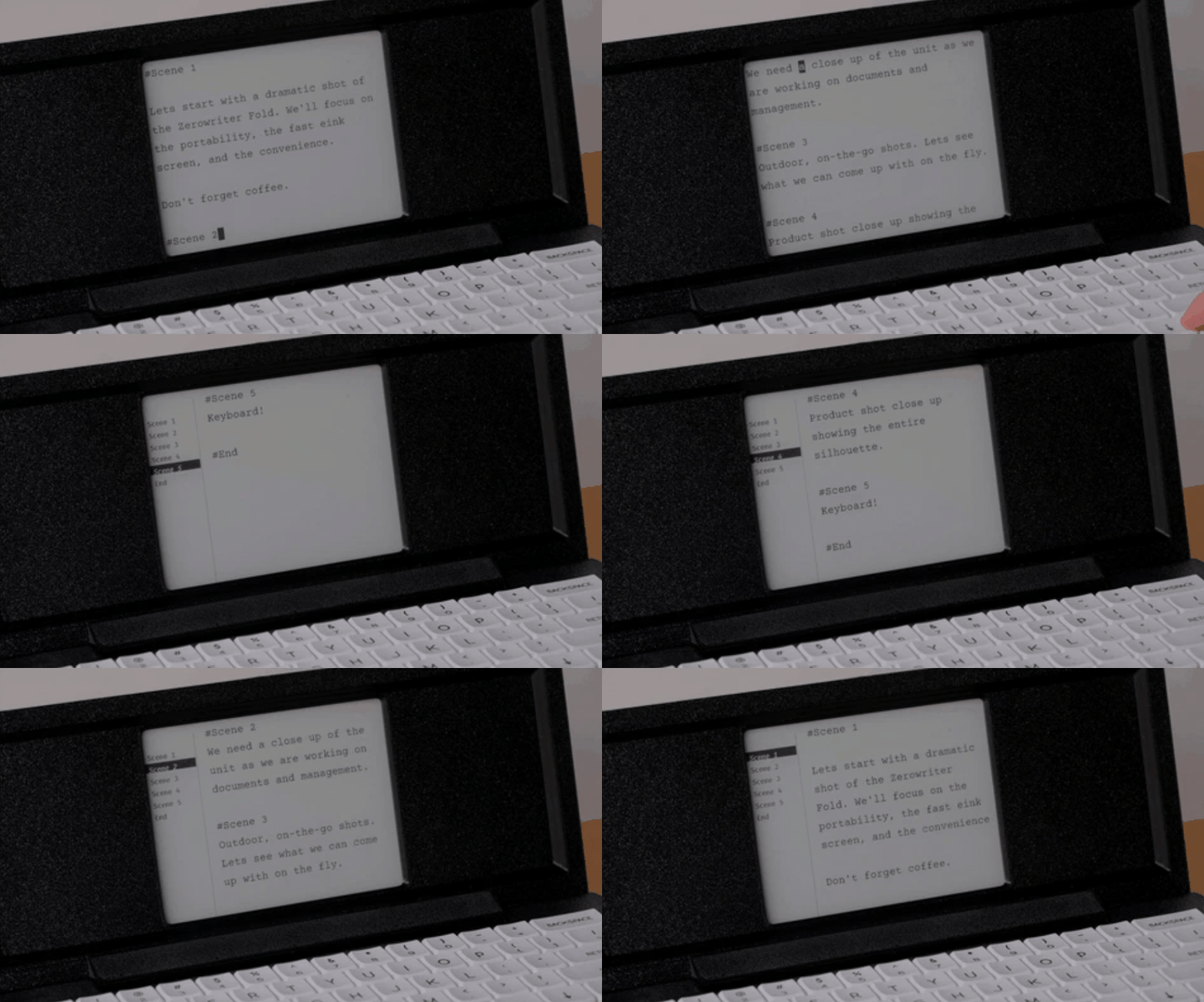
I started with that kind of basic setup, and I started adding things that would help writers. Everything is filtered through writing, and I’ll just add stuff for fun. Things like being able to customize your keyboard layouts, being able to change your fonts. You can upload any fonts that you like, changing the speed of the display. Some people are really comfortable working with a slower e-ink display that looks cleaner. Some people want more speed. It’s totally up to you.
Writer’s tools, so things like measuring your words per minute, session goals like “I want to write 500 words today,” all that stuff got added over about six months after funding. And the net result is now that all of the development work is done, I just kind of put it in the new shell.
It’s got, in my opinion anyway, anything that you would really want out of a writing device… it’s a lot more of a laptop replacement now than it was a year and a half ago, that’s for sure.
Can you give an example of something that somebody asked you for, and at the end you either just couldn’t do that with this hardware or ‘no, that’s not what this device is’?
The most obvious one that comes to mind is spell checks, grammar checks, auto-complete. Those sorts of things are doable for sure. But to me, it’s just not part of this. This is for drafting, for basic edits and revisions, when you’re on the train for that sort of thing.
It’s not intended to replace Microsoft Word… and the biggest advantage in my mind is that you can keep the cost low and keep things affordable. So people can use them by being really smart with the brains of it, and it’s very fast. It’s very responsive, you just have to work with those limitations instead of against it.
Do you have plans for future hardware beyond the ZeroWriter Fold?
One thing that I would love to be able to do is an extremely low-cost version. Maybe it’s a bit more like the ZeroWriter Ink. Something that’s designed for students, for schools, for places without a high budget, or even anyone who wants a more budget device.
Something that is quite literally a replacement for the price point that the Alphasmart Neo was at. Not like, making crazy $1,000 terminals. It’d be great to be somebody who could make good, reliable devices that help people, that are affordable. That would be amazing.
I get emails from schools that are looking to purchase devices. And it’s tough, because everything for ZeroWriter Ink is done through the distributor, I’m kind of hands-off, they have all the inventory… but loud and clear, these schools have kids that could really use devices that are not Chromebooks or iPads. They need something for writing, something that doesn’t have web browsers built in, with all the AI stuff now.
People in professional settings, who are like therapists or doctors, or anybody who wants or needs that private device for their job. I think there’s a big opportunity there, if I can get all the pieces into an affordable package, something like 60 or 70 bucks.
As successful as you have with this initial project and going into the second, do you have any advice for others who want to start designing their own custom hardware?
Don’t do it! Haha, no, no, I would never say that. I think now is a great time to do it. There are so many people working on different things. There’s such a big community of everyone from designers, programmers, developers.
Find a niche. That’s important to you getting involved. Don’t let anybody tell you no. You don’t need to be an expert in a field, you don’t need to be a developer, you don’t need to be a designer. You can figure out what I did.
The ZeroWriter Fold is now up for pre-order on Kickstarter, with an early bird price of $269 USD.
This articles is written by : Nermeen Nabil Khear Abdelmalak
All rights reserved to : USAGOLDMIES . www.usagoldmines.com
You can Enjoy surfing our website categories and read more content in many fields you may like .
Why USAGoldMines ?
USAGoldMines is a comprehensive website offering the latest in financial, crypto, and technical news. With specialized sections for each category, it provides readers with up-to-date market insights, investment trends, and technological advancements, making it a valuable resource for investors and enthusiasts in the fast-paced financial world.