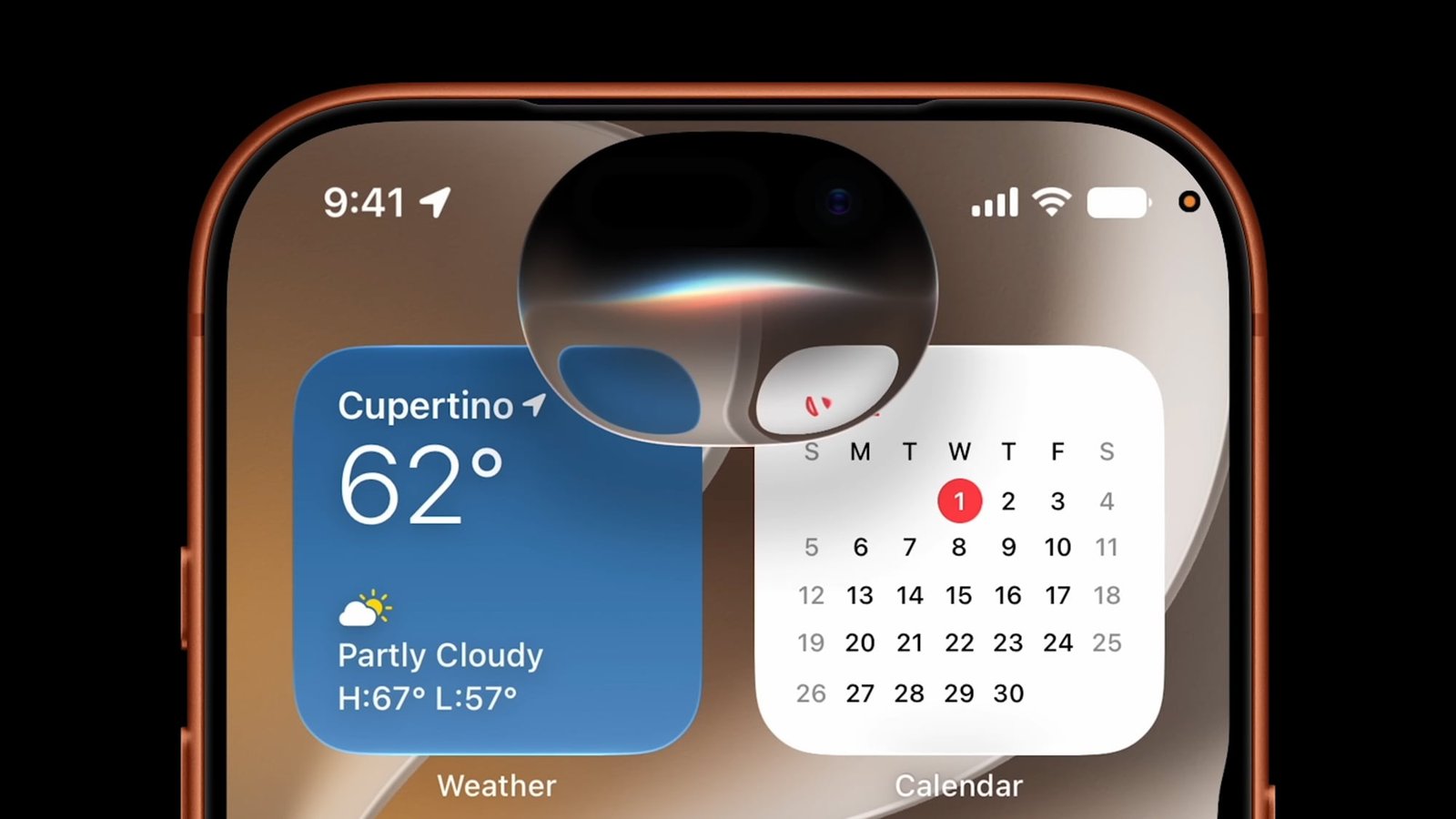
Apple spent a lot of time talking about the upgraded Apple Intelligence platform and the new Siri AI app at WWDC 2026, and in the days since, a few more details have emerged about how the AI model partnership between Apple and Google will affect the new software—but answering the question of how much of Siri AI is Apple, and how much is Google, is still complicated.
Back in January, we got official news that Apple would be tapping into Google’s Gemini AI models to help power Apple Intelligence, that the deal would last multiple years, and that Apple’s “industry-leading privacy standards” would be maintained.
Neither Apple nor Google explained much at the time about how this partnership would actually play out, but it was clear that this was more significant than Apple’s earlier ChatGPT deal, where Siri simply shunted off prompts it couldn’t reply to.
I expect there was plenty of debate within Apple about whether a technological deal with an arch-rival was worth it, even if it meant catching up more quickly with its AI. Ultimately, CEO Tim Cook and his fellow executives decided that it was—and after WWDC 2026, we have more information on the details.
Siri AI is not the Gemini app…
Over to the WWDC 2026 keynote, where Apple’s senior vice president (SVP) of software engineering Craig Federighi told us the vastly improved Apple Foundational Models (AFM) had been developed through a “deep collaboration” with Google. Apple had been “leveraging” the technology behind the Gemini models, in Federighi’s words, to create the AI that now powers Siri AI and the other new Apple Intelligence features.
And you can certainly see the Gemini influence: Apple’s AI is now truly multi-modal, capable of processing audio, voice, and text, and much better at producing text and images of its own. Image editing is much improved—very similar to Nano Banana 2, you might say—and Apple’s AI now has much better world knowledge too, which is another area where the Gemini models excel.
However, these are still ultimately Apple’s own models. For local models, we have the on-device AFM 3 Core and AFM 3 Core Advanced models, which sit on iPhones, iPads, and Macs—though the latest hardware is needed for for the Advanced version (the one that allows you to tweak Siri’s pace and expressiveness). Per Apple, AFM Core Advanced needs an iPhone Air, iPhone 17 Pro or Pro Max, an M4 iPad or later with at least 12GB of RAM, or an M3 Mac or later with 12GB of RAM.

Credit: Apple
In follow-up comments (via 9to5Mac), Federighi said, “we don’t have the Gemini app as our app.” That is, Apple Intelligence doesn’t use the Gemini AI models, or the client code Google Gemini app users get, or a knowledge base built from Google Search. All that work has been done by Apple.
There’s no doubt Apple needed the Gemini AI models to get its own models up to par this quickly, but Apple executives are understandably keen to not make too much of the partnership, for the same reasons that they won’t talk about the billions of dollars Google pays each year to remain the default search option in Safari.
Federighi still had time for some barbed comments though: “Some appear to be racing forward, seemingly pursuing AI for the sake of AI, without clear regard for the people—all of us—that it’s ultimately meant to serve,” he said, in a dig at the competitors that have left his company in the dust on AI (while Apple has paid out $250 million in settlements for promising AI features that never showed up).
…but Apple is using some Google servers
That covers the local Apple Foundation Models, which keep all of your queries and data private and protected on whatever device you’re using. It’s with the cloud-based models that the waters get a bit muddier—these are the models that are called in to deal with larger, more complex tasks that can’t be handled solely on-device.
As described by the Apple team (via Ars Technica), the AFM 3 Cloud is for general-purpose use. Then there’s ADM 3 Cloud for image generation, and AFM 3 Cloud Pro for “more sophisticated” queries (and, it sounds like, the beginnings of agentic work). Like the on-device models, they use some Gemini smarts at the most basic levels, but with Apple’s own contributions and tweaks on top.
Those first two models run on Apple servers, but queries sent to AFM 3 Cloud Pro are going somewhere else: They’ll be sent to Google data centers, to be processed by Nvidia GPUs. However, according to Apple, the exact same Private Cloud Compute (PCC) protections will be in place for those data centers as for those run by Apple.

Credit: Apple
That means no data is stored (it’ll be wiped after the query is processed), no one else can see it (not even Apple or Google), and your identity is masked. Apple lets third-party security auditors check its PCC code, and that’s going to be the case with the AFM 3 Cloud Pro models and Google’s servers, too.
There is one small wrinkle: Apple says “PCC on Google Cloud will be gradually ramping towards the complete set of protections throughout the summer preview period.” So if you’re running one of the developer betas, some of your most complex AI queries might not yet be as fully protected as you would like them to be.
Apple is promising more technical detail on all of this as we get further towards the full launch of the new software updates and Siri AI, but based on the information we have now, it seems to have managed a balance between boosting its AI with Gemini while retaining all of the Apple-ness that its users are going to expect.
This articles is written by : Nermeen Nabil Khear Abdelmalak
All rights reserved to : USAGOLDMIES . www.usagoldmines.com
You can Enjoy surfing our website categories and read more content in many fields you may like .
Why USAGoldMines ?
USAGoldMines is a comprehensive website offering the latest in financial, crypto, and technical news. With specialized sections for each category, it provides readers with up-to-date market insights, investment trends, and technological advancements, making it a valuable resource for investors and enthusiasts in the fast-paced financial world.