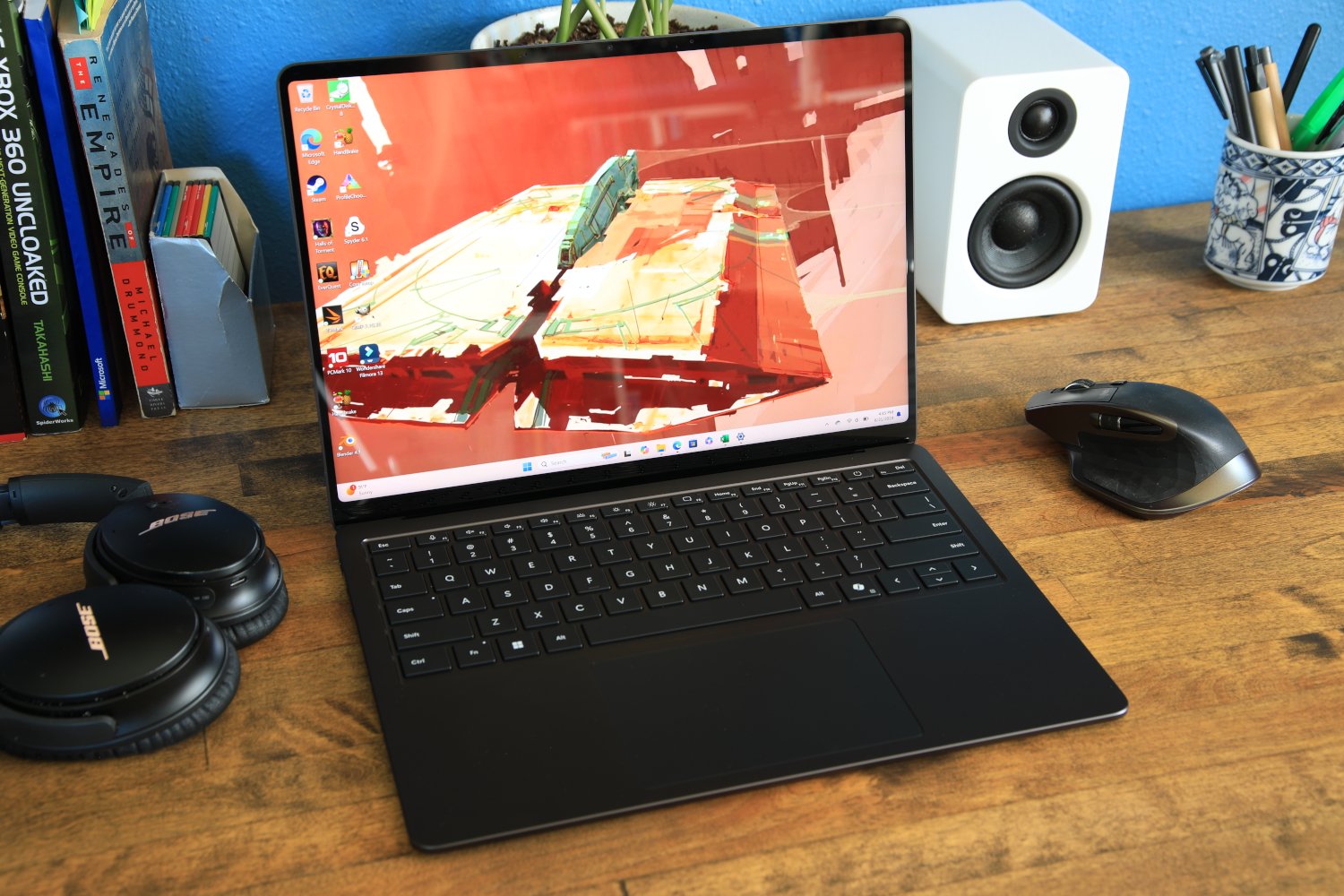
After shipping the Surface Laptop and Pro for business customers starting at about $2,000, Microsoft has come down to earth. Microsoft is releasing a smaller Surface Laptop and Pro for under $1,000, but with a callback to the bad old days of 8GB of system memory.
Brett Ostrum, the corporate vice president of Surface devices at Microsoft, told me that this week would be the opportunity for Microsoft to launch cheaper Surfaces, and Microsoft delivered: Microsoft will ship the Surface Pro 12-inch for $849, beginning today. The company has also added the Surface Laptop 13-inch for $949, as well.
Economists have talked about the K-shaped economy, where premium devices keep costing more and those on a budget struggle to survive. Analysts have predicted a return to 8GB of RAM, and that’s happened, too, after AI-driven shortages have driven up prices of both memory and storage.
Microsoft has embodied that perfectly, charging $3,299 for our review version of an otherwise staid 13.8-inch Surface Laptop 8 for Business. Microsoft made a valiant attempt to address the midrange with new consumer versions of its Laptop and Pro, with prices starting at $1,499 for the Pro with a Qualcomm Snapdragon X2 Elite inside. (Microsoft also quietly added the X2 Elite to its Business lineup, too.)
Still, the laptops that have dominated headlines have been the most sympathetic to consumers: the $599 Apple MacBook Neo (with 8GB of memory, too) and the Dell XPS 13, available to students for $599 but to everyone else at $699. Microsoft has now interposed itself into that conversation, or tried to.
Microsoft tells PCWorld that these new devices won’t launch with any fanfare; they’ll simply show up on the Microsoft Store for consumers to buy. The 12-inch Surface Pro will include the first-generation, older Snapdragon X Plus, 8GB of RAM, and 256GB of storage for $849, while the base configuration of the new 13-inch Surface Laptop will include identical specs. Options for upgraded configurations with more memory and storage “remain available,” Microsoft said.
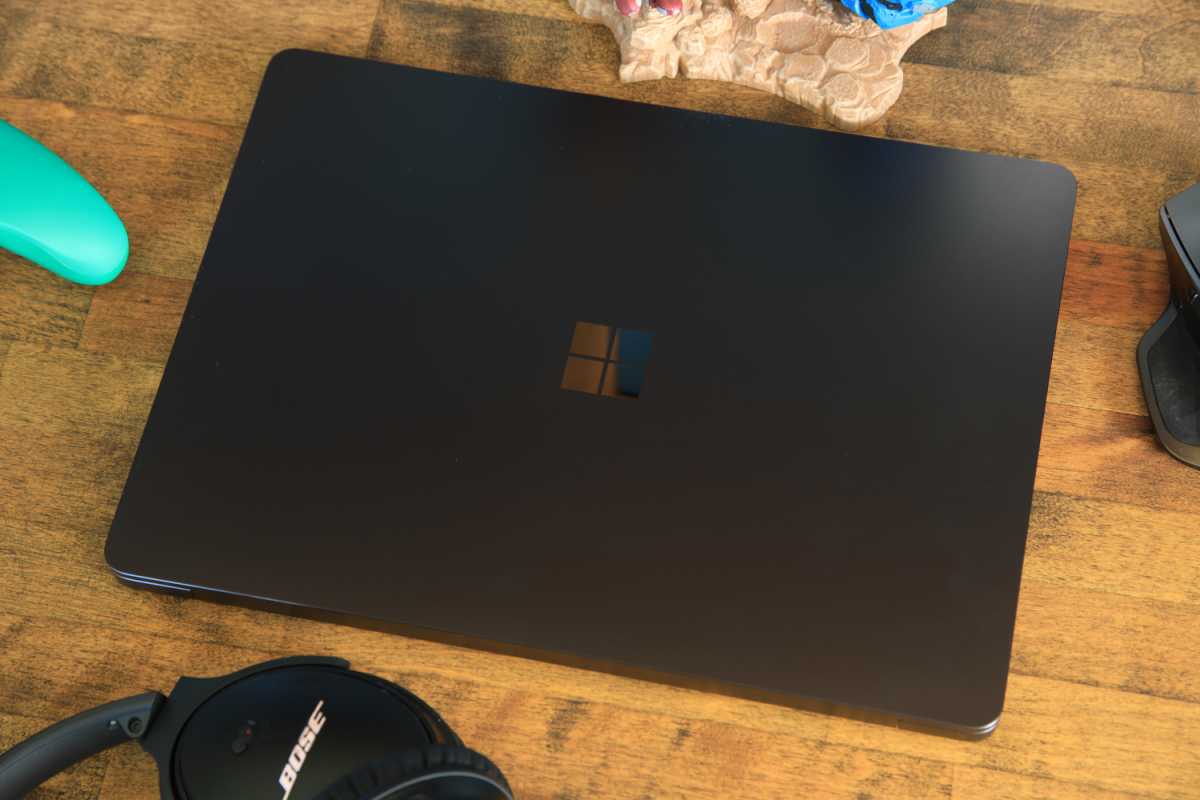
This is an older 13-inch Surface Laptop, but you should expect that the new version will look essentially the same.
Matthew Smith / IDG
Lower price, less performance
The problem, of course, is the 8GB of memory. Though Windows technically can run on as little as 4GB of system memory and 64GB of storage, those specifications were barely usable — and 8GB isn’t much better. With 8GB of memory, fewer applications can be loaded, few browser tabs can be opened at a time, and the system can stutter and slow down when data can’t be called from memory and instead must be accessed from system storage.
Microsoft says that it’s working to minimize the toll Windows takes on system RAM, such as minimizing the amount of memory the Windows Widgets requires. “This includes things like a smaller default memory footprint, giving back memory faster when not in use, putting the user in more control of pre-launch, and limiting pre-launch on devices with lower memory capacity,” a Microsoft representative said via email.
You can’t argue away the rising prices of memory and storage, however. Ostrum told me last week that the reason for Microsoft’s sharp price increases was that it intended to make a “step change” and raise them sharply and suddenly, rather than quietly over time.
“Customer needs vary by workload, and 8GB configurations give customers another entry point for everyday productivity, browsing, communication, and entertainment,” a Microsoft representative added.
That’s fair. It’s true that you’ll be able to buy a smaller Surface Pro or Laptop and run Netflix, type a term paper in Word, or browse the Web like any other laptop. Unfortunately, Apple’s MacBook Neo has been released and well tested. My colleague Roman Loyola of Macworld pushed the Neo to its limits, and it held up.
Apple’s ability to tie its operating system directly to its silicon gives it an advantage, especially in budget scenarios like this one where every byte counts. And, let’s face it — consumers often give Apple the benefit of the doubt. In this case, the question that Apple has answered is, how good is it? To Microsoft, those same consumers will likely ask, how bad is it going to be?
This articles is written by : Nermeen Nabil Khear Abdelmalak
All rights reserved to : USAGOLDMIES . www.usagoldmines.com
You can Enjoy surfing our website categories and read more content in many fields you may like .
Why USAGoldMines ?
USAGoldMines is a comprehensive website offering the latest in financial, crypto, and technical news. With specialized sections for each category, it provides readers with up-to-date market insights, investment trends, and technological advancements, making it a valuable resource for investors and enthusiasts in the fast-paced financial world.