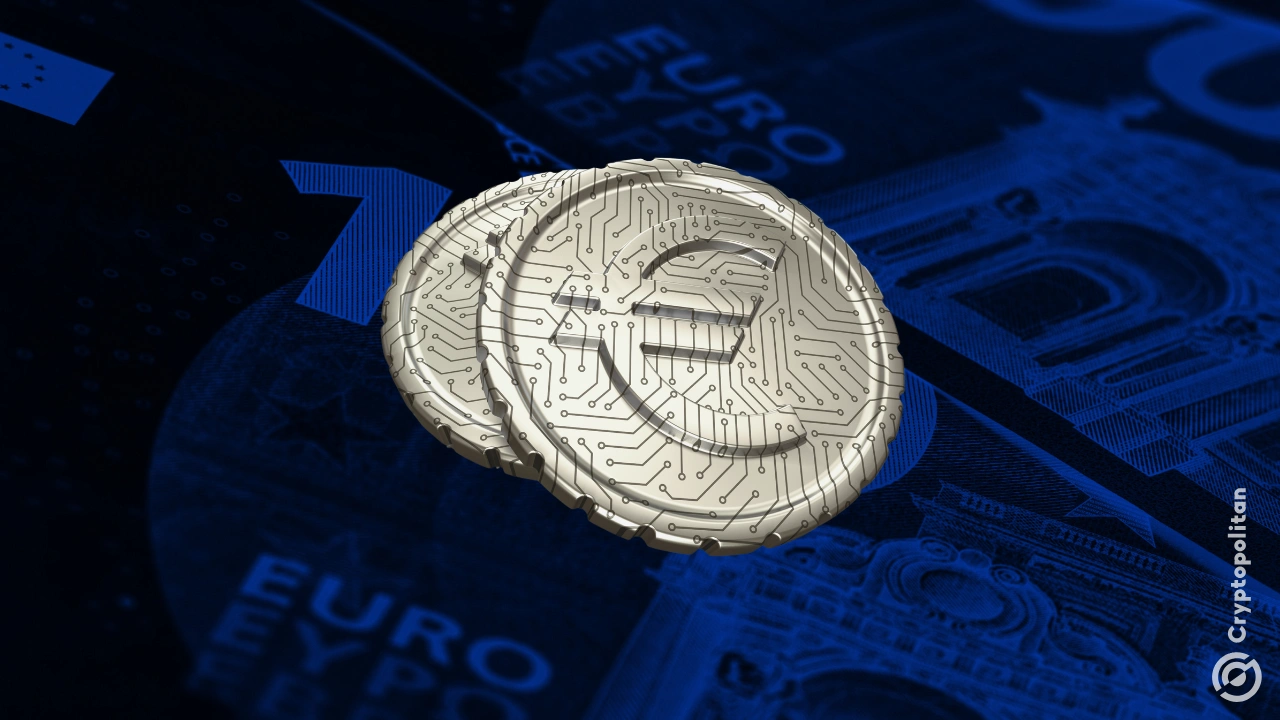
The project to offer Europeans a digital euro advanced in the bloc’s parliament this week with promises that the new form of central bank money will not replace paper cash.
The move comes amid concerns in Brussels and Frankfurt over the growing use of privately issued stablecoins tied to the U.S. fiat as Washington prepares to ban the creation of a digital dollar this decade.
ECON backs digital euro legislation
The European Parliament’s important Committee on Economic and Monetary Affairs (ECON) adopted on Tuesday the so-called Single Currency Package of legislative proposals.
The laws are designed to establish a legal framework for a digital version of the common currency while also ensuring that cash remains a viable option throughout the euro area.
The digital euro file was approved by 43 members of the committee, with 14 voting against and one abstention, the legislative body detailed in an announcement on its website.
MEPs from @EP_Economics adopted single currency package #DigitalEuro, led MEP @fnavarrete_
📌Digital euro regulation 43/14/1
📌Non euro PSPs 43/9/6
📌Legal tender 46/4/8https://t.co/ohE38Mq9bP— ECON Committee Press (@EP_Economics) June 23, 2026
The central bank digital currency (CBDC) will be an electronic form of money issued by the European Central Bank (ECB) that would work both online and offline, the press release noted.
European officials claim the latter option, which will be realized through local storage devices, would be “equivalent to using physical cash,” up to the loss of funds in case of losing the carrier.
They also say the digital euro system will ensure the privacy of transactions, thanks to technologies such as zero-knowledge proofs, and that the ECB would have no access to identification data.
Nevertheless, the EU authorities have also addressed worries that the CBDC may threaten the survival of euro banknotes and coins, whose legal tender status will be guaranteed.
Another approved proposal aims to safeguard the role of euro cash. It must remain widely accepted and accessible in eurozone countries, which will be required to prepare for disruptions in digital channels.
Thus, businesses would not be allowed to reject cash payments and member-states would be obliged to regularly check its availability, especially with vulnerable social groups in mind, such as the elderly and unbanked people.
“With the single currency package, we are protecting citizens’ freedom to choose how they pay,” commented Fernando Navarrete Rojas, the EP’s lead rapporteur on the digital euro. He also insisted:
“The digital euro will complement cash, never replace it. No one should be forced away from cash, and no one should be left without a secure, resilient and genuinely European digital payment option.”
Digital euro moves closer to launch
The positive vote at the ECON is paving the way for further advances in the EU’s complex legislative process. The legislation is expected to be adopted by the end of 2026.
It also opens the door for more negotiations on the realization of the digital euro project, which will now focus on the final design of Europe’s digital currency.
The European Central Bank hailed the progress in a statement posted on X:
We welcome the @EP_economics’ support for ensuring the availability and acceptance of cash as legal tender and advancing the digital euro.
As legislative discussions progress, the ECB continues to:
✅ support co‑legislators with technical expertise
✅ advance technical… https://t.co/wONseOtDb6— European Central Bank (@ecb) June 23, 2026
The monetary authority’s reaction came one day after ECB President Christine Lagarde expressed hope that the initiative will move to its next stage, which will be “of a more technical nature.”
That will lead to the launch of a pilot phase, the governor said, emphasizing on the need to ensure that all Europeans can have a “good experience” with the digital incarnation of the common currency.
In mid-June, Lagarde rallied support for the digital euro in the face of dollar-backed stablecoins and U.S.-dominated global payment systems, as reported by Cryptopolitan.
Meanwhile, legislators across the Atlantic are taking steps to prevent the Federal Reserve from issuing a digital dollar. A new Senate bill aims to impose a respective ban until 2030.
The smartest crypto minds already read our newsletter. Want in? Join them.
This articles is written by : Nermeen Nabil Khear Abdelmalak
All rights reserved to : USAGOLDMIES . www.usagoldmines.com
You can Enjoy surfing our website categories and read more content in many fields you may like .
Why USAGoldMines ?
USAGoldMines is a comprehensive website offering the latest in financial, crypto, and technical news. With specialized sections for each category, it provides readers with up-to-date market insights, investment trends, and technological advancements, making it a valuable resource for investors and enthusiasts in the fast-paced financial world.