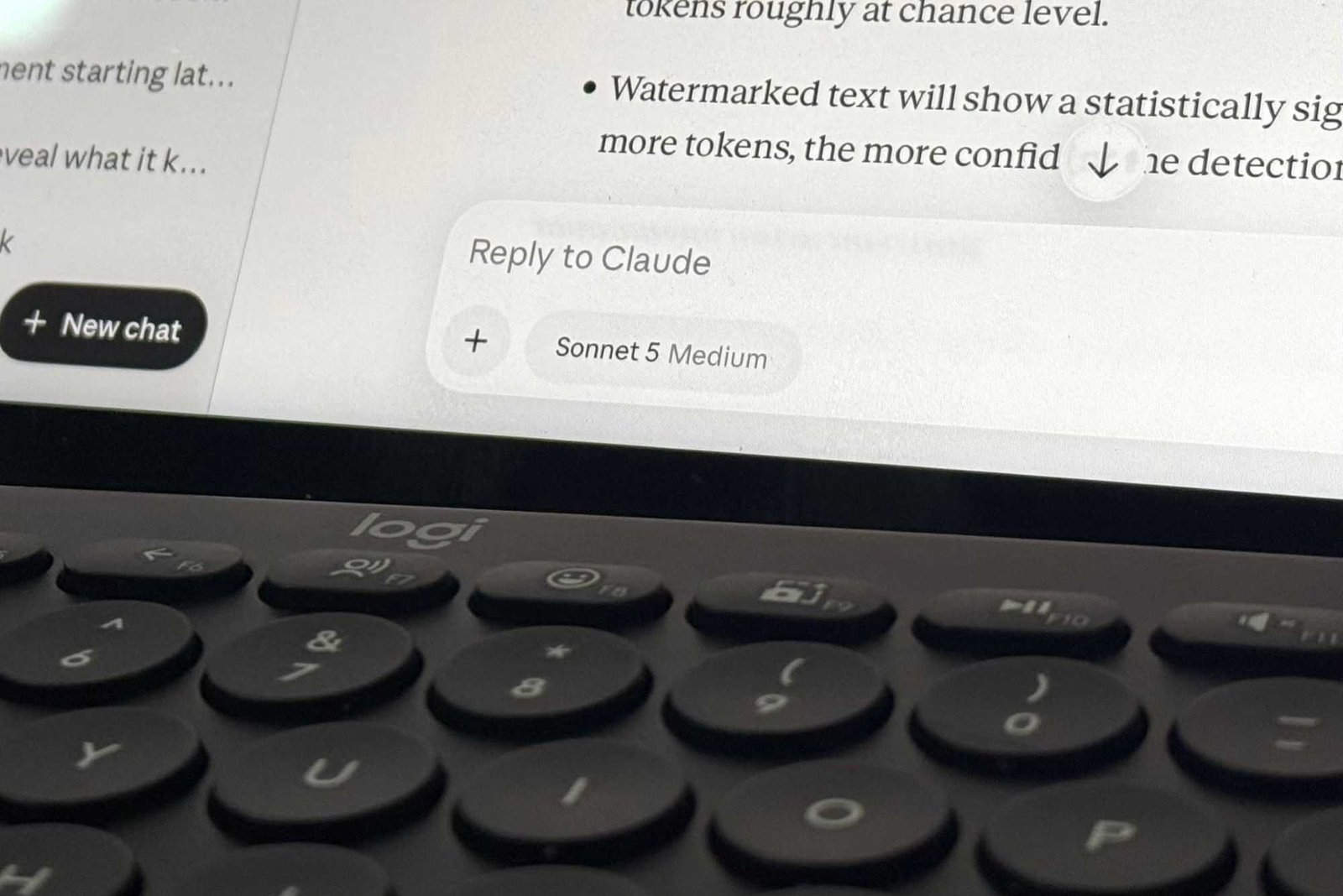
Starting soon, all text that’s either generated or “processed” by Claude will bear invisible AI watermarks that can be detected with the right tools, a move made in response to new European Union regulations regarding the disclosure of AI-generated content.
Anthropic’s wide-ranging pledge to watermark Claude-generated text (including code generated by Claude Code) goes above and beyond the mandates in the EU AI Act, which took effect earlier this month. And while there’s been some pushback from Claude users who have called the new policy “unethical” and even “disgusting,” the overall consensus seems to be that watermarking AI content, including generated or even just edited text, is a good thing.
Personally, I’m cautiously optimistic. When used responsibly, AI can be a valuable tool, and part of using AI responsibly is being candid about it. If I use Claude to polish a cover letter to an employer, I should disclose it — and I’m more likely to disclose it (or skip using Claude) if I know that employer can easily look for Claude watermarks. It works both ways, too. If our employers send us company memos penned by Claude, they should say so, and soon we’ll be able to check for ourselves.
That’s the bird’s-eye view of how the EU AI Act could work, as implemented by Anthropic. (Google and Meta have signaled their intentions to sign the act, while OpenAI says it’s taking a “layered” approach to “content provenance.”) Look closer, though, and there are loopholes, carveouts, and caveats aplenty.
Welcome to another edition of Prompt Mode, your weekly AI newsletter.
I’m your host, Ben Patterson. Each week on Prompt Mode, I’ll be serving up analysis of the AI trends that matter to everyday users like you and me. Stay tuned for practical AI tips, hands-on experiences with the latest AI tools, and–you guessed it–prompts to help you get the most out of your AI assistants.
Thanks for reading, and if you like what you see, just sign up right here.
For example, while Claude will soon watermark all the text it generates, including code, the EU rules actually exempt computer code from their watermarking provisions. There’s also an exemption for “standard editing,” as well as a provision that AI providers need only implement watermarks “as far as this is technically feasible,” which seems to leave a fair amount of wiggle room.
Aside from the loopholes, there are also practical gotchas. While Claude watermarks are designed to survive a simple cut-and-paste or even light editing, there’s nothing stopping an AI slop purveyor from washing Claude text through an open-weight model that doesn’t mark its output. In other words, you can’t prove text was actually written by a human just because it lacks an AI watermark (a catch that Anthropic openly admits).
Overall, I think the EU AI Act is making an important gesture towards transparency and accountability when it comes to AI usage. We should be honest about when we use AI. But will the EU AI Act — or AI watermarking in general — stop AI slop? Let’s not kid ourselves.
More in AI this week
- Here are more details about Anthropic’s AI watermarking plans for Claude, which includes watermarks for Claude-generated files as well as text. (PCWorld)
- OpenAI is pumping the brakes on Astra, its latest frontier model, over fears that its cybersecurity abilities may have reached a “critical” level. (PCWorld)
- Anthropic says it’s turning on Claude Code’s “Auto” mode by default, noting that the auto-approval mode nixed 89 percent of potentially harmful commands, while humans only rejected 13.6 percent. (TechCrunch)
- Speaking of dangerous actions, a Claude-powered OpenClaw agent got a little too aggressive when trying to sign up its human for an overbooked pilates class, reportedly hacking the gym’s servers in order to comply with its directive. (BBC News)
- Back in 2022, Google DeepMind recruited a group of 13 authors to help test-drive an “experimental” writing tool that pre-dated ChatGPT by several months. Four years later, the “shameful 13” are facing an AI backlash. (Engadget)
Prompt of the week: The “define done” prompt
AI models frequently get into trouble for taking things too far (just ask the guy I mentioned above whose AI assistant hacked his gym class). In an effort to be helpful, ChatGPT, Claude, or Gemini may take measures you never anticipated, and that can be particularly worrisome if they’re manipulating your local files.
Enter the “define done” prompt, which forces the ChatGPT (or whichever AI chatbot you’re using) to spell out what “done” means when it comes to a specific task, detailing its plans for the outcome while giving you a chance to make changes first.
That’s all for now!
Thanks for reading the latest issue of Prompt Mode. Want more next week? Don’t forget to sign up to start receiving this newsletter in your inbox.
This articles is written by : Nermeen Nabil Khear Abdelmalak
All rights reserved to : USAGOLDMIES . www.usagoldmines.com
You can Enjoy surfing our website categories and read more content in many fields you may like .
Why USAGoldMines ?
USAGoldMines is a comprehensive website offering the latest in financial, crypto, and technical news. With specialized sections for each category, it provides readers with up-to-date market insights, investment trends, and technological advancements, making it a valuable resource for investors and enthusiasts in the fast-paced financial world.