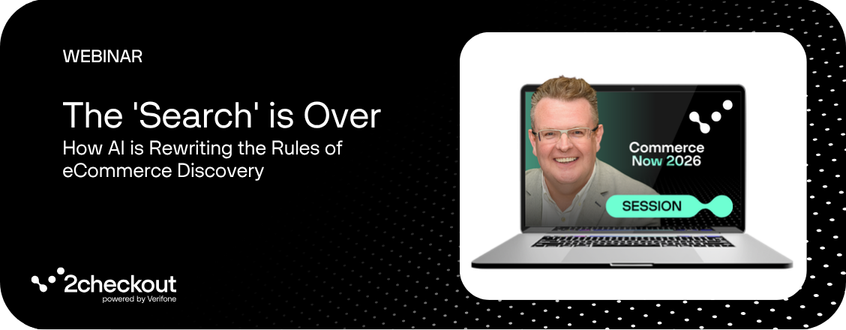
Last week, someone went looking for exactly what you sell. There’s a good chance they never typed it into Google. They asked an assistant (ChatGPT, Claude, or Perplexity) something like “what’s the best option for a business like mine,” and it answered with two or three brands. The question worth sitting with is simple: was yours one of them?
That question ran through CommerceNow’26, 2Checkout’s tenth annual digital commerce event. For most digital businesses, the honest answer is “sometimes, and I’m not sure why,” and that uncertainty is the whole problem. Discovery has quietly moved from a system you could reverse-engineer (keywords in, rankings out) to one that decides which brands to name on your behalf. Adobe’s Digital Insights data points to something close to a fourfold year-on-year jump in AI-referred retail traffic. The behavior has already shifted. The strategies mostly haven’t.
The reassuring part is that this isn’t a reason to throw out everything you know. Strong fundamentals still matter. But there’s a thin layer of work on top of them that decides whether an assistant recommends you or a competitor, and very few brands are doing it well. That gap is the opportunity.
From matching keywords to matching intent
The old model was mechanical. Search engines did lexical matching: they looked for the words in a query on a page. So, you chose the keywords you wanted, placed them in your titles and copy, and when a shopper typed those words, your page appeared. It made optimization feel like a checklist.
That’s not how modern search, or any AI assistant, works. Both now run on semantic matching. They look for pages that fit the intent behind a query, not the exact words. Ask for a “sales CRM for contractors” and a page titled “lead tracker for builders” can surface, because the machine understands those are the same thing. The keywords aren’t on the page at all.
There’s a second shift stacked on top of it. When a shopper asks a broad question, the assistant doesn’t run one search. It fans the question out into many related ones, then synthesizes a single answer from everything it trusts. Ask for “the best barbecue for a small covered yard” and behind the scenes it’s also weighing questions about smoke, clearances, fuel type, and reviews.
The practical consequence is that you no longer win a keyword. You win an entity, a category or topic, and the cluster of questions that surround it. A brand that owns “everyday carry knives” isn’t ranking one page; it’s answering the comparisons, the how-tos, the buying questions, and the specifics that a curious buyer, and the model serving them, will reach for. Isolated, keyword-stuffed pages don’t hold up in that environment. Connected, thorough coverage does.
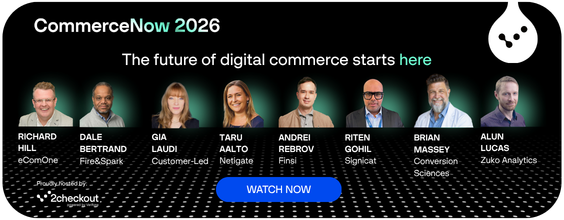
Richard Hill, who runs the eCommerce agency eCom One, keeps catching himself on the old language: “I always say ranking—it’s not ranking.” You are no longer climbing a list. You are being chosen.
Discover our session with Richard Hill on how AI is reshaping eCommerce traffic, revenue, and product discovery.
You can’t optimize for questions you’ve never heard
Here’s the trap most teams fall into: they decide what content to create from a keyword tool, then wonder why the assistants don’t cite them.
A short story makes the point better than any framework. A marketer for a chain of preschools handed a friend a laptop and asked her to search for a preschool the way she normally would. He expected her to Google local schools, open a few websites, and compare curricula and pickup times. Instead, she searched, glanced at the list of names, closed the laptop, and pulled out her phone to ask her friends on Facebook what they thought of those schools.
He had built content for a journey she wasn’t taking. The questions that actually drove her decision were never on his radar, so they were never on his site.
The fix is unglamorous and reliable: go where your customers form opinions, and listen. Talk to them directly. Read the threads on Reddit and in the communities where your buyers gather. Pull transcripts of sales and support calls and note the questions that come up before anyone commits. Read the free-text box on your cancellation survey, where people say what the radio buttons never capture. And do the thing almost no one does consistently: open the assistants yourself, every week, and search your own category the way a customer would. You’ll see exactly what’s being recommended, how you’re described, and what’s missing.
Only after you understand the real questions can you create content that answers them. Frequently that means updating and sharpening pages you already have rather than writing new ones.
Write so a machine can quote you
Assistants build answers from small, self-contained pieces of information. If your best answer is buried three paragraphs into a page that wanders, it won’t get pulled. Structure is what makes your content quotable.
A few principles carry most of the weight:
- Answer first. Put the direct answer to a question in the opening sentence, then support it. Vague, warm-up copy gets skipped.
- Ask the question in the heading. Use question-based H2s and, where a topic is competitive, H3s. Lead with your H1, then structure the sub-questions beneath it.
- Make it scannable in modules. A short summary, a table of contents, comparison tables, and callout boxes help the machine locate the exact fact it needs. Comparison tables and buying guides are doing especially well right now.
- Keep each module dense and on-topic. If you’re answering a specific question, keep the whole answer about that question. Wander into loosely related material and the model may decide the passage isn’t relevant and ignore it.
- Add the machine-readable layer. FAQ schema and structured data help both the assistant and traditional search understand what a page is about. Name your authors, and make sure those authors are credible and cited elsewhere.
Two operational details matter more than they sound. First, make sure your catalog and content are actually crawlable and indexed. It’s common to find whole sections of a site invisible to search and AI, and no amount of good copy can fix that. Second, consider publishing an llms.txt file: a plain index that points assistants to your key pages and credentials. Its influence is still debated, but it’s cheap to create and the direction of travel favors it.
This is also where your commerce stack quietly earns its keep. The clean product data behind your catalog and checkout is exactly what assistants reach for when they assemble a product answer. In a monetization platform like 2Checkout, that is the same feed that carries your pricing, currencies, variants, and availability. When it’s complete and current, you’re easier to recommend; when it’s thin or stale, you’re easier to skip.
One more distinction is worth internalizing. The content that earns recommendations is not old-school “educational” content written to look helpful. Writing about how bees make honey does little to sell honey. What works is content tied directly to the information a buyer needs to make a decision: buying guides, comparisons, and honest answers to the specific questions that precede a purchase.
Earn the mentions, and protect the reputation behind them
Assistants don’t only read your site. They read what the rest of the internet says about you, and they weigh it heavily.
That’s why mentions have become the currency that links used to be. A mention, even an unlinked one, on a page an assistant already trusts raises your odds of being included in an answer. A reasonable starting target is on the order of dozens of contextual mentions for a page you care about, placed where your buyers and the models actually look: Reddit, YouTube, review platforms, and industry or PR sources. Watch which sources an assistant cites when it answers a query in your space, and work to appear there.
But mentions only help if what they say is good, and here reputation stops being a marketing abstraction. Consider a well-built eCommerce store that lost roughly half its traffic and couldn’t work out why. Technically it was pristine: clean structure, solid backlinks, tidy metadata. Then a quick question to an assistant told the whole story. Customers reported not receiving orders, being double-charged, and never reaching anyone by phone. The search systems had simply caught up with a bad experience and stopped sending people to it. No optimization survives that.
So, the buying experience itself is now a discovery asset. Reliable payments, honest pricing, and real reviews are what keep the sentiment an assistant reads on your side, which is one reason a merchant-of-record platform like 2Checkout matters here: it handles tax correctly at checkout and puts a dedicated shopper-support team behind every purchase.
Two other things follow. You don’t control the whole footprint: competitors publish comparison pages that can misrepresent you, and reviews meant for a similarly named brand can get attributed to yours. Part of the job is monitoring what the internet says and correcting the record where you can, so the model learns the accurate version.

Stop counting clicks, start measuring influence
All of this forces a harder look at how you measure success. A majority of searches now end without anyone clicking through to an external site; clickstream analysis from SparkToro puts it around 68%. Those aren’t failures. Many are buyers getting the information they needed, forming an impression of your brand, and moving toward a decision you’ll never see in a click report.
Two patterns come with the shift. Conversion rates on the clicks you do get tend to rise, because the assistant has already filtered out pure information-seekers and sent you people with intent. And attribution gets murkier, because influence rarely arrives as a tidy tracked click.
Dale Bertrand, who runs the SEO agency Fire & Spark, draws the stakes plainly: “if AI can’t describe what your brand does, who you serve, and why you’re trustworthy, then you don’t exist in the buying process.”
The reporting change is to stop treating traffic as the headline metric. Traffic is easy to measure, so it’s tempting to optimize for it, but it increasingly understates your real position. Track how often you’re named across the major assistants, how you’re described, and which of your pages get cited, then connect that presence to the outcomes finance cares about. When you’re asking a CFO to fund this work, influence tied to revenue is a far stronger case than impressions.
Where to start this quarter
You don’t need a replatform. You need a focused push on the layer that decides recommendations.
- Audit yourself. Search your brand and top products across ChatGPT, Claude, Perplexity, and AI overviews. Note how you’re described, what’s cited, and what’s wrong or missing.
- List the twenty questions your customers actually ask before buying, sourced from real conversations rather than a keyword tool.
- Rewrite your top five pages answer-first, with question-based headings, a comparison table, and an FAQ block.
- Pick one entity to own and build the surrounding cluster: a listicle, a buying guide, comparisons, and clear Q&A.
- Earn mentions on the sources assistants already cite in your category, and make sure your reviews and reputation are worth citing.
- Publish an llms.txt, confirm your catalog is indexed, and set a weekly rhythm to re-check your visibility and patch weak spots.
The brands that win here aren’t gaming anything. They’re the ones an assistant can confidently describe, trust, and recommend, because they’ve made themselves easy to understand and good to buy from.
Want to see how the rest of the discovery-to-checkout journey is changing?
Watch the full CommerceNow’26 sessions on demand, and explore how the 2Checkout Monetization Platform helps you turn global demand into revenue at 2checkout.com.
The post How to Get Recommended by AI Search: A Zero-Click Playbook for eCommerce appeared first on he 2Checkout Blog | Articles on eCommerce, Payments, CRO and more.
This articles is written by : Nermeen Nabil Khear Abdelmalak
All rights reserved to : USAGOLDMIES . www.usagoldmines.com
You can Enjoy surfing our website categories and read more content in many fields you may like .
Why USAGoldMines ?
USAGoldMines is a comprehensive website offering the latest in financial, crypto, and technical news. With specialized sections for each category, it provides readers with up-to-date market insights, investment trends, and technological advancements, making it a valuable resource for investors and enthusiasts in the fast-paced financial world.