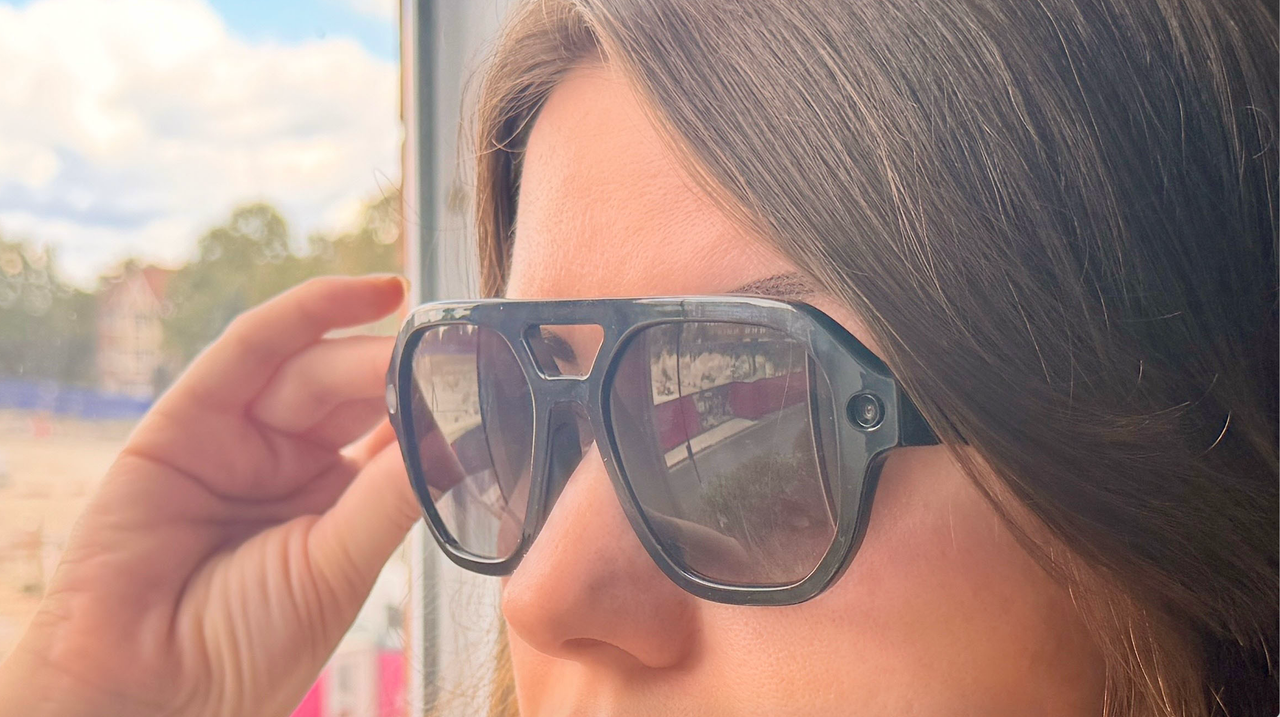
L’Atitude 52°N smart glasses: one-minute review
A new smart specs maker has arrived on the scene, and it’s looking to arrive with a bang. The L’Atitude 52°N Smart Glasses are loud and proud, and after L’Atitude dispatched a slightly rocky first batch of review units to tech publications (including ourselves), I’ve been putting the newer, more production-ready glasses through their paces over the past month.
Let’s first unpack the selling points, which I discussed with L’Atitude’s founders (including ex-OnePlus engineer Gary Chen) in the weeks before my review. Made in Europe and unapologetically Euro-coded, with Berlin-inspired and, coming soon, Milan frame designs, these won’t be the glasses for everyone, and that’s okay, the team says; but they are for adventurers.
On board, you’ll find Goya AI (named after the Spanish painter, Francisco Goya), a dulcet-toned Southern California male voice assistant who’s eager to help you explore the world with features like AI Tour Guide, Live Translation, and the usual retinue of camera-laden smart-glasses features.
At least, that’s the pitch. On vacation with my lovely mom on the Greek island of Santorini, I put these supersized specs to the test, and although I can see them shaping up to be terrific travel companions, right now they’re dogged by big problems. From spotty software to an entirely unclear future in terms of how much its AI features will cost when the subscription plan kicks in sometime in the next year, it’s hard to recommend L’Atitude’s bold frames from a value perspective, at least for now.
L’Atitude 52°N review: price and availability
- List price: starts at $465.00 (about £345)
- Availability: US, with UK availability expected soon.
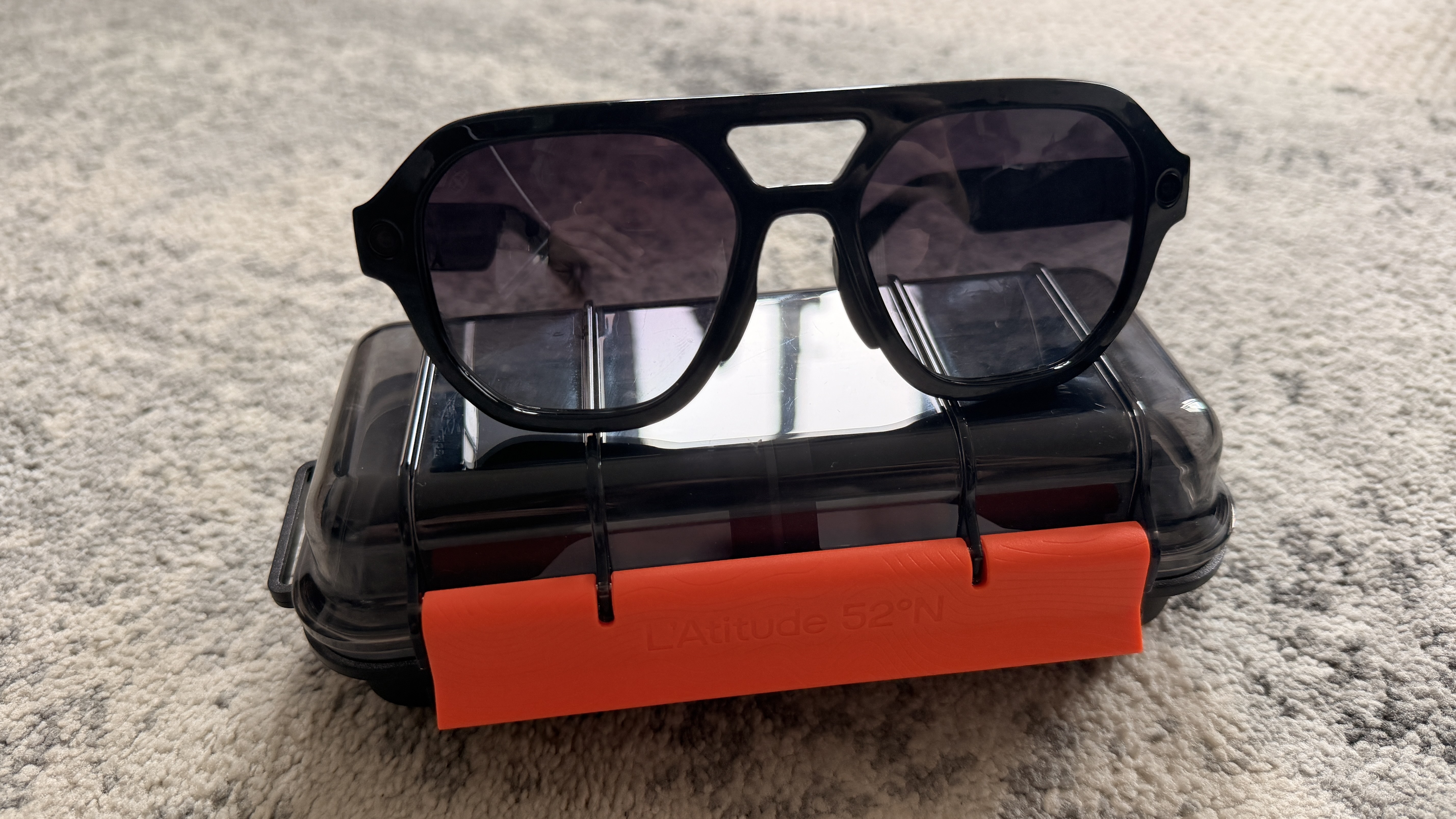
The L’Atitude Berlin glasses start at $465, which converts to about £345, increasing to $520 if you opt for photochromic lenses. At the time of writing, they’re exclusively available in the US and EU, with UK availability to follow soon. You can choose from Obsidian (black) and Dune (greige) frames as well as grey gradient, orange, and photochromic lenses. These prices apply to both the currently available Berlin frames, as well as the upcoming Milan model, which offer a more delicate design.
Already, that’s a lofty list price, especially when compared to the comparatively expensive Meta Ray-Ban (Gen 2), which start at $379 / £379 / AU$689. And it gets worse.
The major dampener here is that these glasses will, at some point, also require you to take out a subscription in order to use the full set of features, but right now we have no confirmed pricing for this. I asked the brand about its plans in this area, and they told me: “Customers who purchase any Departure Collection [a.k.a. Either the Berlin or Milan frames] product by December 31, 2026 and register an account will automatically receive a complimentary 12-month trial of all AI features, requiring no separate purchase or activation.
“The trial starts as soon as the account is activated and grants full access to current and future AI capabilities, including upcoming releases, with a generous daily usage allowance of 60 minutes. After the trial period, users can continue to enjoy AI features with a subscription plan, while essential functions will always remain accessible. AI usage tracking will soon be available in the app for added transparency.”
As for pricing for said plan, various sources cite this as “less than $20” per month, though L’Atitude didn’t confirm this when I asked. So overall, this offers little comfort given that you’re already shelling out for an already expensive pair of specs, and until that final number is confirmed I can’t in good conscience give these glasses a higher value rating.
If you love the designs here, and especially the fact no other pair of smart glasses look quite like them, then you could argue that the value-for-money proposition is improved; personally, I still think it’s a hard sell.
- Value: 2.5/5
L’Atitude 52°N review: specs
|
L’Atitude 52°N |
|
|
Weight |
50-51g |
|
Camera |
12MP Sony sensor, 1080p video recording at 30fps |
|
Chip |
Bestechnic BES2800 6nm chipset |
|
AI Assistant |
Goya AI, powered by Google Gemini |
|
Battery |
200mAh (case offers 8-10 full recharges) |
|
Storage |
32GB |
L’Atitude 52°N review: design
- Chunky but funky frames
- Lightweight with IP65 rating
- Charging case is a behemoth
Design is where L’Atitude takes its biggest swing, and while other fashion-first and adventurous designs have hit the market in 2026, I do think the brand is carving an exciting niche, especially in the European market.
Do I love how the Berlin frames look on my face? No, but the stylish, rounder new Milan frames weren’t available for me to try when I started my testing. Still, there will be some who find the boxy shape and unapologetically Berlin-esque chunkiness is right up their street.
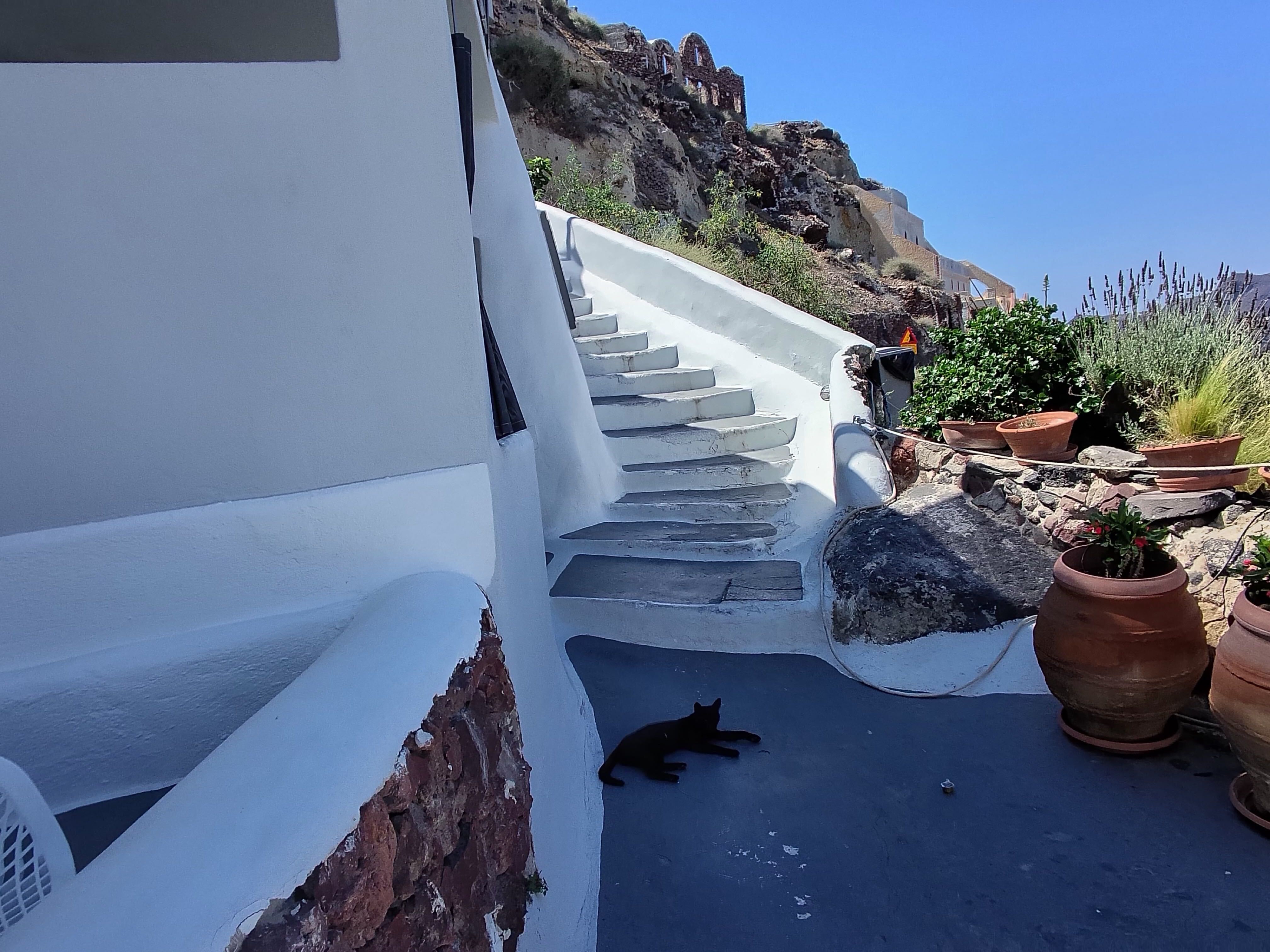
The nose grips were fine, but overall the glasses were a little too big and loose of a fit for me. While traversing the famous steps of Oia, which are notoriously perilous, having to hold these onto my face while I looked down at the cobbled roads meant I took a bit of a tumble and hobbled home with a sprained finger and a nasty gash; I’d put a fair chunk of responsibility on my choice of shoes and general clumsiness here, though.
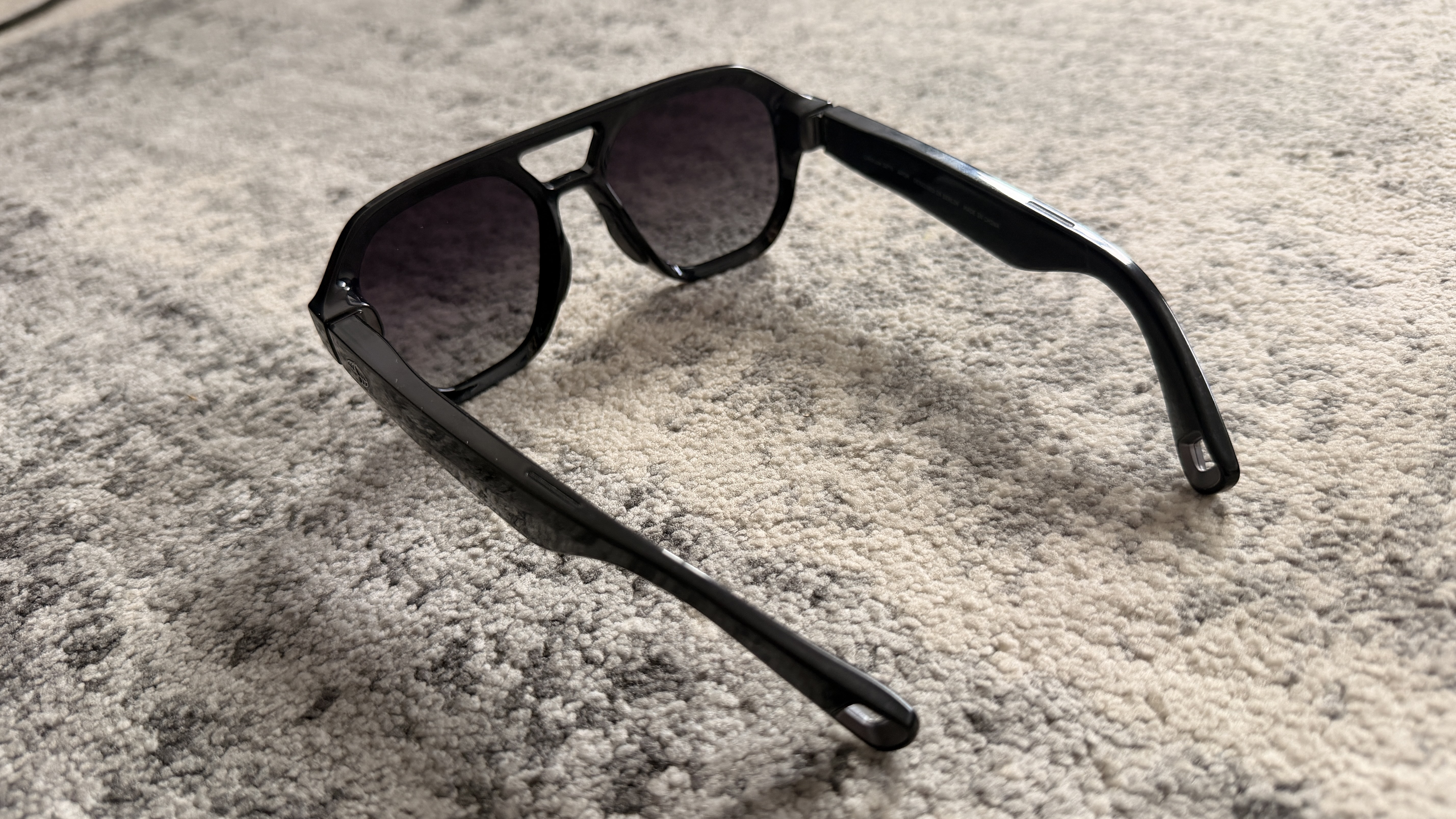
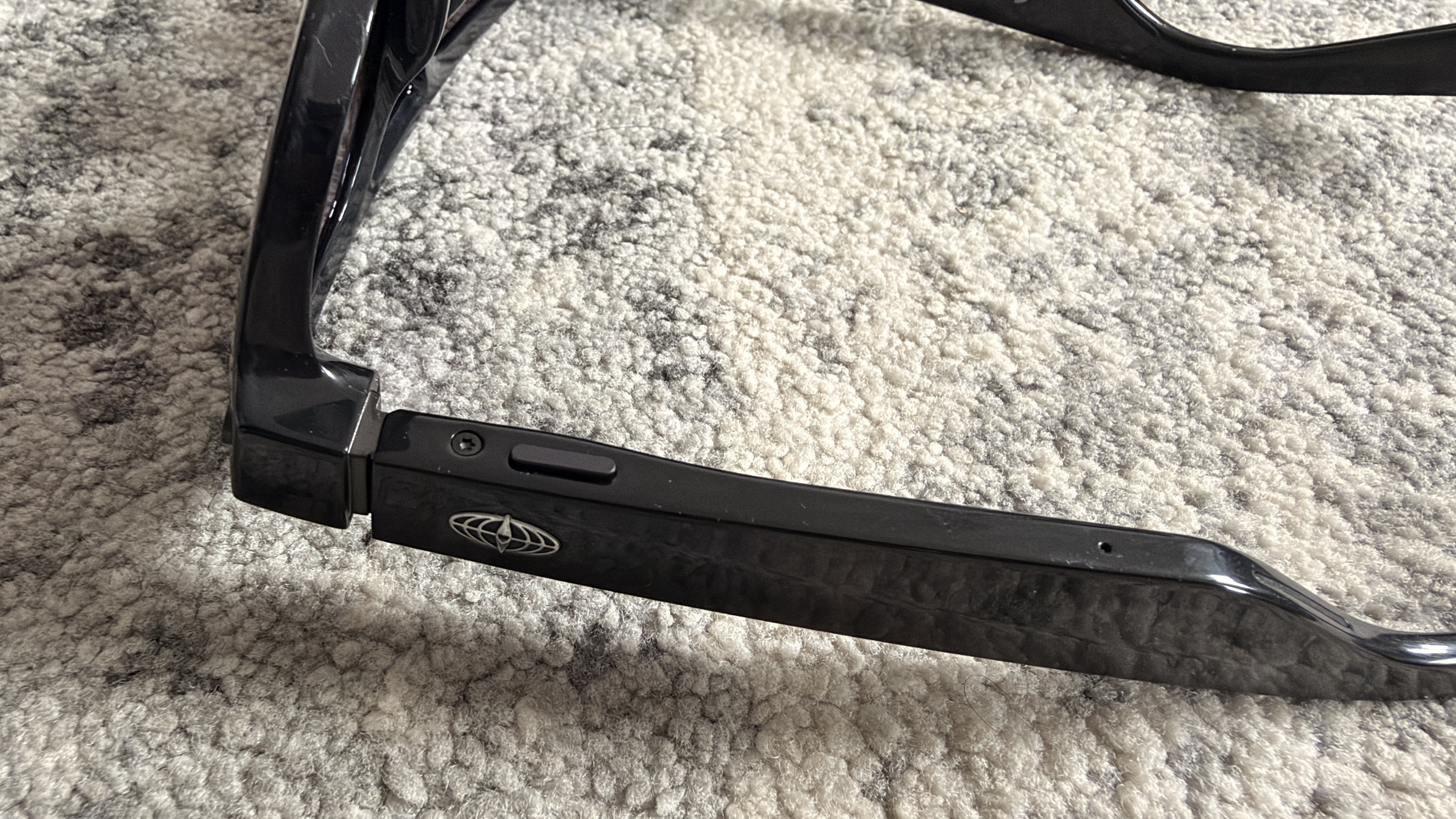
They are pretty well designed, though. At just 50-51g, they’re light and comfortable to wear, and though the plasticky frames aren’t quite as svelte as, say, some Ray-Ban Meta frames, they’re far from cheap-looking. They’re IP65 rated for weather and dust resistance, and a scratch-resistant treatment is applied to the lenses, meaning they’re towards the more durable end of the spectrum versus other currently available smart glasses.

The arms house the Bestechnic BES2800 6nm chipset and 200mAh battery, as well as some pretty punchy speakers for listening to music or podcasts, calls, or chatting with the AI on the go. In day-to-day settings while out and about, I found sound leakage to be pretty minimal unless someone’s very close by and you have the volume turned up; however, in a quiet room you can hear at least some of what’s going on on-device, even at lower volumes, albeit not clearly.
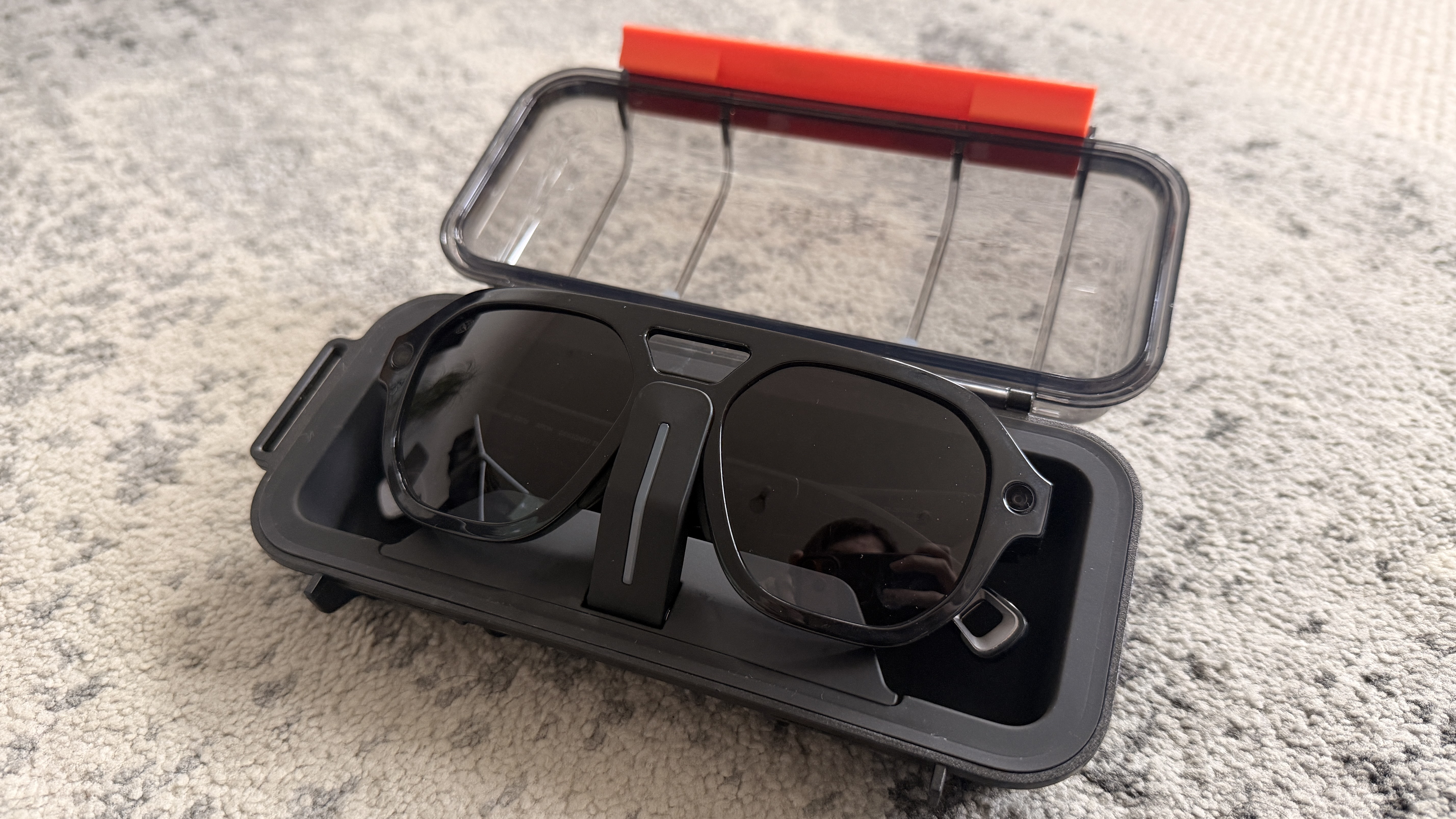
There’s a 12MP camera on the left-hand side of the frame, and a matching dummy camera on the right side. A recording light flashes while you’re filming or taking shots; this is pleasingly bright, so those around you will know you’re recording. If the light is covered, capture is immediately shut down; whether or not lights are enough to alert potentially unconsenting parties is a separate conversation, but for now, this is the privacy bar that’s been set by smart-glasses manufacturers. I tried several times to obstruct this and gladly found it’s pretty darn reliable.
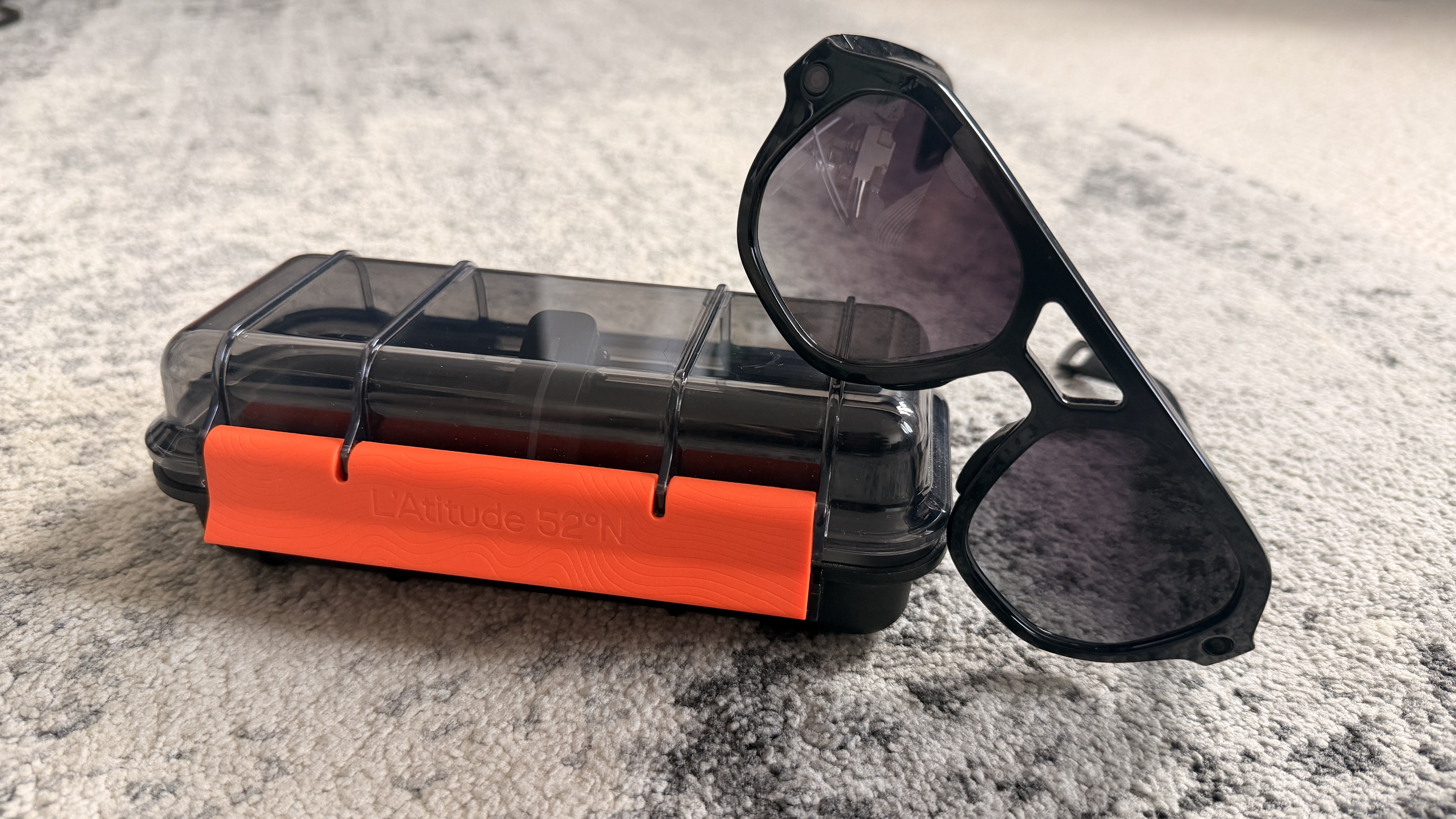
The biggest design fault, for me, is the case. Now, these are bulky frames, but the charging case is a real heifer at 2 x 6.8 x 3.14 inches / 5.2 x 17.5 x 8cm (H x W x D), which somewhat defeats the purpose of branding these glasses as travel-friendly, as it’s going to take up a good chunk of your carry-on luggage space. Speaking of which, I noticed following both my flight to and from Santorini that the case had suctioned shut due to the cabin pressure on board, and I had to prise it open with a pin.
Still, the case is robust and well-made, and with its IP67 rating it’s hardy enough to come along on more adventurous trips, too. Plus, it lights up a nice orange color when the glasses are charging.
- Design: 3.5/5





L’Atitude 52°N review: Performance
- On-device photo transfers are a privacy boon…
- But some shots are lost in the void
- Great photos, decent video
L’Atitude really wants you to treat its glasses, and specifically Goya AI, as a travel companion; the moment you open up the app, the AI Tour guide feature is front and center. But how do they fare on the camera-hardware side?
Fairly well, I’d say. Horizontal and vertical photos captured by the 12MP Sony sensor, and cleaned up by the on-board AI, are comparable to results from my second-generation Meta Ray-bans, and the specs record well-stabilized 1080p video at 30fps (though this pales against the latest Meta Ray-Ban’s 3K capture), with clips from 30 seconds to three minutes.
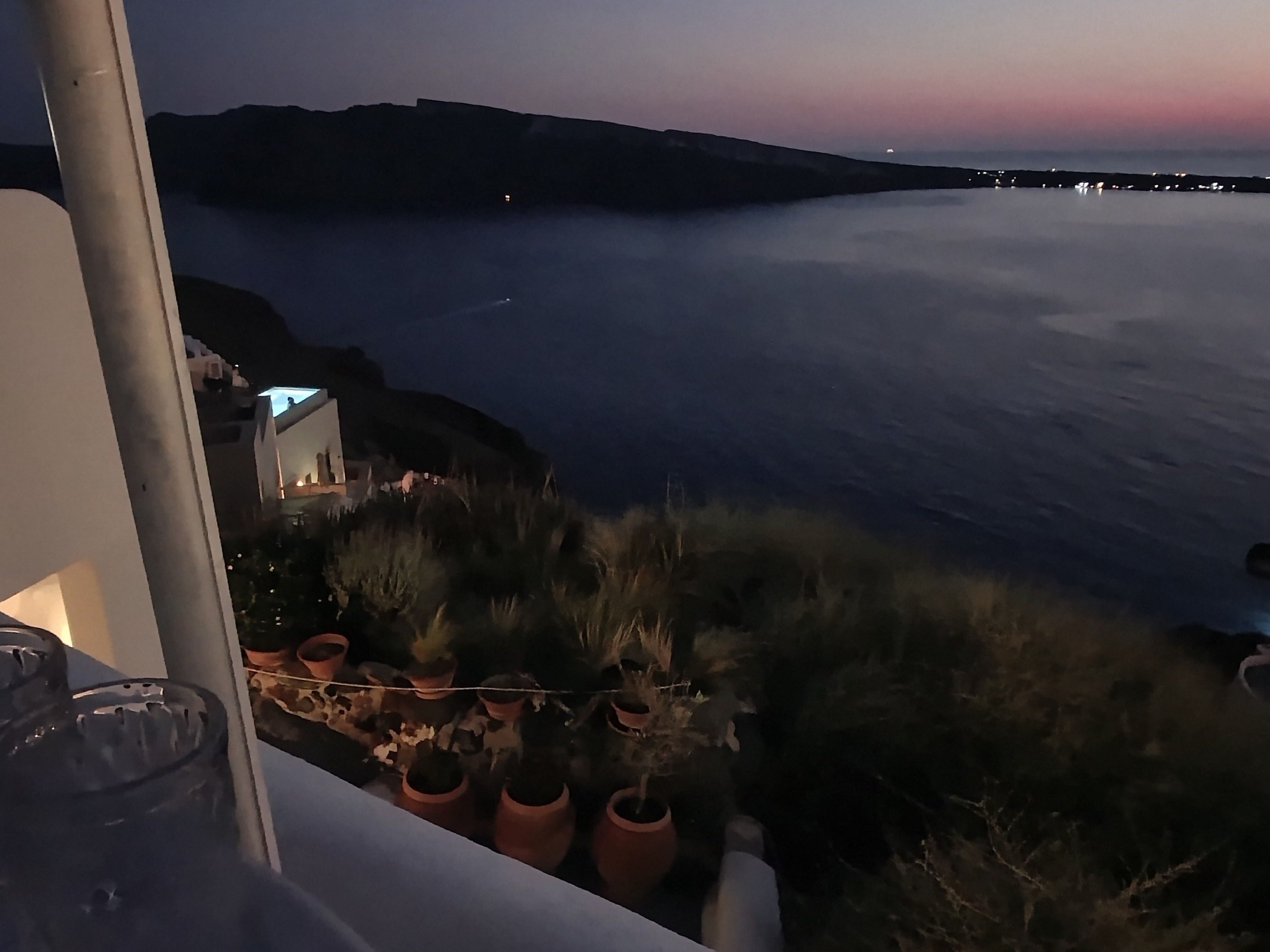

Even low-light and night shots came out pretty well, and I found that framing shots broadly felt natural, though some were a little wonky. The five-mic array captured my voice impressively clearly and without too much background noise, and the speakers deliver bright, clear audio.
With 32GB of on-board memory, there’s a decent amount of room to store photos and videos before sharing them from your phone — your content goes straight to your local companion phone app instead of a permanent cloud database, swerving the privacy minefield of your most personal moments living on someone else’s database.
That being said, uploading your content isn’t always easy. I most definitely lost a few shots — especially if my glasses ran out of battery before I had a chance to sync them — and syncing sometimes inexplicably stalls, and you have to wait a while to try again.
Elsewhere, everything works as expected; the touch controls on the arms are responsive and intuitive, and the battery lasts up to six hours — with moderate use, I generally saw four to five hours of usage. The case offers between eight and 10 full charges, and fast-charges the glasses to 70% in 20-25 minutes.
- Performance: 4/5
L’Atitude 52°N review: AI features
- Goya AI often cuts you off
- Replies are spotty at best
- Tour guide feature is a work in progress
I’d originally tried some beta versions of these frames, and while the current software is far from perfect, it’s impressive to see how many kinks L’Atitude has ironed out in a few short months.
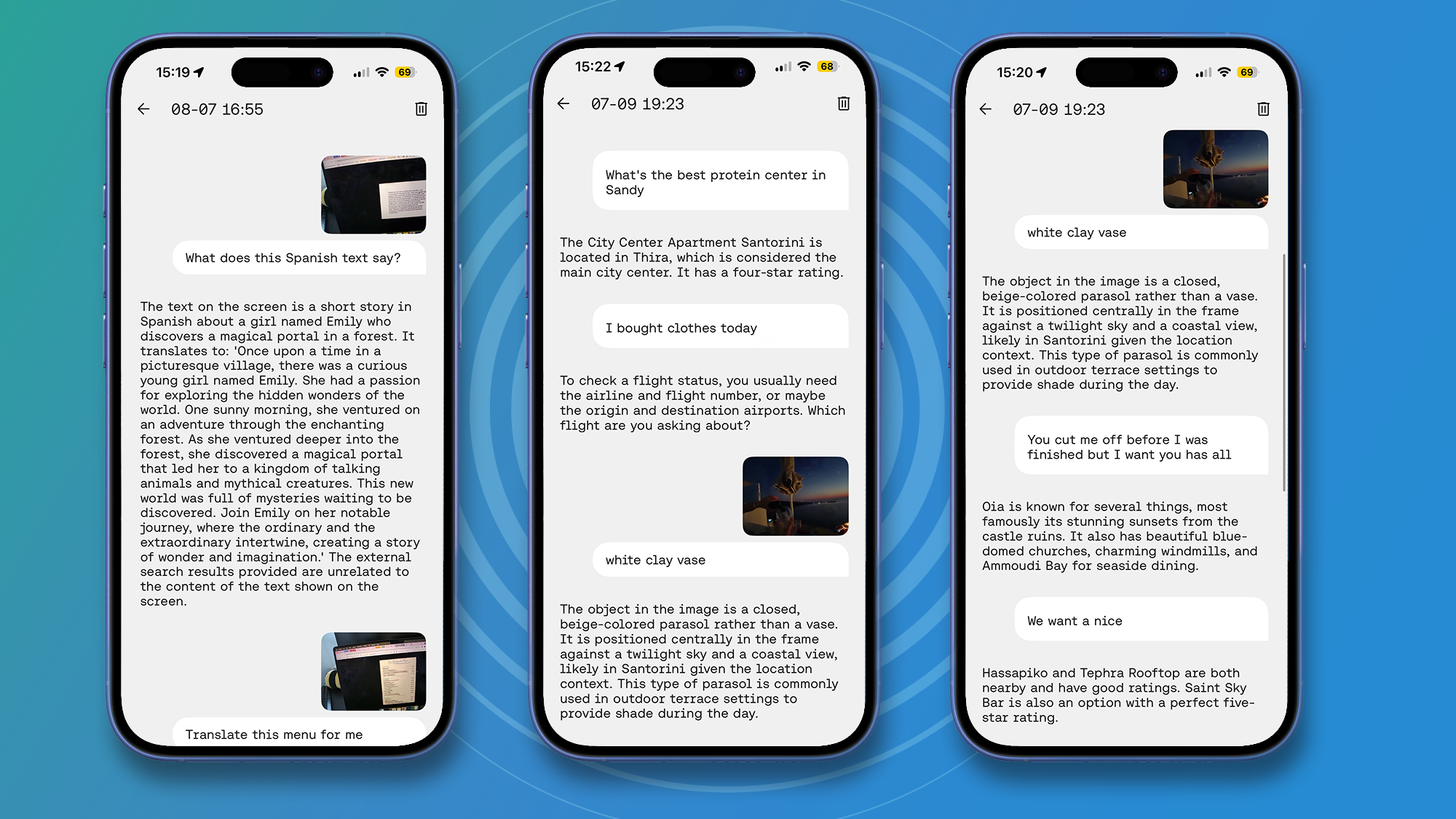
Contrary to earlier reviews you may have read, as well as my own experience, I’m pleased to report that many of Goya AI’s advertised features now work (hooray!), though in my experience it’s still not always quite as advertised.
Some of that may be to do with my main testing location; Santorini is beautiful, but there aren’t a great number of landmarks for which the tour guide feature could come in handy; and Oia, where we stayed, is a labyrinth of winding stairways, private paths and roads less traveled, so navigation — even on more developed software like Google Maps — is a challenge.
That being said, I did get to try the AI tour guide out on the ruins of the Castle of Oia, which it helpfully informed me were the ruins of the Castle of Oia, offering little else beyond a few brief words on its popularity as a sightseeing and photography spot in Santorini. This was all happening while I was fighting for my life not to be pushed off the edge of the castle walls by other tourists, so while it’s accurate, I wouldn’t exactly call it additive.
I tried this feature on a few locations back home in the UK to much the same results; sometimes, the synopses were more detailed, but I couldn’t seem to find any landmarks that offered the full walkthrough experience I’d hoped for when I first read about the “expert-level guidance” offered by the feature.
The five-mic array may help capture great audio for your video, but so much is lost in translation when speaking with Goya AI. Maybe it’s my British accent, but I found that more than half of my questions were entirely misheard, making for some hilarious if not mildly frustrating interactions with the on-board intelligence. It frequently cut me off, answered completely different questions to what I’d asked, and often couldn’t recall previous prompts.
Sometimes Goya AI does seem to understand you, but doesn’t want to execute your commands. When I asked it to take photos, shoot video, tell me what I’m looking at or play music from Spotify, Goya would occasionally spit out a totally random response at best, and at worst behave as though it was about to follow my command before doing big fat nothing. It had good days and bad days, so I have to wonder how much of this stems from connectivity issues. Regardless, spending much of your time yelling at your glasses is not what you want when you’re out travelling or in public places.
Translation to and from Greek isn’t yet available, so when I got home I tested this feature out with my Spanish friend. I wouldn’t quite call spoken-word translation live as advertised; Goya can handle approximately one sentence at a time, will need to think for up to 20 seconds, and will then speak it in your native language through the glasses. When I asked Goya to translate a written book synopsis from Spanish to English, though, it worked much more quickly and fluidly; with both tests, I was impressed with its accuracy, though it’s to be expected with Google’s Gemini under the hood.
- AI: 3.5/5
Should I buy the L’Atitude 52°N?
|
Attribute |
Comment |
Score |
|
Design |
A bold first stab at the smart glasses market with broadly well thought-out design features, but one with a few small quirks |
4/5 |
|
Performance |
Decent cameras, decent sound, and decent battery. These are pretty good all-rounders, but again, there are quirks. |
4/5 |
|
AI |
Not quite frictionless and not quite as additive as I’d hope with its travel-first features, but these glasses do stick the landing on a lot of standard smart glasses features |
3.5/5 |
|
Value |
A bit pricey as-is, and until there’s clarity on AI feature subscription costs, this score sticks. |
2.5/5 |
Buy them if…
You love the Berlin look
I won’t take that away from you, even if it looks so wrong on my face — looks-wise these are a striking and exciting addition to a market that’s been fairly same-y for a long time.
You want locally stored content
While I can’t guarantee that these offer absolute security and privacy, I can say that the direct-to-phone photo transfers offer some peace of mind, given reports of other brands’ privacy minefields.
Don’t buy them if…
You want to spare yourself a subscription
The great, looming unknown of the upcoming L’Atitude AI subscription fee is off-putting at best, and given many of the features are still works in progress, it’s hard to recommend these glasses to the budget-conscious.
You want top-of-the-range video cameras
Photo quality is competitive with that of smart specs from the big-hitting brands, but on the video front, 1080p at 30fps is a low bar.
How I tested the L’Atitude 52°N
- I took the glasses on my week-long vacation to Santorini, and tested them for around 10 hours in the UK
- I tried all of its advertised software and hardware features
- I used its AI to help enrich my vacation. Well, I tried.
As these are travel-focused smart specs, what better way to test them than to hit the road and take them on vacation? On my trip to Santorini, I tried their travel-focused software features, including the AI tour guide, asking for restaurant recommendations and questions about the island’s history, weather, and the like.
Having recently reviewed the second-generation Meta Ray-bans, I used those specs, which we rate as the best overall smart glasses pick for most people, as my main comparison point, but I’ve also sampled a range of other models at trade shows and in our offices over the past few years.
I ran the L’Atitude app from my iPhone 17 Pro.
- First reviewed: August 2026
This articles is written by : Nermeen Nabil Khear Abdelmalak
All rights reserved to : USAGOLDMIES . www.usagoldmines.com
You can Enjoy surfing our website categories and read more content in many fields you may like .
Why USAGoldMines ?
USAGoldMines is a comprehensive website offering the latest in financial, crypto, and technical news. With specialized sections for each category, it provides readers with up-to-date market insights, investment trends, and technological advancements, making it a valuable resource for investors and enthusiasts in the fast-paced financial world.