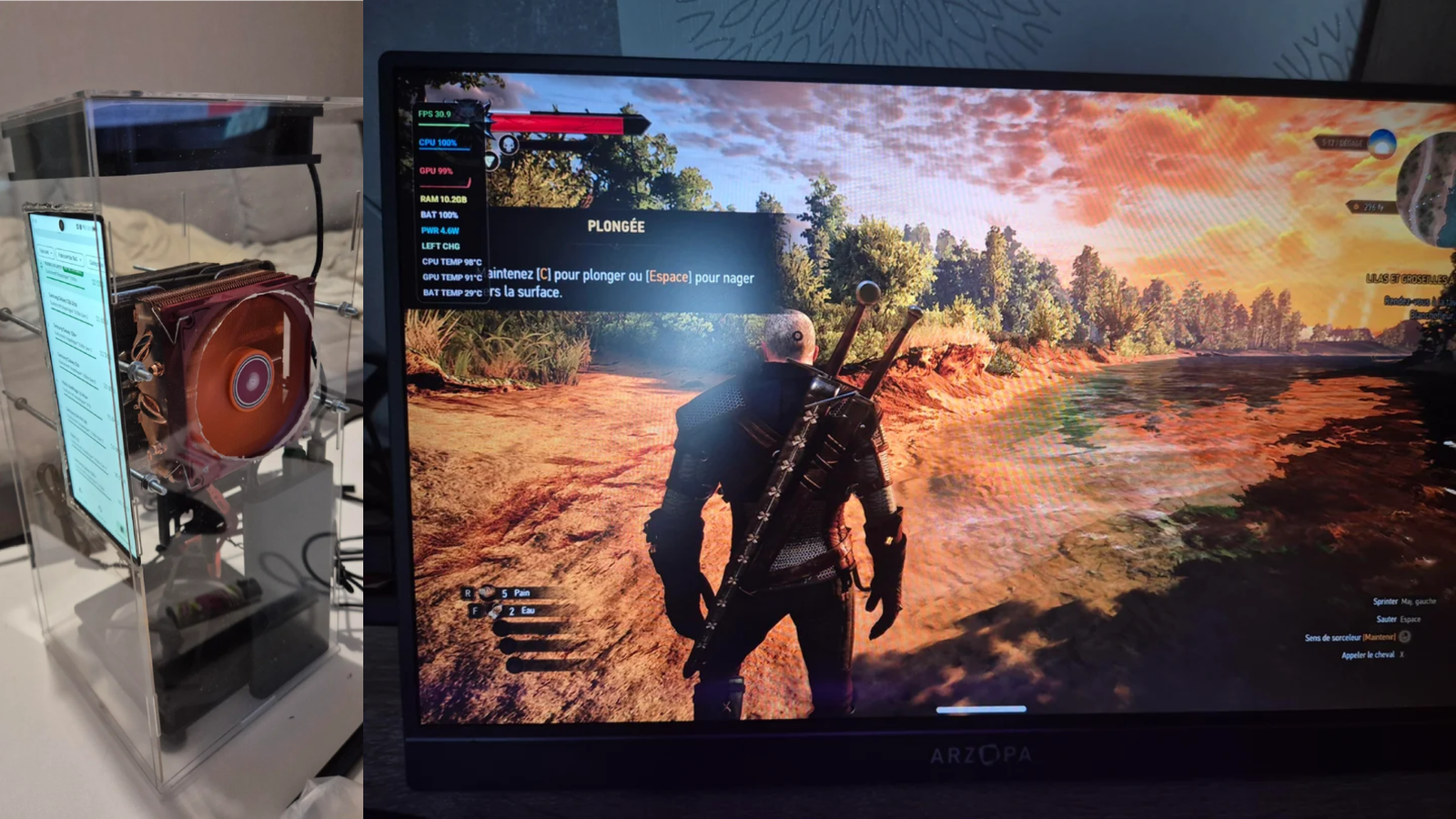
Somebody built a desktop “PC” out of a gaming phone. It’s a cool little project. The modder basically disassembled a powerful Android phone, strapped on an enclosure and cooler setup, and connected it to an external monitor. It runs a native Linux desktop on Android. This means it can run full PC games via a software translation layer, including The Witcher 3 at ultra settings.
Neat. You gotta respect the work and the passion put into this project. And Reddit user ntsow, I’m sorry to cast a dark cloud over your very fine work.
Because it freakin’ terrifies me.
K-shaped PC economy
Let me explain. Over the last year I’ve watched RAM and storage prices balloon over 500 percent due to the “AI” boom, as memory suppliers prioritize data centers with apparently unlimited money over consumers. This caused a (roughly) 50 percent increase in the price of finished laptops and desktops at the same time, equalizing for hardware components. So now the market is separating into two segments: ultra-expensive hardware for those who can afford it, and stripped-down devices for everyone else.
It’s a K-shaped economy, the same thing the US and other countries have been seeing for a decade for valuable purchases like homes and cars.
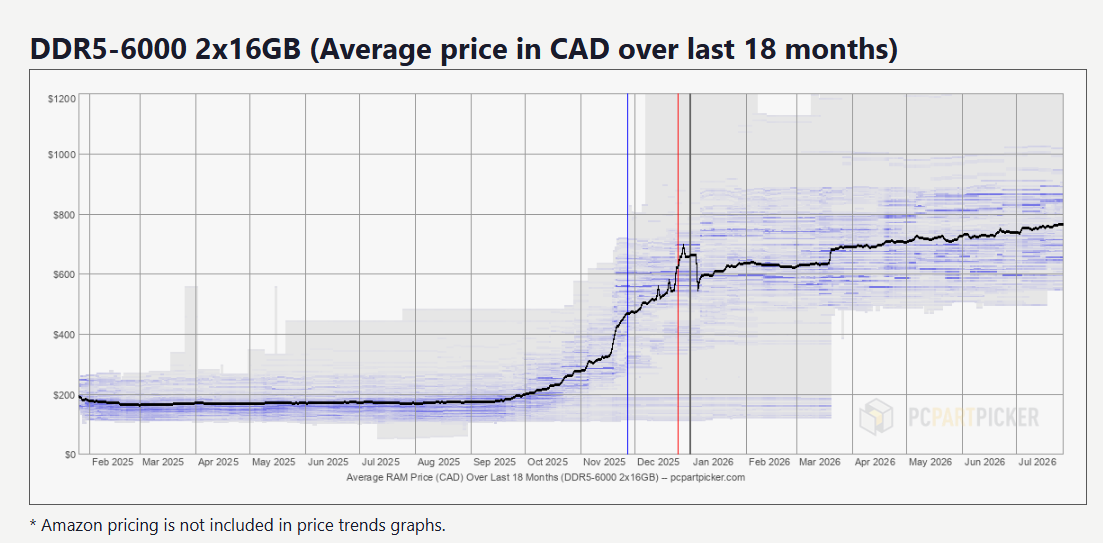
Tech had been democratized, so most people could afford a nice PC even if it wasn’t an impulse purchase. Those days are disappearing before our eyes as the RAM crunch continues, and spreads to adjacent components like CPUs and GPUs. Twenty years of progress in affordability have been erased, as we discussed on this week’s The Full Nerd podcast, as we’re now back to 2007 levels of effective pricing.
Industry analysts predict this state of affairs to continue — or worsen — over the next year, probably two, even as newcomers like CXMT scramble to fill the hole in supplies created by the data centers. These stopgaps might help a little, but the experts predict that the situation will only deteriorate in the short term unless the “AI” bubble pops. Even then it would be a long time before we return to normality.

You probably know all of that if you’ve been watching the PC market. It’s creating a lot of anxiety for anyone who’s been planning a PC purchase or upgrade, especially if you want something powerful. But as someone who’s been watching that market for 20 years, I’m worried about what happens next.
Allow me to share a vision with you. Or perhaps a nightmare. This is not a market prediction, I’m not an economic analyst tasked with laying down those kinds of prophecies. I don’t actually want this to happen. But I worry that if things don’t change significantly from the current direction, it might.
A grim phone-only future
Let’s say it’s 2030. A laptop with 16GB of RAM and a 1TB storage drive costs $2,500. (If you doubt that price, a 16GB/1TB Surface Pro laptop costs $2,000 today. So, if anything, I’m being conservative in this estimate.) It is simply unaffordable for most users, who would have been hunting for those specs in the $700 range in 2025. They decide to go with a secondhand mini PC, if they go with any dedicated PC hardware at all. Maybe with that kind of sticker shock, they wonder if they really need a desktop or a laptop.
But they do need a phone. Everyone needs a smartphone — okay, not everyone, there are certainly people who do without them. But I think I can confidently say that the vast majority of people who work and communicate with friends and just generally get stuff done in the modern world consider either an iPhone or an Android phone in their pocket a necessity. That’s a non-negotiable purchase at least once every five years or so, in the way that a new laptop might not be.
Chris Hoffman / Foundry
So the natural move in a world where PC hardware is unattainable is trying to do more with your phone. Maybe spending more money on it to enable this. Someone who might have bought an $800 phone instead budgets $1,500 for one, even if they have to pay for it in installments, or just fully finance it. You know, the way most people buy cars now, even if they’re secondhand. The smartphone is the way most people interact with the digital world initially even today. And so that decades-long trend just continues, and swallows up the formats of the laptop and desktop.
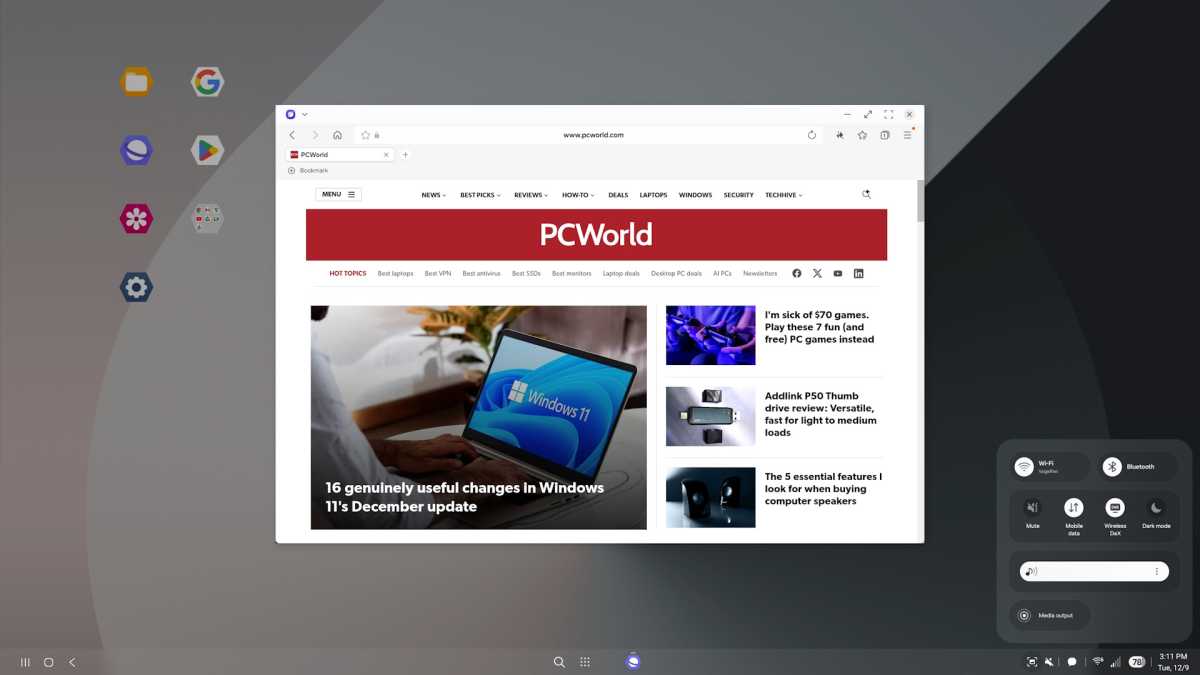
It’s doable. Right now you can plug a screen into your phone (almost all models support this to some degree), connect a keyboard and mouse over Bluetooth, and just browse the web. You can watch videos and even play games. It’s not a great experience, but there are some companies like Google and Samsung that have been working on improving this functionality for a long time. I can plug my Galaxy Z6 Fold into a single plug, get wired support for my monitor, keyboard, mouse, and speakers, and even use the phone itself as a second screen.
Michael Crider / Foundry
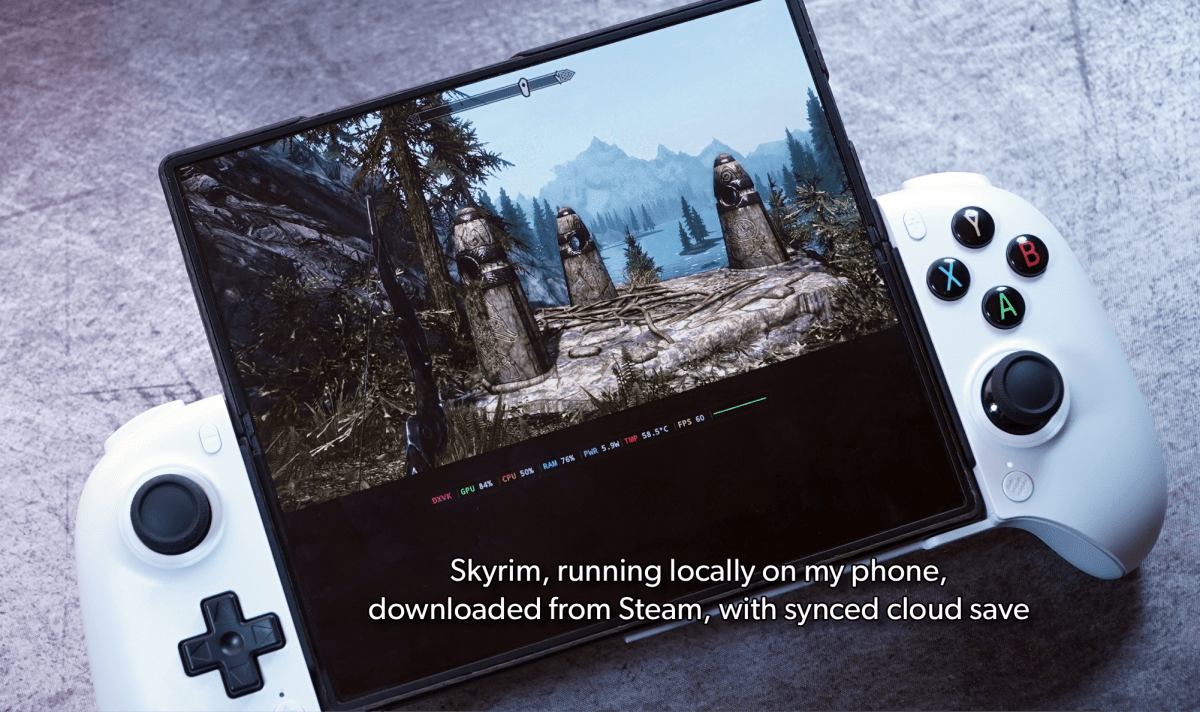
I can browse the web, albeit in a pretty compressed way. I can edit photos — really edit photos in a Photoshop-style interface, not get an “AI” bot to do it for me. I can play games. (I played the desktop version of Fortnite via Nvidia GeForce Now on my phone in 2024.) Not just Android games, I can play Steam games locally, and I don’t even need the Linux environment to do it. It’s all possible, right now in 2026.
It’s not very good. But when you’re staring down the barrel of a purchase that’s most or all of a monthly paycheck, “not very good” becomes “acceptable compromise.”
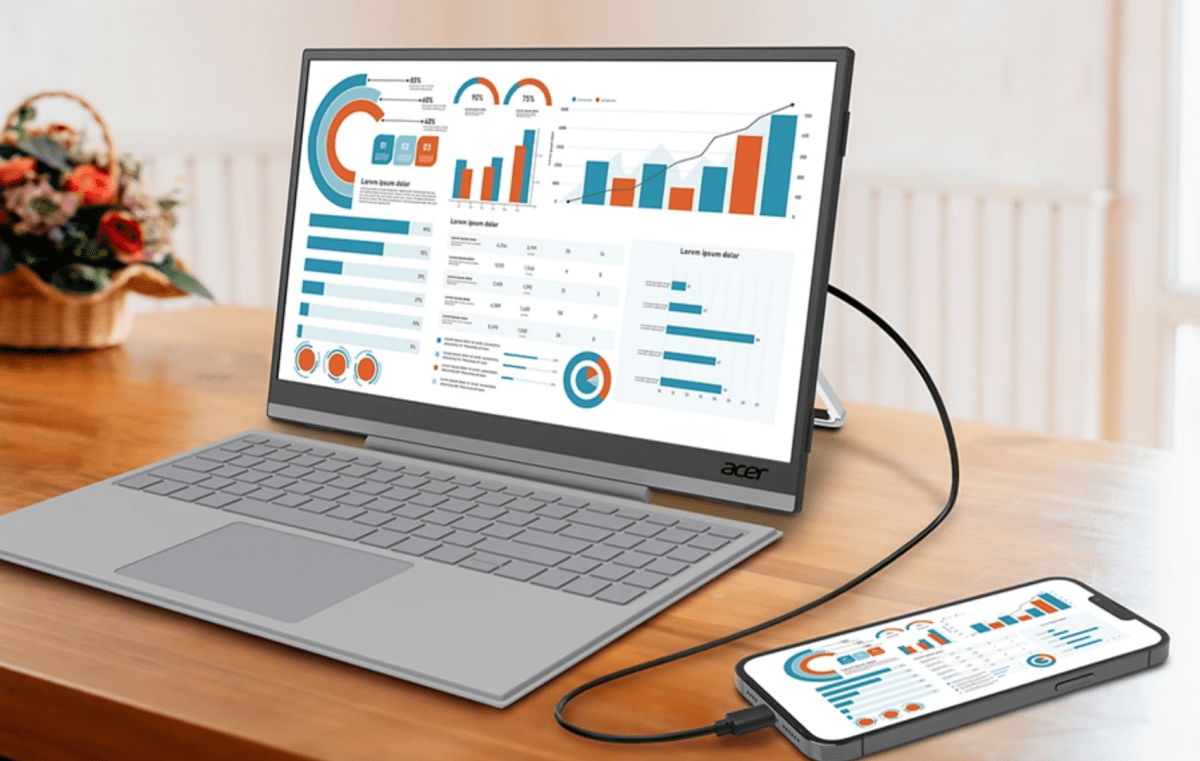
Maybe other, more affordable gadgets could fill in the gap. A monitor with a smart TV-style interface for streaming video, for example — those exist right now. A dedicated $300 device for typing, a commercial version of a “writerdeck,” if you miss the laptop form factor. Acer seems to be investigating a sort of add-on laptop interface for phones, something that was attempted and abandoned over a decade ago.
Acer
Maybe if you spend enough money on a subscription to Google Gemini, the company will graciously lease you a GoogleBook as an affordable interface for prompts. It’s locked down in every possible way, it doesn’t play PC games unless you stream it through the browser. But it’s a laptop. Kinda.
The end of affordable PCs
We’ve seen similar dire predictions before. When the iPad debuted, tablets were predicted by some to be the end of laptops, maybe the end of PCs. That didn’t happen, and the reports of the PC’s demise were greatly exaggerated. That’s not a dunk on the pundits of the time, it seemed possible back then, and it’s easy to look back over a decade later and see what happened.
Laptops and desktops stuck around because they make sense as natural form factors, for purposes that tablets simply don’t — typing, multitasking, that sort of thing. And they were cheap enough, accessible enough, that tablets couldn’t kill them even if the companies making them wanted that to happen.
Now we’re looking at a possible future where less mutable economic realities force users into new behaviors. The kind of thing that makes the average passenger car on the road in the US 15 years old. How old will the average laptop be in 2030? Will people even still use a 10-year-old laptop when they can replace its function with a phone and accessories? I don’t want this reality. But I fear it.
Michael Crider / Foundry
I think a majority of people switching to a phone-only lifestyle, especially those with less income, becomes more and more likely as conventional PC hardware becomes less affordable. There are parts of the world where it’s a reality right now… in fact that’s most of the world outside of the US, Canada, Europe, and Australia. If you live in one of those PC-rich countries, it might be worth taking a look at other parts of the world to see how they’ve adapted their digital lifestyle to revolve entirely around smartphones, to the exclusion of laptops and desktops for most functions.
The market would adapt to this new reality, with things like USB-C docks, television adapters, and mobile controllers booming. The old idea of a convergence device, typified in early Android designs like the Asus Transformer, would become far more relevant. Not because anybody actually wants that — I think the number of people who want to abandon desktops and laptops is tiny — but because the economic reality forces it upon them as an adaptation.
Play The Witcher 4 on your phone, either via streaming (own nothing and be happy!) or by pushing your local hardware to the breaking point? Sure, why not. That’s just the way the market works in this grim vision of 2030, when corporations chase every possible dollar of profit from “AI,” and only give a passing glance to billions of regular users.
This articles is written by : Nermeen Nabil Khear Abdelmalak
All rights reserved to : USAGOLDMIES . www.usagoldmines.com
You can Enjoy surfing our website categories and read more content in many fields you may like .
Why USAGoldMines ?
USAGoldMines is a comprehensive website offering the latest in financial, crypto, and technical news. With specialized sections for each category, it provides readers with up-to-date market insights, investment trends, and technological advancements, making it a valuable resource for investors and enthusiasts in the fast-paced financial world.