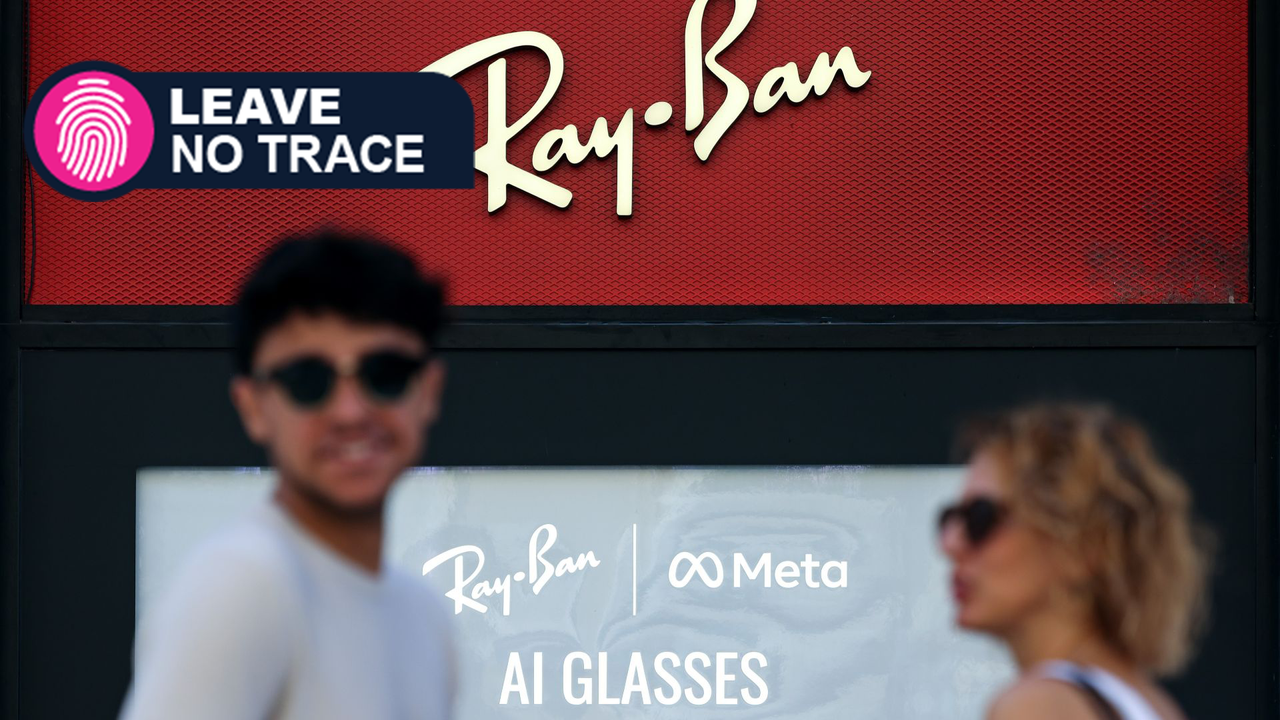
As incidents of women being harassed by people wearing smart glasses were making headlines, London-based mum and tech founder Liz Hunter could not help but watch in horror as fashionable Ray-Ban Meta glasses multiplied across city streets.
She went online to sign a petition calling for a ban on the technology. To her disbelief, she couldn’t find a single petition that reflected the scale of the outrage she was seeing online. So she decided to take matters into her own hands.
“I didn’t want to just stand on the sidelines wringing my hands, because everyone just complaining to each other on LinkedIn isn’t going to do anything. I wanted to build something to make that voice a little bit louder,” Hunter told TechRadar.
Hunter decided to team up with teacher and privacy campaigner Guy Holder — who was behind a parliamentary petition calling for a sales ban on Meta’s wearables — and build a grassroots movement.
Last Friday, the Stop Smart Glasses campaign was officially launched with a clear goal: to pressure retailers and lawmakers to act before the technology is normalized.
But how exactly does Stop Smart Glasses plan to achieve this? And can social pressure be the key to breaking a legislative roadblock?
How to stop the rise of smart glasses
The idea behind the Stop Smart Glasses initiative is simple: harness the growing wave of UK venue bans to turn privacy concerns into public action.
Major pub chains like Wetherspoons — alongside courtrooms, theaters, and cinemas — have already responded to public backlash by banning smart glasses on their premises. “So, I thought, let’s borrow a bit of that attitude,” Hunter told us.
With the help of basic AI tools, Hunter built the campaign platform in just a week, despite having no coding background.
The website includes several tools to help people take practical action. A store finder enables visitors to locate local retailers across the UK and Ireland by entering their postcode, town, or city, and email them asking to stop selling smart glasses.
Similarly, users can contact local sports facilities and other venues, urging them to implement private property bans. The site even makes it easy to swamp the customer support inboxes of major national retailers or contact local MPs.
“Then obviously you can sign [Holder’s] petition. We really hope that we see the numbers starting to snowball soon,” Hunter said.
While the campaign’s primary target is Meta’s line of wearables, Hunter says the problem is much bigger. A quick Google search reveals that dozens of companies are already making smart glasses.
For Hunter, one principle isn’t negotiable: cameras embedded in everyday items should not become a normal part of daily life. “An urgent public debate is needed and, whilst we wait for this to happen, these devices must be immediately banned,” she writes on her website.
Smart glasses and the grand public privacy debate were discussed in our latest podcast episode. Check it out!
To ban or not to ban: why campaigners demand action on smart glasses
A backlash against Meta’s wearables has intensified following a sharp rise in reports of women being secretly recorded in public spaces, with footage often posted online without their consent.
As reported by Futurism, TikTok is already flooded with teenage boys in the US using these glasses in schools to harass and bully girls.
For Hunter, the priority is avoiding a repeat of social media’s early days, when new technology “raced ahead of regulation” with little concern for the potential downsides.
“We turn the page, and suddenly we’re in an episode of Black Mirror,” she said. “We don’t want another damaged generation to be the evidence of [inaction].”

The problem with banning smart glasses, however, is that they also offer legitimate benefits. They enable real-time translation and hands-free controls — and, most importantly, empower visually impaired individuals to live more independently.
We previously reported that these factors make a complete UK sales ban unlikely.
While supporting the use of smart glasses for the disabled, Hunter strongly objects to trading general consumer convenience for public anonymity. “It’s not worth the risk. You cannot ignore how quickly they have become a means to abuse and harass people,” she said.
Ultimately, Hunter believes tech giants like Meta are using accessibility benefits as a PR shield to force public acceptance. “They nudge the door open with them, and then flood through to the mass market, which was their goal all along,” she added.
We have reached out to Meta for comments, and a company spokesperson told us that limiting how people can use this technology, which they deem “critical” for people in the blind and low vision community, “would be a major step backwards.”
The spokesperson recognized that “some places shouldn’t be filmed at all,” but argues that “rules should be applied consistently.” They also pointed out that the glasses have a light that turns on to let people know when a photo or video is taken, “something smartphones and other cameras don’t have.”
However, recent research suggests these lights fall short, with a study concluding that neither bystanders nor wearers “viewed LED indicators as adequate privacy protection.” The research noted that many believe they are too small, easily overlooked in daylight, and simple to obstruct.
Malicious users have also been finding ways to deactivate or hide the recording light. This prompted a patch from Meta in July that includes disabling the camera when physical tampering with the capture LED is detected.

NEW: Leave No Trace — A weekly newsletter on digital privacy and online surveillance.
Leave No Trace investigates the companies and governments putting our digital freedom at risk — and the people fighting back.
📩 Subscribe now to get every edition delivered to your inbox every Friday, launching this September.
The people vs. Big Tech: putting public pressure to the test
Stop Smart Glasses is now giving concerned citizens the tools they need to make their voices heard. But will that be enough?
In reality, online momentum rarely translates into actual legislative change. We saw this last year when a petition to repeal the UK Online Safety Act failed despite garnering over 450,000 signatures in just a few days
That said, public pressure does sometimes pay off — such as the 2014 Change.org petition that led to the abolition of the tax on sanitary products in 2021.
While viral petitions do not guarantee statutory changes, they can still trigger parliamentary debate. Real-world change takes time — time that, in the case of smart glasses, society may not have.
Despite the challenges, for Hunter, it’s a no-brainer — lawmakers need to step in and regulate this market before any more societal harm is done. She believes this urgency can be driven by more public venues and retailers siding with citizens’ concerns.
People power can shift the needle
Liz Hunter
“I’m a real believer that people power can shift the needle,” said Hunter, adding that the campaign wants to appeal directly to the new UK Prime Minister. “We want him to be brave enough to ban smart glasses.”
Public pressure against smart glasses has shown signs of success elsewhere in Europe. In Norway, for example, the Ministry of Digitalisation announced tighter regulations on controversial features, while the Norwegian Consumer Council urged retailers to halt sales until regulations are settled.
Will the Stop Smart Glasses campaign foster a similar legislative push? That remains to be seen. But ultimately, the true strength of the campaign may lie in its refusal to remain a localized battle.
While currently focused on the UK and Ireland, the platform was fundamentally “built to go global,” Hunter explains. The entire website’s code is open-source to make it “easy to replicate” — a strategy that has already attracted interest from a US supporter looking to launch their own version.
What started as a local fight for privacy rights could soon turn into a global movement. Will you join?
This articles is written by : Nermeen Nabil Khear Abdelmalak
All rights reserved to : USAGOLDMIES . www.usagoldmines.com
You can Enjoy surfing our website categories and read more content in many fields you may like .
Why USAGoldMines ?
USAGoldMines is a comprehensive website offering the latest in financial, crypto, and technical news. With specialized sections for each category, it provides readers with up-to-date market insights, investment trends, and technological advancements, making it a valuable resource for investors and enthusiasts in the fast-paced financial world.