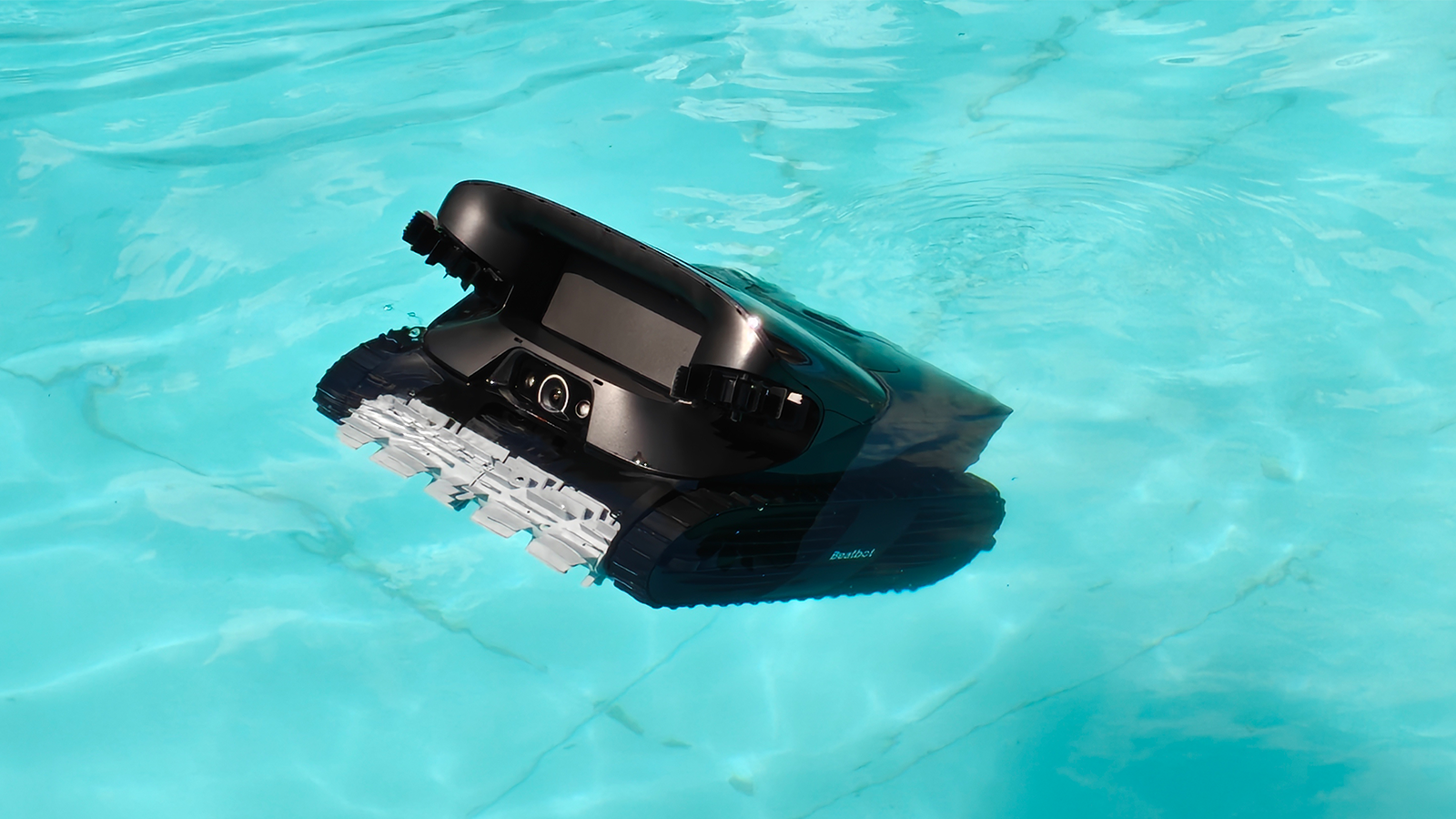

At a glance
Expert’s Rating
Pros
- AI finds and cleans leftover leaves
- Climbs above the waterline
- Parks at the pool edge and sends an alert
- Lots of useful accessories
Cons
- Heavy
- No fine filter for pollen
Our Verdict
Overall, the AquaSense 2 Ultra is a great choice for larger, more demanding pools, but its high price is hard to justify for a standard pool.
Price at time of review
This value will show the geolocated pricing text for product undefined
Best Price Today
Price When Reviewed
$3,550.00
Best Prices Today: Beatbot AquaSense 2 Ultra

Battery-powered pool robots now use structured navigation, route planning, wall detection, and app connectivity, with software becoming an increasingly important differentiator. Beatbot positions itself at the forefront in this area with the AquaSense 2 Ultra. In a practical test carried out in a round foil above-ground pool with a stainless steel ladder, the setup, app control, standard cleaning cycle, and post-cleaning procedures were assessed.
Christoph Hoffmann
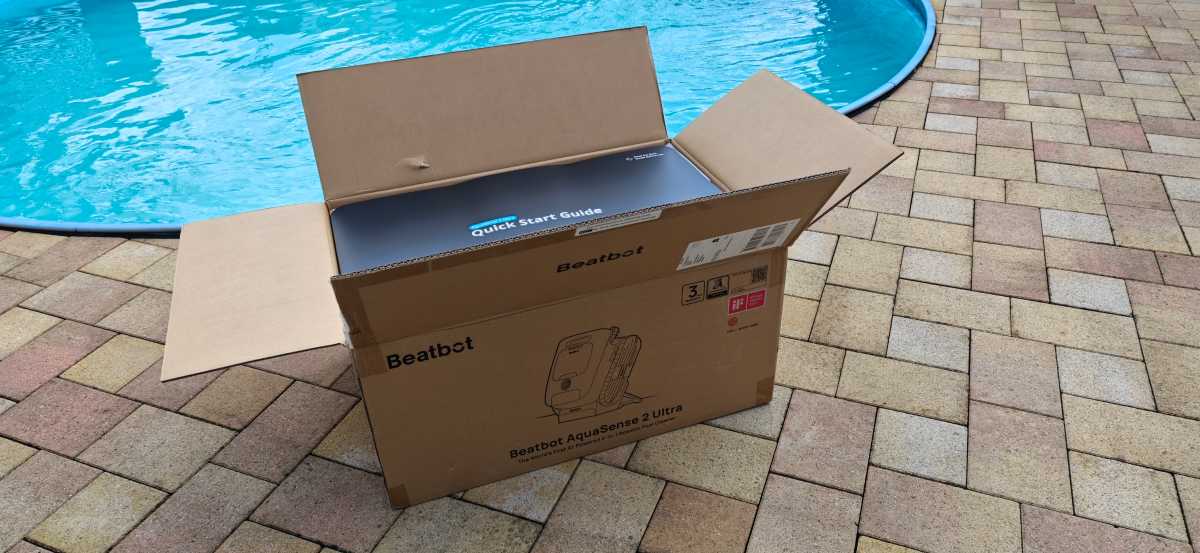
Beatbot AquaSense 2 Ultra: Design and build quality
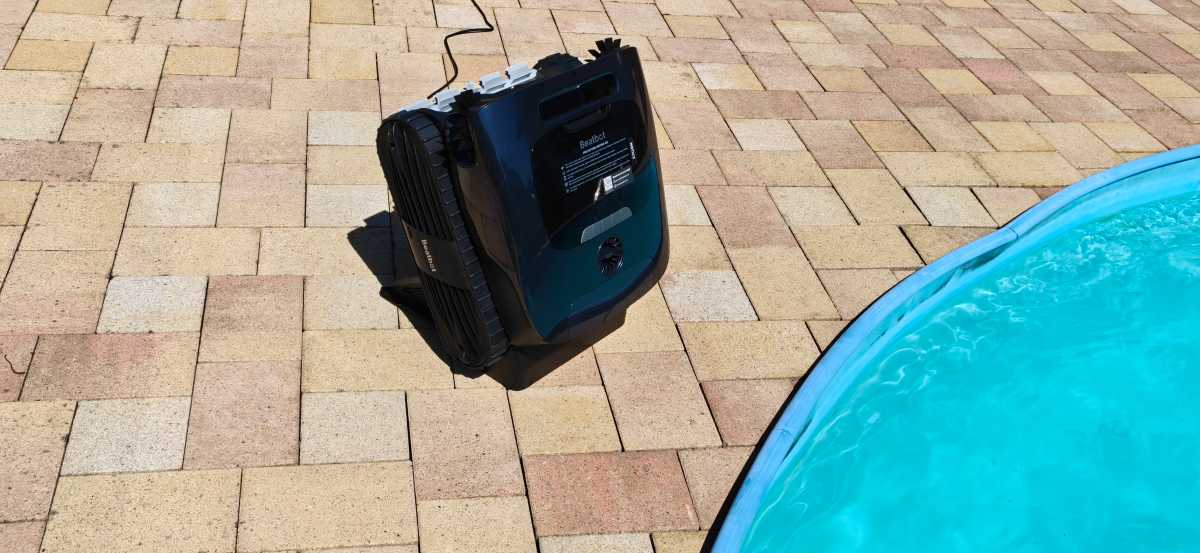
Beatbot positions the AquaSense 2 Ultra as the flagship model of the AquaSense series, and it certainly looks the part. The housing measures 17.9 × 17.3 × 10.9 inches and weighs 29.1 pounds when empty. This makes the AquaSense 2 Ultra one of the heavier pool robots.
The Mova Rover X10 weighs in at 34.8 pounds, while the Mammotion Spino E1 weighs just 20.5 pounds. The difference is even more striking when compared to the Aiper Scuba V3, which, at around 18.1 pounds, weighs about 11 pounds or less. This difference is clearly noticeable when lifting the robot over the side of an above-ground pool, as the weight of the remaining water is temporarily added until it has drained out through the SmartDrain openings.
Christoph Hoffmann
The surface features a dark blue IMR coating, which is applied via injection molding and, according to the manufacturer, protects against UV radiation and mechanical abrasion. It looks high-quality, but shows every water droplet and fingerprint. The handle on the top is deep enough to fit the whole hand. Given the weight, this is no minor detail.
Christoph Hoffmann
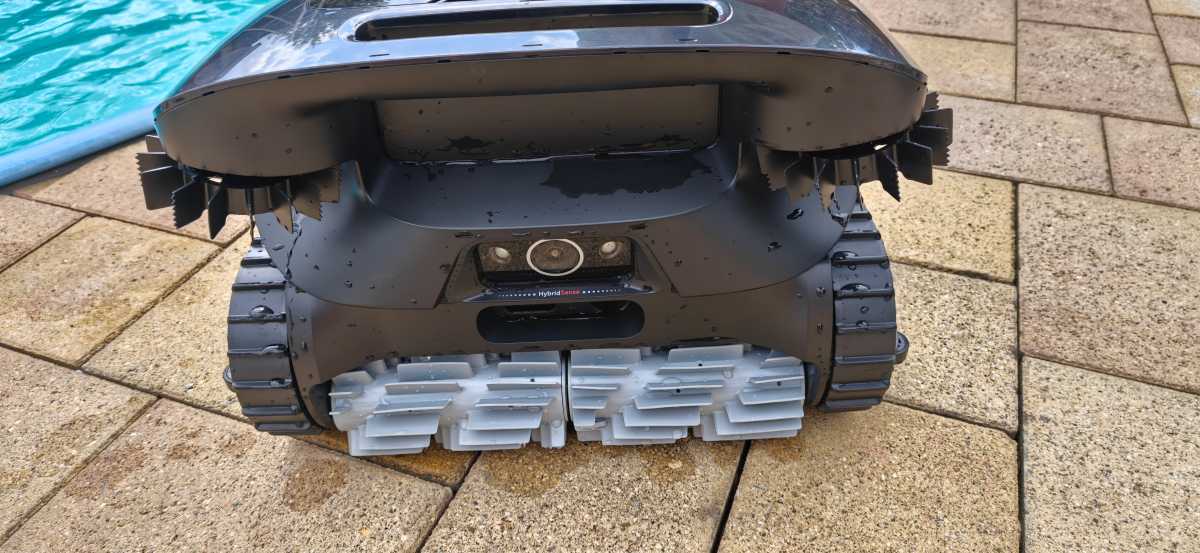
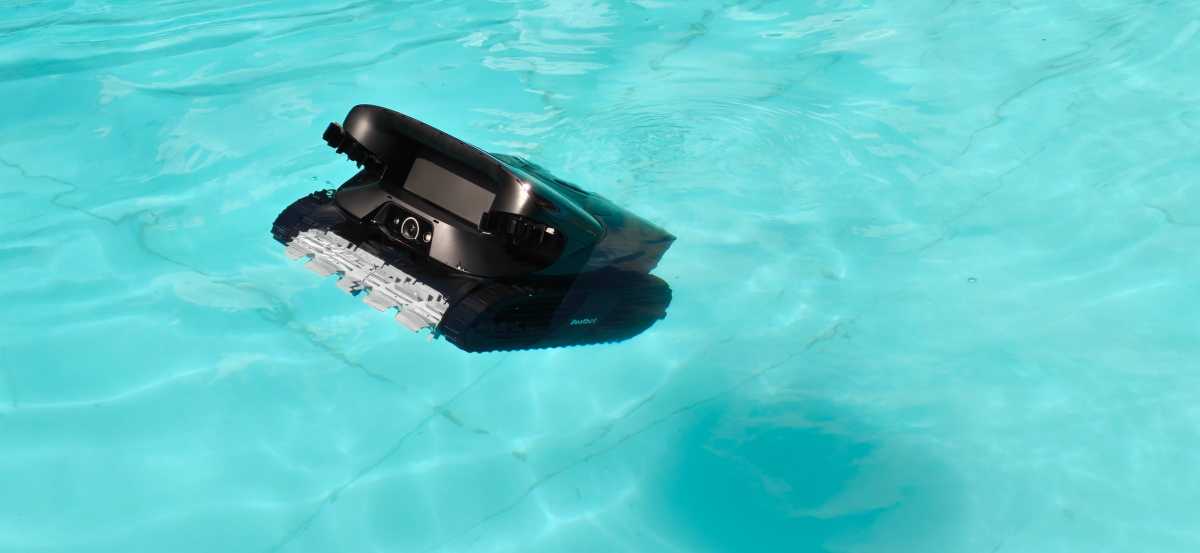
The front is striking. Behind a viewing window sits the HybridSense module with a camera and two LEDs for additional lighting. Above it, two small side brushes rotate, designed to guide floating debris towards the suction inlet. On the underside, wide rubber tracks work in conjunction with two light-grey roller brushes. The tracks have a coarse tread and provide reliable grip on smooth pool liners.
Christoph Hoffmann
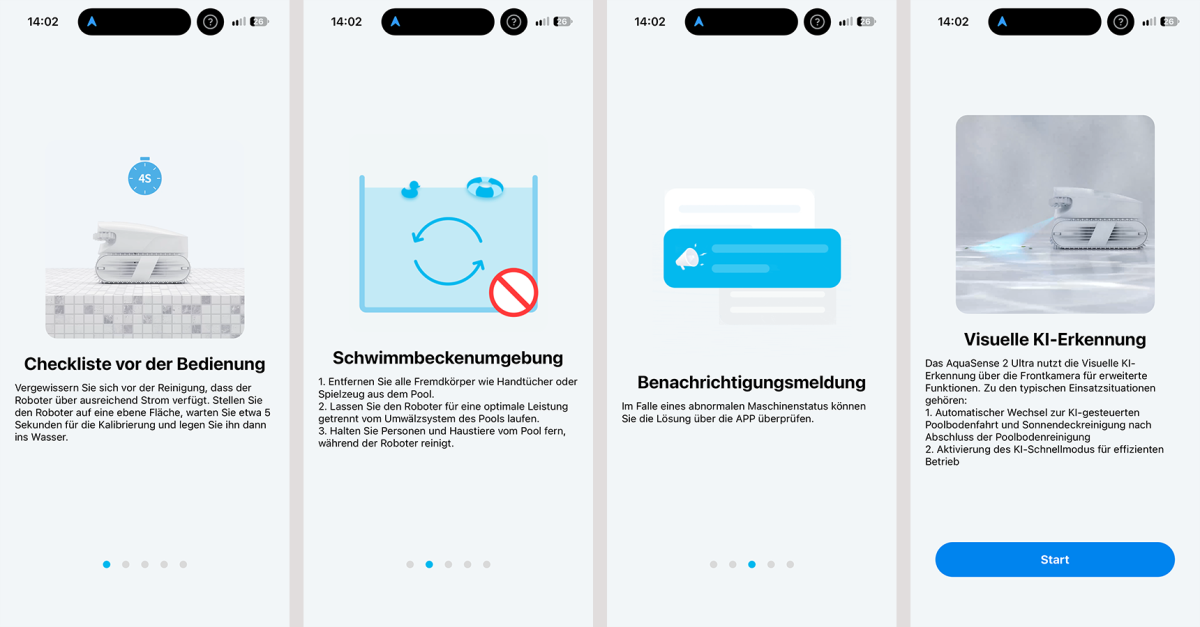
The build quality is excellent. The gaps are even, and the large flap closes securely. Nothing rattles during operation, either. The robot is IP68-rated and designed for underwater operation. The charging dock, on the other hand, is only IPX4-rated and should be kept in a covered, dry place. The app explicitly points this out during charging.
Beatbot AquaSense 2 Ultra: Specifications, filtration
According to the manufacturer, the device uses a quad-core CPU, 11 motors and sensors comprising an AI camera, two TOF and two infrared sensors, and four ultrasonic sensors. The official battery life figures range from 10 to 11 hours on the surface and five to six hours on the seabed.
The battery has a capacity of 13,400 mAh and charges wirelessly via the vertical charging cradle. Beatbot states that a full charge takes 4.5 hours. The circulation rate is up to 5,500 US GPH. The Spino E1 manages around 5,800 GPH, while the Rover X10 manages up to 10,000 GPH. The Beatbot’s advantage lies not in its pump flow rate, but in its navigation.
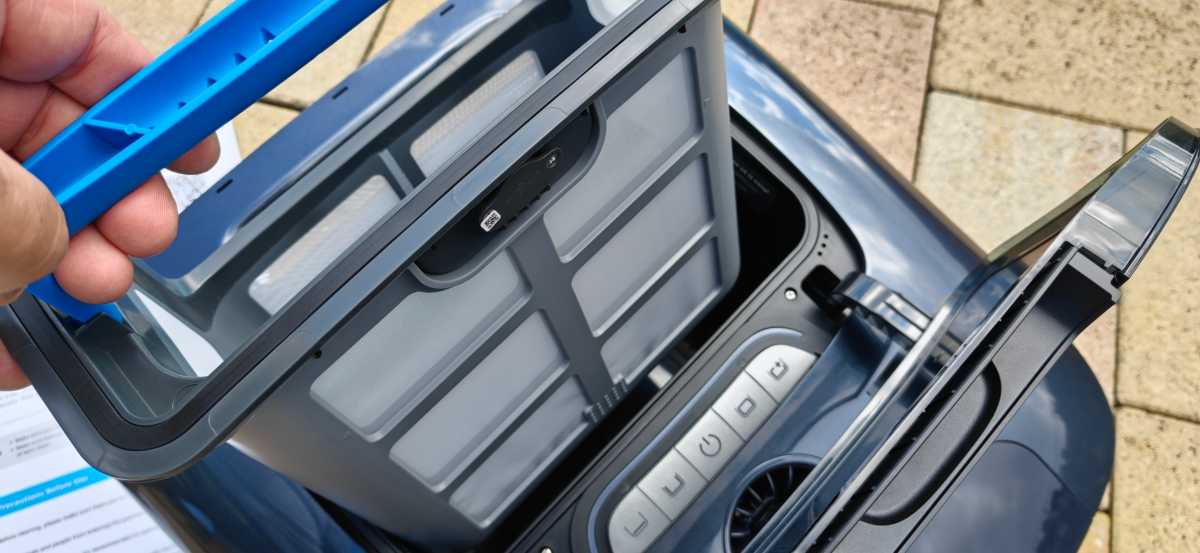
Filtration is carried out via two nested baskets with volumes of four and 3.9 quarts. The finest mesh is rated at 150 microns. This is sufficient for leaves, insects, coarse sand, and small pebbles, while very fine suspended particles and pollen may sometimes pass through.
Christoph Hoffmann
In this respect, the significantly cheaper Aiper Scuba V3 is better equipped. In addition to its 180-micron coarse filter, a replaceable 3-micron MicroMesh membrane is included. In our test, it even retained pollen and very fine suspended particles. However, the fine membrane clogs up quickly in heavily contaminated water and requires a powerful jet of water to rinse clean. With the Beatbot, a finer double filter basket has to be purchased separately.
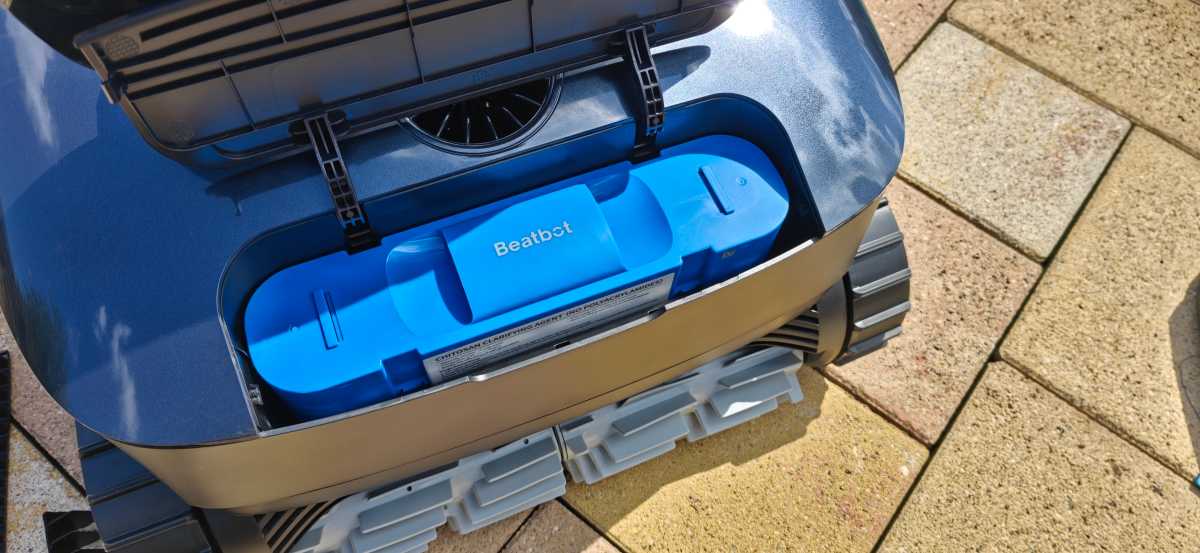
The ClearWater technology is designed to close this gap, at least in part. In a separate chamber beneath the flap sits a blue cartridge containing a chitosan-based clarifying agent derived from crab shells. Chitosan acts as a flocculant and can aggregate very small suspended solids into larger particle clusters. Whether these subsequently actually end up in the robot’s 150-micron filter depends, among other things, on the dosage, water chemistry, circulation, and particle type. The process does not replace true fine filtration. Compared with Aiper’s 3-micron membranes, the Beatbot remains at a design disadvantage.
Christoph Hoffmann
One cartridge holds 300 milliliters and is sufficient for four treatments. Replacement cartridges are on offer from around $220 for 12 cartridges, which are intended to last six months.
Once opened, the clarifying agent should be used up within 30 days. Dosing is triggered either via the switch in the app or by pressing and holding the button on the base of the device for three seconds. A purple light confirms the process. The user resets the consumption counter themselves. This is an inelegant solution, as the app does not know the actual fill level.
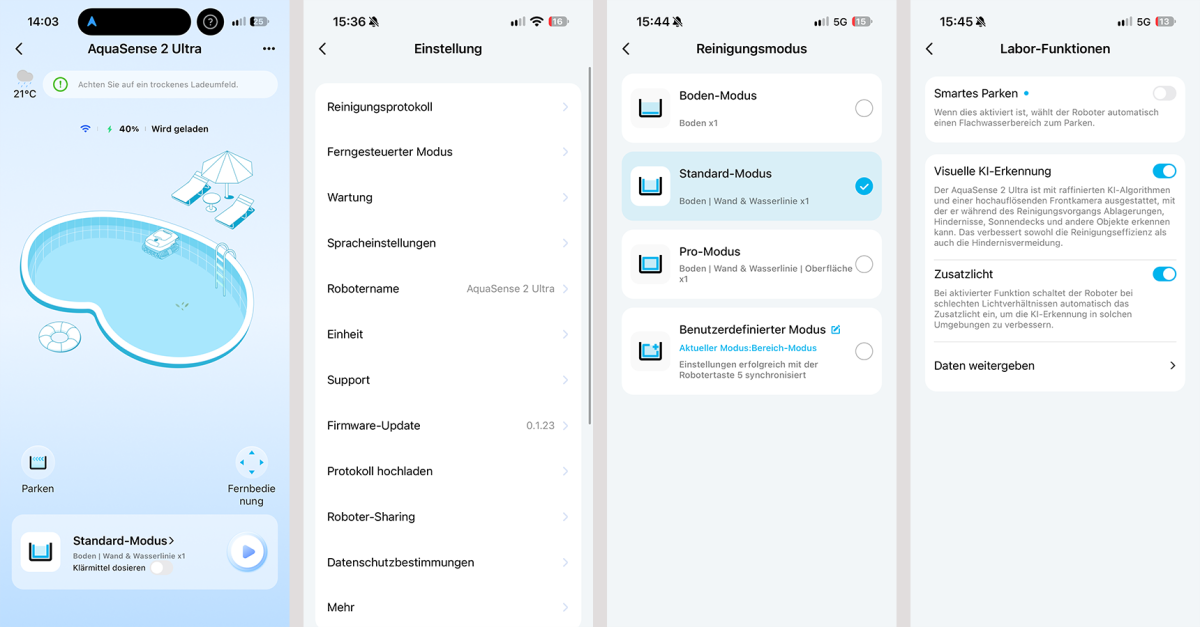
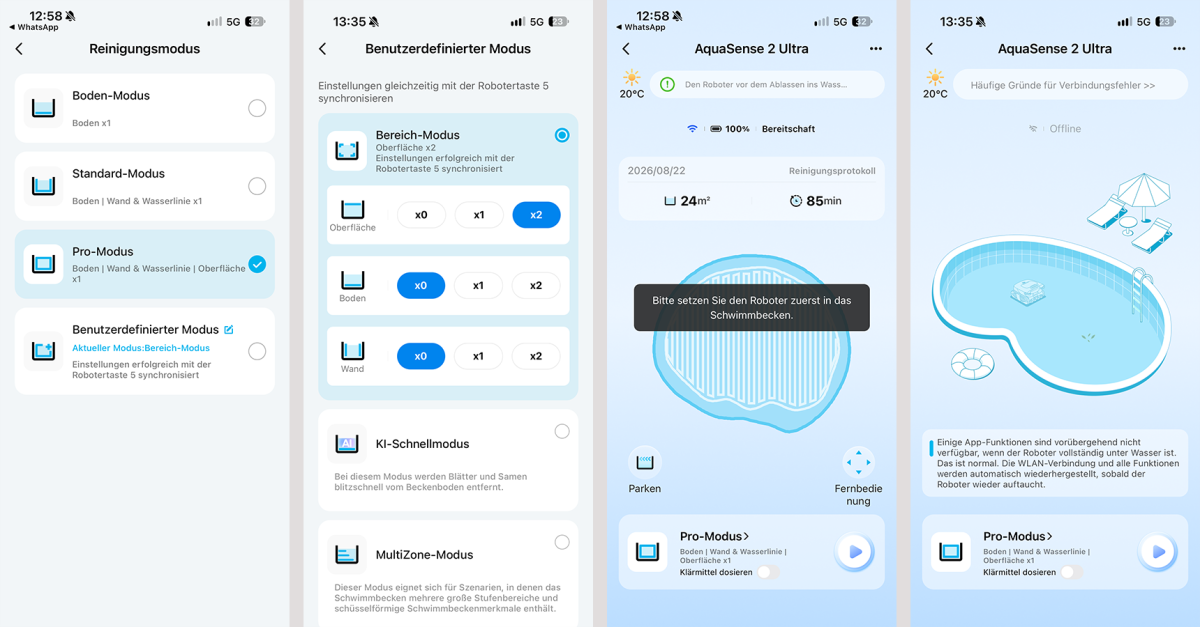
There are four programs to choose from. Floor mode cleans only the base of the pool. Standard mode adds the walls and waterline. Pro mode includes the surface as well.
There is also a custom mode, in which the number of passes per zone can be set individually, including a zone mode for pools with multiple levels. Once synchronised, the settings configured in the app can be started using the fifth button on the robot.
Beatbot AquaSense 2 Ultra: Setup
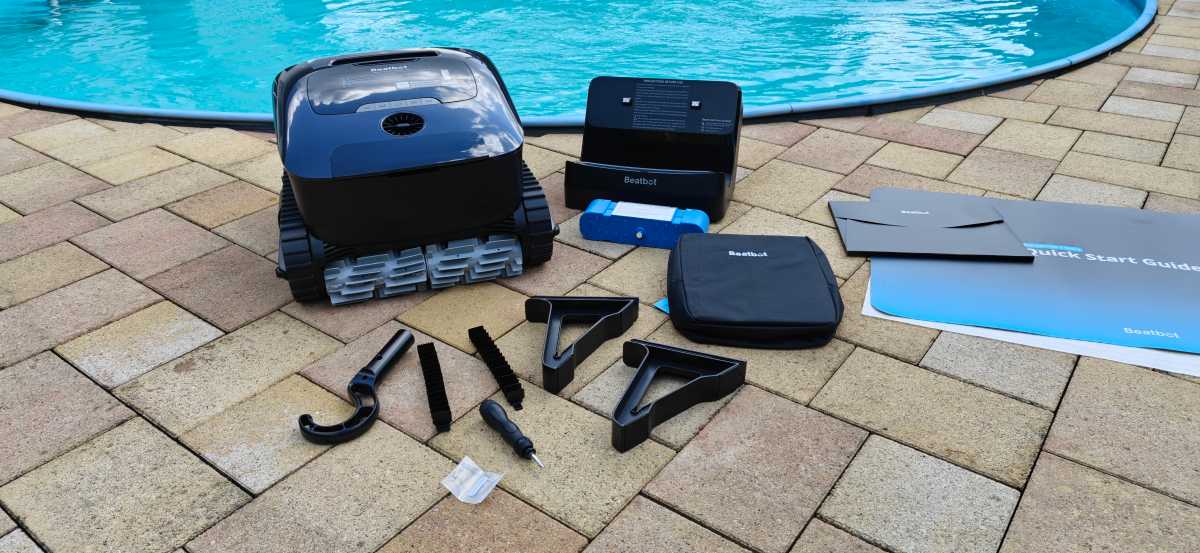
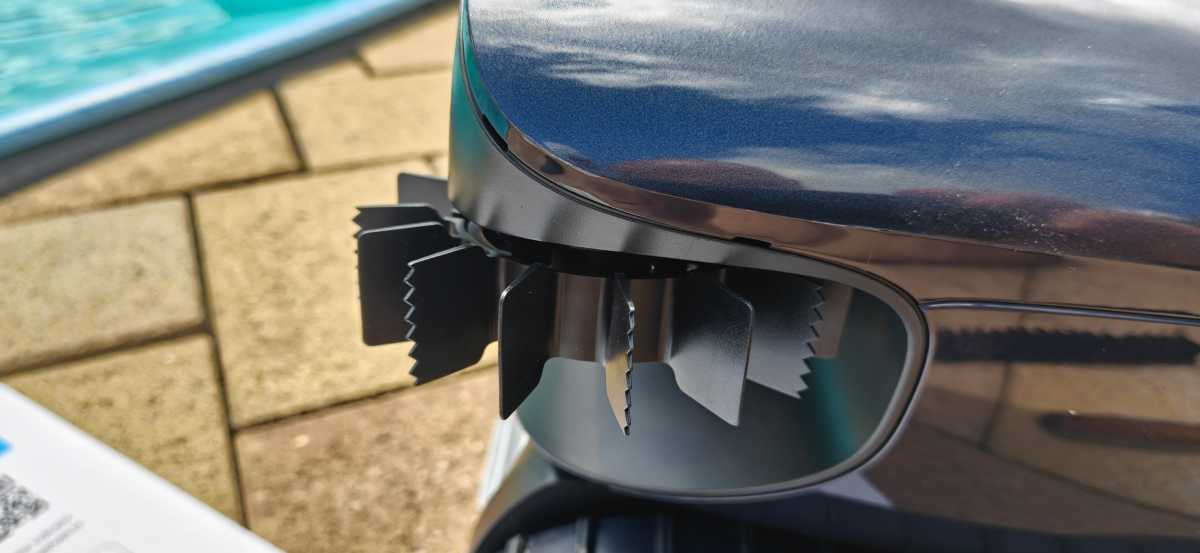
Some manual work is required before first use. The two side brushes are supplied as loose rubber strips and must be stretched around the brush wheels and secured. The charging cradle also only becomes stable once two stand feet have been inserted. Most competitors come fully assembled out of the box.
Christoph Hoffmann
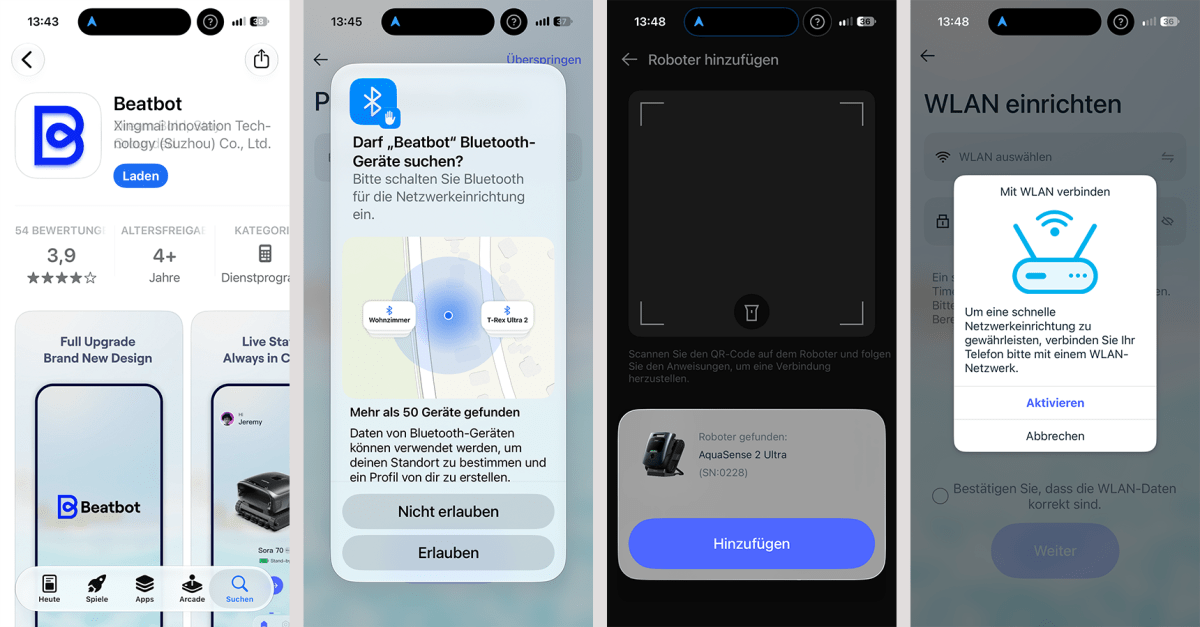
The rest is quick. After creating an account in the Beatbot app, you scan the QR code on the robot. In our test, the device registered within a few seconds, displaying its model name and serial number, followed by Wi-Fi pairing. The robot supports 2.4 and 5 GHz as well as Bluetooth. A second attempt wasn’t necessary.
Christoph Hoffmann
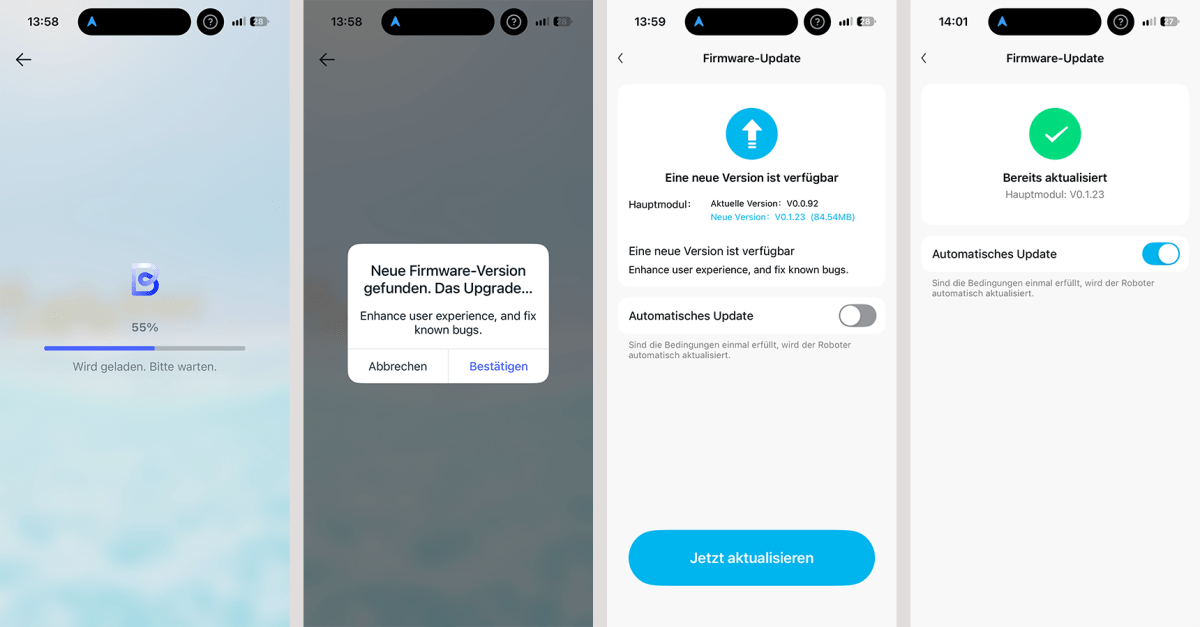
Immediately after pairing, the app offered a firmware update from version 0.0.92 to 0.1.23 – a whopping 84.54 MB. It completed without any interruptions. It is worth noting that automatic updates are disabled by default. Without automatic updates enabled, firmware updates can be easily overlooked. I’d recommend enabling automatic updates immediately after setup.
Christoph Hoffmann
The most interesting features have been moved to the Lab Features section. These include visual AI recognition, the auxiliary light for poor visibility, and smart parking in shallow water. AI recognition and the auxiliary light are active, but smart parking is not.
Christoph Hoffmann
Beatbot AquaSense 2 Ultra: Performance
The test was carried out in a round above-ground pool with a smooth liner and a suspended stainless-steel ladder. Round pools make it difficult to plan a consistent cleaning path, as there are no long, straight edges to use for orientation.
Christoph Hoffmann
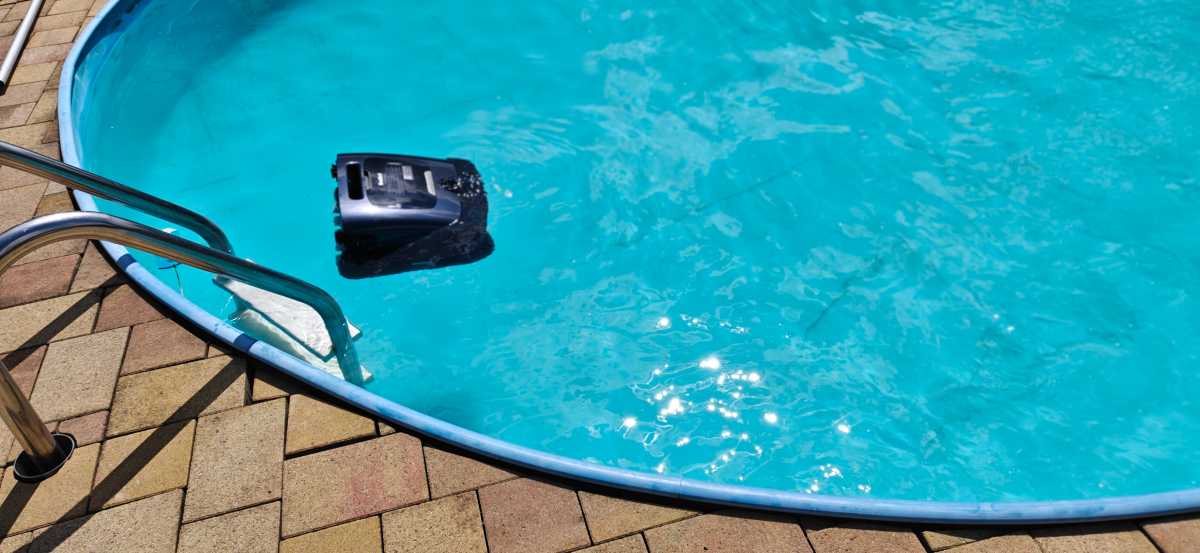
The procedure is simple. After switching it on and selecting the mode, the robot is placed in the water. The device fills its chambers with water, rotates once on the surface to orientate itself, then sinks to the bottom. In standard mode, it first cleans the floor in parallel paths, then it climbs up the wall and cleans the waterline.
Christoph Hoffmann
Stubborn lines of grime had built up on the pool floor over several years. The AquaSense 2 Ultra was able to remove most of it.
The robot really comes into its own on the wall. The chains grip securely on the smooth liner, and it climbs without slipping. At the waterline, the body extends a few inches above the water’s surface and remains there.
The robot also removed the typical build-up of sun cream and skin oils at the waterline. According to the manufacturer, the robot passes over the waterline twice per cycle.
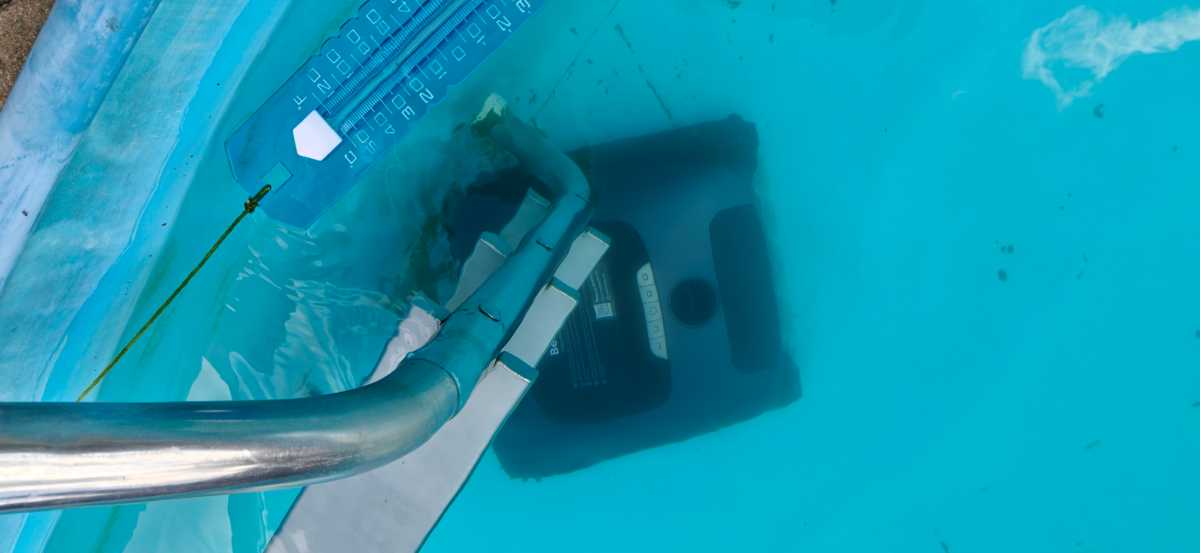
The AquaSense 2 Ultra navigated the suspended ladder without any intervention. It approached, stopped, reversed, and maneuvered round the rungs. It did not get stuck under the steps. It was precisely this type of ladder that the Aiper Scuba V3 struggled with. It became wedged under the rungs on several occasions and, at times, allowed its chains to run over the liner for 20 to 30 seconds before reversing. In this regard, the Beatbot’s obstacle detection is noticeably more reliable.
Christoph Hoffmann
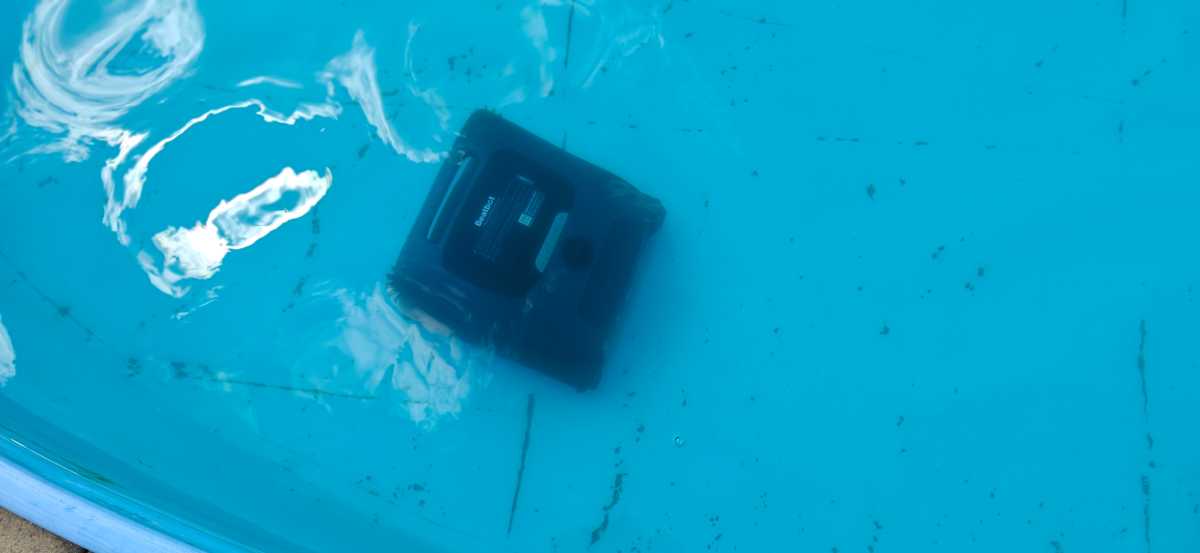
After the regular floor clean, the robot switches to AI-assisted dirt detection. It first moves through the pool without any discernible pattern until the camera detects dirt. It then corrects course, drives over the spot, stops, and repeats the movement forwards and backwards. This movement pattern did indeed result in targeted spot cleaning.
The Beatbot goes a step further in its use of the camera than the Aiper does with the Scuba V3. The latter’s AI camera is primarily used for navigation, obstacle detection, and adaptive route planning. The AquaSense 2 Ultra also uses the camera for targeted dirt detection. After its regular cycle, it searches for any remaining dirt and returns to the areas it has detected. This difference was evident during direct testing.
Christoph Hoffmann
Of the ten test leaves added to the water afterward, the robot picked up nine. After 85 minutes, no visible patches of dirt remained in the test tank. The filter basket contained sand, fine plant matter, and leaves.
Surface cleaning, however, is significantly less effective. As it moves, the robot pushes a bow wave in front of it, which pushes floating leaves to the side rather than directing them into the suction opening. The new side brushes mitigate the effect, but do not eliminate it. Anyone wishing to keep the water’s surface reliably clear will have no choice but to use a dedicated skimmer or landing net. Consequently, the advertised surface cleaning remains the weakest of the five areas of application.
Christoph Hoffmann
A second weakness concerns connectivity. As soon as the robot submerges, the app connection is lost. Status checks and mode changes are only possible again once the device is floating on the surface. Physically, this is understandable, as water strongly attenuates radio waves.
However, this problem is not unique to the Beatbot. The connection to the Aiper Scuba V3 also dropped after it submerged. Battery level and completion notifications were only reliably available again once it had resurfaced. Neither of the two AI pool robots offers continuous communication while underwater. Mova solves this in the Rover X10 using a more technically complex solution: a floating buoy that receives Wi-Fi commands and relays them to the robot via ultrasound.
Given the high price, this limitation is particularly significant. Consequently, the remote control mentioned in the data sheet also only works at the surface.
At the end of the cycle, the robot first moves to the edge of the pool and waits there at the water’s edge. If it is not retrieved, it later breaks away from the edge and floats freely on the surface. It can be recalled using the Park button in the app. Lifting it out remains the most tedious part of daily use. When lifting it over the wall of an above-ground pool, the 29.1 pounds plus residual water are clearly noticeable. The retrieval hook is included but is rarely needed if the Park function is working properly.
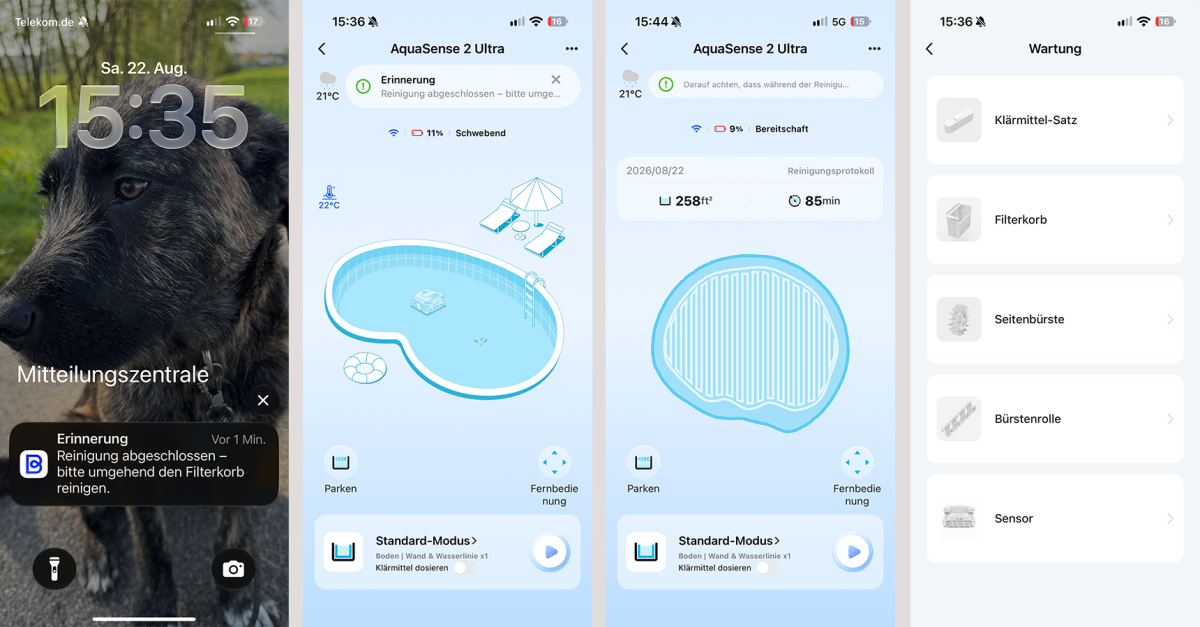
Once the cycle is complete, the app notifies you via a push notification and prompts you to clean the filter basket immediately. The log showed 258 square feet over a running time of 85 minutes. Extrapolated to a full load, this works out to a little over four hours Standard mode. The manufacturer’s specification of five hours refers to bottom-cleaning operation only and is therefore plausible.
Christoph Hoffmann
The schematic map shows the basic layout and paths taken. However, it does not allow for targeted planning, as restricted zones and individual areas are missing.
In custom mode, surfaces, floors, and walls can each be combined with up to two passes. The selected configuration is then synchronized with the robot.
Christoph Hoffmann
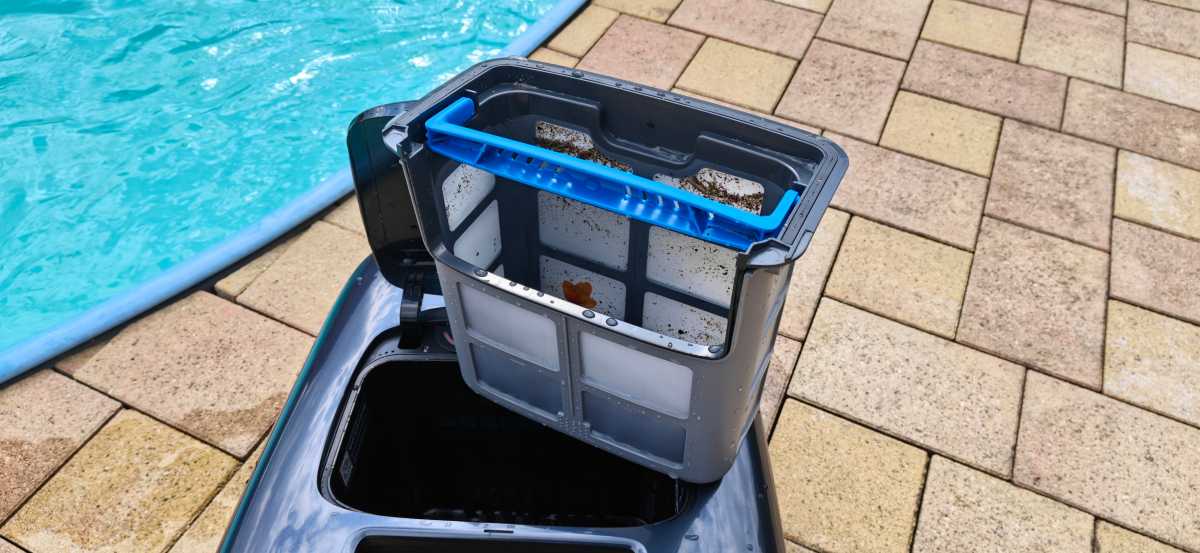
The filter basket is removed from the top. The blue clip is secure, and the basket can be removed with one hand. It can be rinsed clean using a garden hose. Because the basket does not open downward, a fair amount of water pressure is needed to dislodge sand stuck in the corners. The Rover X10 exhibited the same shortcoming.
Christoph Hoffmann
The robot is clearly audible on the surface. Underwater, however, it’s barely noticeable.
Beatbot AquaSense 2 Ultra: Conclusion
The AquaSense 2 Ultra performs very well at the core tasks expected of a pool robot. The floor, walls, and waterline remain clean, and the navigation system is easy to follow. The camera-based post-cleaning check proved to be a tangible benefit in the test. In backyards with trees, it noticeably reduces the need for a pool net.
Surface cleaning falls short of expectations, and the standard fine filtration stops at 150 microns. Aipet offers a significantly finer filter with its 3-micron membrane. Added to this are the lack of app connectivity underwater and the ongoing costs of the clarifying agent.
That leaves the price. At around $3,150, the AquaSense 2 Ultra costs roughly three times as much as an Aiper Scuba V3, which is available for around $1,050. Yet the Aiper also cleans the floor, walls, and waterline, navigates using a camera and, once the work is done, parks at the edge of the pool for removal.
It even has advantages in terms of weight and standard fine filtration: weighing 18.1 pounds, it’s considerably lighter, and a 3-micron membrane is already included in the box. The Beatbot stands out in terms of obstacle detection, targeted AI dirt detection, and additional surface and platform cleaning. Whether these features justify the premium price depends heavily on the pool and the level of dirt.
The AquaSense 2 Ultra really comes into its own in large or irregularly shaped pools with sunbathing areas and a high volume of fallen leaves. For a standard round pool, however, its range of features is harder to justify.
Beatbot AquaSense 2 Ultra: Technical specifications
- Model: Beatbot AquaSense 2 Ultra
- Type: Cordless, rechargeable pool robot with AI camera
- Cleaning areas: Floor, walls, waterline, surface, platforms from a water depth of 35 cm
- Navigation: HybridSense AI pool mapping, CleverNav
- Sensors: AI camera, two TOF, two infrared sensors, four ultrasonic sensors
- Processor: Quad-core CPU
- Motors: 11
- Propulsion: Rubber tracks, six guide wheels, and two drive wheels
- Brushes: Two side brushes, two roller brushes
- Circulation capacity: Up to 5,500 GPH, approx. 20,800 l/h
- Filter: Double basket, 4.0 and 3.7 liters, finest mesh size 150
- Water clarification: ClearWater with chitosan clarifying agent, 300 ml per cartridge, four applications
- Battery: 13,400 mAh, up to 10 hours on the surface, up to five hours on the bottom, up to 4.5 hours on the walls and waterline
- Charging time: 4.5 hours, wireless charging cradle
- Coverage: Up to 320 m² per charge
- Operating depth: 0.4 to 3.0 metres
- Cleaning modes: Floor, Standard, Pro, Custom (including Area Mode)
- Surfaces: Vinyl, concrete, fibreglass, ceramic tiles, stainless steel, mosaic
- Salt water: Suitable for up to 5 g/l
- Connectivity: Wi-Fi 2.4 and 5 GHz, Bluetooth
- Controls: Buttons on the unit, Beatbot app, remote control on the surface
- Protection rating: IP68 (robot), IPX4 (charging dock)
- Dimensions: 454 × 439 × 278 mm
- Weight: 21.1 pounds
- Contents: Robot, charging cradle with power adaptor, clarifying agent cartridge, protective cover, retrieval hook, two side brush strips, screws, screwdriver, quick start guide
- Warranty: 3 years with full replacement
- Updates: OTA firmware updates
This articles is written by : Nermeen Nabil Khear Abdelmalak
All rights reserved to : USAGOLDMIES . www.usagoldmines.com
You can Enjoy surfing our website categories and read more content in many fields you may like .
Why USAGoldMines ?
USAGoldMines is a comprehensive website offering the latest in financial, crypto, and technical news. With specialized sections for each category, it provides readers with up-to-date market insights, investment trends, and technological advancements, making it a valuable resource for investors and enthusiasts in the fast-paced financial world.