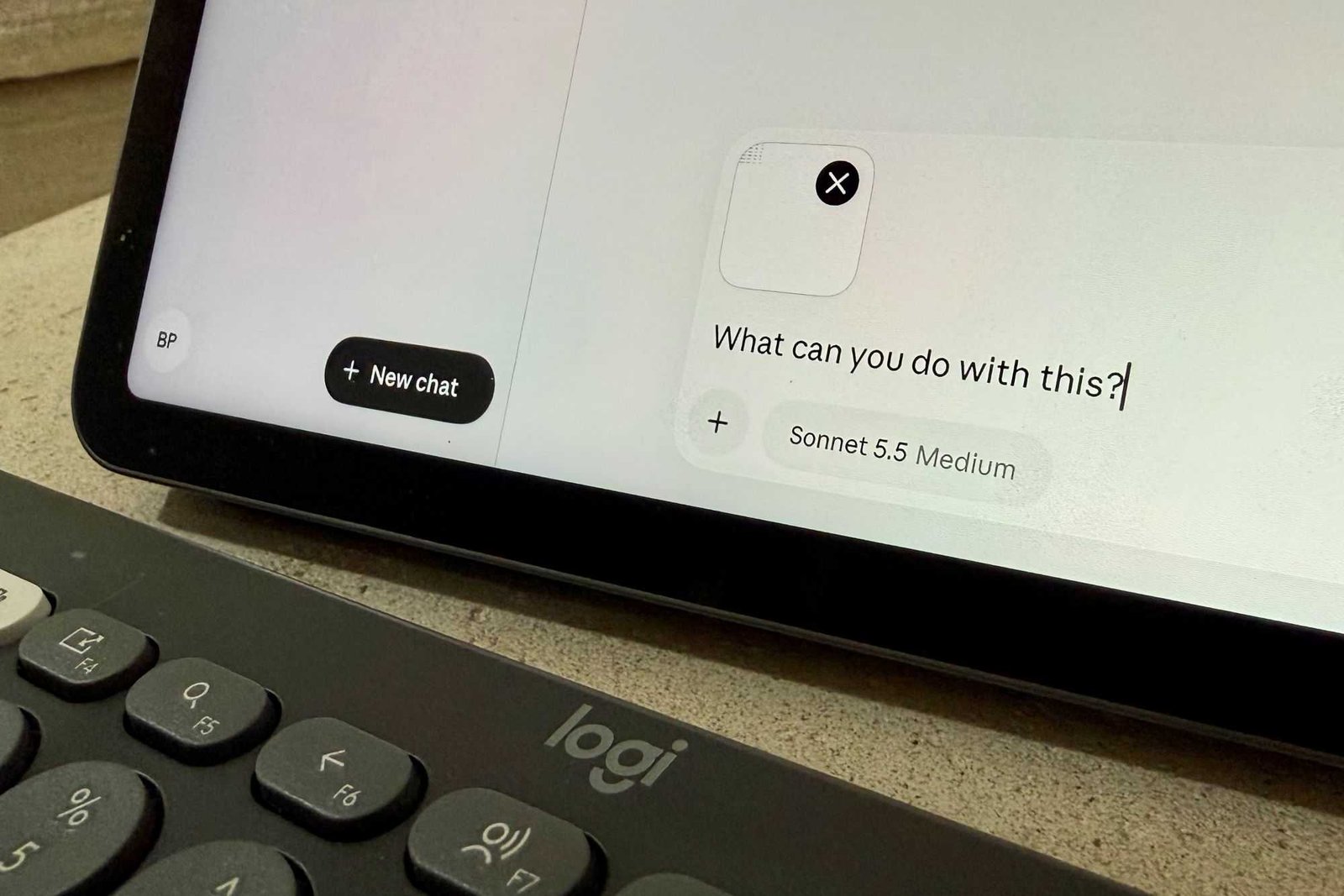
The latest version of Claude Sonnet—Anthropic’s workhorse AI model—has just landed, and with it comes a prompt that could help keep any AI agent from leaping into action before making a plan first.
Available now on the web, the Claude desktop app, and other Claude platforms, Claude Sonnet 5.5 is Anthropic’s middle-of-the-road model, It’s a step below Opus 5.5 but apparently just as capable as Fable 5.1 (Anthropic’s pricey frontier flagship) and a step above Haiku 5 (a fast but basic Claude model that’s due for a 5.5 upgrade).
In Anthropic’s benchmarks, Sonnet 5.5 achieves scores rivaling Opus 5.5 in areas such as agentic coding and computer use, although the latest Opus model is still on top in terms of “complex, open-ended work requiring sustained judgement,” Anthropic notes. Still, Sonnet 5.5 appears surprisingly powerful and affordable compared to Claude Opus, and it also has the distinction of being the default Claude model for free users.
In any event, with a new Claude model comes a new prompting guide, and the guide for the latest Sonnet contains a gem that could come in handy for other AI models, particularly those capable of building things.
The prompt concerns “open-ended” requests, including those that don’t strictly define boundaries for what the AI should and shouldn’t do. An example provided by Anthropic is “show me what you can do with this,” with “this” being anything from an Excel spreadsheet to a code snippet.
Like ChatGPT and Gemini, Claude can spontaneously start building charts, reports, videos, and other “artifacts” on the fly depending on your request, and an open-ended request could spawn an artifact you didn’t explicitly ask for. Needless to say, those artifacts will eat into your Claude usage limits—not great when you didn’t want them to begin with.
In my tests, Sonnet 5.5 was pretty good about keeping its replies text-only when I handed it an Excel spreadsheet of made-up operating costs and asked “show me what you can do with this,” but in at least one instance it did spin up a chart on its own.
I’ve previously written about prompts designed to keep AI models from jumping the gun, including one that directs an AI to stay in “pencil-and-paper” mode. But in Claude Sonnet 5.5’s prompting guide, Anthropic shares a new prompt for dialing down preemptive building:
When the user asks for ideas, options, or a plan, give them that and stop. Don’t start building or changing anything until they say to go ahead.
You can use that prompt (or something similar) at the beginning of any AI chat, but it’ll be most effective as part of the AI’s custom instructions, or in the case of Claude Code as part of your CLAUDE.md file.
Even if you don’t use this particular Anthropic prompt, it’s a good reminder to be specific when asking an AI assistant or coding agent to do something—or not to do something, as it were.
This articles is written by : Nermeen Nabil Khear Abdelmalak
All rights reserved to : USAGOLDMIES . www.usagoldmines.com
You can Enjoy surfing our website categories and read more content in many fields you may like .
Why USAGoldMines ?
USAGoldMines is a comprehensive website offering the latest in financial, crypto, and technical news. With specialized sections for each category, it provides readers with up-to-date market insights, investment trends, and technological advancements, making it a valuable resource for investors and enthusiasts in the fast-paced financial world.