On October 2, Apple announced that it would implement stricter controls on macOS in relation to applications that request extensive access to data on a Mac. This decision follows complaints about Meta’s Muse. In addition, it brings to light a broader issue that concerns the level of access that AI agents may have and by which this access is communicated and regulated.
What Apple is changing about Full Disk Access
In its developer update, Apple said that Full Disk Access might allow certain files, emails, messages, and browsing history to be accessed, as it circumvents the safeguards that typically protect app data.
“Going forward, we will introduce additional controls to ensure that users who genuinely wish to grant an app this extraordinary level of access can only do so with very explicit user action,” Apple wrote. It added that “as AI agents become increasingly capable and autonomous, the risks associated with this level of access will grow substantially.”
Reuters explained why this issue has greater significance on Mac computers. iPhones and iPads are programmed to provide a level of separation between applications as a default protection. In contrast, computers running macOS allow an application that possesses the Full Disk Access feature to have a much broader access to user data.
Why Muse drew the complaints
The change followed complaints from Inc columnist Jason Aten, who said Muse read private messages on his Mac even though he had not enabled Full Disk Access.
Meta has disputed his claim. Meta Spokesperson Andy Stone said access to Apple Messages is opt-in. Users must first enable both Full Disk Access and the Messages connector, which they can revoke at any time.
This is not the first time that Muse has encountered concerns regarding security. According to Cryptopolitan, Meta tightened its security warning following the discovery of a flaw classed SEV-2 by a researcher that could have potentially allowed an attacker access to a user’s virtual machine, emails, and files.
Why agents need the keys to everything
The tension is built into agentic AI: the more useful an agent becomes, the more access it may need.
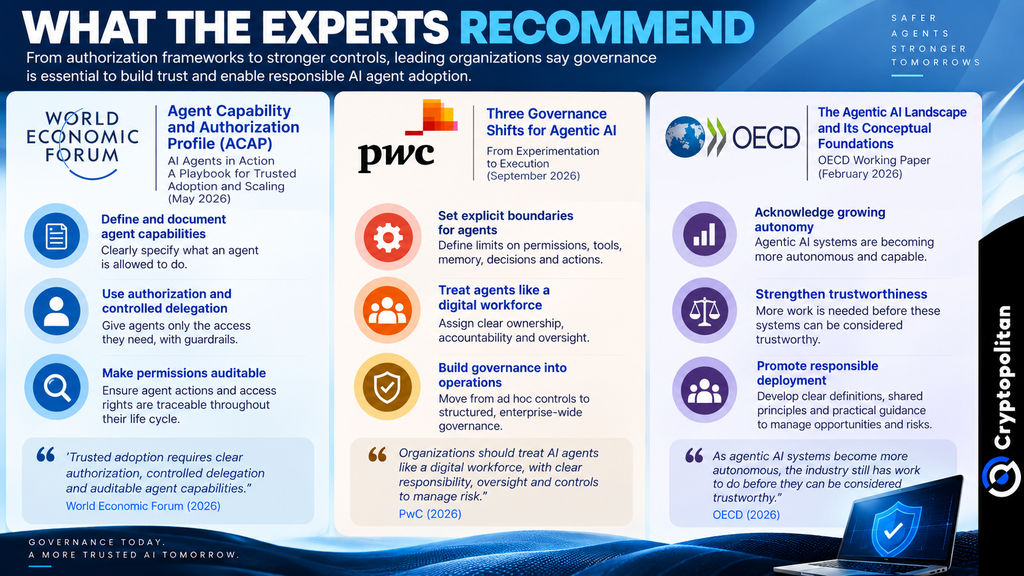
The World Economic Forum recommends an Agent Capability and Authorization Profile to define what an agent can access and what it is allowed to do. The idea is to make those limits easier to track and enforce.
PwC takes a similar view. It argues that companies should manage AI agents similar to a digital workforce, with clear ownership, access based on specific tasks, and limits on what they can do on their own.
The OECD strikes a more cautious note. It says agentic AI is still evolving, and more work is needed before these systems can be considered trustworthy.
Trust is turning into a commercial constraint
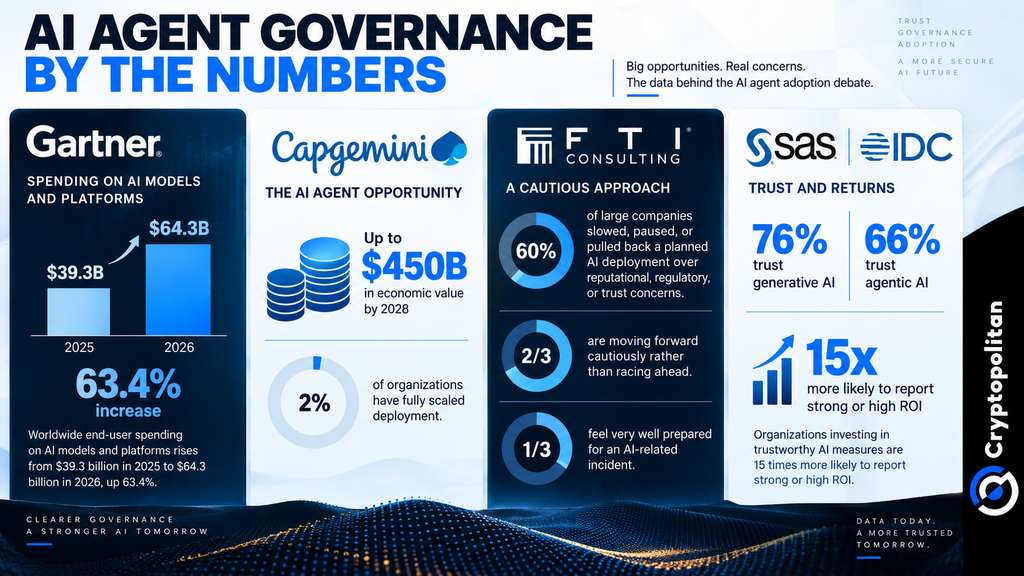
Those issues are already influencing how businesses deploy artificial intelligence. Research by FTI Consulting shows that the deployment of AI has either slowed down, been stopped, or postponed by 60% of large enterprises due to issues related to reputation, regulation, and trust.
A SAS report also highlights the existence of a trust gap. According to its findings, 76% of participants trust generative AI compared to 66% of participants who trust agentic AI. In addition, companies that invest in trustworthy AI methods have seen a 15 times greater likelihood of receiving high or good ROI from their efforts.
There is a lot of money riding on that trust. According to Gartner forecasts, investments in AI models and platforms will increase from $39.3 billion in 2025 to $64.3 billion in 2026. Capgemini estimates that by 2028, AI agents could create up to $450 billion in value, despite the fact that only 2% of companies have implemented AI systems fully.
Friction now, broader adoption later
Apple’s tighter controls may add friction, but clearer, revocable permissions could also make users more comfortable giving agents meaningful access. As agentic AI moves from experimentation into everyday use, permission design is becoming part of the product itself—not just a compliance issue.
Don’t just read crypto news. Understand it. Subscribe to our newsletter. It’s free.
This articles is written by : Nermeen Nabil Khear Abdelmalak
All rights reserved to : USAGOLDMIES . www.usagoldmines.com
You can Enjoy surfing our website categories and read more content in many fields you may like .
Why USAGoldMines ?
USAGoldMines is a comprehensive website offering the latest in financial, crypto, and technical news. With specialized sections for each category, it provides readers with up-to-date market insights, investment trends, and technological advancements, making it a valuable resource for investors and enthusiasts in the fast-paced financial world.