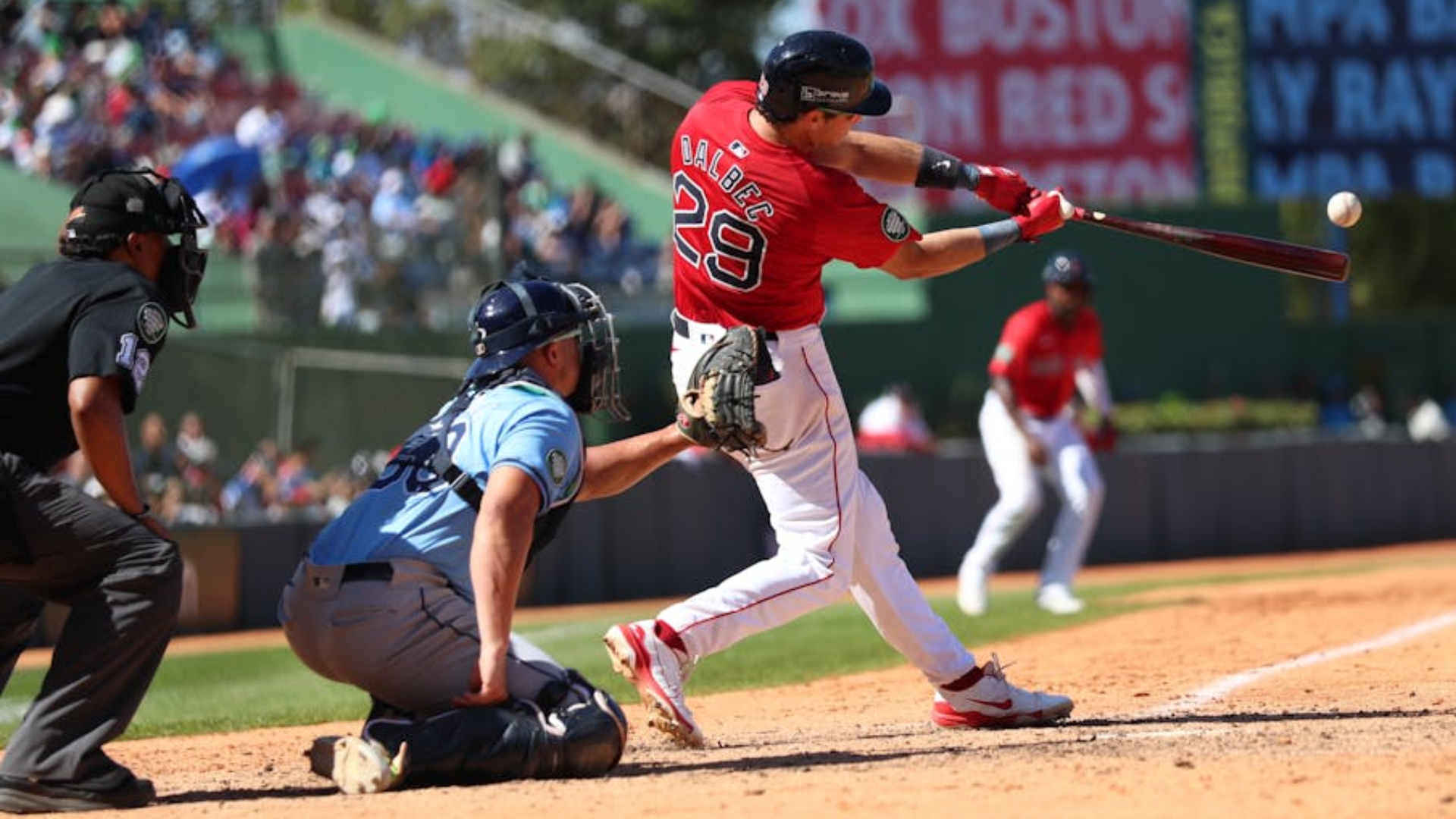
Name something bad happening in the computer or consumer electronics space, and you can point to “AI” as a culprit. High prices, low stock, degrading search results, enshittification, I could go on. So I will: Copilot. But allow me to take a pause from the dumpster fire that is the PC industry, and pull the classic move for when you need a distraction from an intense situation: Think about baseball.
In the United States, the 2026 Major League Baseball season started just last week. And like everything else, it’s now infected with “AI.” Specifically, there’s a new system that allows players to challenge the ball or strike call of the home plate umpire. This is kind of a big deal for anyone who cares about baseball — calling a ball or a strike can be pivotal to a play, and thus an at-bat, inning, or a game.
Automated Ball-Strike System, or ABS for short, “watches” a pitch live and determines whether a pitch is within a batter’s strike zone. It is, essentially, a robot umpire. The system has been tested in the minor leagues and in South Korea for years, but it’s now live on the biggest baseball stage of all. Unlike its implementation in other leagues, the ABS does not call balls and strikes immediately, replacing the human umpire. But players — the pitcher, catcher, or batter — can challenge the umpire’s call of a ball or strike. With the challenge activated, the system shows precisely where the pitch fell in relation to the batter’s strike zone…or at least, where the ABS determined the batter’s strike zone to be.
It’s contentious, to say the least. Not just because it’s an extremely visible example of “AI” replacing humans, and in a quintessentially human environment no less. The implementation of the system itself is controversial. The strike zone isn’t universal for all batters, you see — in the MLB, it’s based on “the midpoint between the batter’s shoulders and the top of the uniform pants, and a point just below the kneecap” in height, and the width of home plate.
So shorter players or those who crouch lower in their stance get a smaller strike zone, and thus are more likely to be walked if the pitcher is trying to hit the edge of the zone. Shorter players with smaller strike zones have such a tangible advantage in an at-bat, there have been instances in the MLB of coaches and promoters specifically seeking out little people as players who were “impossible to strike out,” though most of these were gimmicks and promotions (and somewhat distasteful ones, by modern standards).
The implementation of ABS has created the interesting phenomenon of the incredible shrinking Major League Baseball player. Because ABS uses a batter’s stated height as the basis for its strike zone determination, the exact height of the player in his official stats is crucial here. According to a report in The Atlantic, 225 MLB players — more than half of the total league! — have adjusted their official height lower. Most of them by a single inch (that’s 2.5 centimeters if you live in a civilized country), a few dozen by two inches. Six players shrank a full three inches.
Are players actually correcting their height because it’s vainly overstated on the official stats, or are they bumping the height down to get a smaller strike zone? A mix of both? I suspect there’s a way you could find out if you dig deep enough into the dugout. This brings to mind the saying that “there’s no such thing as five-foot-eleven.” Now, apparently, there very much is, at least as it pertains to professional baseball players.
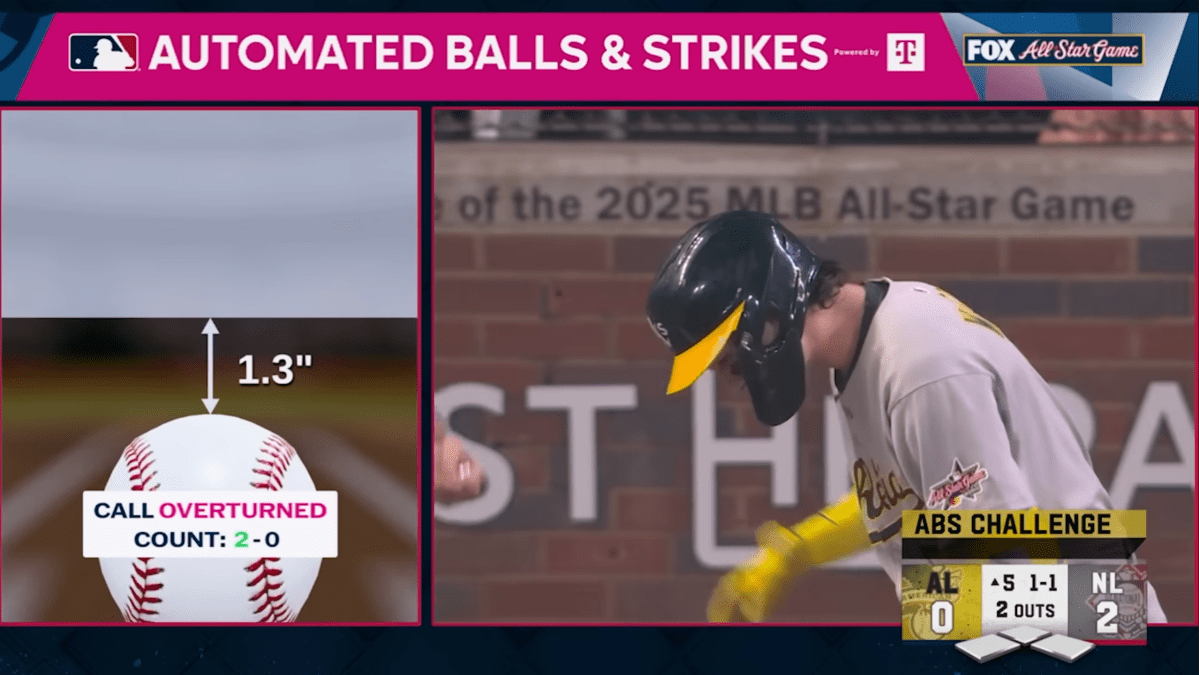
The drama surrounding the ABS implementation has been fun to watch for baseball fans, who get to see the results on a TV broadcast or on the big screen at the stadium. “You can’t defeat the robots” has instantly become memified, and it’s a good distillation of the fact that the final call on balls and strikes is now in the power of a computer, at least some of the time. You can also see trackers of total challenges, accepted or denied, online. It must be cathartic for players to get the opportunity to nu-uh the umpire for the first time.
And naturally professional umpires, who have a fairly high profile in the league and in the sport (never more than now, when sports betting is don’t-call-it-legal all over the US) aren’t thrilled. The first pitch challenge came on MLB opening day, the first successful challenge the next day. But it isn’t unlimited. While the KBO League in Korea has had all its pitches called by the system for three years running, in the MLB each team is limited to just two umpire challenges per game, one more if a challenge is successful. Since MLB games need at a minimum 153 pitches for a complete game, generally many more, exactly when you use those challenges is quickly becoming a strategic choice.
It’s similar to where a football coach uses their challenge in the NFL, though the final replay calls to affirm or overturn an official’s decision are made by humans. Human-called replays are also being used in MLB for calls on the bases, making umpires more and more of a figurehead on the field. And that’s saying nothing of whether a player is actually successful with their challenge…or whether the ABS system is correct in its placement of the strike zone and pitch.
At the risk of sounding petty, it’s kind of fun to watch something else that people care about get shaken up by AI. Though I have to add that this isn’t the kind of “AI” that necessitates the air quotes — it isn’t generative “AI” that’s trained on an entire internet’s worth of stolen writing, images, video, and music, and in many cases is trying to replace what it stole with bad fakes. It is a system developed with machine learning, what we used to call artificial intelligence before the rise of ChatGPT. (And which still wasn’t artificial intelligence in the sci-fi sense, i.e., a sentient machine like HAL 9000 or Commander Data.) And it’s apparently enhancing the accuracy of strike and ball calls, without fully replacing umpires. I can’t see the MLB ever going without actual officials on the field, if only because a human needs to be there to enforce the rules of baseball.
That being the case, I don’t think this is a true double standard. ABS is, arguably, a net positive for baseball, though I’m sure plenty would take up that argument. And it doesn’t require massive data centers, unsustainable amounts of energy and money, or years and years of the global chip supply. So I can enjoy the drama without any guilt. Though again, I’m sure someone will argue with me about that.
This articles is written by : Nermeen Nabil Khear Abdelmalak
All rights reserved to : USAGOLDMIES . www.usagoldmines.com
You can Enjoy surfing our website categories and read more content in many fields you may like .
Why USAGoldMines ?
USAGoldMines is a comprehensive website offering the latest in financial, crypto, and technical news. With specialized sections for each category, it provides readers with up-to-date market insights, investment trends, and technological advancements, making it a valuable resource for investors and enthusiasts in the fast-paced financial world.