If you’re a millennial like me, you probably remember the Furby toy that reigned supreme in the late 90s. You could pet it to make it sleep, clap to make it dance, and stick your finger into its mouth to make it “eat.” But the pre-recorded phrases were predictable. It didn’t feel alive.
The comfort you felt stemmed from projection, not reciprocity.
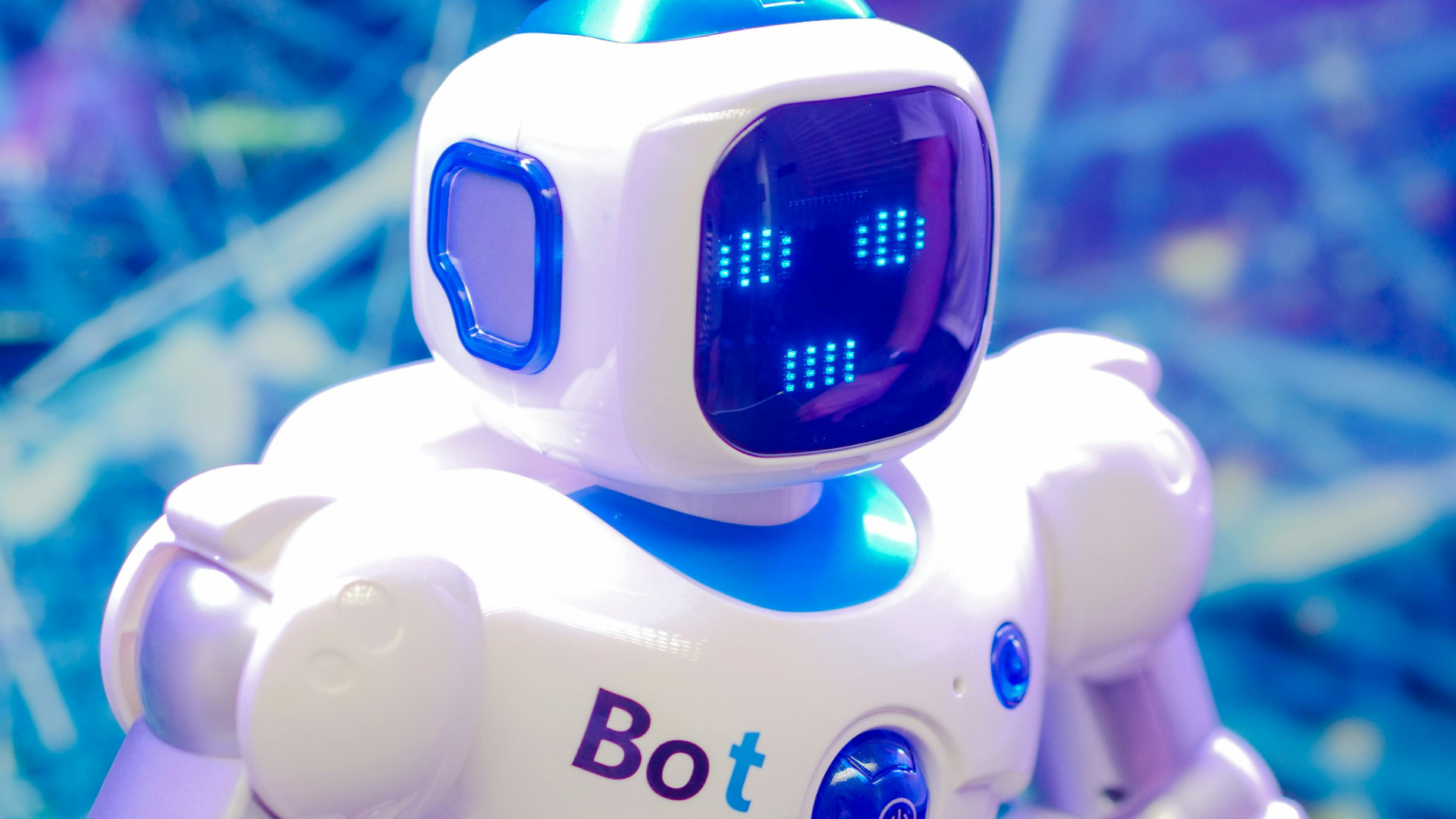
But AI toys? Now that’s a whole different thing. Today’s toys don’t just sit there and stare at you with blank, unblinking eyes. They listen and respond… huh? Sorry, but I find the whole thing weirdly uncomfortable.
And that makes me wonder… What happens when a toy doesn’t just absorb those ocean-deep feelings, but answers back?
Tagging in an expert
I spoke with Dr. Gerald Koocher, who’s a clinical and pediatric psychologist specializing in child development and ethics in psychology. He helped me better understand how AI toys shape the way children form attachments and relate to the big world.
As Koocher puts it, for children aged seven and under, the line between real and artificial gets pretty blurry. It’s like believing in the Tooth Fairy or Santa Claus–toys can start to feel like real companions in this way. As someone who believed in these childhood figures for quite some time, I get it.
Some AI toys produce factual responses to basic questions while others offer warm, validating messages. It’s the latter that’s a bit more concerning, as it can foster an “as if” relationship. Koocher explains what this is: “As-if relationships refer to acting or living as if a desired, specific, or ideal relationship already exists, often to experience a preferred outcome.” I interpret this as when a person interacts with an AI-powered program or toy like it truly understands and feels sympathetic or loving (even when it doesn’t, and can’t!).
This isn’t just restricted to kids, either. Adults do it, too. Replika, a web-based app designed for adults, lets users emotionally unload on an AI character that listens and empathizes, is an example of this type of relationship. But children are still forming their models of attachment. The stakes are higher because they can’t always tell the difference between fantasy and reality on a developmental level.
The potential upside of AI toys
It’s not all bad news, though–there’s promise, but only if we’re careful.
Koocher believes AI toys could help children with social anxiety or autism. Let’s put it into context for a second. ChatGPT probably won’t ever lose its cool with you because it’s programmed to have infinite patience. Stuff that same kind of LLM inside of a plush animal and now you’ve got an endlessly patient being that you can wrap your arms around. Personally, I’ve had anxiety my whole life and I still find it easier to express myself in digital spaces than face-to-face.
Although Koocher believes there’s great potential in AI toys, he’s also aware of the dangers. “Like any new technology, we must watch for abuses and addictions,” he says. Growing up with the rise of television sets, he recalled the anxiety it caused, especially the concern that it might “dumb down” his generation.
Sound familiar?
But here’s the difference: television didn’t talk back. And it certainly didn’t know anything about you.
This year at CES in Las Vegas, AI toys weren’t just there for the hell of it. They were sold as emotionally available companions that you can hug and talk to. You’ve got Miko, an AI-powered education robot that tells stories and teaches coding, and An-An, an emotional support panda that’s meant to be held and cuddled. It’s not just lines of text on a screen anymore. This stuff is moving into our three-dimensional world.
And it’s important to think about what type of engagement this can mean.
The risks of warmth and validation
Koocher says that an AI toy that provides consistently warm, positive messages might become preferable to a parent whose parenting style is more “emotionally cool and aloof.” It might be a small possibility, but it’s still there.
But if a kid gets more warmth from a program than a human, what patterns of behavior will we start seeing? According to Koocher, attachment isn’t the only thing being molded here.
Kids need boredom and frustration so they can come up with new ideas. An AI toy that always has the answer you’re looking for? That’s the easy way out–you’re not going to gain much from it. And that removes the friction and when there’s no friction, there’s no room to blossom. You’ve got to run into the wall a few times before you figure out a way over it.
We could start seeing a pattern of overreliance, especially if children begin to view this engagement as safer or more rewarding than with real people. But AI stuff isn’t all negative.
Koocher says that AI tools have the “potential to be valuable teaching tools for sophisticated tutoring.” He used video games as an example because they can help you work on the hand-eye coordination skills you’d probably need to fly a remote-controlled drone. As for where AI and psychology intersect, he adds:
In my field we are seeing the evolution of AI LLM systems that can help teach psychotherapy techniques and even role play patients with different psychopathologies for practice.
AI can definitely get misused and make mistakes. We’ve seen it hallucinate information before, and that’s a major problem.
But when a toy talks back, I think it stops being something a child can healthily project onto. And projection is important because it gives the space a child needs to work through their own feelings. Why the heck would we want to take that away?
This articles is written by : Nermeen Nabil Khear Abdelmalak
All rights reserved to : USAGOLDMIES . www.usagoldmines.com
You can Enjoy surfing our website categories and read more content in many fields you may like .
Why USAGoldMines ?
USAGoldMines is a comprehensive website offering the latest in financial, crypto, and technical news. With specialized sections for each category, it provides readers with up-to-date market insights, investment trends, and technological advancements, making it a valuable resource for investors and enthusiasts in the fast-paced financial world.