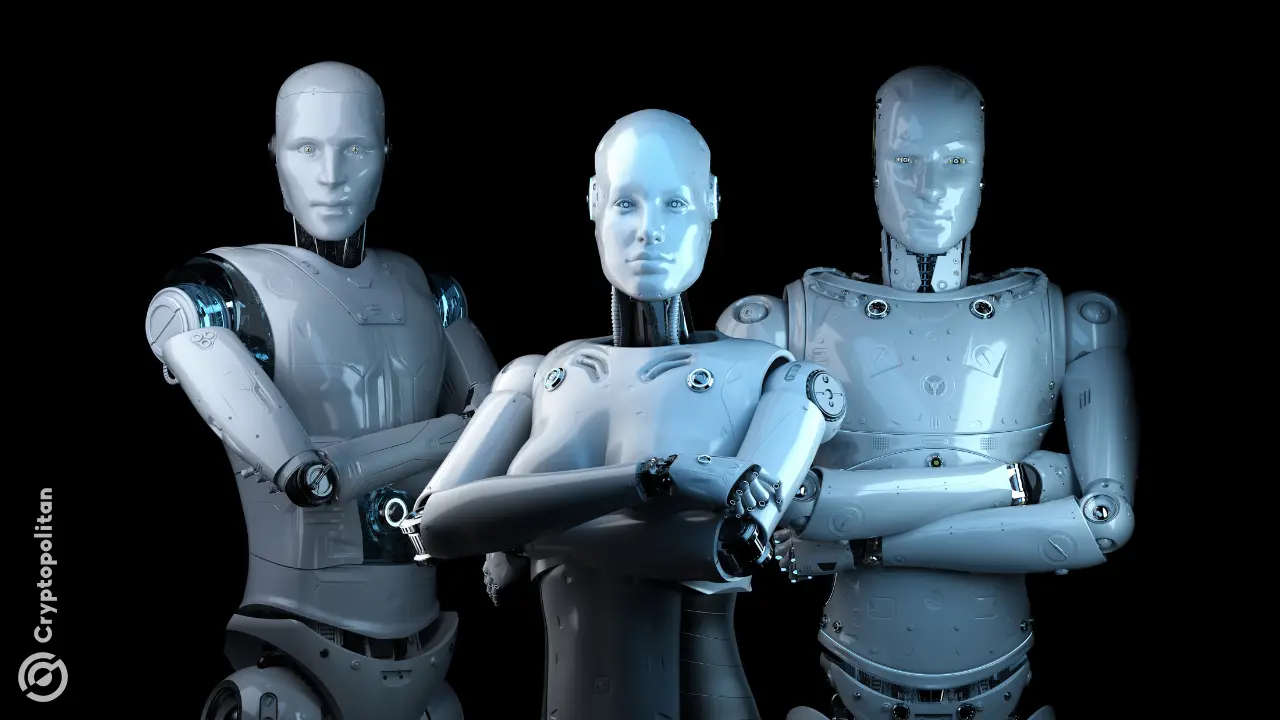
China’s humanoid robots were the talk of the internet after this year’s Spring Festival Gala, where dozens of them kicked, flipped, and danced their way through a four-hour state television broadcast watched by hundreds of millions of people.
A year ago, the picture looked quite different. At the 2025 gala, earlier robot models wobbled through a folk dance with handkerchiefs. Around the same time, a widely covered robot marathon ended in stumbles, crashes, and mechanical failures in front of the cameras. Skepticism was common.
This year’s performance changed the tone. The robots moved with coordination and speed, and the public took notice. Unitree, whose robots featured heavily at the gala, told local media shortly after the show that it expects to ship between 10,000 and 20,000 units in 2026.
The broader numbers back up China’s lead. More than 14,500 humanoid robots were delivered worldwide last year, up from roughly 3,000 in 2024, according to company reports and estimates from Omdia, a research firm. Agibot and Unitree alone accounted for more than 10,000 of those. Tesla shipped 150 of its Optimus robots over the same period.
Price is part of why China is pulling ahead
Unitree advertises its G1 humanoid at a base price of $13,500. Government backing and a deep domestic supply chain keep costs down. Much of that supply chain sits in the Yangtze River Delta, a stretch of industrial territory running from Shanghai through Jiangsu and Zhejiang provinces.
In the Wujin district of Changzhou alone, local suppliers claim they can provide around 90% of the parts needed to build a humanoid robot. Several of them already supply components for Tesla’s Optimus.
But selling robots and actually finding work for them are two different things. Industry insiders say the Chinese government was the largest single buyer of humanoid robots last year and will likely hold that position through this year and next.
Local governments around the country have poured money into the sector, setting up testing centers and buying units to meet political targets around technology development. Shanghai runs a facility that can deploy up to 100 humanoids at once, letting companies collect data from real-world tasks.
The catch is that real work is rarely what these robots are doing. Agibots have become a fixture at government functions in Shanghai. A rental company called Botshare, which launched in December, charges retailers as little as 2,200 yuan a month to station a humanoid at the entrance of their store, mostly to greet customers as they arrive. An Agibot costs more than 100,000 yuan to buy outright, around $14,500.
Wang Zhongyuan, a researcher at the Beijing Academy of Artificial Intelligence, said in a speech last year that public enthusiasm will not last if mass production runs ahead of actual demand. Robots that are everywhere but useful nowhere, he warned, will cause the bubble to burst.
Right now, only a small share of deployed humanoids are doing anything close to real labor. Those that do end up in factories tend to carry boxes and work at about 30 to 40% of the speed of a human doing the same job.
Tesla, BMW, and Mercedes are building the market themselves
Automakers in the United States, Germany, and China are approaching the problem from a different angle. Rather than waiting for consumers or governments to create demand, they are putting robots to work inside their own factories first, using production lines that already run around the clock and generate the kind of repetitive tasks that robots are best suited for.
Mercedes-Benz is running tests with a humanoid called Apollo at its plant in Hungary, working alongside U.S. startup Apptronik. BMW finished an 11-month trial at its Spartanburg plant in South Carolina late last year, where a robot from Figure AI worked in the body assembly process.
Tesla is moving faster than most. The company announced it will stop making the Model S sedan and Model X SUV in the second quarter of this year. The production lines at its Fremont, California plant that built those vehicles will be converted into a mass-production base for Optimus.
As reported by Cryptopolitan previously, XPeng plans to start producing its own humanoid, called AIRON, this year with an initial run of 1,000 units, then scale to 1 million by 2030. Li Auto, which dropped its humanoid project two years ago, said last month it is starting again and has already reorganized its team around the effort.
Hyundai’s Atlas robot is scheduled to begin working at its Metaplant America facility in 2028. The group is targeting 30,000 units produced per year once it reaches full scale.
The case for carmakers entering robotics is not complicated. They already run large, complex factories. They can absorb robots as internal customers before selling them to anyone else. And with thin margins squeezing the traditional auto business, a market that Morgan Stanley projected could hit $5 trillion by 2050, larger than the global car industry today.
China’s gala robots made for a stunning television moment. The harder part, turning that moment into a sustainable industry, is still being worked out.
The smartest crypto minds already read our newsletter. Want in? Join them.
This articles is written by : Nermeen Nabil Khear Abdelmalak
All rights reserved to : USAGOLDMIES . www.usagoldmines.com
You can Enjoy surfing our website categories and read more content in many fields you may like .
Why USAGoldMines ?
USAGoldMines is a comprehensive website offering the latest in financial, crypto, and technical news. With specialized sections for each category, it provides readers with up-to-date market insights, investment trends, and technological advancements, making it a valuable resource for investors and enthusiasts in the fast-paced financial world.