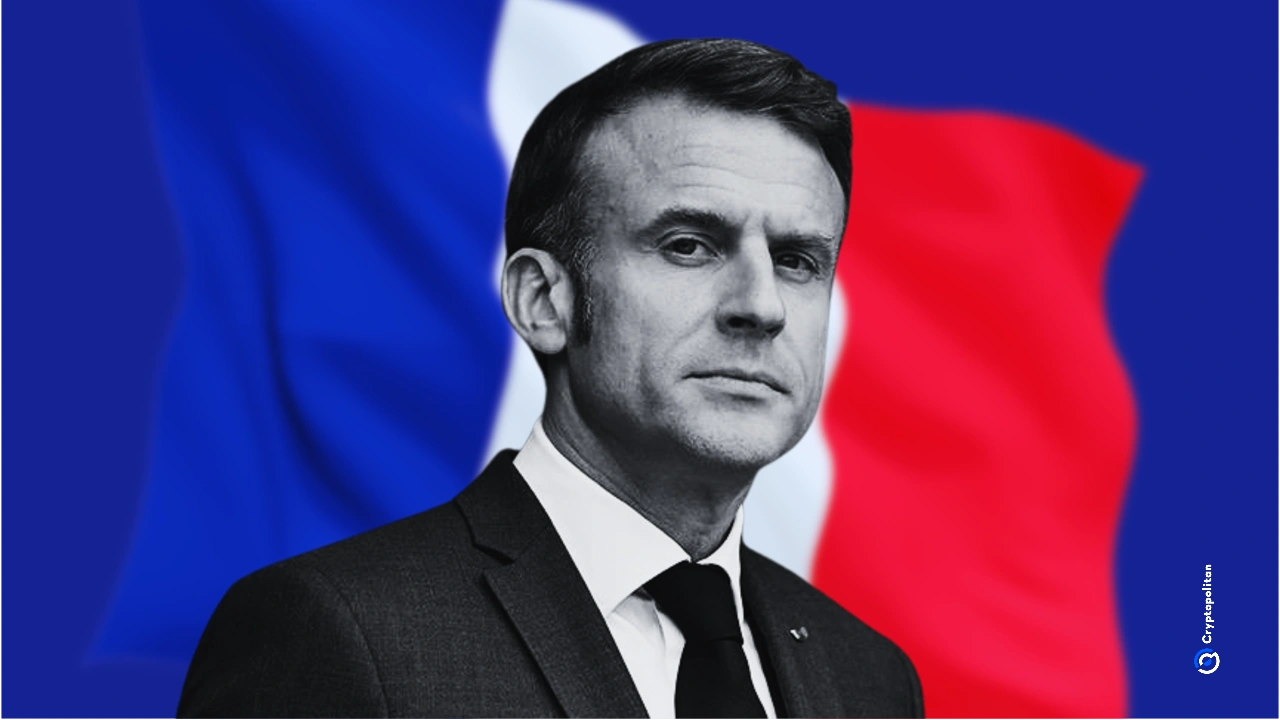
European leaders will gather this week to forge a new economic direction as the area grapples with rising doubts about government credibility and efforts to compete with global digital behemoths.
In an interview published Tuesday with various journalists, French President Emmanuel Macron raised warnings about Washington’s posture toward the European Union. Macron characterized the current global trade environment, saying, “There are threats and intimidation, and then suddenly Washington backs down. And we think it’s over. But don’t believe it for a second.”
Macro warned that “every day” there are US threats against Europe, noting further hostile moves to come in the form of American import tariffs. Tensions over digital regulation have prompted Paris to demand sweeping economic reforms across the bloc.
Macron pushes for protective measures
Macron told audiences at Davos the EU requires an economic transformation, stating, “we do prefer respect to bullies. We do prefer science to plotism, and we do prefer rule of law to brutality.” He stressed that economic concerns must become the priority. His plan revolves around what he calls a “European preference” strategy.
The bloc faces a double challenge, the French leader said in the February interview, explaining, “We have the Chinese tsunami on the trade front, and we have minute-by-minute instability on the American side. These two crises amount to a profound shock, a rupture for Europeans.” He advocates for what he calls “protection, which is not protectionism, but rather European preference” to safeguard manufacturers.
These policy demands come as private investment accelerates dramatically. The pursuit of what officials call “strategic autonomy” appears in current funding trends. Investors have directed substantial capital toward European artificial intelligence firms and defense technology ventures, viewing them as essential for security interests.
European tech investment reached €72 billion in 2025, according to Tech.eu, marking the second-strongest year of the past three. Artificial intelligence led the surge, with France’s Mistral AI securing a €1.7 billion round that nearly doubled its valuation to €11.7 billion.
Corruption concerns undermine progress
Institutional weaknesses stand in the way. The industrial push confronts a major barrier: eroding public confidence in governmental bodies. Transparency International’s 2025 Corruption Perceptions Index reveals that “persistent failures of leadership” are accelerating the loss of public confidence in government.
Europe remains the least corrupt region globally, though the region’s average score fell from 66 to 64, with only seven countries showing any improvement.
The assessment documents a “significant decline” across thirteen nations. Hungary and Bulgaria remain at the bottom of the EU with scores of 40. Transparency International noted that newly proposed powers to shut down critical NGOs face accusations of weakening judicial independence.
Even nations with stronger track records experienced rating decreases. Flora Cresswell, TI’s regional adviser, argued that under present circumstances, “Europe should be raising, not lowering, its anti-corruption ambitions.”
The EU is under pressure from two sides. It must establish a “maturing ecosystem” in sophisticated technology businesses, with military, security, and resilience firms generating a record $8.7 billion by 2025, while also addressing weakening democratic standards.
As citizens become more dubious of government accountability, concerns about Europe’s capacity to achieve “technological and security independence” persist. Macron’s position remains unchanged: without restoring “fair trade terms” and resolving internal governance difficulties, Europe risks being “swept away.”
Why economic power alone cannot secure the union’s future?
The conditions highlight a mismatch between Europe’s technological objectives and its deteriorating governmental institutions. Capital pours into the defense and AI sectors, but uneven fiscal coordination makes these businesses exposed to the same global trade barriers that they seek to overcome.
Declining governance standards also create openings for foreign interference. Economic growth and democratic integrity travel in opposite directions. If French requests for involvement collide with German-led deregulation ambitions, the EU may stay split rather than cohesive.
This fragmentation facilitates the same collapse Macron warns about, since individual states may bypass Brussels to form alternative alliances.
Don’t just read crypto news. Understand it. Subscribe to our newsletter. It’s free.
This articles is written by : Nermeen Nabil Khear Abdelmalak
All rights reserved to : USAGOLDMIES . www.usagoldmines.com
You can Enjoy surfing our website categories and read more content in many fields you may like .
Why USAGoldMines ?
USAGoldMines is a comprehensive website offering the latest in financial, crypto, and technical news. With specialized sections for each category, it provides readers with up-to-date market insights, investment trends, and technological advancements, making it a valuable resource for investors and enthusiasts in the fast-paced financial world.