A federal judge in Arizona has rejected an emergency attempt by prediction market operator Kalshi to stop criminal enforcement actions from state regulators, intensifying a growing legal battle.
In a ruling issued Tuesday (March 17), U.S. District Judge Michael T. Liburdi turned down Kalshi’s request for a temporary restraining order that would have immediately blocked Arizona authorities from pursuing action against the company.
The overarching lawsuit, however, is still moving ahead. The court has set a hearing for April 3, 2026 to consider Kalshi’s request for a preliminary injunction.
But Liburdi’s order raised another issue that could prove even more important i.e. whether the federal court should pause the case because Arizona prosecutors have already filed criminal charges.
“The Younger abstention doctrine provides that federal courts are not to interfere with pending state criminal proceedings,” the order notes.
The doctrine is rarely invoked in regulatory disputes, but it can block federal courts from intervening when state criminal prosecutions are already underway. If the judge applies it here, the federal case could effectively stall while the state case proceeds.
At the same time, Arizona’s prosecution is already moving forward. According to the Maricopa County court calendar, Kalshi’s first appearance in the state criminal case is scheduled for April 13, 2026 at 8:29 a.m.
Arizona files criminal charges, alleging Kalshi operates as illegal gambling
Arizona Attorney General Kris Mayes has accused KalshiEx LLC and Kalshi Trading LLC of conducting an unlawful wagering business inside the state.
“Kalshi may brand itself as a ‘prediction market,’ but what it’s actually doing is running an illegal gambling operation and taking bets on Arizona elections,” Mayes said in a statement announcing the charges.
State prosecutors filed twenty misdemeanor counts tied to what they describe as illegal wagering activity. Authorities allege that Arizona residents were able to place bets through the platform on outcomes ranging from professional and college sports to political contests.
Four of those charges specifically focus on election wagering. Prosecutors say the platform offered contracts tied to the 2028 U.S. presidential election, the 2026 Arizona governor’s race, the 2026 Arizona Republican gubernatorial primary, and the 2026 Arizona secretary of state race.
Arizona law forbids the operation of an unlicensed wagering business and explicitly bans betting on election outcomes, according to the attorney general’s office.
The criminal charges follow earlier steps taken by state regulators. In May 2025, Arizona officials had already issued a cease-and-desist order directing Kalshi to stop offering certain event-based contracts to people in the state.
Crypto.com also pulled sports event contracts for Arizona users in December 2025 after regulators warned that the markets could violate state law.
Arizona officials argue that markets allowing users to wager on sports or political outcomes fall squarely within state gambling law rather than federal financial regulation.
Kalshi argues federal law gives regulators authority amid Arizona criminal charges
Kalshi strongly disputes that characterization and says the state is attempting to regulate something it does not control.
The company maintains that its marketplace operates under the authority of the Commodity Futures Trading Commission (CFTC) because the products traded on its platform are structured as derivatives contracts listed on a federally regulated exchange.
Soon after the criminal charges were announced, the company responded publicly.
“These state-court charges are seriously flawed. It’s gamesmanship,” Kalshi wrote on X.
The company pointed out that the criminal filing came only four days after Kalshi initiated its own federal lawsuit against Arizona regulators. In that suit, the company argues that federal commodities law overrides state gambling rules when it comes to CFTC-regulated exchanges.
“They attempt to prevent federal courts from evaluating the case based on the merits — whether Kalshi is subject to exclusive federal jurisdiction,” the company stated.
Kalshi also described the charges as “meritless” and said it intends to challenge them in court.
The dispute has also attracted attention in Washington. Kalshi operates as a CFTC-registered exchange, and the federal regulator has been grappling with how to oversee a rapidly growing class of markets that resemble both financial trading and betting.
CFTC chairman Mike Selig publicly criticized Arizona’s decision to pursue criminal charges.
“The Arizona Attorney General today filed criminal charges against one of our registered exchanges related to prediction markets,” Selig wrote on X. “This is a jurisdictional dispute and entirely inappropriate as a criminal prosecution.”
The agency is already examining how event-based derivatives should be regulated. In recent guidance, the CFTC warned exchanges that event contracts must not be “readily susceptible to manipulation,” a concern that becomes particularly acute for markets tied to individual athletes or easily influenced outcomes.
At the same time, the regulator has opened a wider rulemaking process that could determine which types of sports- or event-related contracts are allowed on federally regulated exchanges.
Jurisdiction fight could reshape prediction markets
Legal analysts say the more significant development may be the court’s reference to the Younger abstention doctrine.
The doctrine comes from the 1971 Supreme Court case Younger v. Harris, which held that federal courts generally should not interfere with ongoing state criminal prosecutions brought in good faith. The decision reflects a basic federalism principle. States should be allowed to conduct their own criminal proceedings without federal courts stepping in midstream.
Over time, the Supreme Court has expanded the doctrine beyond strictly criminal cases. In Middlesex County Ethics Committee v. Garden State Bar Ass’n, the court said Younger can also apply to certain noncriminal proceedings when important state interests are involved, such as the regulation of licensed professionals. And in Exxon Mobil Corp. v. Saudi Basic Industries Corp., the justices recognized that overlapping state and federal cases can require federal courts to respect the outcomes of state litigation.
The doctrine isn’t absolute, however. Federal courts may still intervene in limited situations, including when a prosecution is brought in “bad faith,” when the law being enforced is clearly unconstitutional, or when the state forum cannot fairly adjudicate the dispute.
Consequently, gaming and betting law attorney Daniel Wallach said the issue could seriously reshape how the situation unfolds.
“The abstention issue raised by the Arizona federal judge may prove to be more important than the TRO denial,” Wallach wrote on X.
He also warned that the doctrine could shift power back toward state prosecutors.
“Under Younger abstention, federal courts cannot interfere with ongoing state criminal proceedings. If the judge agrees, more states could file criminal charges vs. Kalshi.”
If the federal court ultimately steps aside, the fight could move largely into state criminal courtrooms. The outcome might delay any federal decision on whether commodities law preempts state gambling enforcement.
Arizona’s action is also striking because other states have already challenged Kalshi’s expansion into sports and event-based contracts. Massachusetts, Nevada, and Michigan have all taken steps against the company, though those efforts have generally involved regulatory orders or civil disputes rather than criminal charges.
The conflict centers on the unusual structure of prediction markets.
Kalshi allows users to buy and sell contracts linked to real-world outcomes. A trader might purchase a contract predicting a team will win a championship or that a political candidate will win an election. If the predicted outcome occurs, the contract pays out.
Supporters say these markets function as financial forecasting tools that aggregate information and produce probability signals about future events. However, critics argue that many of the contracts look and behave almost exactly like traditional bets, particularly when tied to sports or election results.
This tension has produced a regulatory tug-of-war.
Kalshi insists its products fall within federal derivatives law, giving the CFTC primary oversight. State regulators counter that the contracts are effectively wagers and therefore subject to state gambling statutes and licensing systems.
Prediction markets have grown quickly in recent years, drawing millions in investor funding and growing public attention. Companies in the sector describe their platforms as a new category of financial market where prices reflect collective expectations about future outcomes.
But that swift growth has also prompted scrutiny from regulators who worry the products may blur the line between financial trading and gambling.
If states ultimately succeed in classifying the contracts as gambling, prediction market platforms could face licensing hurdles or outright prohibitions in many jurisdictions. If courts determine that federal commodities law preempts those state restrictions, the platforms could potentially roll out nationwide even in places where sports betting remains illegal.
Because the legal questions involve the balance of power between federal financial regulation and state gambling law, some legal observers believe the dispute could eventually reach the U.S. Supreme Court.
For now, the next phase of the fight is approaching quickly.
Kalshi must explain by March 20 why the federal court should not abstain from hearing the case. Arizona will file its response to the company’s injunction request on March 25, followed by Kalshi’s reply on March 31. The federal hearing is scheduled for April 3, while the company’s initial appearance in the Arizona criminal case is set for April 13.
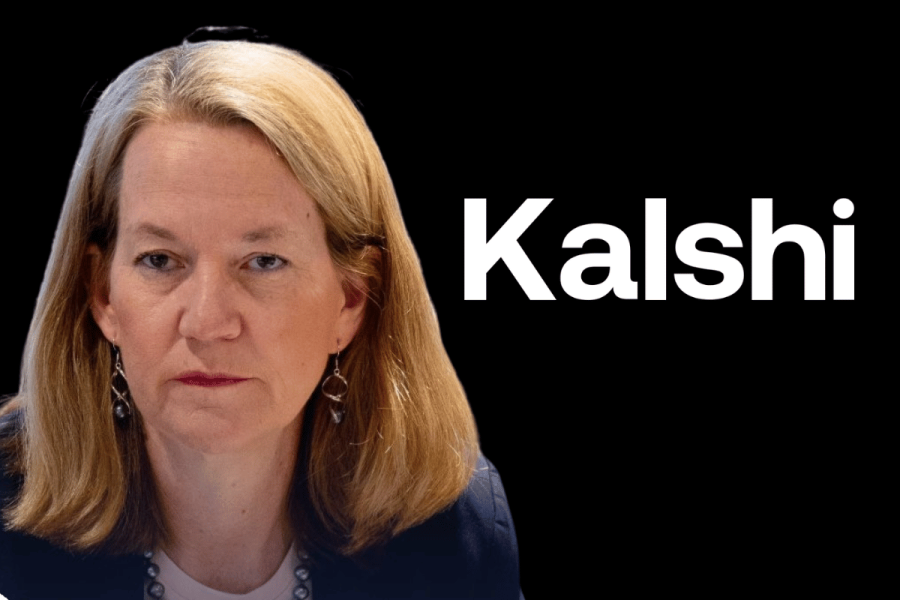
Featured image: Kalshi / AZ Attorney General Kris Mayes via X
The post Federal judge denies Kalshi’s emergency request in Arizona as state brings unprecedented criminal case appeared first on ReadWrite.
This articles is written by : Nermeen Nabil Khear Abdelmalak
All rights reserved to : USAGOLDMIES . www.usagoldmines.com
You can Enjoy surfing our website categories and read more content in many fields you may like .
Why USAGoldMines ?
USAGoldMines is a comprehensive website offering the latest in financial, crypto, and technical news. With specialized sections for each category, it provides readers with up-to-date market insights, investment trends, and technological advancements, making it a valuable resource for investors and enthusiasts in the fast-paced financial world.