

For small business owners, inventory management can feel like a constant juggling act. Order too little, and you miss out on sales. Order too much, and you tie up cash flow in products that gather dust.
It’s a delicate balance, but mastering ecommerce inventory management is the secret weapon of successful online retailers.
Ready to stop guessing and start growing? In this blog post, we’ll break down everything you need to know about managing your stock, choosing the right tools, and setting your business up for scalable success.
Understanding Ecommerce Inventory Management
At its core, ecommerce inventory management is the process of sourcing, storing, and selling inventory. It involves tracking stock levels, managing orders, and ensuring that you have the right products in the right place at the right time.
For a small business owner, this isn’t just about counting boxes in a garage or warehouse. It’s about data. It’s about knowing exactly what you have on hand, what’s selling fast, and what needs to be reordered before you disappoint a customer.
Effective inventory management for ecommerce covers the entire supply chain:
- Sourcing: Ordering products from suppliers.
- Storage: Organizing goods in your warehouse or storage facility.
- Tracking: Monitoring stock levels across all sales channels.
- Fulfillment: Picking, packing, and shipping orders to customers.
- Forecasting: Predicting future demand to prevent overstocking or stockouts.
When you have a handle on these processes, you gain visibility into your business that spreadsheets simply can’t provide.
Why Effective Inventory Tracking Matters
You might think, “I’m small enough to update stock levels manually in a spreadsheet.” But as you grow, reliance on memory or messy notebooks becomes a recipe for disaster.
Implementing a solid ecommerce inventory management system offers tangible benefits that directly impact your bottom line.
Reducing Operational Costs
Holding inventory costs money. You have to pay for storage, insurance, and the opportunity cost of cash tied up in unsold goods. By optimizing your stock levels, you reduce “dead stock”—items that never sell—and free up capital to invest in products that actually move.
Preventing Missed Sales
Nothing kills a sale faster than a customer falling in love with a product only to find it’s unavailable.
Stockouts cost more than just one sale. They can also cost you future sales, because customers won’t return to a store that’s often out of stock.
Proper tracking ensures you replenish popular items before they hit zero.
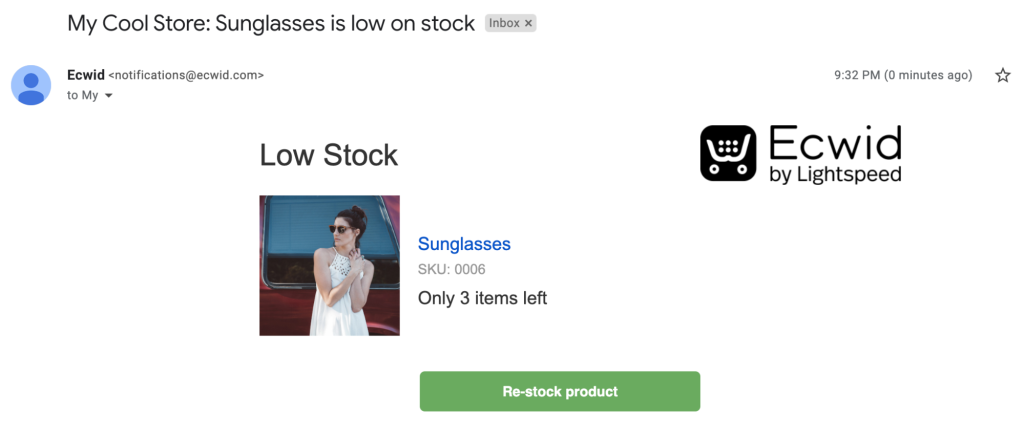
Ecwid sends you low-stock notifications automatically, so you can restock products on time
Improving Customer Satisfaction
Accurate inventory data leads to accurate order fulfillment. When your system says an item is in stock, it actually is. This prevents the nightmare scenario of having to email a customer to cancel their order because of an inventory error.
Happy customers leave positive reviews, and positive reviews drive more sales.
Key Inventory Challenges for Small Businesses
Even with the best intentions, ecommerce inventory management comes with hurdles. Recognizing these challenges is the first step toward overcoming them.
Balancing Stock Levels
The “Goldilocks” problem is real: you don’t want too much stock, and you don’t want too little. Finding that “just right” amount requires understanding your sales velocity and lead times (how long it takes for a supplier to deliver new stock).
Multichannel Selling Complexity
If you sell on your own website, Amazon, eBay, and social media, you have a major challenge. Without a centralized system, selling an item on eBay might not automatically update your website’s stock count. This leads to overselling—selling a product you no longer have.
Managing Returns
Returns are an inevitable part of ecommerce. Getting that returned item back into your inventory system quickly so it can be resold is crucial for maintaining accurate counts and recovering revenue.
Choosing the Ecommerce Inventory Management Software
To scale effectively, you eventually need to graduate from manual spreadsheets to dedicated software. But with so many options, how do you choose the best ecommerce inventory management software for your specific needs?
Here are the critical features to look for:
- Real-time syncing: The software must update inventory levels across all your sales channels instantly.
- Automation: Look for tools that automate purchase orders, low-stock alerts, and shipping labels.
- Ease of use: If the interface is too complex, you won’t use it. The best inventory management software for ecommerce is intuitive and user-friendly.
- Scalability: Will the software grow with you? You don’t want to migrate to a new system just because you added a new product line.
- Reporting: You need detailed reports on sales trends, best-sellers, and slow-moving items to make informed decisions.
Whether you are looking for standalone inventory management software for ecommerce or an all-in-one platform, prioritize integration. Your inventory tool needs to talk to your accounting software, your shipping provider, and, most importantly, your ecommerce platform.

A Product Sales and Stock Overview report in Ecwid helps you stay on top of your inventory
Optimizing Your Inventory Management Workflow
Software is powerful, but it needs to be paired with good physical processes. Here is how to organize your operations for maximum efficiency:
Organize Your Space
Whether it’s a warehouse or a spare room, implement a logical system. Place best-selling items nearest to the packing station to reduce travel time. Use clear labeling for shelves and bins.
Conduct Regular Audits
Even with software, physical counts are necessary. You don’t have to shut down operations for a week to do a full inventory count; try “cycle counting,” where you count a small section of inventory every day or week.
Forecast Demand
Use historical sales data to predict seasonal spikes. If you know you sell 300% more scarves in November, order them in September. Don’t wait until the rush hits.
Ecommerce Inventory Management with Ecwid
If the idea of buying expensive, standalone software sounds daunting, we have good news. You might not need it yet.
Ecwid by Lightspeed is an ecommerce platform designed to make selling online simple, including managing your stock. For many small businesses, Ecwid serves as a powerful ecommerce inventory management system right out of the box.
Built-in Inventory Tracking Tools
With Ecwid, you don’t need a separate spreadsheet. You can specify the stock quantity for every product in your store directly in your dashboard.
- Automatic updates: Ecwid automatically reduces your inventory count the moment an order is placed.
- Sold out labels: When a product hits zero, Ecwid automatically applies a “Sold Out” label and hides the “Add to Cart” button, preventing overselling. (You can also set a different behavior for out-of-stock products, if needed.)
- Low stock notifications: You can choose to receive an email notification when a product quantity gets low, so you have plenty of time to restock before you run out.
- Pre-orders: Want to keep selling even when stock is out? You can enable pre-orders, allowing you to capture revenue while you wait for your supplier.
- Built-in reports: The Product sales and stock overview report summarizes what you’ve sold in a specific timeframe and your current stock levels. This helps you spot sales trends and identify which products to discount or restock.
Multi-Channel Selling
Ecwid effortlessly connects with social media platforms like Meta and marketplaces such as Amazon and eBay, enabling you to sell your products across multiple channels.
Keeping track of inventory manually across all these platforms would be overwhelming, but with Ecwid, there’s no need to worry.
Your products and orders are automatically synced, and everything can be managed from a single, convenient dashboard — the Ecwid admin.
This not only eliminates the risk of overselling but also saves you valuable time by streamlining product and order management across multiple platforms.
Integrations with Popular Software
As your business grows, you might need highly specialized features such as multi-warehouse management or raw materials tracking.
Ecwid has you covered there, too. It integrates seamlessly with the best ecommerce inventory management software on the market.
You can easily connect your Ecwid store to top-tier apps like Katana, ShipStation, Xero, and other specialized inventory tools found in the Ecwid App Market. This allows you to keep your familiar Ecwid storefront while powering up your backend operations.
Start Taking Control of Your Inventory
Effective ecommerce inventory management isn’t just about avoiding chaos—it’s about building a foundation for growth. By understanding your stock, optimizing your processes, and leveraging the right tools, you can stop worrying about fulfillment and start focusing on your brand.
Don’t let inventory headaches hold you back. With Ecwid, you get a robust platform that handles the basics beautifully and scales with you when you’re ready for the big leagues.
Create your Ecwid store today and experience how easy inventory management can be.

- Edit Products in Bulk
- Everything You Need to Know About Inventory Management Software (+ Top 5 Best Solutions)
- Inventory Control Procedures: How to Control Your Store Inventory
- SKU Explained in Simple Words
- How GS1 GTINs Can Power Your Ecommerce Business
- Forecasting Demands: Strategies to Avoid Stockouts and Overstocking
- Finding the Optimal Way to Store Your Products
- How to Optimize Inventory Levels Without Sacrificing Sales
- Top Three Inventory Headaches and How to Fix Them
- Healthy Inventory Turnover Ratio for Retail Businesses
- What Does Deadstock Mean? A Guide for Small Business Owners
The post How to Master Ecommerce Inventory Management first appeared on Ecwid | E-Commerce Shopping Cart.
This articles is written by : Nermeen Nabil Khear Abdelmalak
All rights reserved to : USAGOLDMIES . www.usagoldmines.com
You can Enjoy surfing our website categories and read more content in many fields you may like .
Why USAGoldMines ?
USAGoldMines is a comprehensive website offering the latest in financial, crypto, and technical news. With specialized sections for each category, it provides readers with up-to-date market insights, investment trends, and technological advancements, making it a valuable resource for investors and enthusiasts in the fast-paced financial world.