When it comes to knowledge there are things you know as facts because you have experienced them yourself or had them verified by a reputable source, and there are things that you know because they are common knowledge but unverified. The former are facts, such as that a 100mm cube of water contains a litre of the stuff, while the latter are received opinions, such as the belief among Americans that British people have poor dental care. The first is a verifiable fact, while the second is subjective.
In our line there are similar received opinions, and one of them is that you shouldn’t print with old 3D printing filament because it will ruin the quality of your print. This is one I can now verify for myself, because I was recently given a part roll of blue PLA from a hackerspace, that’s over a decade old. It’s not been stored in a special environment, instead it’s survived a run of dodgy hackerspace premises with all the heat and humidity that’s normal in a slightly damp country. How will it print?
It Ain’t Stringy
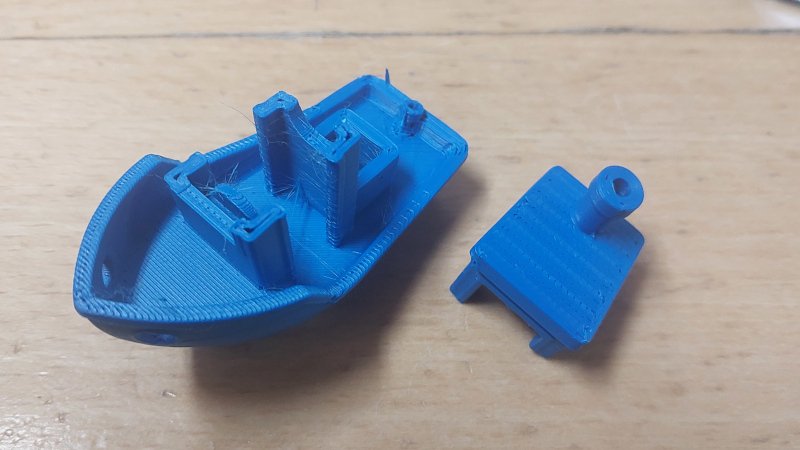
In the first instance, looking at the filament, it looks like any other filament. No fading of the colour, no cracking, if I didn’t know its age it could have been opened within the last few weeks. It loads into the printer, a Prusa Mini, fine, it’s not brittle, and I’m ready to print a Benchy.
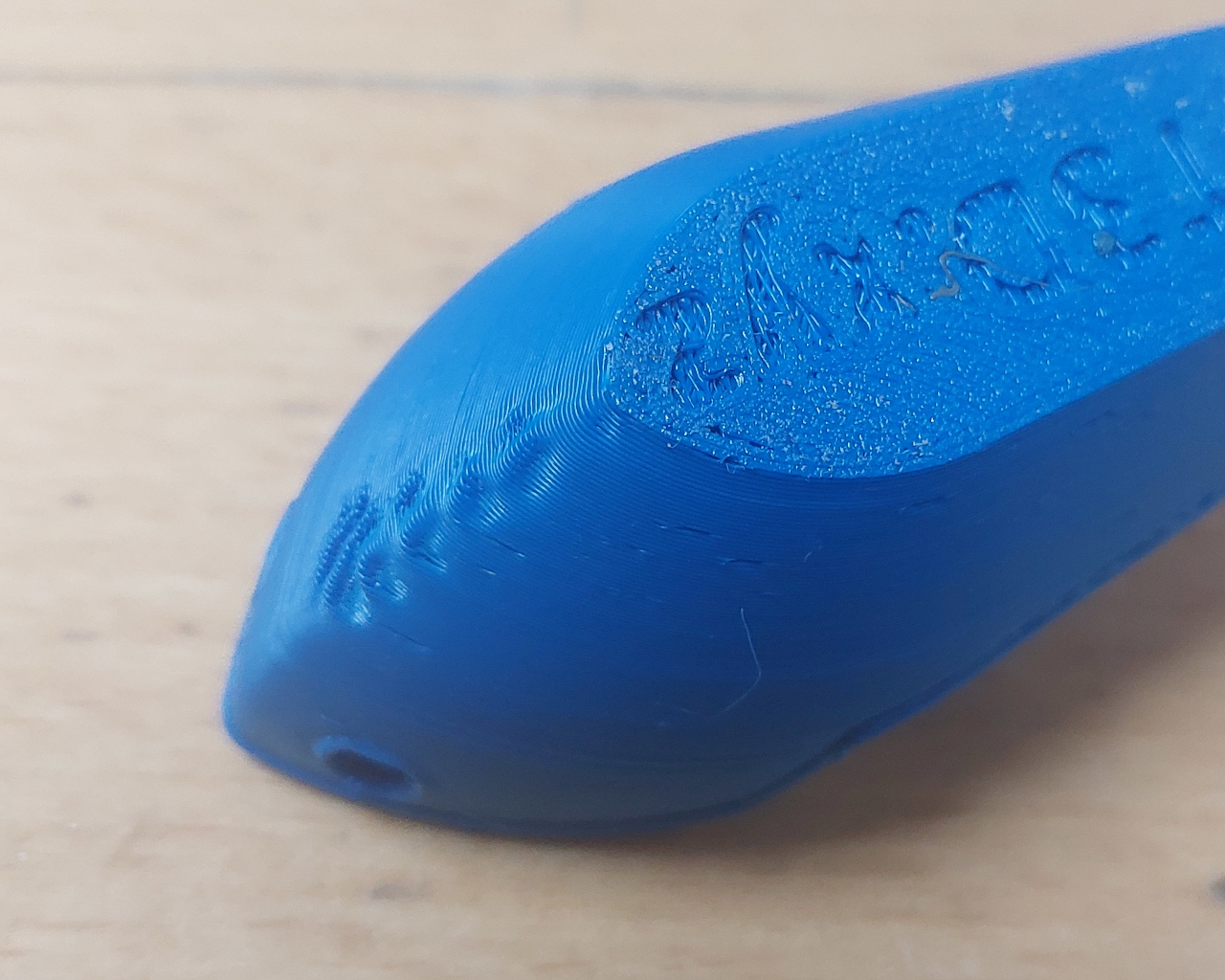
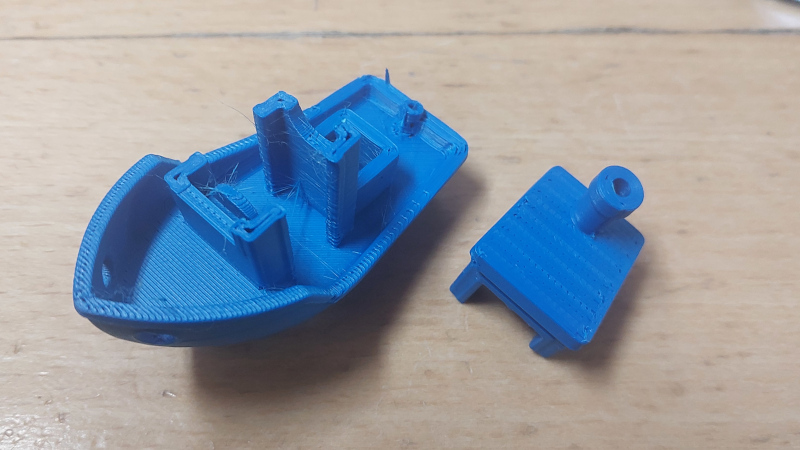
My first surprise on printing the Benchy is that it’s a pretty good print. Received Opinion tells me that PLA is hydrophobic, and if you leave some out for a decade it will absorb so much moisture as to be unusable. In fact I was expecting a very stringy print indeed because I’ve seen that before with filament left out for about a year in the damp British climate. But this Benchy had almost no hairiness, its only flaw was a little bit of collapse along its prow line. I know the Mini isn’t at fault here as I’ve seen it print a flawless Benchy with new PLA, so that’s strike one to the ancient plastic.
Manipulating the Benchy, I found strike two. This is a reasonable print, but with not-too-hard pressure on the cabin I could snap it. The layer adhesion wasn’t as much as it is with a new-filament Benchy, and it has broken cleanly along the layer lines in the cabin pillars. Since snapping a Benchy isn’t a quantitative measure of how much the layer adhesion had degraded, I decided to formulate a test for layer adhesion. If I print something designed for measuring layer adhesion failure in both this old PLA and some new PLA, I can compare the two. It’s not perfect as I don’t have a new reel of the same formulation as the old stuff, but it’ll be close enough.
Punishing Prints, And Risking Holes In The Floor
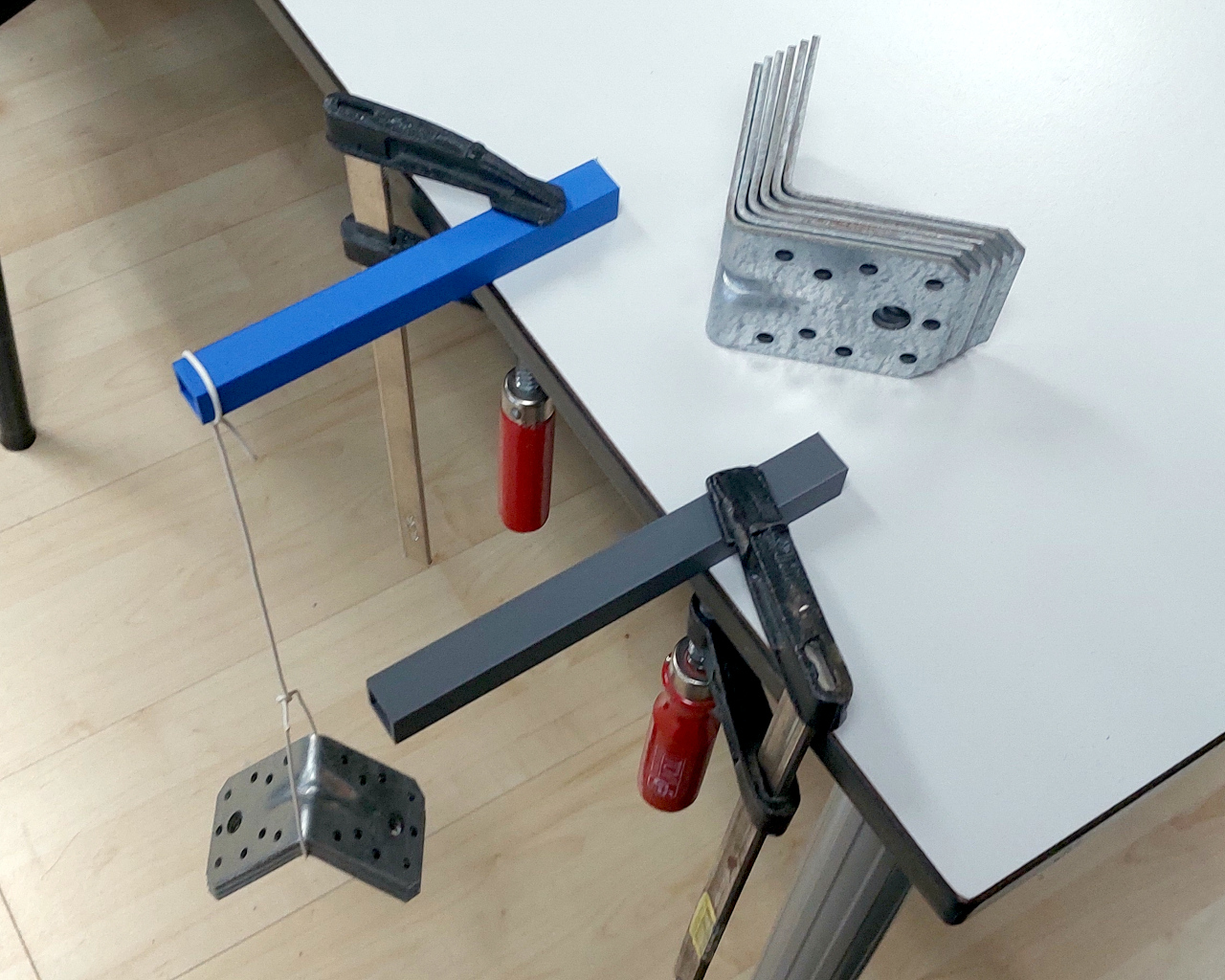
What I have come up with is a 150 mm long box section with a 2 mm wall. If I clamp the first 5 0mm to the edge of a table, I can apply a force to the far end of the 100 mm poking out into free space, and find its breaking point. To that end I’ve printed two, one in my blue old PLA, and another in brand new grey PLA. I’m dangling a collection of angle brackets each of which weighs 130 g from the end of the box section, and adding brackets until it breaks.
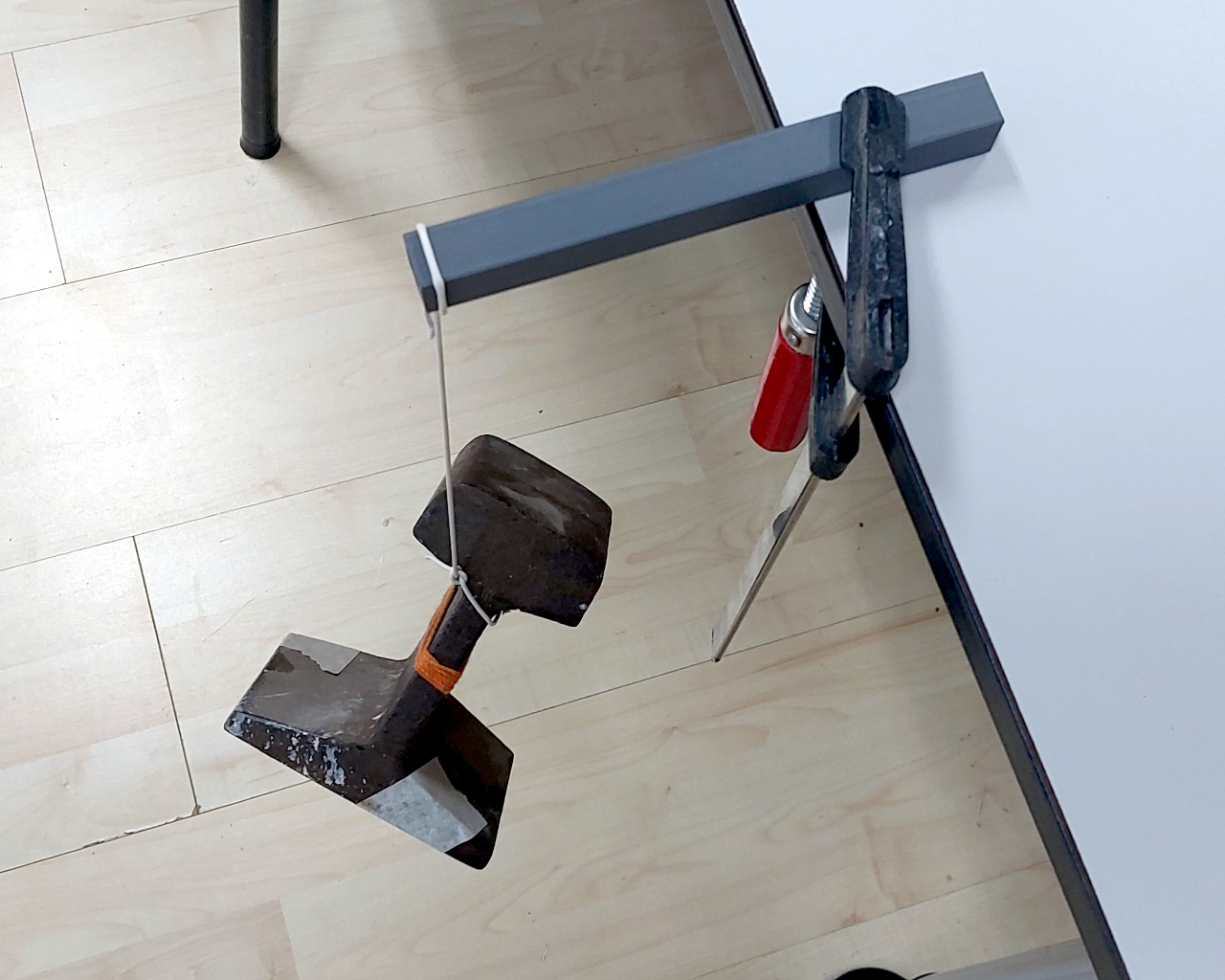
I had only twenty brackets, and as expected the old PLA broke first, at ten brackets, or a 1.3 kg load. My back of the envelope calculation from high school physics gives me about a 130 N force on the top edge of the layer boundary over the fulcrum on the edge of the table to do this. I ran out of brackets and other hardware to try to break the grey box section, and finally admitted defeat when it refused to break with a 3 kg piece of rail I’ve been hoarding to make an anvil dangling from its end. I have proved that layer adhesion with ancient PLA is more than three times weaker than on the same printer with new PLA. It’s interesting when examining the break, the layers have parted very cleanly, this is not tearing of the PLA but simply poor adhesion between layers.
In doing these experiments I’ve discovered, not unexpectedly, that ancient PLA isn’t as good as new PLA. I am assuming that this was as good a PLA as the modern stuff when it was new — indeed I remember printing back in the day and my prints seemed just as good as today. What does surprise me though is that how it’s deteriorated isn’t what I expected. It produces good prints in terms of their physical form, without the hairiness I was expecting. In turn I didn’t expect the prints with this stuff to be weak, so what’s going on?
When The Volatiles Depart, What’s Left?
PLA filament is not pure PLA, instead it has chemicals added to modify its properties. The most obvious one in this reel is the blue pigment, but others might modify its plasticity or melting characteristics, to name two possibilities. These are not going to be stable solids like the polymer, instead they will be volatile compounds which are capable of evaporating over time.
I’m no polymer chemist, so I’ll draw my engineer’s conclusions here and prepare for a roasting from the chemists if I’m wrong. What I think has happened is that the volatile additives in the filament have departed over the years, and both the stringiness in damp newer PLA and the strength in prints made with new PLA are as much due to their presence or absence as to the PLA itself. In my tests here I think I have seen something closer to PLA alone with the additive chemistry absent, and along the way I may have touched on why the manufacturers add it in the first place.
It’s likely few of you are printing using ancient PLA, so while interesting, these results have limited direct relevance to your printing. But I have to wonder whether there’s a lesson to be learned in filament storage, and perhaps using a warm environment to stave off moisture might hasten the departure of those volatiles. Perhaps the best thing is not to be a hoarder, and to use your filament up as quickly as you can. Meanwhile, this isn’t the first time we’ve ventured into backyard physical measurements.
This articles is written by : Nermeen Nabil Khear Abdelmalak
All rights reserved to : USAGOLDMIES . www.usagoldmines.com
You can Enjoy surfing our website categories and read more content in many fields you may like .
Why USAGoldMines ?
USAGoldMines is a comprehensive website offering the latest in financial, crypto, and technical news. With specialized sections for each category, it provides readers with up-to-date market insights, investment trends, and technological advancements, making it a valuable resource for investors and enthusiasts in the fast-paced financial world.