5G has only been around for a few years. The technology is still far from living up to everything that operators, manufacturers, and other players in the industry promised before its launch. But just like then, the same players have already started talking about 6G.
So what is the plan for the next generation of mobile networks? When will it be launched, and what practical differences can ordinary consumers expect?
10-year product cycle
Ever since the infancy of mobile telephony in the 1980s, there has been a major technological shift approximately every 10 years. NMT was replaced by GSM (later called “2G”) in the early 1990s, which was replaced by UMTS and CDMA 2000 (3G) around the turn of the millennium. Ten years later, LTE (4G) made its entrance, and around 2020, parts of 5G began to roll out.
It is therefore hardly surprising that the mobile industry is aiming to launch 6G around 2030. But just as with previous generational shifts, no one expects operators to one day switch on the new network and suddenly all the new technologies that have been in development over the past decade will work.
And just as 3G received a major upgrade with “3.5G” (HSUPA) and 4G with LTE-Advanced and later LTE-Advanced Pro, the planned innovations in 6G are expected to come in waves over the next 10 years.

Anna-Lena Lundqvist
Tommy Svensson, professor at Chalmers, lists the highlights of 6G: More robust and energy-efficient wireless communication, AI-driven mobile networks with AI processing in the networks, the possibility of radio sensing and sensor data combining.
He also says that 6G will bring higher speeds, higher capacity per square meter and shorter response times.
Who is behind 6G?
The development of new mobile technologies is driven by a large number of players around the world. The central organizer is the UN agency International Telecommunication Union (ITU-R). Technical development is mainly driven by the organizations 3rd Generation Partnership Project (3GPP) and Next Generation Mobile Networks (NGMN), whose members include technology companies, network operators, and academics.
“The architecture is currently being designed. The specifications are expected around 2028. Right now, there is an intense global battle for technological leadership. China, the U.S., and the EU are all investing billions in research programs to ensure that their patents and visions will be the ones that determine the final standard,” says Mikael Gidlund.
During the MWC trade show in Barcelona at the end of February, Nvidia unveiled an initiative that could have major consequences for this development. With support from Swedish companies such as Ericsson and Nokia, operator giants such as Deutsche Telekom and Softbank, and encouragement from the U.S. government through a collaboration with the Linux Foundation, Nvidia will ensure that the 6G standard is the first to be largely open source.
Radar everywhere
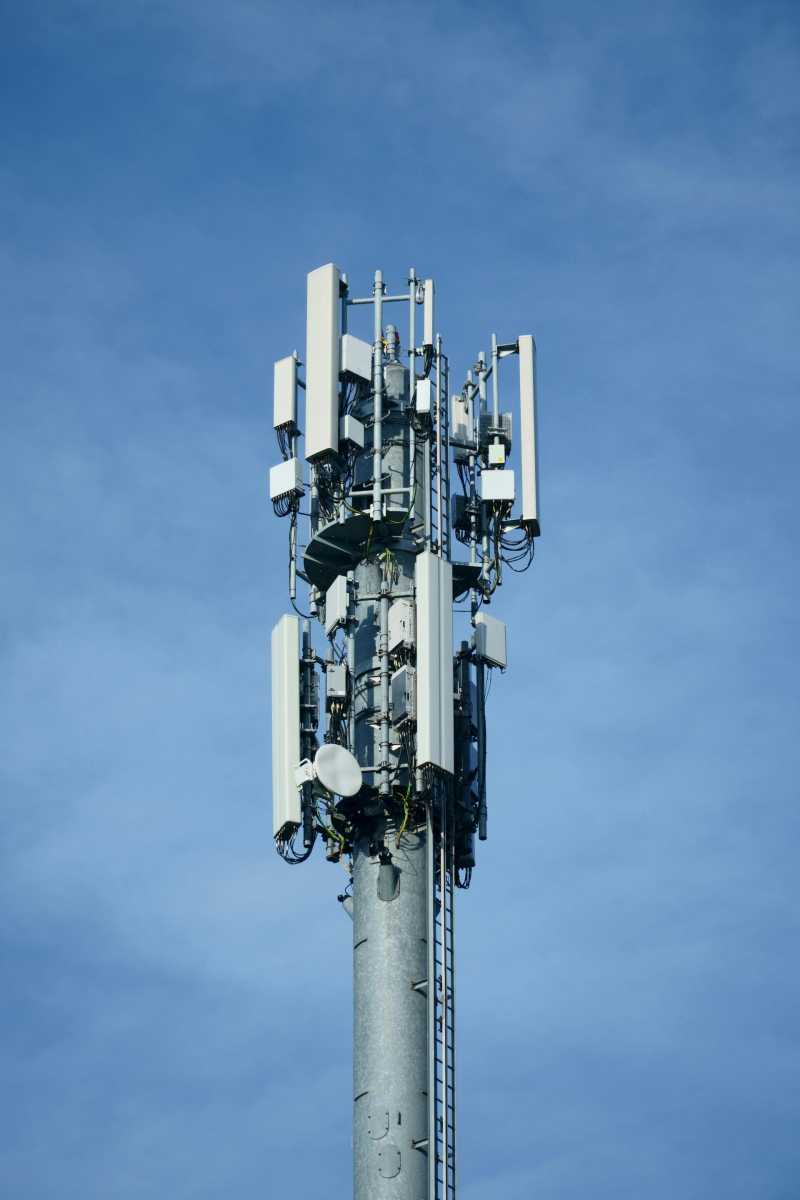
One of the planned new features in 6G is called Integrated Sensing and Communication, or ISAC.
“It’s the big talking point that’s getting the most attention right now. ISAC means that we will no longer see the mobile network as just a way to transport data. Instead, radio waves will be transformed into a sensor, a kind of radar. The network can ‘see’ and measure distance, speed, and movement with centimeter precision without the devices needing GPS or cameras. This opens doors for everything from traffic monitoring to fall detection in healthcare,” says Mikael Gidlund, professor at Mid Sweden University.
The idea that all mobile phone masts could be able to sense their physical surroundings and detect presence or movement may sound like science fiction — and also like a nightmare from a privacy perspective. This is something Mikael Gidlund is well aware of.
“This is one of the most important technical challenges that must be solved for the technology to gain acceptance. The goal is to design the system according to the principle of ‘privacy by design.’ ISAC works like a radar, not a camera. It works with anonymous point clouds rather than biometric data. We can see that someone has fallen and needs help, but not who it is. By allowing data processing to take place locally in the mast and building technical barriers to identification directly into the standard, we can actually increase privacy by replacing cameras in sensitive environments. Anonymization is not an option — it is a technical prerequisite for trust.

Tina Strafrén
Financially, network operators hope that technologies such as ISAC will be marketable to companies that want to run autonomous drones that scan their surroundings and stay in the right place, for example.
A related innovation that also takes advantage of the air being full of radio waves is the “zero-energy internet of things.” This is a concept involving small sensors that do not need batteries but are powered by energy extracted from the environment, in this case radio waves in the mobile network (but it can also be via temperature differences, light, vibrations, or other means).
The technology is reminiscent of the RFID chips found in some retail goods that trigger an alarm if you get too close to the exit. However, these sensors can read their environment in different ways and do not need to be located right next to a base station. Ericsson has an interesting article on this if you are curious and want to know more.
Smart surfaces
There is great interest among researchers in a new development called Reconfigurable Intelligent Surfaces. This involves using smart materials to improve coverage in urban environments by reflecting and directing signals around corners, so that fewer places end up in radio shadow.
An example: You are standing next to a large building. On the other side of the building is a mobile phone mast. The signal has difficulty reaching you through the concrete, glass, and steel of the building, but on the other side of the road is another building whose façade has been coated with this type of smart surface. This allows the signal from the mast to bounce off the façade and easily reach you.
This sounds fantastic, but Mikael Gidlund is pessimistic.
“It’s an elegant solution on paper for solving range problems, but in reality we are struggling with difficult business models. Who will own and maintain these surfaces? Operators are skeptical about the logistics, even though the technical potential is exciting.

AI built into the network
6G is being developed at the same time as another huge technological shift has swept across the world: AI. And since AI is set to be everywhere, it is not surprising that it is taking center stage in the development of the 6G network.
“A fundamental change is that 6G is designed as an ‘AI-native network.’ Intelligence is built into the network’s foundations to optimize operation and energy consumption,” says Mikael Gidlund.
“AI-native” also means that the base stations themselves will have the capacity to run AI algorithms for various purposes. What could that mean in practice? Lightweight AR glasses where the network provides the computing power, for example,” says Mikael Gidlund.
“But let’s be honest: Holographic living rooms by 2030 are more of a visionary image than a practical consumer product. The main consumer benefit will be a robust network. It simply must not go down, regardless of external stresses.”
Analyst Ian Fogg explains the idea to The Verge: People move between different locations, and it is not practical to store information about all these locations in the mobile phone to which the glasses are connected. But a base station can store up-to-date information about everything in its surroundings, which can be communicated immediately to users who are located there.

Filling in the blank spots on the map
According to Mikael Gidlund, the innovation that could be of most practical use to ordinary users is something called Non-Terrestrial Networks. This involves using satellites for communication when there is no mobile phone mast nearby.
“Today, satellite communication is often expensive and separate, but in the 6G era, the mobile network will become three-dimensional. Your regular phone will be able to switch to a satellite when you leave the range of the terrestrial network. For consumers, this means a whole new level of coverage. The last “white spots” on the map in the forest, at sea, or in the mountains will disappear or become fewer, which is a huge safety gain.
With 6G, the total capacity of each base station is expected to be significantly higher, both at higher frequencies and at the lower frequencies used over longer distances and to reach inside buildings. Mikael Gidlund is hopeful that 6G will eventually overcome “network collapses” in crowded arenas and similar venues, where thousands of people gathered in a small area cause mobile networks to be unable to cope with the enormous pressure.

New frequencies
While mobile networks currently use frequencies below 6GHz and above 24GHz, there is discussion about how the space in between should be used. Mikael Gidlund calls the centimeter band (7- to 15GHz) “6G’s workhorse,” something that Ericsson also highlights in a report on 6G development.
Tommy Svensson points out that the allocation of frequencies in this range has not yet been decided anywhere in the world. In Europe, the frequency bands 7.125- to 7.25GHz, 7.75- to 8.4GHz, and 14.8- to 15.35GHz are being discussed. It is thanks to this range that ISAC and 6G’s higher capacity can become possible, says Mikael Gidlund.
The companies developing 6G technology are also interested in the terahertz bands, frequencies above 100GHz. In theory, these can provide extreme speeds, but Mikael Gidlund is skeptical about their social benefits and believes that they will remain niche solutions for controlled environments such as factory floors.
“The biggest challenge for operators is to avoid being forced into a massive rollout of thousands of new small cells. The success of the 6G standard depends on whether we can squeeze maximum performance out of the bands between 6- and 15GHz. Anything higher than that is research. Anything lower than that is coverage,” summarizes Mikael Gidlund.
This articles is written by : Nermeen Nabil Khear Abdelmalak
All rights reserved to : USAGOLDMIES . www.usagoldmines.com
You can Enjoy surfing our website categories and read more content in many fields you may like .
Why USAGoldMines ?
USAGoldMines is a comprehensive website offering the latest in financial, crypto, and technical news. With specialized sections for each category, it provides readers with up-to-date market insights, investment trends, and technological advancements, making it a valuable resource for investors and enthusiasts in the fast-paced financial world.