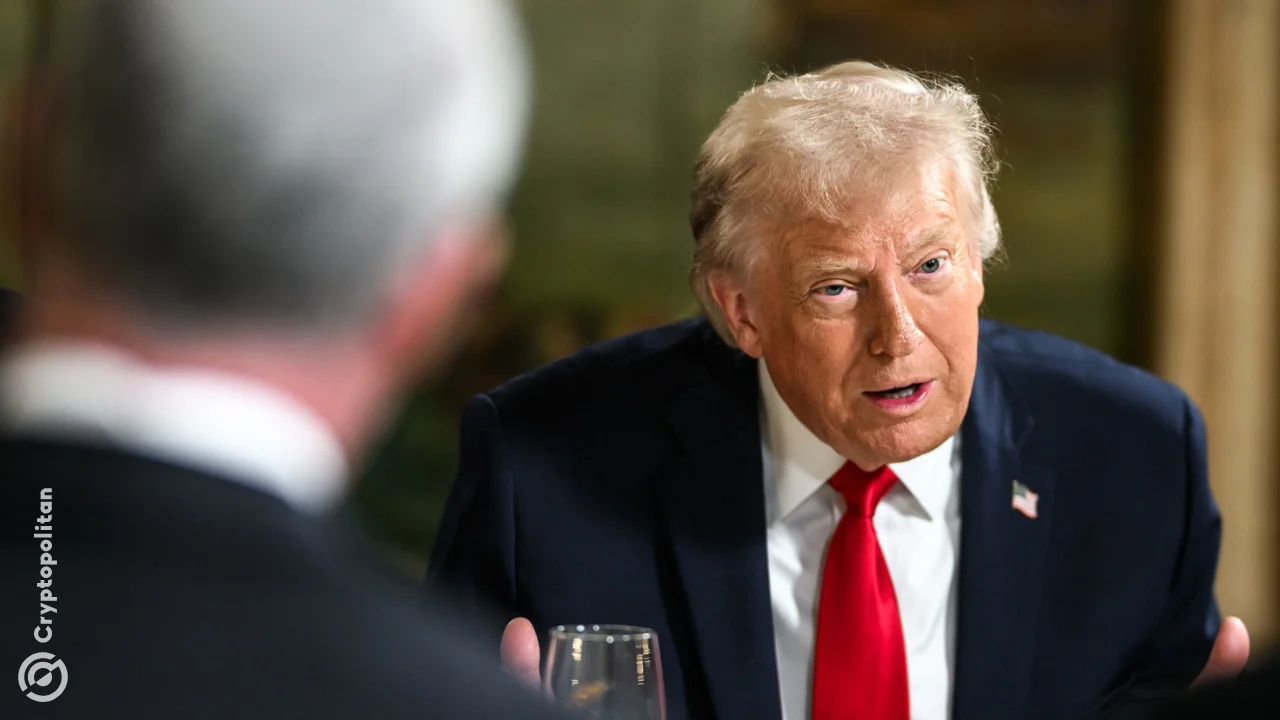
After the country’s top court undermined its import tax program and opened formal investigations against 16 trading partners, the White House rushed on Wednesday to rescue its trade war while scurrying to find new legal ground.
On February 20, the Supreme Court found 6-3 that President Trump lacked the legal authority to impose broad tariffs using the International Emergency Economic Powers Act. Within hours of the ruling, Trump unveiled a two-step plan to uphold the duties through various legal channels.
The first move was slapping a 15% tariff on imports from across the board for 150 days using Section 122 of the Trade Act of 1974. The second was opening a round of investigations under Section 301 of the same law, a process that could produce tariffs with much longer staying power.
U.S. Trade Representative Jamieson Greer spoke to reporters on Wednesday, saying the Section 301 probes would examine whether the countries being targeted have been playing by the rules when it comes to trade.
Under the law, if investigators find that a country has engaged in unfair trade practices, the U.S. can hit its goods with tariffs. Scott Bessent, the Treasury Secretary, expressed optimism that the duty rates would revert to their previous levels in five months.
“It’s my strong belief that the tariff rates will be back to their old rate within five months,” Bessent said. He also pointed out that Section 301 has “survived more than 4,000 legal challenges,” suggesting the administration feels the legal footing is solid this time around.

Unfair trade practices under investigation
The investigation’s central allegation is that foreign governments have allowed their industries to develop considerably more production capacity than would be necessary to meet real market demand, which has resulted in an overabundance of commodities on international markets.
According to Greer, output capacity has increased well above what would be required by typical demand.
The government believes the program will succeed in court due to the evidence-based basis of the investigations and the legal background of Section 301. With the intention of reverting to previous tariff levels by the summer of 2026, officials believe the temporary 15% tax allows them breathing room while the longer process takes place.
An approach with inherent conflict
However, there are challenges on the road. Because these investigations take time and require public involvement, even on a fast track, the process may not be completed before the 150-day deadline expires. Retaliation, exemptions, or a shift in supply chains away from U.S. consumers are all possible options for trading partners.
In order to lessen their reliance on American markets, European, Asian, and other allied economies have already begun subtly strengthening their economic links with one another. The tariffs may also be slowed or stopped by World Trade Organization cases or new legal disputes in the United States.
Economists and analysts have pointed to a deeper problem at the heart of the administration’s strategy. If tariffs succeed in pushing factories back onto American soil, fewer imports come in and tariff revenue drops. However, if the government counts on those tariffs to raise money, imports have to keep coming, which means the manufacturing jobs may never return.
Both goals, analysts say, cannot be reached at the same time. With the IEEPA decision, Trump’s “trade wall” lost its emergency-power basis.
Although Section 301 allows them to add more focused tariffs to some sections of the trade wall, it falls well short of the massive, all-encompassing barrier that Trump first intended to impose on his own. And in the long run, this will remain somewhat leaky and half-built until other nations genuinely agree to reduce all that excess production capacity.
Despite the legal defeat, Greer said the overall direction of trade policy has not shifted.
“Protect American jobs and to make sure we have fair trade with our trading partners,” he said, summing up the administration’s stated aims.
Want your project in front of crypto’s top minds? Feature it in our next industry report, where data meets impact.
This articles is written by : Nermeen Nabil Khear Abdelmalak
All rights reserved to : USAGOLDMIES . www.usagoldmines.com
You can Enjoy surfing our website categories and read more content in many fields you may like .
Why USAGoldMines ?
USAGoldMines is a comprehensive website offering the latest in financial, crypto, and technical news. With specialized sections for each category, it provides readers with up-to-date market insights, investment trends, and technological advancements, making it a valuable resource for investors and enthusiasts in the fast-paced financial world.