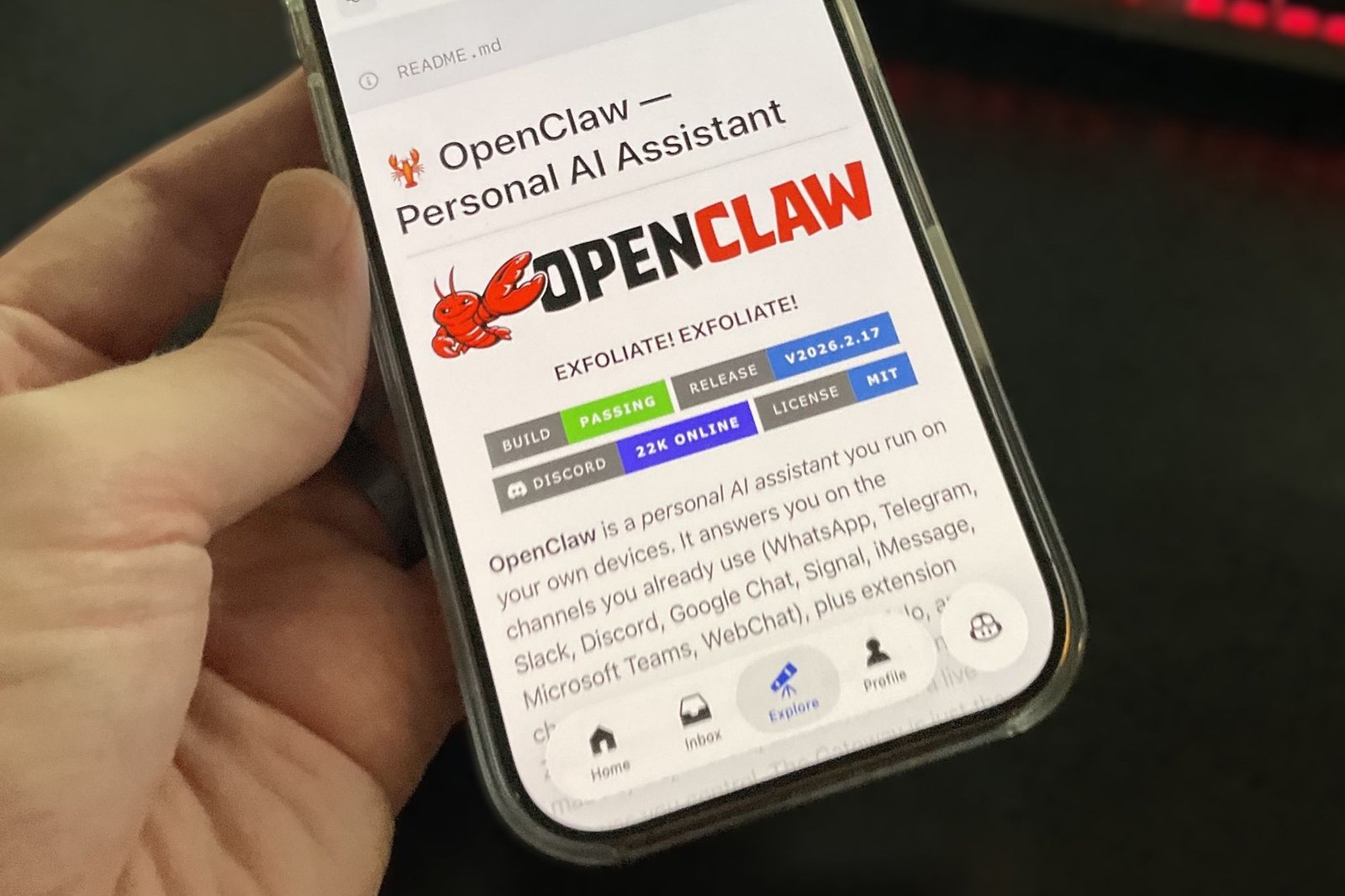
If you’ve been using your flat-rate Claude or Gemini account to feed OpenClaw and its eye-popping AI abilities, get ready to be banned.
Specifically, those who’ve used their Claude and Google OAuth credentials for OpenClaw, the viral AI sensation that can gobble up millions of AI tokens in a single afternoon, have seen both Anthropic and Google ban their AI accounts. The bans frequently come without warning, and many who’ve tried to find out what happened or get their accounts reinstated have been met with silence.
Of course, you can always dodge the banhammer by creating a new Claude or Google account, and it’s worth noting that most banned Google AI users are still able to access their Gmail, Google Drive, and other core Google services.
Still, it’s not fun to get locked out of the $200-a-month Claude or $250-a-month Google AI account you’ve been actively using for OpenClaw and other tools, including Google’s popular Antigravity coding tool, particularly given the lack of refunds.
“Pretty draconian from Google,” wrote OpenClaw creator Peter Steinberger on X, who added that he would likely remove support for using Google’s Antigravity OAuth credentials to power the viral AI agent. “Be careful out there if you use Antigravity.”
Responding to the hubbub on X, Google DeepMind engineer Varun Mohan said the company has “been seeing a massive increase in malicious usage of the Anitgravity backend that has tremendously degraded the quality of service for our users. We needed to find a path to quickly shut off access to these users that are not using the product as intended. We understand that a subset of these users were not aware that this was against our ToS and will get a path for them to come back on but we have limited capacity and want to be fair to our actual users.”
While both Anthropic and Google are cracking down on the use of flat-rate OAuth credentials for OpenClaw, ChatGPT isn’t wielding the banhammer yet–perhaps because OpenClaw creator Steiberger is now among OpenAI’s newest employees. OpenClaw itself is still an open-source tool, albeit with the backing of OpenAI.
To understand the hubbub over Anthropic and Google’s bans for OpenClaw use via OAuth credentials, you must know the difference between OAuth and API access to Claude and Gemini.
Even if you don’t know what OAuth access is, you likely use it all the time. Whenever you log into a third-party service using one of those “Login with Google,” “Login with Facebook,” or “Login with Apple” buttons, that’s OAuth at work. Now, the Claude and Google bans for OAuth users connecting to OpenClaw aren’t about OAuth per se; instead, it’s the fact that OAuth credentials are used for authenticating flat-rate Claude and Gemini plans.
Generally speaking, you’re not supposed to use your Claude or Google AI OAuth credentials to power third-party AI tools and services, which typically don’t enforce rate-limiting policies; instead, you’re supposed to use the Claude or Gemini API, which charge by the token rather than a flat monthly fee. (In AI lingo, a token is a tiny unit of data used by AI models to process your prompts and create content such as text, images, and video; the more you interact with an AI, the more tokens you burn.)
Still, just because you’re not supposed to use your Claude, ChatGPT, or Google OAuth credentials for an unsanctioned third-party service doesn’t mean you can’t.
For OpenClaw users to authenticate their flat-rate Claude accounts with the bot, they can grab an OAuth token (not to be confused with an LLM token) by running the Claude Code setup process, then using that token for OpenClaw rather than Claude Code. For Gemini users, a Google Antigravity plug-in for OpenClaw does the trick. (The process for connecting ChatGPT to OpenClaw via OAuth is far easier, but remember, OpenAI just hired OpenClaw’s creator and is thus more invested in OpenClaw’s success.)
But while big AI providers like Anthropic and Google may have tolerated such “hacky” OAuth authentication methods in the past, they’re now cracking down in earnest, and the explosive popularity of OpenClaw has accelerated the process.
Unlike previous third-party AI tools that more or less flew under the radar, OpenClaw went from obscurity to everywhere-all-at-once status in a matter of weeks, far outstripping the user base of previous tools.
Another difference is that OpenClaw’s jaw-dropping agentic AI abilities come at the expense of tokens–a lot of tokens, with some users astonished to find they’d used millions of tokens in a single afternoon. Simply asking your OpenClaw agent “how are you?” could chew through 30,000 tokens (or way more, if you have a lengthy OpenClaw session going), versus a couple thousand tokens for ChatGPT on the web.
From a business perspective, Anthropic and Google probably saw money going down the drain as OpenClaw users let it rip with their OAuth-enabled flat-rate AI accounts. And to the point of Google DeepMind’s Varun Mohan, the OpenClaw-driven surge in OAuth usage may have taken a toll on non-OpenClaw users on the same flat-rate plans. (Indeed, I noticed frequent “attempting to reach Gemini 3 Flash” warnings when vibe coding with Gemini CLI over the weekend. Were those connectivity issues were due to OpenClaw usage? Good question.)
To repeat, Anthropic and Google are more than happy to fund your OpenClaw habit via a pay-as-you-go API key, and indeed, some API-using OpenClaw users have run up some eye-watering bills.
But as far as using your flat-rate, OAuth-enabled Claude or Google account for OpenClaw, the party appears to be over.
This articles is written by : Nermeen Nabil Khear Abdelmalak
All rights reserved to : USAGOLDMIES . www.usagoldmines.com
You can Enjoy surfing our website categories and read more content in many fields you may like .
Why USAGoldMines ?
USAGoldMines is a comprehensive website offering the latest in financial, crypto, and technical news. With specialized sections for each category, it provides readers with up-to-date market insights, investment trends, and technological advancements, making it a valuable resource for investors and enthusiasts in the fast-paced financial world.