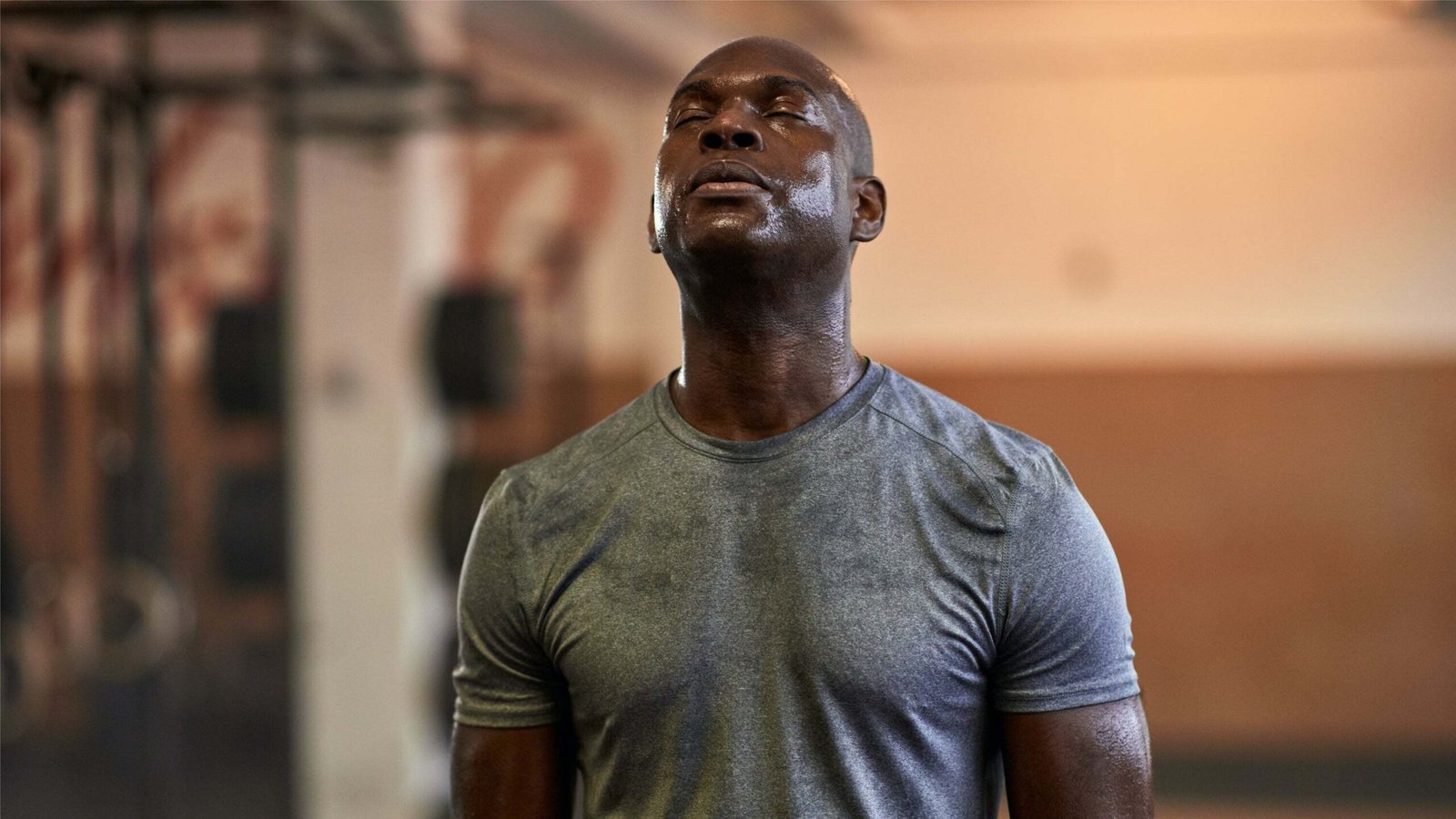
Let me introduce you to your good friend, sweat. Ignore the gross feel and the potential for B.O. for the moment, and think about what it does for you: When your body gets too hot, threatening to raise your core temperature over what’s healthy, little glands in your skin squeeze drops of moisture onto its surface. As soon as a breeze hits those droplets, they evaporate, taking some of your body heat away with them.
This is true even during exercise. It’s not the exercise that makes you sweat; exercise just raises your body heat, and it’s the heat that makes you sweat. That’s why you sweat without exercising on a hot day, and why you can sometimes exercise without sweating in a cold environment. In other words, sweat means a lot less than you might think. Sweating doesn’t mean you’re getting a good workout, doesn’t mean you’re losing weight, and it doesn’t tell you much about your fitness level. Let me explain.
You can get a great workout even if you don’t sweat very much
At the same ambient temperature, a harder workout might result in more body heat, so we’ve built up an association between sweating and working hard. It’s deceptive, though.
If you go for an hour-long run in the heat, you’ll sweat buckets. Run an hour on a treadmill at room temperature, and you may not sweat quite as much, but you’ll still be dripping. Go and run an hour in the winter, though, and you’ll barely be damp. That’s because your body doesn’t have to worry about cooling itself down.
Besides the ambient temperature, there’s another factor here: Not all workouts raise your body temperature equally. A heavy strength training workout, with plenty of rest time, may not raise your body temperature enough to make you sweat very much. That doesn’t make it a less-intense workout than, say, an easy jog. So don’t read too much into the amount you sweat.
Why do some people sweat more than others?
One of the biggest differences between people who sweat a lot and those who sweat less is body size. And by “size” I literally mean that—it doesn’t matter whether you’re fat, muscular, tall, or some combination thereof. The more of you there is, the harder your skin has to work to cool you down, and thus the more you sweat.
And then there’s the relationship between surface area and volume. The more skin you have relative to your body size, the more efficiently sweat can cool you. That means smaller people, including children, have a higher surface-area-to-volume ratio, so they can cool down with less sweat. If you lose a substantial amount of weight, you may end up sweating (slightly) less for these reasons. You have less body mass, and your surface-to-volume ratio improves a bit.
On the flip side, the fitter you are, the more you might sweat, as research suggests runners’ bodies turn on the sweat glands sooner than sedentary people, and that they sweat more during the same workout. So sweating more doesn’t mean you’re out of shape; it can mean you’re actually fitter and better adapted to the heat than people who sweat less.
Finally, if you feel like you’re the biggest sweater in your friend group, look at whether you’re actually doing appropriate comparisons. If you’re dripping when you run in the noonday sun and you see your friend post a selfie from the air-conditioned gym, you shouldn’t expect the two of you to sweat the same amount.
What’s the connection between sweat and weight loss?
Sweating a lot during a workout does not mean you’re losing fat, so let’s bust that myth right there. Sweating a lot can make you lose water weight, though, which is only temporary.
Our bodies contain a certain amount of water in our blood and in the various cells and compartments we’re made of. We can lose a little bit of it, become slightly dehydrated, and barely notice. Or we can drink a ton of water and become very hydrated, and have to pee a lot to get back to a normal level. In extreme cases, we can get so dehydrated it threatens our health, but that’s rare with normal activities.
When you sweat, and that sweat evaporates or gets rubbed off (you mop your brow with a towel, let’s say), that’s water leaving your body. You can actually weigh yourself before and after a workout and notice a change in weight if you sweat enough. Every pound of weight you lose is two cups (16 ounces) of water that has left your body. So technically you “lost weight,” but it wasn’t fat. You’re just due to drink two cups of water, and then you’ll be hydrated and happy again.
This articles is written by : Nermeen Nabil Khear Abdelmalak
All rights reserved to : USAGOLDMIES . www.usagoldmines.com
You can Enjoy surfing our website categories and read more content in many fields you may like .
Why USAGoldMines ?
USAGoldMines is a comprehensive website offering the latest in financial, crypto, and technical news. With specialized sections for each category, it provides readers with up-to-date market insights, investment trends, and technological advancements, making it a valuable resource for investors and enthusiasts in the fast-paced financial world.