
In a striking shift in Bitcoin’s global acceptance, nation-states are embracing it faster than individuals, on-chain analyst Willy Woo pointed out in a recent tweet. The revelation is an interesting way to look at things, as individuals are often viewed as the backbone of the cryptocurrency space, but that could change as nation-states scramble to find reliable hedges against inflation.
Willy Woo tweeted:
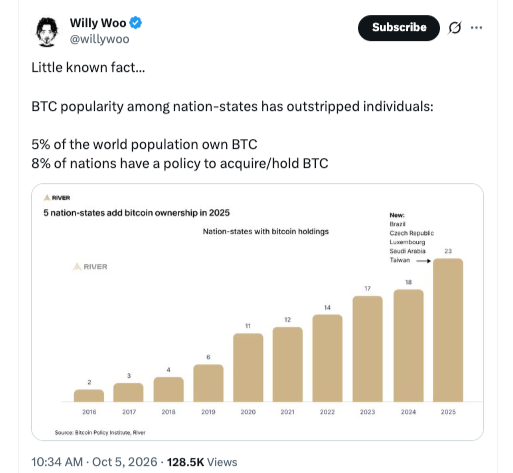
Expanding on his analysis of the actions of individuals and nation-states, Woo noted that while 8% of countries had a policy to hold/acquire BTC, 12% actually do, which makes it even more interesting for analysts. There could be multiple reasons more nations actually hold crypto than those that want to, but the obvious answer is that most of the BTC comes from law enforcement actions. The BTC eventually ends up in the state’s coffers and usually sits there for a long time before legal formalities are concluded.
Why Governments are Frontrunning Their Own Citizens in the Race to Own Bitcoin?
Woo’s list includes major nations like the USA, the UK, China, Brazil, Russia, Saudi Arabia, Ukraine, Argentina, and a handful of others. This growing state-level trend, especially in the more developed world, suggests their future positioning. Bitcoin is viewed as a reserve asset, or a tool for financial sovereignty, and nothing else compares. This is why, even with today’s subdued figures, the race is very much on and unlikely to slow over time.
The increasing state-sponsored adoption of Bitcoin is lending further legitimacy and stability to the premier digital asset, ensuring long-term demand. Bitcoin is rapidly moving away from its supposed fringe speculative notion into the realm of national strategy.
The Future
While the gap between individual users and government holders isn’t that big right now, it could widen over time, with nation-states emerging as the sector’s main stakeholders. That could drive up the price of BTC, but it could also mean that these states will have considerable leverage over the future of the crypto economy, something that has not been beneficial over the years.
This is because, at the core, Bitcoin is a decentralized asset, and nation-states inherently don’t approve of anything they cannot control. Every state, however, is logically expected to want more mining power and BTC reserves so it can control supply and price to a large extent, and it will try to do that. The only way to counter the negative effects of state crypto exposure is to increase individual ownership, and the new generation is expected to accelerate the process and help bridge the gap.
This articles is written by : Nermeen Nabil Khear Abdelmalak
All rights reserved to : USAGOLDMIES . www.usagoldmines.com
You can Enjoy surfing our website categories and read more content in many fields you may like .
Why USAGoldMines ?
USAGoldMines is a comprehensive website offering the latest in financial, crypto, and technical news. With specialized sections for each category, it provides readers with up-to-date market insights, investment trends, and technological advancements, making it a valuable resource for investors and enthusiasts in the fast-paced financial world.