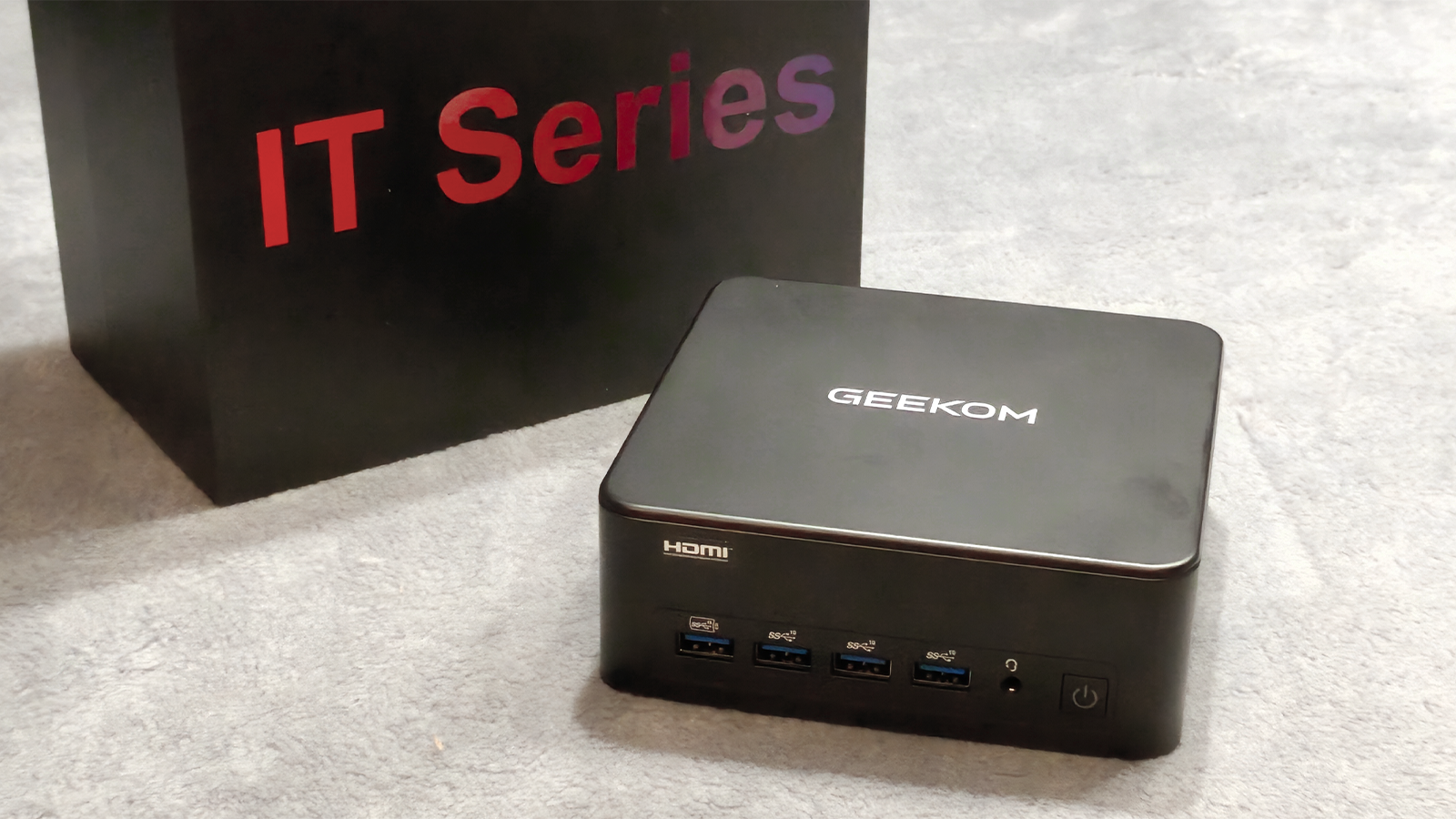
At a glance
Expert’s Rating
Pros
- High CPU performance for demanding applications
- Powerful Intel Arc graphics for a mini PC
- Plenty of ports, including USB4 and dual 2.5Gbit LAN
- Fast PCIe 4.0 SSD and Wi-Fi 7
- Robust, high-quality build
- Support for up to four displays
Cons
- 24GB LPDDR5 – not upgradeable
- Fan is clearly audible under sustained heavy load
- No USB-C port on the front
Our Verdict
The Geekom IT13 Max is an unusually powerful workstation in a mini format. Although the Core Ultra 9 185H is no longer part of the current processor generation, it still delivers plenty of computing power.
Price at time of review
This value will show the geolocated pricing text for product undefined
Best Price Today
Price When Reviewed
Geekom IT13 Max: $799
Geekom IT13 Max: $799
Best Prices Today: Geekom IT13 Max

In 2026, mini-PCs no longer need to be limited to office work and streaming. Models featuring Ryzen AI or Core Ultra now offer enough performance for many tasks that were previously reserved for high-performance desktop PCs. The Geekom IT13 Max relies less on a new generation of processors and more on high-performance hardware centered on Intel’s Core Ultra 9 185H.
Christoph Hoffmann
Design & Build Quality
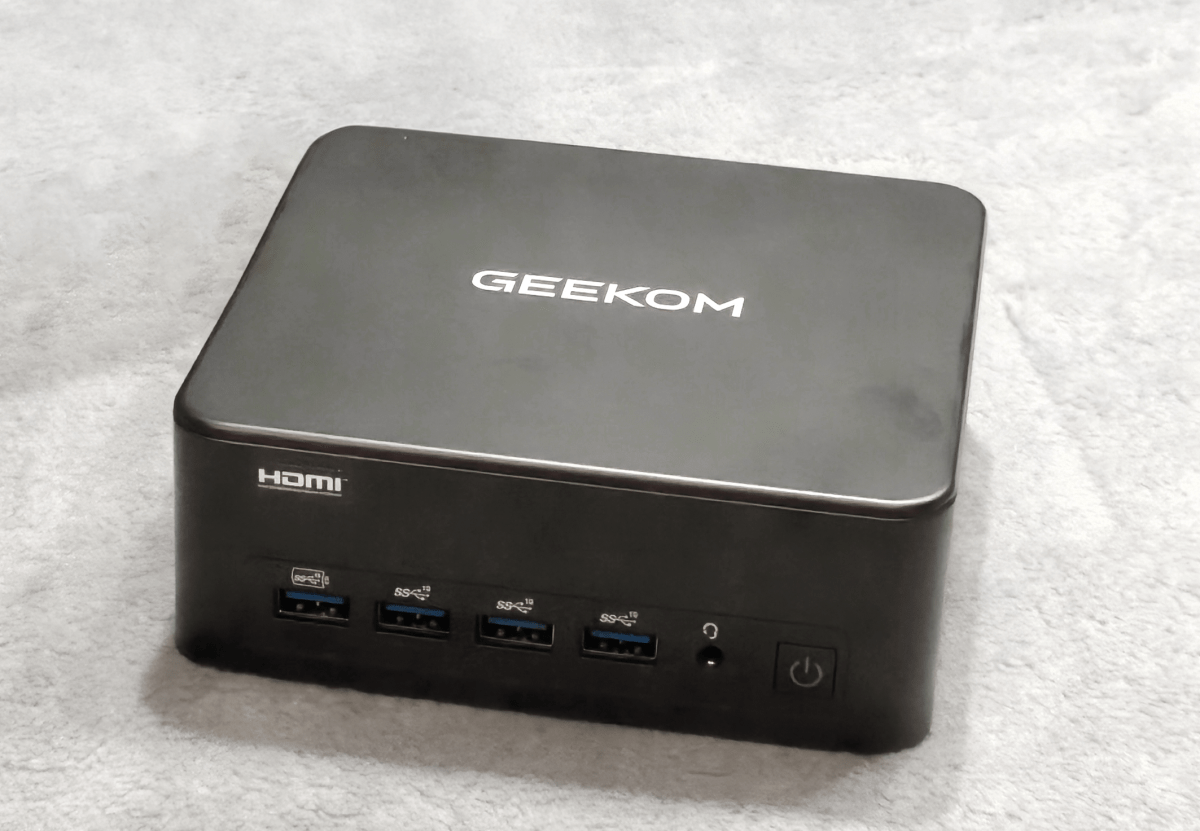
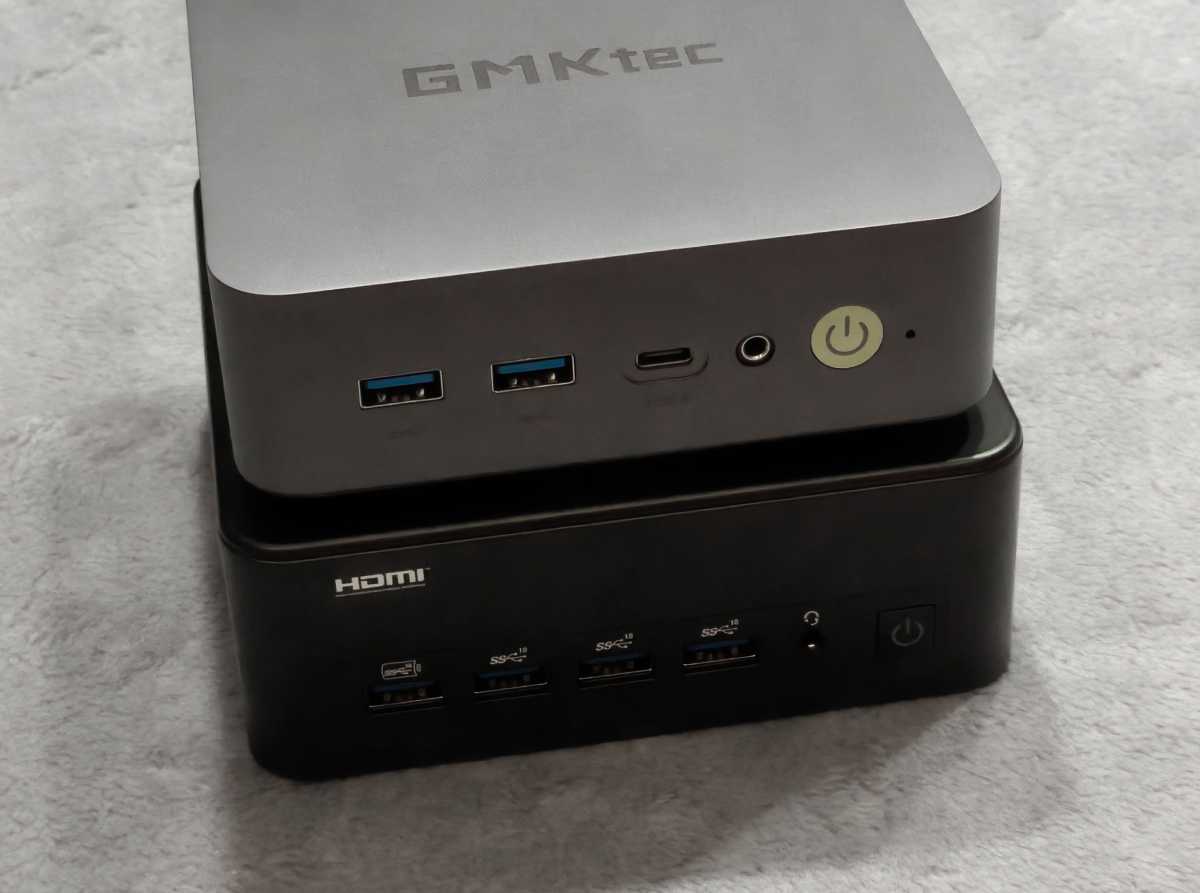
The IT13 Max isn’t one of the particularly tiny mini PCs. The black chassis measures 5.35 x 5.19 x 1.97 inches, giving it a volume of around 30 ounces. Nevertheless, the computer remains compact on the desk. In a direct comparison with a typical GMKtec model in the 4×4-inch format, it’s noticeable that the Geekom requires more space, particularly in terms of width and depth.
Christoph Hoffmann
The manufacturer utilizes the additional space for a large cooling system and a comprehensive range of ports. The build quality gives the impression of sturdiness. The top panel fits neatly onto the base, and the gaps are even. The rounded edges give the case a less austere appearance than many classic bare-bones. Geekom also features an internal metal frame and a robust base plate. This makes the construction feel more solid than that of many budget mini-PCs.
The large ventilation areas on the sides and above the rear ports are particularly striking. They form part of the IceBlast 3.0 cooling system. Geekom specifies that the cooling system is rated for a CPU power draw of up to 65 watts.
Christoph Hoffmann
Effective cooling is essential, as the Core Ultra 9 185H can generate significantly more heat under prolonged multi-core loads than typical U-series processors.
The front panel is almost entirely covered with ports. Four USB-A sockets with 10Gbit/s are positioned side by side and are easily accessible. There is also a 3.5mm audio jack and the power button. However, we would have expected a USB-C port on the front of a device in this price range.
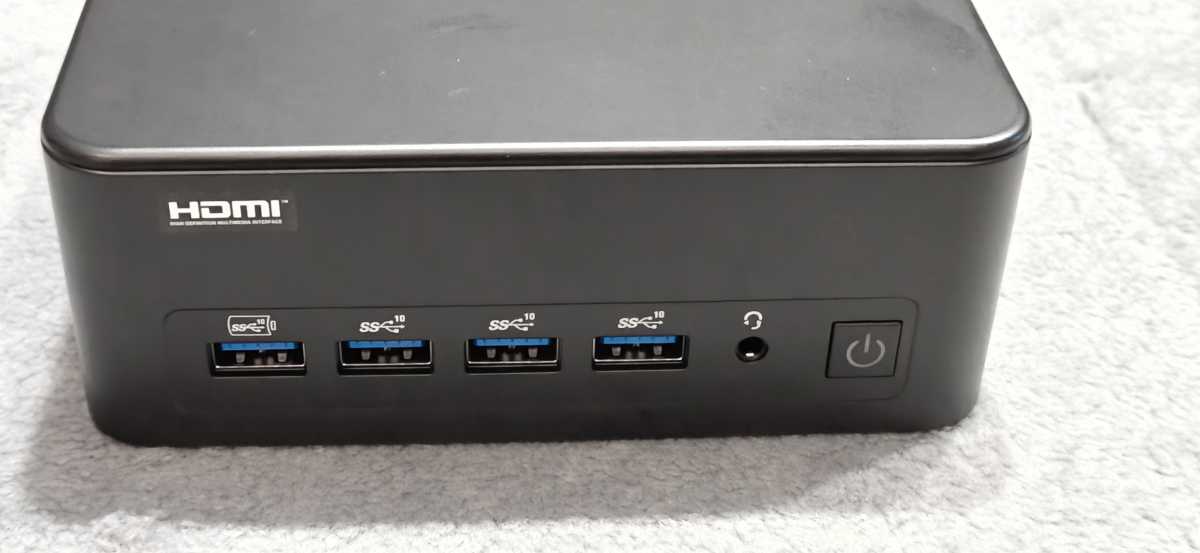
Christoph Hoffmann
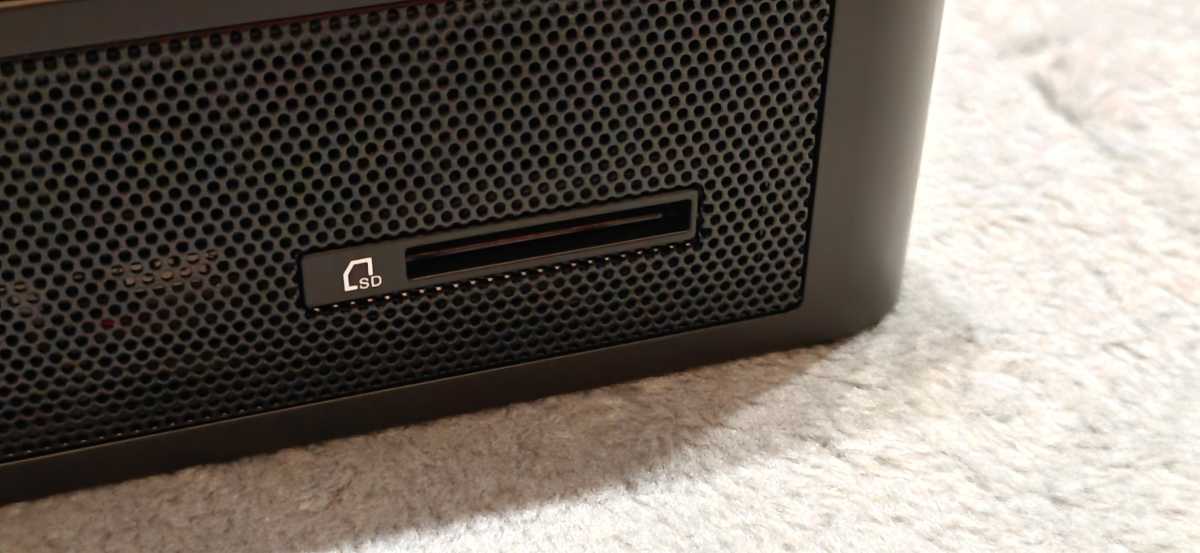
The rear is even more crowded. There you’ll find two USB4 ports offering speeds of up to 40Gbit/s, two HDMI 2.0 outputs, two 2.5Gbit Ethernet sockets, and two further USB-A ports. One of these only supports USB 2.0. There’s also an SD card reader on one side of the case and a Kensington lock slot on the other.
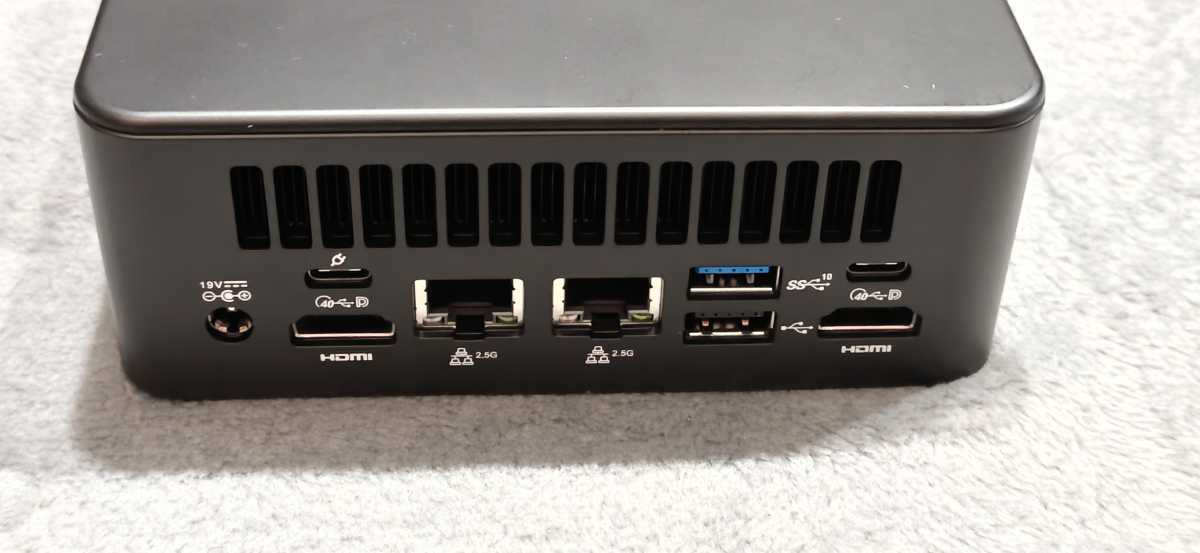
Christoph Hoffmann
This sets the IT13 Max apart from many smaller models. While devices such as the GMKtec NucBox K16 score points with OCuLink support for an external graphics card, they offer fewer network interfaces. The Geekom is therefore particularly well-suited to demanding workstations, as well as home lab and networking tasks.
Specifications
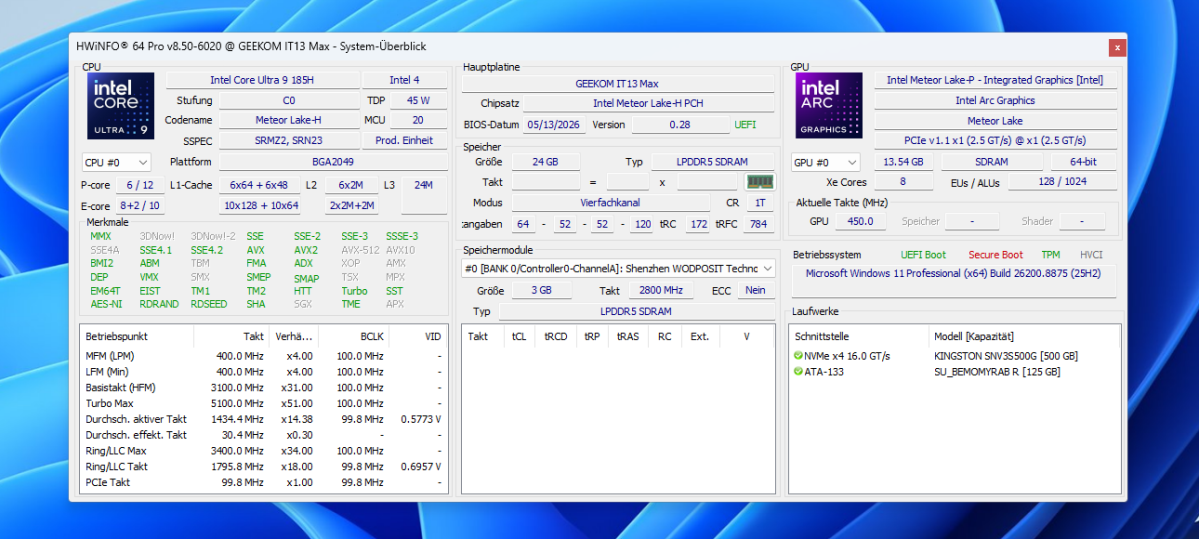
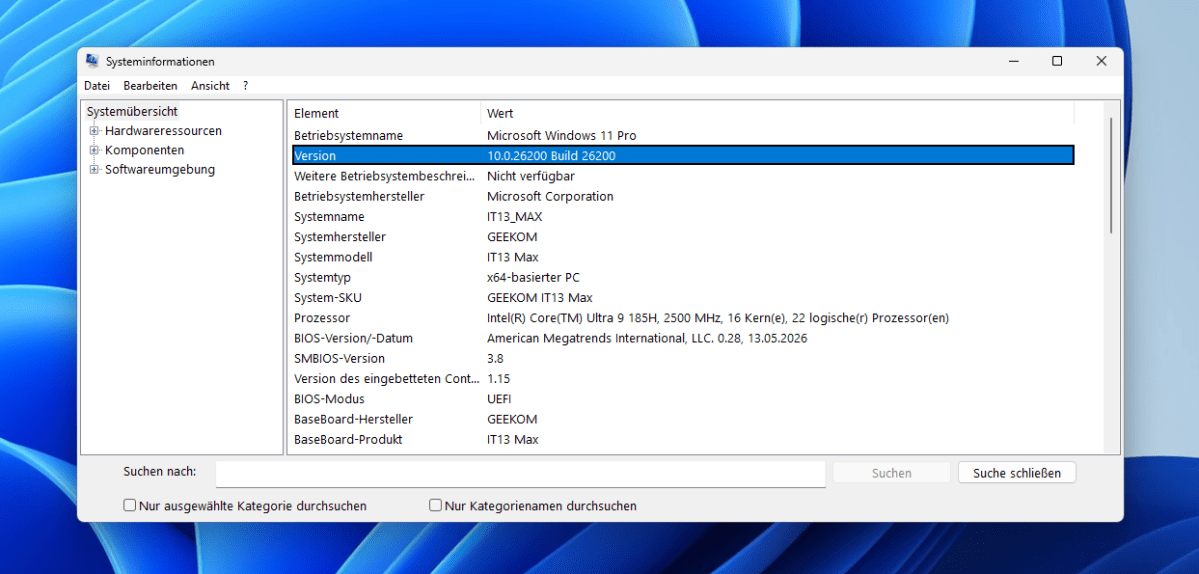
The test unit is powered by the Intel Core Ultra 9 185H. The Meteor Lake processor has 16 cores and handles 22 threads. Intel combines six performance cores, eight efficiency cores and two particularly energy-efficient low-power E-cores. The maximum turbo frequency is 5.1GHz, while the Smart Cache is 24MB. Intel specifies the chip’s base power consumption as 45 watts.
Despite its model name, the Core Ultra 9 185H belongs to the first Core Ultra generation. Intel launched the processor back in the fourth quarter of 2023. Processors from the Core Ultra Series 3, based on Panther Lake, are now available. The IT13 Max, therefore, does not utilize a current CPU generation.
Christoph Hoffmann
When it comes to traditional CPU performance, however, this age difference is less significant. The 185H was designed as the flagship model of its generation and still boasts ample computing power. For highly parallelized applications, the 185H will still deliver high performance even in 2026. By contrast, the latest Ryzen AI models and Intel’s newer Core Ultra generations offer more modern NPUs and, in some cases, greater performance per watt.
The CPU is paired with an Intel Arc iGPU based on Meteor Lake. HWiNFO detects eight Xe cores. The Arc graphics feature 128 Xe Vector Engines. This makes the graphics component significantly more powerful than the old Iris Xe graphics found in earlier Intel mini-PCs. Multimedia applications and hardware encoding benefit most from this. Even light 3D tasks are handled significantly better by the Arc graphics than by older Intel iGPUs.
In addition, the processor features Intel AI Boost as a dedicated NPU. It achieves around 11 TOPS. According to Intel, the CPU, GPU, and NPU together achieve up to 35 TOPS, of which the dedicated NPU accounts for around 11 TOPS. However, newer Ryzen AI and Panther Lake platforms offer significantly higher NPU performance.
Our test unit is equipped with 24GB of LPDDR5. This is precisely where one of the IT13 Max’s distinctive features lies: With this configuration, the RAM is permanently installed. It cannot be upgraded at a later date.
A Kingston SNV3S500G with a nominal capacity of 500GB serves as the system drive. This is a Kingston NV3 in the M.2-2280 format with PCIe 4.0 x4. The 500GB version is officially specified for up to 5,000MB/s read and 3,000MB/s write speeds.
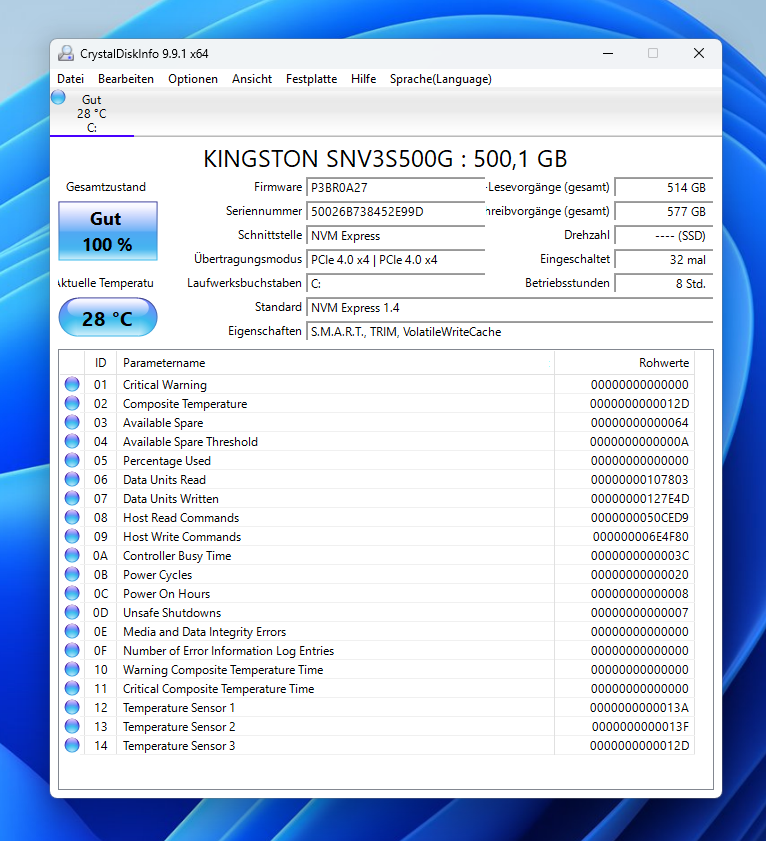
Christoph Hoffmann
Additional storage can be added. Alongside the M.2-2280 slot, there is an M.2-2242 connector for SATA drives. According to Geekom, the platform supports up to 6TB in total.
When it comes to networking, Geekom leaves little to be desired. Two Ethernet ports each operate at up to 2.5Gbit/s. The two LAN ports are suitable, for example, for router and firewall applications. Separate network segments can also be connected with ease. Wireless connectivity is provided by Wi-Fi 7 via Intel’s BE200 module and Bluetooth 5.4.
Up to four displays can be driven simultaneously via the two USB4 ports and two HDMI outputs. Geekom also cites 8K output as a possible configuration.
Christoph Hoffmann
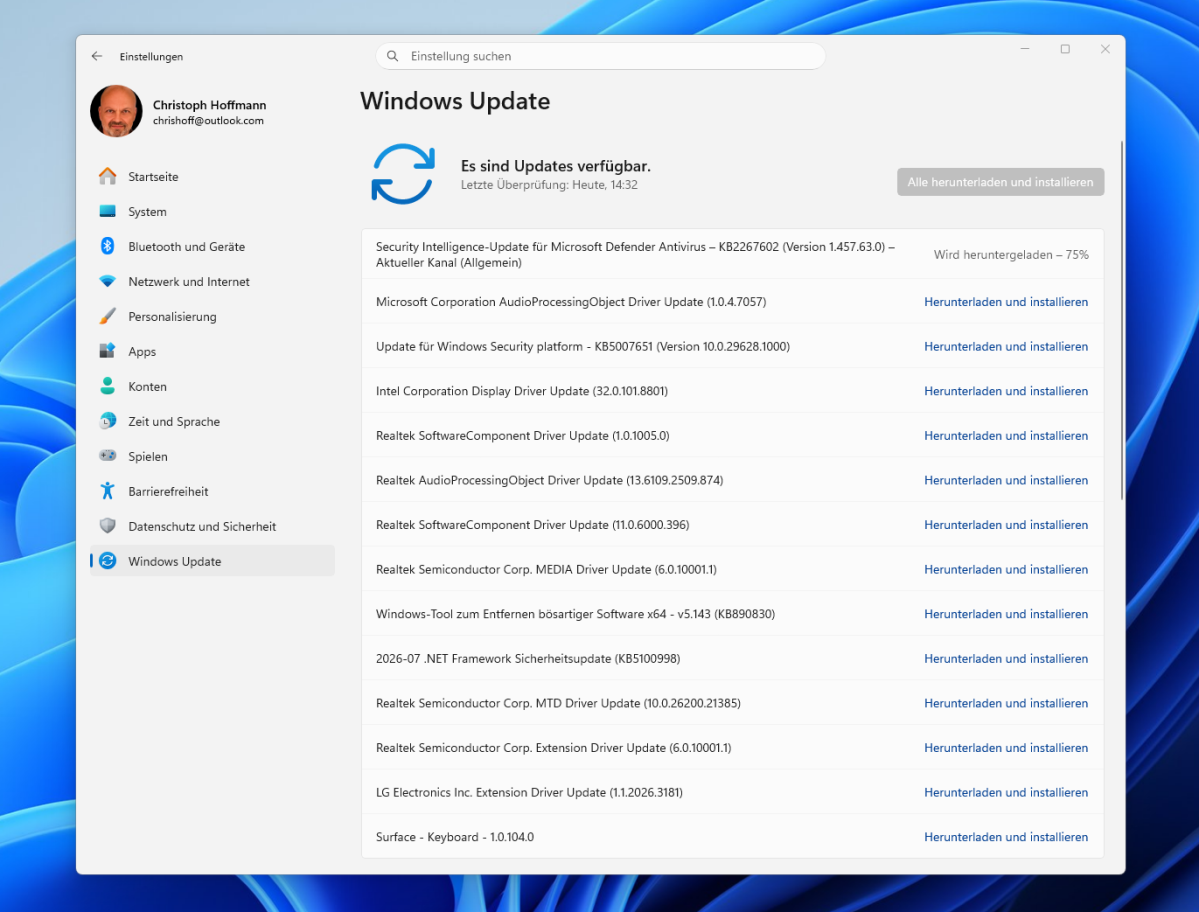
Windows 11 Pro was already installed on our device in version 25H2. When we checked via Windows Update, security updates and several driver updates were still available. Windows was therefore installed in the latest version, but had not yet been fully updated.
Christoph Hoffmann
Computing power
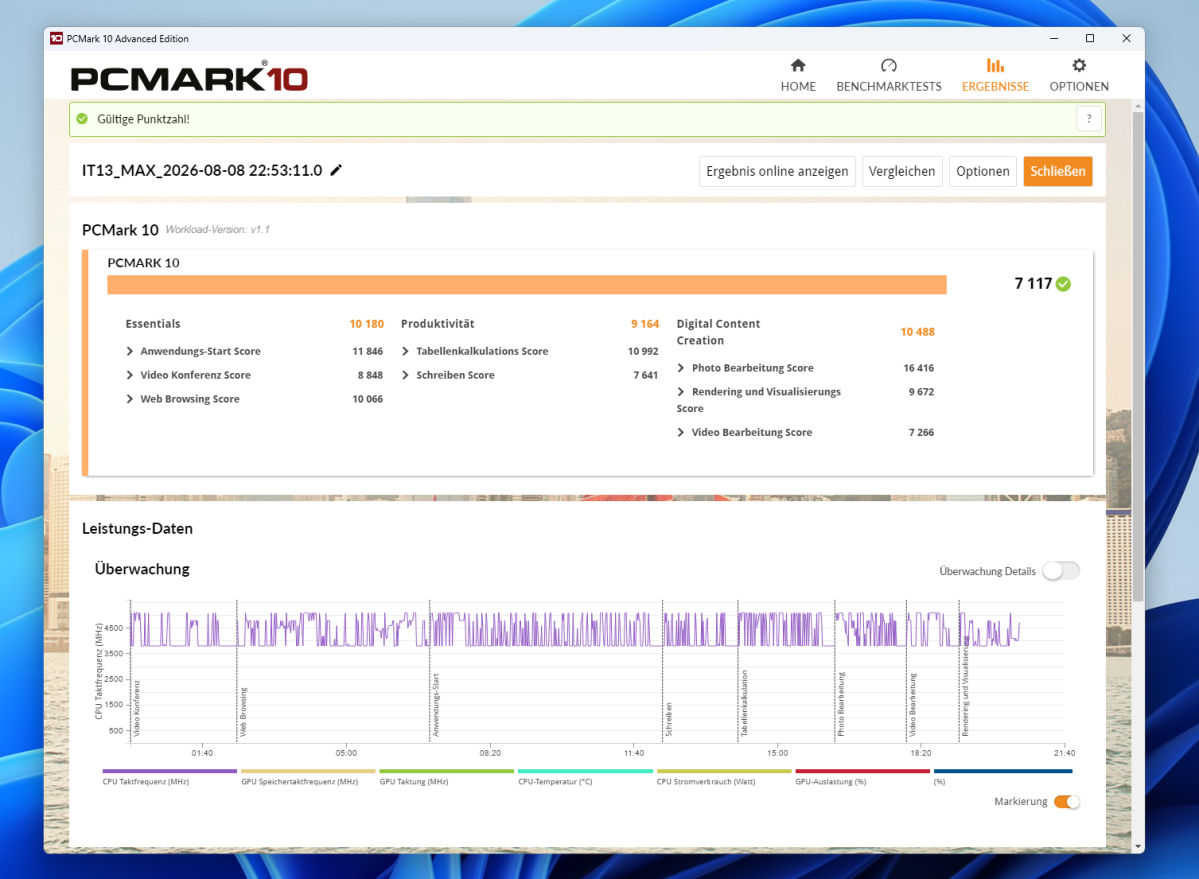
In the IT13 Max, the Core Ultra 9 185H — launched at the end of 2023 — demonstrates that it still offers high computing power even in 2026. With 7,117 points in PCMark 10 (Essentials: 10,180, Productivity: 9,164, Digital Content Creation: 10,488), Windows responds smoothly throughout. The mini PC also handles large spreadsheets, intensive multitasking, and more demanding image and video editing with ease.
Christoph Hoffmann
However, the results also highlight the gap between this model and newer top-of-the-range models. The Geekom A9 Max 2026 with Ryzen AI 9 HX 470 achieves 8,908 points in PCMark 10. The Geekom IT15 with a Core Ultra 9 285H scores 8,341 points. The IT13 Max therefore lags behind by around 20 percent and 15 percent, respectively. The picture is different when compared to mid-range systems. A GMKtec NucBox K16 with a Ryzen 7 7735HS scores 6,836 points, while the MSI Cubi NUC AI with a Core Ultra 7 155H scores 6,804 points. The IT13 Max performs a few percent faster here.
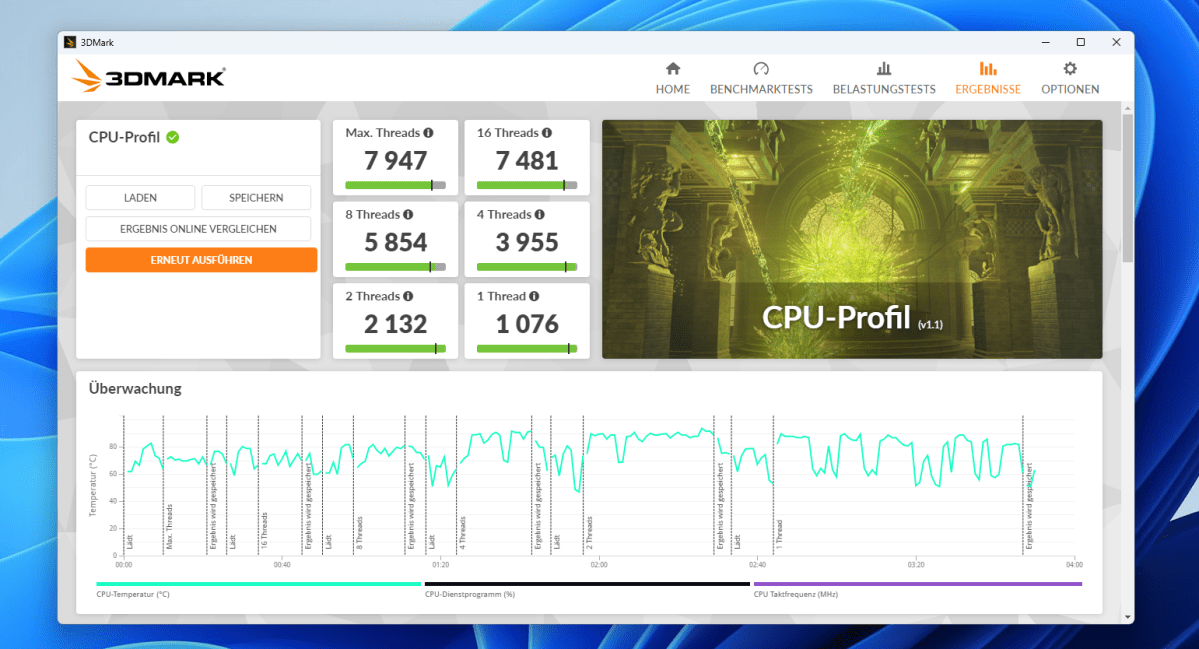
The 3DMark CPU Profile confirms the high multi-core performance. With the maximum number of threads, we achieve 7,947 points. With 16 threads, the score is 7,481; with eight threads, 5,854; and with four threads, 3,955 points. Two threads yield 2,132 points, while one thread yields 1,076 points. Increasing the number of threads from eight to 16 raises the score from 5,854 to 7,481 points — an increase of around 28 percent. However, compared to the Ryzen AI 9 HX 470, which scored 9,737 points, it falls short by around a fifth in multicore performance.
Christoph Hoffmann
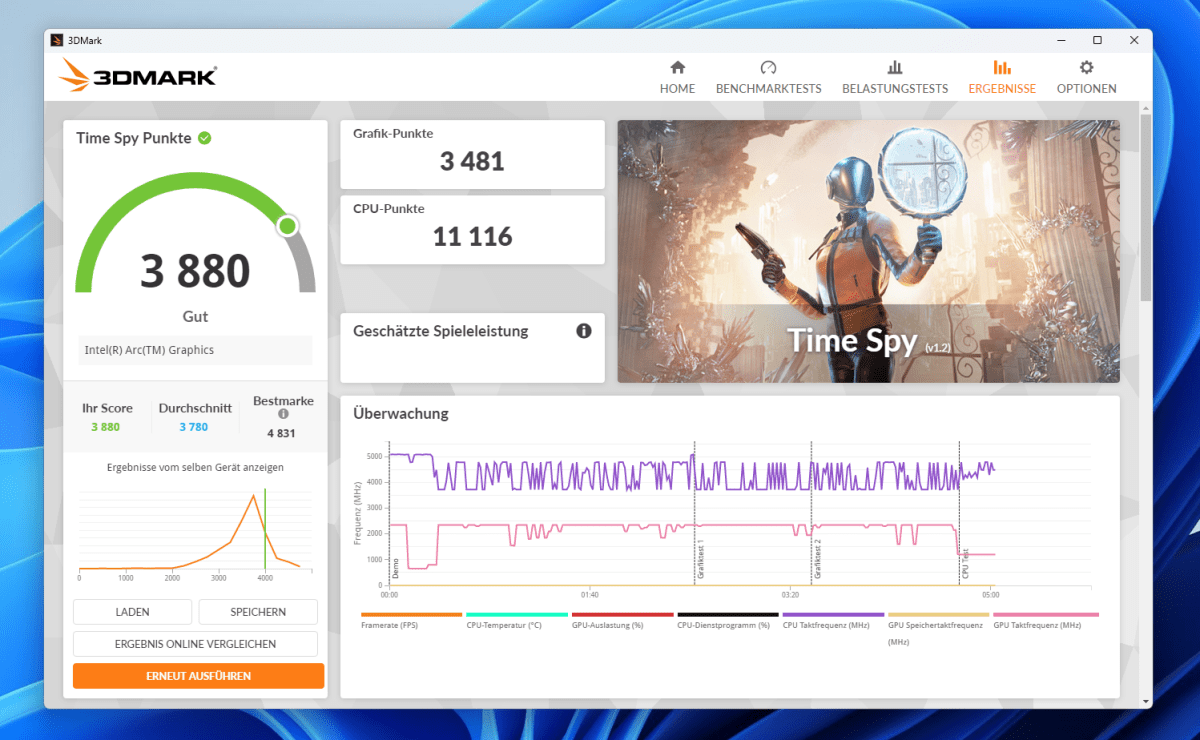
The graphics comparison is more surprising. In 3DMark Time Spy, the IT13 Max achieves a total of 3,880 points. The Graphics Score is 3,481 points, while the CPU Score is 11,116 points. That is a strong result for integrated Intel graphics. The MSI Cubi NUC AI with a Core Ultra 7 155H manages just 2,927 points. The A9 Max 2026 we tested, with its factory-set memory configuration running in single-channel mode, scored 2,416 points. The Geekom IT15 with the Core Ultra 9 285H, on the other hand, is once again clearly ahead with 4,244 points. Only the newer Core Ultra 9 285H in the Geekom IT15 manages to pull clearly ahead again with 4,244 points.
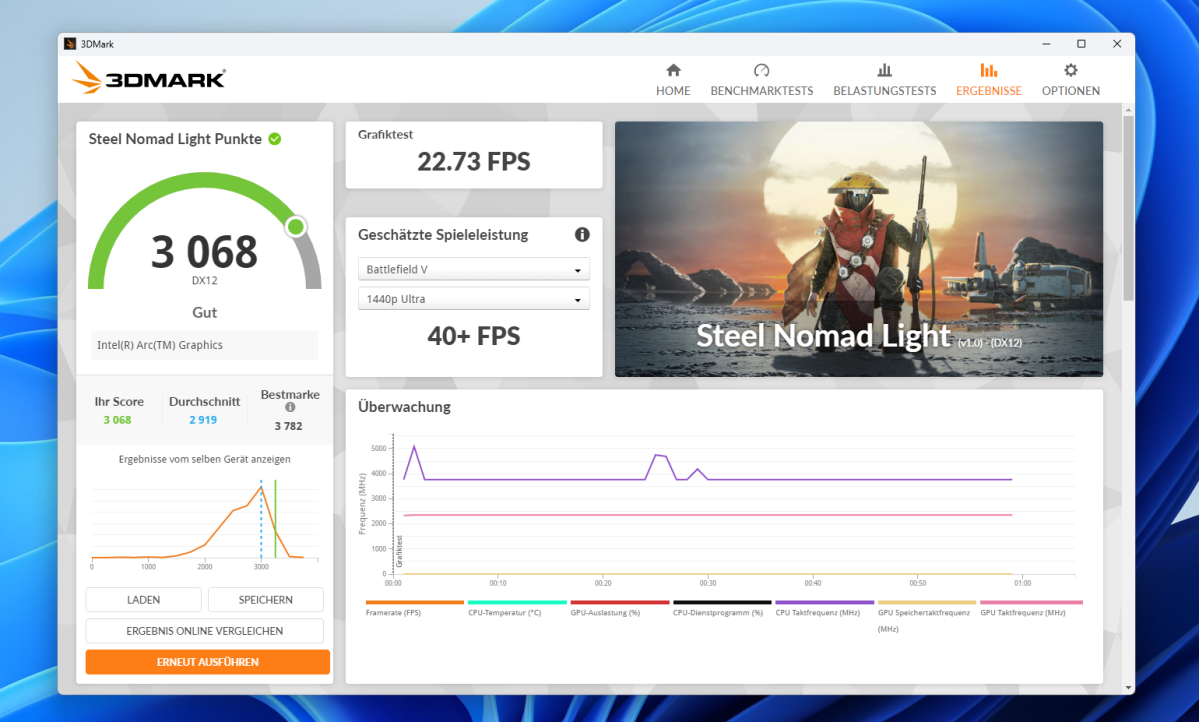
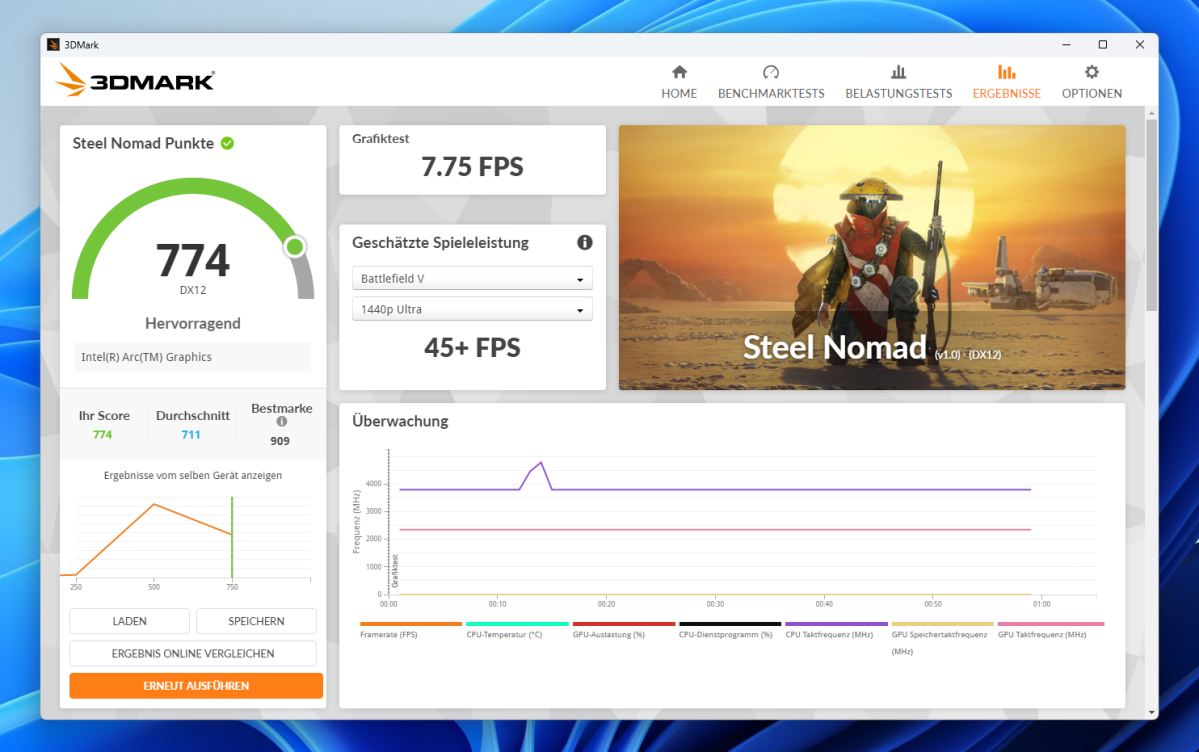
The Steel Nomad Light scores 3,068 points and 22.73 fps. In the more demanding Steel Nomad test, the figures stand at 774 points and 7.75 fps, respectively. This is not sufficient for running the latest games at high detail settings. Less demanding games should run significantly better in Full HD with reduced detail settings. However, specific gaming benchmarks would be required for a reliable assessment of gaming performance. The IT13 Max is therefore considerably closer to a multimedia PC than earlier Intel mini PCs with Iris Xe, but it is no substitute for a dedicated graphics card.
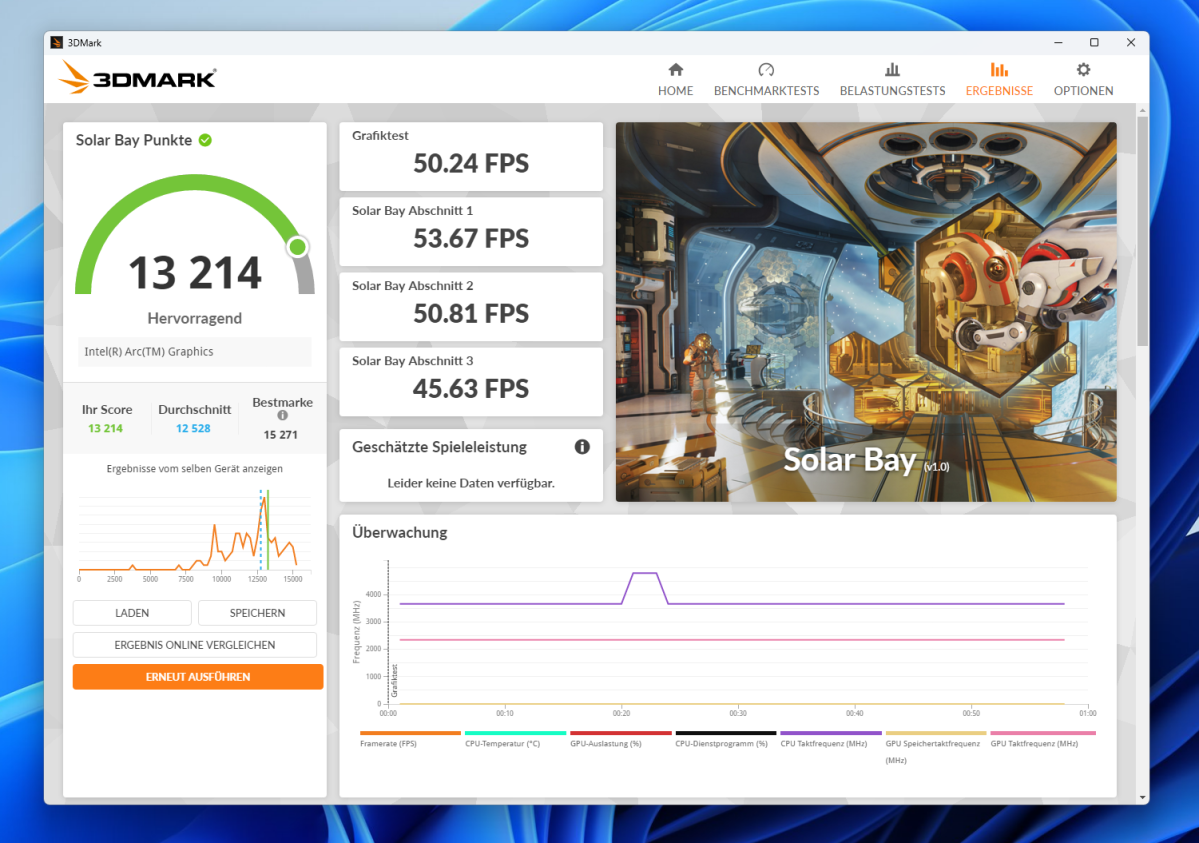
In the Solar Bay ray-tracing benchmark, the IT13 Max achieves 13,214 points or 50.24 fps. For an integrated GPU, this is a remarkable result, even in the hardware-accelerated ray-tracing test. Nevertheless, its practical usefulness for current AAA games remains limited due to the restricted overall performance.
Christoph Hoffmann
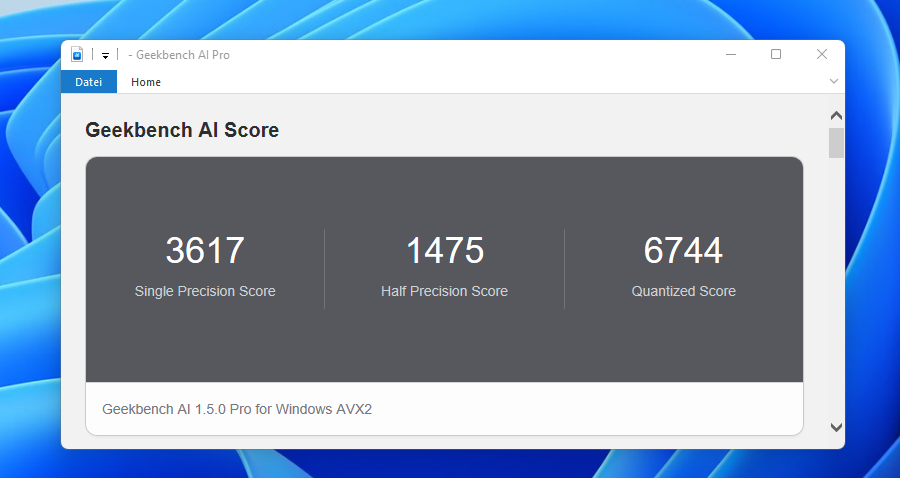
For AI tasks, we recorded 3,617 points in single precision, 1,475 points in half precision and 6,744 points in the quantized test using Geekbench AI. This is significantly higher than the MSI Cubi NUC AI with a Core Ultra 7 155H, which achieves 2,909, 1,176, and 5,501 points. Newer platforms have now overtaken it. The A9 Max 2026 with Ryzen AI 9 HX 470 scores 7,195 points in the quantized test, while the IT15 with Core Ultra 9 285H scores as high as 8,005 points.
Christoph Hoffmann
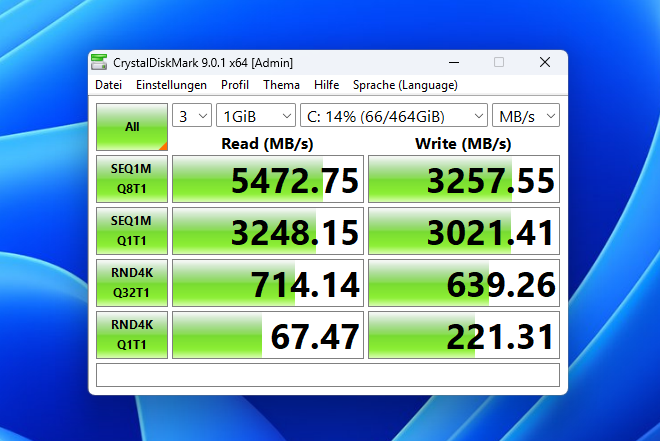
The Kingston SSD also achieves high transfer rates. CrystalDiskMark reports sequential read speeds of 5,472.75MB/s and write speeds of 3,257.55MB/s. This puts our drive slightly above the transfer rates specified by Kingston of up to 5,000- and 3,000MB/s, respectively. For random 4K accesses with a high-queue depth, we achieve 714MB/s read and 639MB/s write. Even at Q1T1, speeds of 67- and 221MB/s, respectively, are still available. When booting Windows and launching programs, the SSD performs swiftly and without any noticeable delays.
Christoph Hoffmann
Overall, the IT13 Max thus positions itself between the current top-of-the-range segment and the classic mid-range mini PC segment. In terms of CPU performance, newer Ryzen AI and Core Ultra systems clearly pull ahead. The Arc graphics, however, keep up surprisingly well. The computer offers sufficient performance for Office, software development, image editing, and moderate VM or video projects. However, those seeking maximum local AI performance or the highest possible gaming performance will now find better options with newer AMD and Intel platforms.
Noise & power consumption
The cooling system has to work hard under heavy load. During normal Windows operation and typical office work, the IT13 Max remains virtually silent. During prolonged CPU or graphics tests, however, the fan revs up significantly. The noise is steady but clearly audible in a quiet home office.
In the 3DMark CPU Profile, the CPU briefly reaches around 90 degrees Celsius. In the less heavily parallelized sections of the test, the temperature drops significantly. We did not observe any significant drop in performance during the benchmark. The IceBlast 3.0 system, therefore, keeps the Core Ultra 9 thermally under control. Under sustained load, however, the fan speed increases significantly.
Intel specifies the Core Ultra 9 185H with a base power of 45 watts. Geekom has designed the cooling system to handle up to 65 watts of CPU power consumption. However, the actual power consumption of the entire computer cannot be deduced from this. We measured around 16 watts at the power connector while idle. In the 3DMark CPU Profile, power consumption rises to around 42 watts.
Should you buy the Geekom IT13 Max?
The Geekom IT13 Max relies on an older processor in 2026. Its Core Ultra 9 185H dates from 2023 and belongs to the first Core Ultra generation, but still delivers high performance, particularly for multi-core tasks. It is by no means slow, therefore. The mini PC continues to deliver strong performance, particularly in multi-core tasks.
The integrated Arc graphics perform particularly well. With 3,880 points in Time Spy, the IT13 Max scores highly for an integrated GPU. In our comparative tests, it achieves scores on a par with some newer AMD mini-PCs.
Its greatest strength, however, lies in its range of features. Two USB4 ports, six USB-A ports, two 2.5Gbit LAN ports, two HDMI outputs, Wi-Fi 7, and an SD card reader are rarely found in this combination. This makes the IT13 Max particularly well-suited as a compact work or developer PC, as well as for home lab and networking tasks.
However, the 24GB version we tested has one clear drawback. The soldered-on RAM sets a fixed limit and restricts upgradeability, particularly over the long term. For those who can make do with 24GB and are looking for a small computer with a powerful CPU, a good integrated GPU, and an exceptional number of ports, this is a compelling all-round package.
Technical specifications
- Processor: Intel Core Ultra 9 185H, Meteor Lake H (Core Ultra Series 1), 16 cores/22 threads (6 P-cores, 8 E-cores and 2 low-power E-cores), up to 5.1 GHz, 24 MB Intel Smart Cache, 45-watt base power
- Graphics: integrated Intel Arc Graphics, Meteor Lake, 8 Xe-cores
- NPU: Intel AI Boost, approximately 11 TOPS NPU performance
- Total AI performance of the platform: Up to 35 TOPS (Int8, according to Intel)
- RAM: 24GB LPDDR5, soldered on
- SSD: Kingston NV3 SNV3S500G, 500GB
- SSD interface: M.2 2280, PCIe 4.0 x4, NVMe
- Second storage slot: M.2 2242 SATA
- Maximum storage capacity: Up to 6TB according to the manufacturer
- Front: 4 × USB-A 3.2 Gen 2 at 10Gbit/s, 1 × 3.5 mm audio, power button
- Rear: 2 × USB4 Type-C at 40Gbit/s, 1 × USB-A 3.2 Gen 2, 1 × USB-A 2.0, 2 × HDMI 2.0, 2 × RJ45 2.5 Gbit/s, DC-In
- Side: SD card reader and Kensington slot
- Monitors: Up to four displays simultaneously
- Connectivity: 2 × 2.5Gbit Ethernet, Intel Wi-Fi 7 BE200, Bluetooth 5.4
- Security module: dTPM 2.0
- Cooling: Geekom IceBlast 3.0
- Dimensions: 136 × 132 × 50.1 mm
- Chassis volume: Approx. 0.9 litres
- Operating system on test unit: Windows 11 Pro 25H2
- Contents: Mini PC, power supply, HDMI cable, VESA mount, documentation
- Warranty: 3-year manufacturer’s warranty
This articles is written by : Nermeen Nabil Khear Abdelmalak
All rights reserved to : USAGOLDMIES . www.usagoldmines.com
You can Enjoy surfing our website categories and read more content in many fields you may like .
Why USAGoldMines ?
USAGoldMines is a comprehensive website offering the latest in financial, crypto, and technical news. With specialized sections for each category, it provides readers with up-to-date market insights, investment trends, and technological advancements, making it a valuable resource for investors and enthusiasts in the fast-paced financial world.