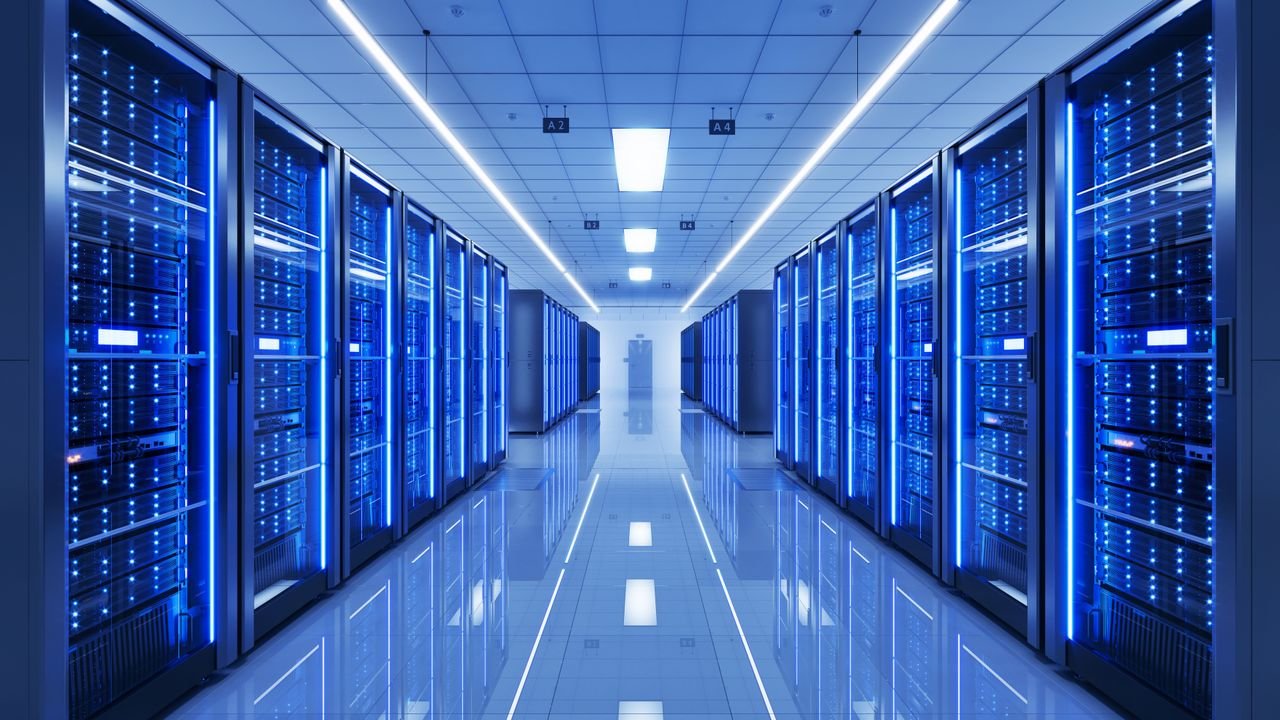
- AI data centers currently use a huge amount of energy
- Scientists have found a way to cut that energy bill by “orders of magnitude”
- It involves using “ultrafast magnetic-field pulses” in RAM and storage
It’s no secret that the current artificial intelligence (AI) boom is leading to record levels of energy consumption — all that computing power needs to be fueled somehow — and it’s causing much controversy among the communities that are impacted whenever a new data center lays down its roots in their neighborhoods.
Now, though, scientists think they’ve come across a way that could radically slash the energy requirements of memory and storage, with potentially massive consequences for the future of the computing and AI industries.
In a paper published in the Advanced Materials journal (via a press release in Science Daily), researchers at the University of Edinburgh in Scotland wrote that the breakthrough would fundamentally affect the way magnetic memory operates. Right now, switching its state allows magnetic memory to control digital information, but the current methods of doing so can be costly in terms of energy.
Instead of using standard energy switching techniques, the researchers discovered an alternative that harnessed ultrafast magnetic field pulses that consumed far less energy. In fact, the paper claimed that the authors’ approach could cut energy usage by “up to two orders of magnitude” — in other words, a cut of around 100x, which is a significant reduction.
The data centers of the future

The AI revolution is only a few years old, but data center energy consumption has already become a significant issue. As the authors of the research paper put it, “Without significant improvements in efficiency, [information and communication technologies] could eventually represent a sizable share of worldwide electricity consumption and carbon emissions.” AI is playing a large role in that trend thanks to both its voracious appetite for component production and the sizable emissions it produces.
While the paper focused on magnetic memory, its theories could be applied to other fields, the authors believe. As study writer Dr. Elton J.G. Santos put it, “The same framework can be adapted to electrical currents and even ultrafast laser pulses, which are among the most cutting-edge technologies for future data storage. That means the ideas developed here could have applications far beyond the systems we studied.”
Although the research is still in the realm of theory, the paper’s authors proposed a number of practical steps that could help others build prototypes and conduct experiments.
That said, don’t expect monumental changes any time soon. There is still a long road ahead before these ideas get put into practice, if they ever do. But given the promising results of the scientists’ work, there is hope that the data centers of the future could be far less energy-intensive than those of today.
This articles is written by : Nermeen Nabil Khear Abdelmalak
All rights reserved to : USAGOLDMIES . www.usagoldmines.com
You can Enjoy surfing our website categories and read more content in many fields you may like .
Why USAGoldMines ?
USAGoldMines is a comprehensive website offering the latest in financial, crypto, and technical news. With specialized sections for each category, it provides readers with up-to-date market insights, investment trends, and technological advancements, making it a valuable resource for investors and enthusiasts in the fast-paced financial world.