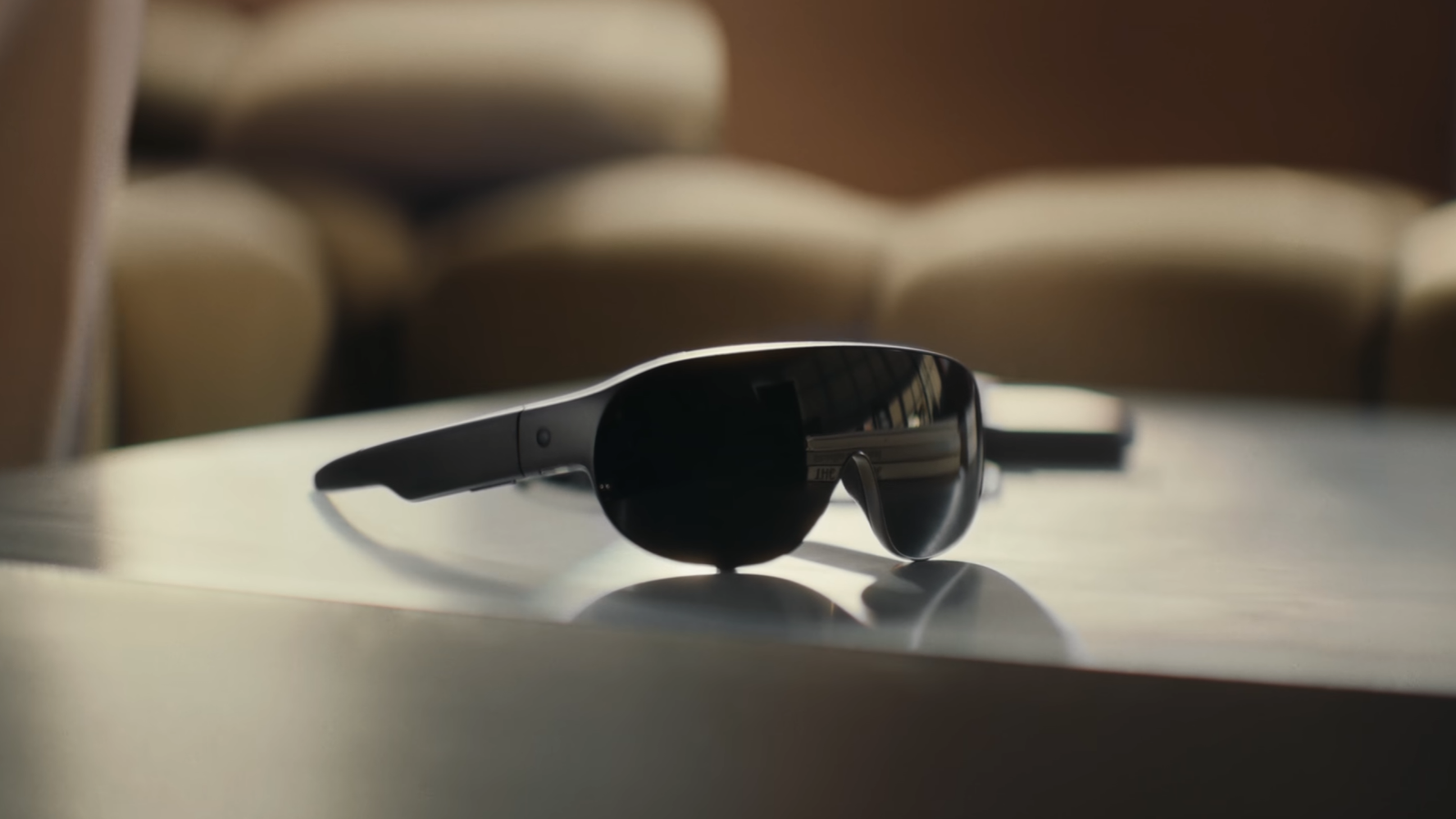
I have a medium-intensity interest in virtual reality gaming. I’m excited to try Valve’s new Steam Frame, and an older VR headset design helped me lose a ton of weight. VR, more than any other technology, has the potential to change how video games are experienced.
So it’s a little concerning to me that Meta, the multi-trillion-dollar company that rebranded itself around a virtual reality future…doesn’t seem to care about VR gaming.
There’s a lot of information to unpack here, a big complicated mess of stuff to use a highly technical term. But the core issue is that I think Meta, one of the only corporate forces actually driving VR gaming forward, isn’t.
Welcome to the Boost Mode newsletter. Every week I share my insights on PC gaming, desktop setups, and hardware optimization. I also track down some of the most interesting PC and nerd news from around the web, plus a PC game pick you might not have seen elsewhere. Want this newsletter to come directly to your inbox? Sign up on our website!
How Facebook got to the party
The discussion requires a bit of context. Oculus, the company that started the most recent push into VR, was founded in 2012. It released the Oculus Rift in 2013, a PC-based VR setup combining a headset, tracker, and controllers. The company was bought by Facebook in 2014, which eventually completely absorbed the former into sub-units. Various other headsets have been released, notably the Oculus Quest, based on Arm hardware and running a modified version of Android, in 2019.
Facebook rebranded as Meta in 2021, essentially betting the farm on the “Metaverse,” a vision of the future of gaming, work, and the internet at large where everyone was operating in virtual reality and mixed reality. To make a complex situation pithily simple, it seems like Mark Zuckerberg watched Ready Player One, saw baby’s first cyberpunk corporate dystopia, and said “Yeah, I wanna be the bad guy from that movie.”
The Quest series of headsets continued as a cheap-ish way for people to get into VR. At the same time in the middle of the pandemic, Meta-nee-Facebook tried desperately to convince everyone that wearing two pounds of tech on your face for eight hours a day, while paying the company for every interaction on the web, was a good idea. It, um, didn’t go well.
Valve
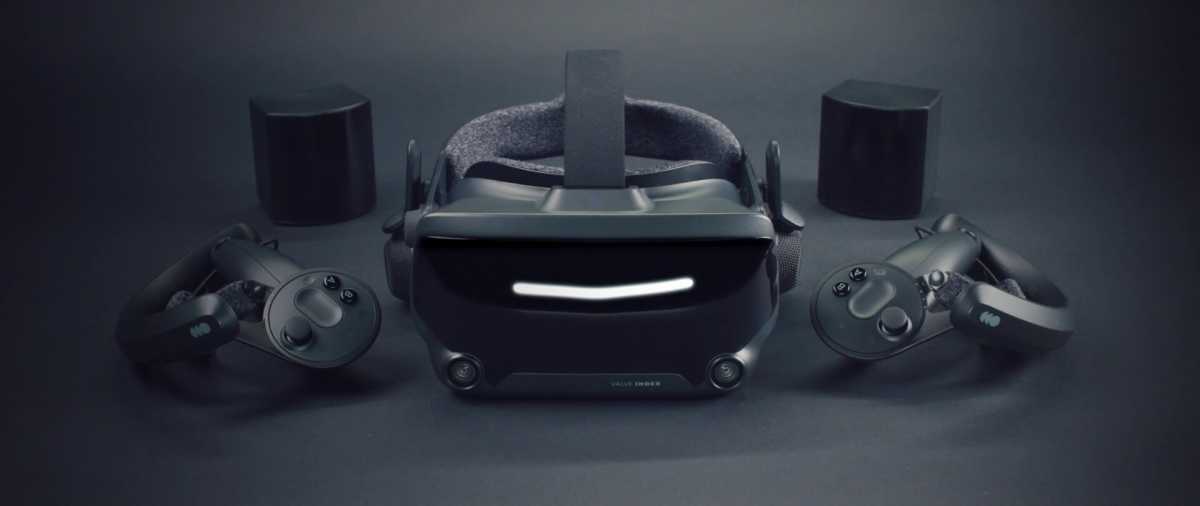
Running in parallel to Zuckerberg trying to turn the internet into his own digital fiefdom (in his defense, he’s has some success before!), VR gaming had a mini-renaissance. In addition to Oculus/Meta investing billions into VR gaming mostly focused on the standalone/mobile side of the equation, Valve was partnering with various companies to push VR gaming on the PC side. Notable releases include the HTC Vive in 2016 and Valve’s own-branded Index in 2019, both of which require a gaming PC.
Valve picks up the torch
The Steam Frame is the evolution of these products, operating as both a stand-alone Arm-powered headset, a la the Meta Quest, and a PC-connected headset like the Index that can play more powerful games. It’s very exciting for a lot of reasons. Valve recognizes the work that Meta has put into VR gaming, and it’s even trying to woo developers of the Android-based games that work on Meta Quest headsets onto Steam, developing games that play on the standalone Frame.

Valve
All good, right? Well, maybe not. We’re a little over a decade into what was supposed to be a revitalization of VR gaming. And while there are dedicated developers and players, including tons of fascinating niche hardware…the Steam Frame comes bundled with Half-Life: Alyx. A blockbuster, genre-defining VR game, which came out more than six years ago. The fact that Valve can’t be bothered to put together a showpiece title for its new gadget is less than promising, and not a great endorsement for a headset that costs $1300.
Valve’s lukewarm debut for the new system isn’t shocking, all things considered. For all that it’s an absolute legend of PC gaming, Valve isn’t all that interested in making its own games anymore — it wants to sell the platform. That’s what SteamOS, the Steam Deck handheld, and the Steam Machine mini PC are all about.
And with the PC hardware market essentially frozen thanks to “AI,” now is unfortunately the worst time to try to get people to spend money on a new platform and niche hardware. If anything, the Arm guts of the Steam Frame are more exciting than its VR aspect, because it means you might be able to play Steam games on much cheaper non-VR devices very soon.
But if Valve seems like it’s gotten over a seven-year itch for VR gaming, then Meta seems like it’s ready to file divorce papers.
Earlier this year the company cut over a thousand jobs in Reality Labs, the corporate descendant of Oculus. It’s cut funding to studios that were making VR games for the Quest series of headsets, which included Meta exclusives like Rock Band VR, Vader Immortal, and Resident Evil 4 VR.

Meta
Perhaps more concerning for anyone who went all-in on the “metaverse,” the company has kinda-sorta abandoned its Horizon Worlds product. This was supposed to be the anchor point of Zuckerberg’s virtual reality empire, the thing that he was trying to force his own employees to work on. At its height in 2023, the platform had less than half a million regular users — not exactly earth-shattering.
Facebook-Meta is estimated to have lost the better part of a hundred billion dollars on VR and the metaverse push. When it announced the above cuts, its stock price rose. It’s now chasing AI, just like everyone else.
Meta seems to think the future is now in a panopticon of pervert glasses, purposely created political misinformation, and simulated child abuse that fits within its terms of service, despite the platform apparently being afraid of the big, bad Virginia Woolf. And it’s not like the company is losing money — $186 billion in profit for the 2025 fiscal year — so maybe it’s right.
The new headset
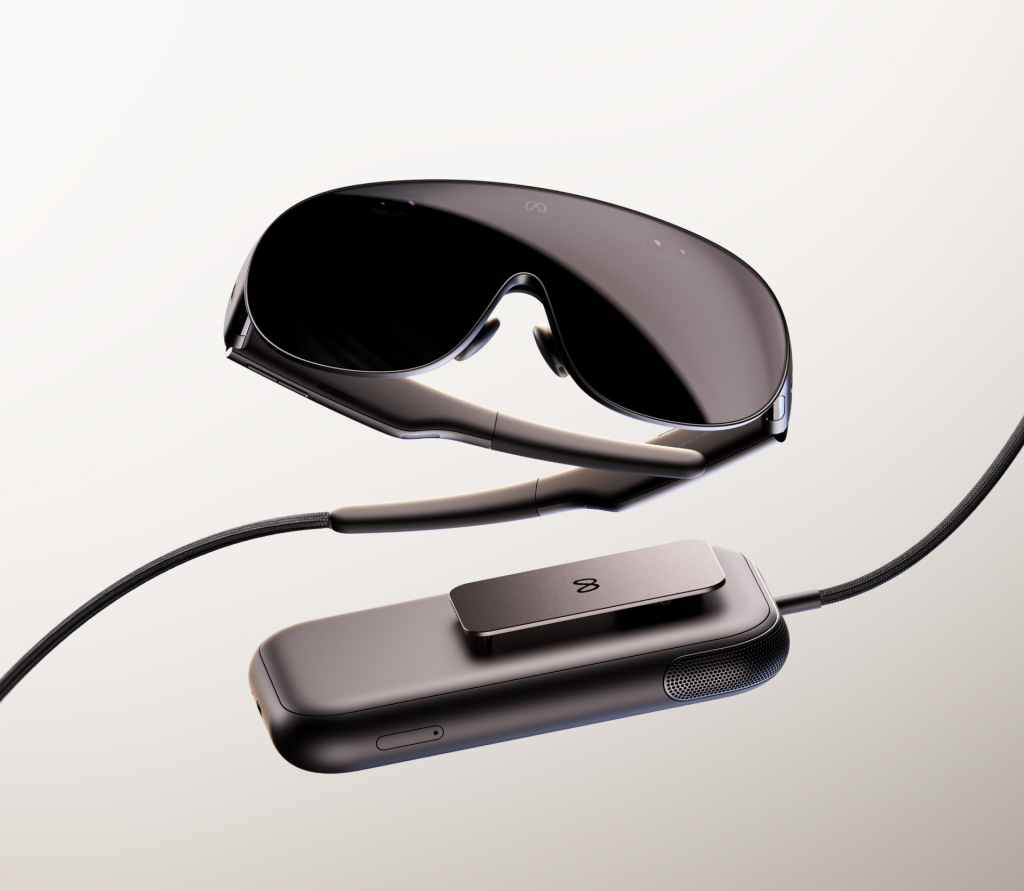
That being said, it might seem strange that Meta debuted a new VR headset last week. The Meta VR Glasses are interesting from a hardware perspective, sort of a halfway point between Apple’s Vision Pro designs and more basic “VR” heads-up displays, like Xreal and Rayneo. They’re small and light, requiring no rear headband. They include eye tracking, like the previous Quest Pro.
Meta
And they don’t actually look like regular eyeglasses, despite being called “Meta VR Glasses.” So you’re more likely to be mistaken for an X-Men cosplayer than someone who’s memorized the laws of recording consent in your state or country. A real bonus!
Perhaps most compelling in terms of actual use case, Meta has highlighted these glasses’ utility as an entertainment machine with high-quality pancake lenses and OLED screens, and their ability to actually do work, thanks to a built-in quasi-desktop environment. Combined with a shockingly low weight thanks to its puck design — the headset is seven times lighter than the Vision Pro! — it looks like a genuine leap forward in comfort and design, if not in total utility.

Meta
Hey look at that, I’m three paragraphs into talking about the Meta VR Glasses. It feels like I forgot to talk about something.
Oh, that’s right. GAMES.
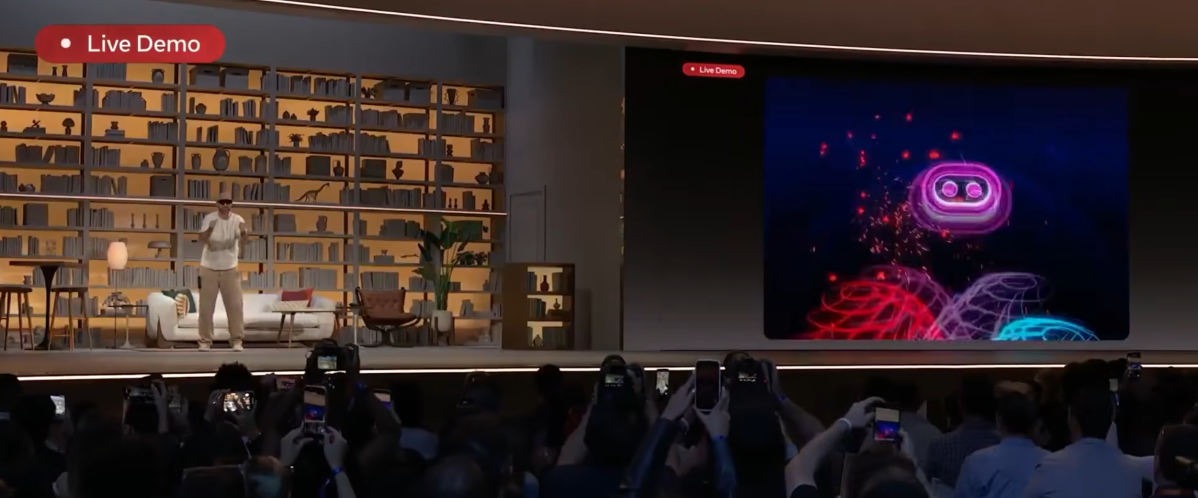
Despite making the best-selling VR headset of the modern era, and arguably being the driving force behind VR gaming for over a decade, Meta’s trailer for the VR Glasses doesn’t mention games at all. Hardly shocking, since this is also the first VR headset the company has produced without the Quest name attached. In the portion of the Meta Connect presentation announcing the new system, you get a demo of Beat Saber. That’s it. The seven-year-old casual game was shown off with no controllers, because Meta is focusing on hand tracking only for this headset. Despite a $1300 price tag, there’s no indication of controllers included in the purchase.
“VR gaming is alive and well on Meta VR Glasses,” said Meta’s CTO, after playing a 2019 title for less than 30 seconds. It comes with the same level of reassurance that an octogenarian senator is in “excellent health.” The presentation also leaned on Xbox Cloud streaming, in the same way Google mentioned GeForce Now for its Googlebooks, before proceeding on to talk about movies.
Meta
Soooo yeah. Meta VR Glasses are impressive on a technical level. But if Meta is actually excited about VR gaming, specifically new VR games, it isn’t demonstrating that excitement to me at all. Considering how much it’s been dialing back its commitment to virtual reality everywhere, instead leaning into wearables and “AI,” I’m shocked this headset even came out.
Rolling silicon stones
I’ve been thinking a lot about corporate inertia lately. The Steam Machine and Steam Frame, Nvidia’s new RTX-powered laptop chips, Google’s Googlebook laptops. All of these products are launching at an objectively terrible time for consumers. Price tags are higher than ever, while other factors like wars, stagnant wages, and inflation are leaving consumers with less and less disposable income, even in wealthy nations.

Alaina Yee / Foundry
And yet these products launch anyway, even when practical wisdom might suggest they should stave it off for a year or two. The reason why — at least one of the reasons, and the one I’m most interested in — is corporate inertia. These products take years to develop, sometimes the better part of a decade. Billions of dollars invested, millions of hours of work from international teams. Once you get past a certain point of development, even companies as huge as Nvidia, Google, and Meta have to launch, if only to avoid throwing all that money and effort away.
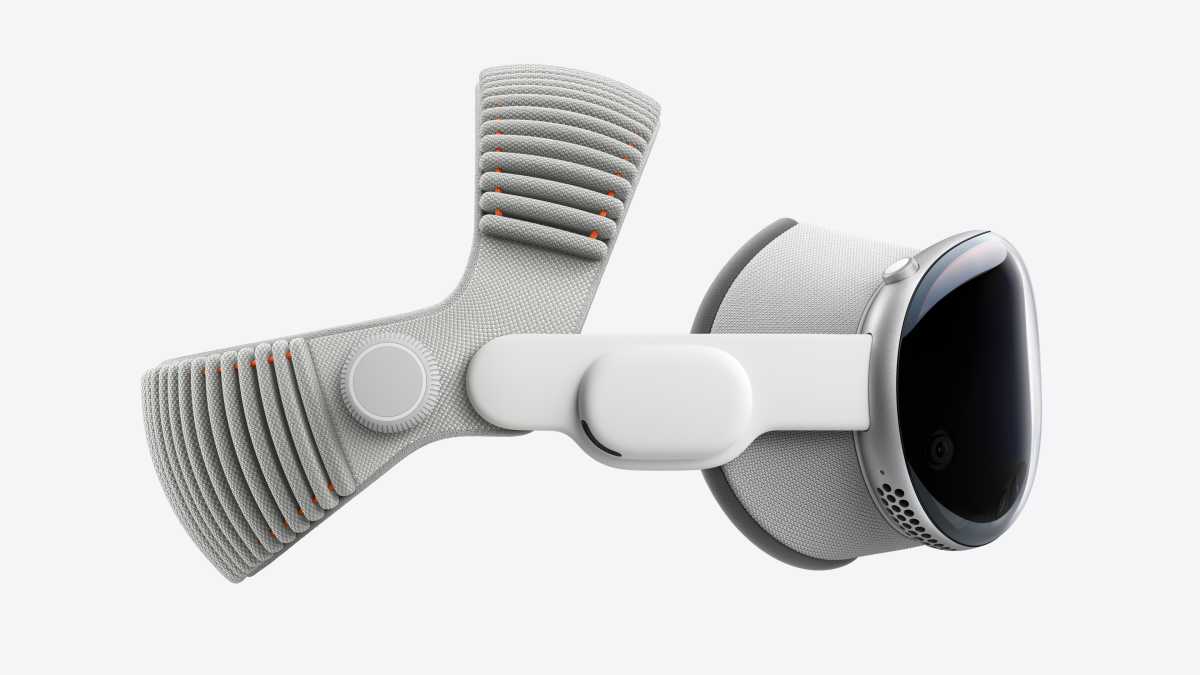
I think the Meta VR Glasses might be another victim of that, not that I’m particularly broken-hearted for any scheduling chaos on Meta’s part. While it’s incorporating innovations developed from years of VR headsets, particularly the Quest Pro, it’s also obviously taking a lot of inspiration from the Apple Vision Pro. And its most highlighted feature, the low weight, is a particular selling point against the Apple design. The fact that it’s less than half the price probably doesn’t hurt either.
Apple
I’m sure there’s a group of people who can both stomach giving money to a historically horrible company, and are also excited for the entertainment and utility in the VR Glasses. But I’m also sure that’s a pretty small sliver of the consumer electronics market. Meta doesn’t seem to be interested in courting gamers at all anymore, either at the low end for the Quest headsets, or in the $1300 range that the Steam Frame is targeting.
That’s a big problem if you’re excited about VR gaming. Even if you never intend to give a cent to Meta, the company’s platform and push for the Metaverse absolutely elevated VR far beyond where it would have been otherwise. However excited Valve is about VR, it simply doesn’t have the money or the muscle to push virtual reality gaming into the public eye like Meta can. Once again, let me point out that the Steam Frame is launching with a VR Valve game that’s six years old.
If Meta can’t or won’t be that driving force, we might see this entire section of the market shrivel and die, put on the shelf for another decade or two. And that would be a real shame at a time when gamers are craving novelty and innovation like never before.
Cool stuff from around the web
- PS5 games can be emulated on PC now: You’re going to need an absolute monster of a PC gaming desktop just to hit 30FPS, and only a few games work. but you can kinda-sorta-techically play all those PlayStation exclusives if you want.
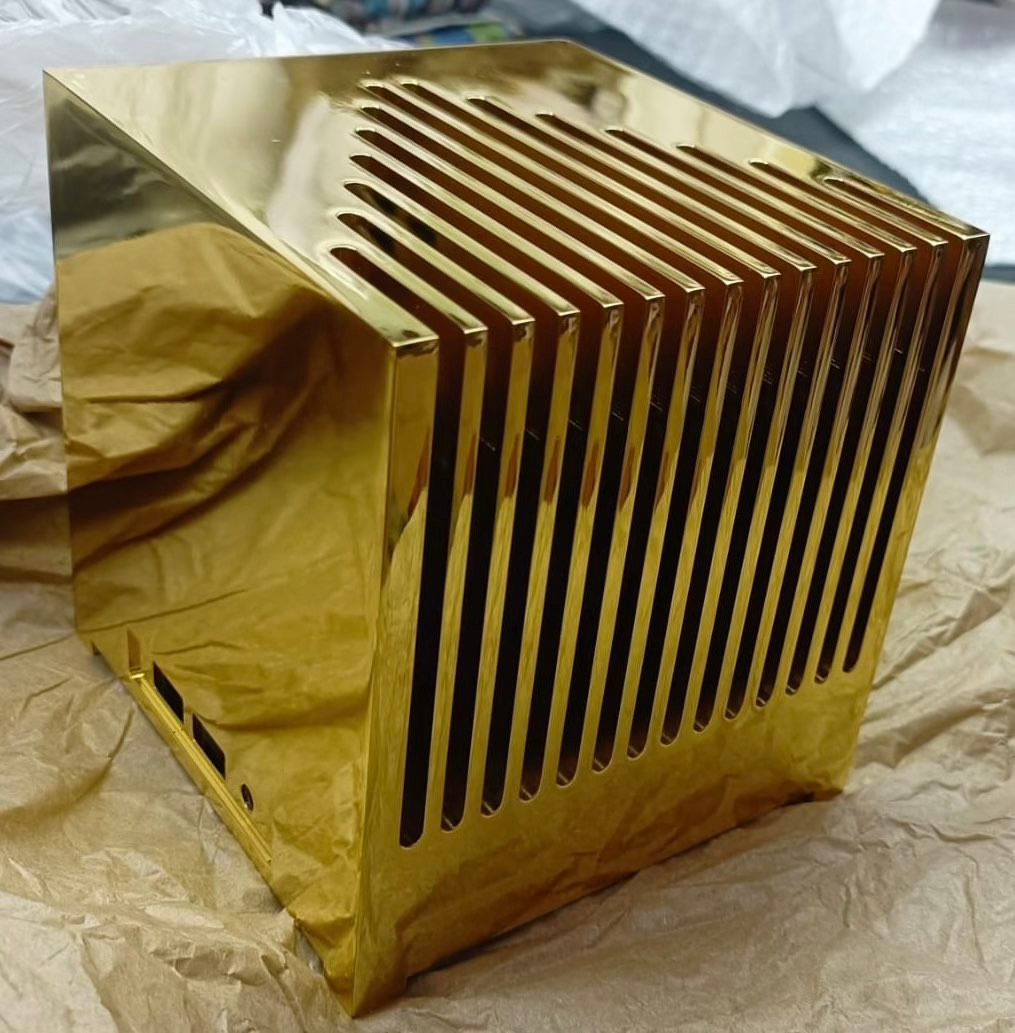
- Somebody made a mini PC out of gold: It weighs almost 30 pounds and costs almost two million dollars. And because gold is a decent thermal conductor, it doesn’t need fans. But surely there was a better way to do this…like, you know, aluminum or copper.
- The Steam Deck makes a pretty good Mars rover controller: Not exactly shocking, since you can control a submarine with an old Logitech USB controller. Though hopefully this one doesn’t meet the same end.
- DLSS 5 mod working on AMD graphics cards: If you want the yass filter but you don’t have a four-figure graphics card from Team Green, now you have options.
- Microsoft drops Copilot+ branding program: Since Microsoft has helped make PCs unaffordable, it can’t scrape together enough RAM for some of its own consumer PCs to qualify for the label anymore. So goodbye, Copilot+ — too bad the keyboard button is sticking around.
Game pick of the week: Art of Rally

Funselektor Labs
Racing games tend to get the latest and greatest in terms of tech, especially on the “sim” side of things. But you can enjoy racing without all the bells and whistles, even without any real element of stress. That’s what Art of Rally is all about: It’s a chill love letter to decades of rally racing history.
With a sort-of-top-down viewpoint and a low-poly visual style, it almost looks like a mobile game. (I love the way the crowds of spectators can get onto the track, like in old rally racing videos, and I love even more that they’re little Game of Life peg people.) But there’s a deceptive amount of skill required to optimize these time trials, and you can get into a flow state easily.
With the gorgeous, simple vehicles based on dozens of real-world classics, and tons of flavor text, the game loves to teach you about rally racing. Any you’ll love zooming through the countryside. Art of Rally is $25 on Steam, but can frequently be had for far less — it’s just $10 on Indiegala at the time of writing.
That’s all for this week. To get my editorials, news picks, and game recommendations delivered straight to your inbox, you can sign up for Boost Mode on the PCWorld Newsletter hub. Also check out The Full Nerd for more enthusiast-focused goodies, Prompt Mode for AI tips, Safe Mode to keep your PC and gadgets secure, and Smart Mode to boost your productivity.
This articles is written by : Nermeen Nabil Khear Abdelmalak
All rights reserved to : USAGOLDMIES . www.usagoldmines.com
You can Enjoy surfing our website categories and read more content in many fields you may like .
Why USAGoldMines ?
USAGoldMines is a comprehensive website offering the latest in financial, crypto, and technical news. With specialized sections for each category, it provides readers with up-to-date market insights, investment trends, and technological advancements, making it a valuable resource for investors and enthusiasts in the fast-paced financial world.