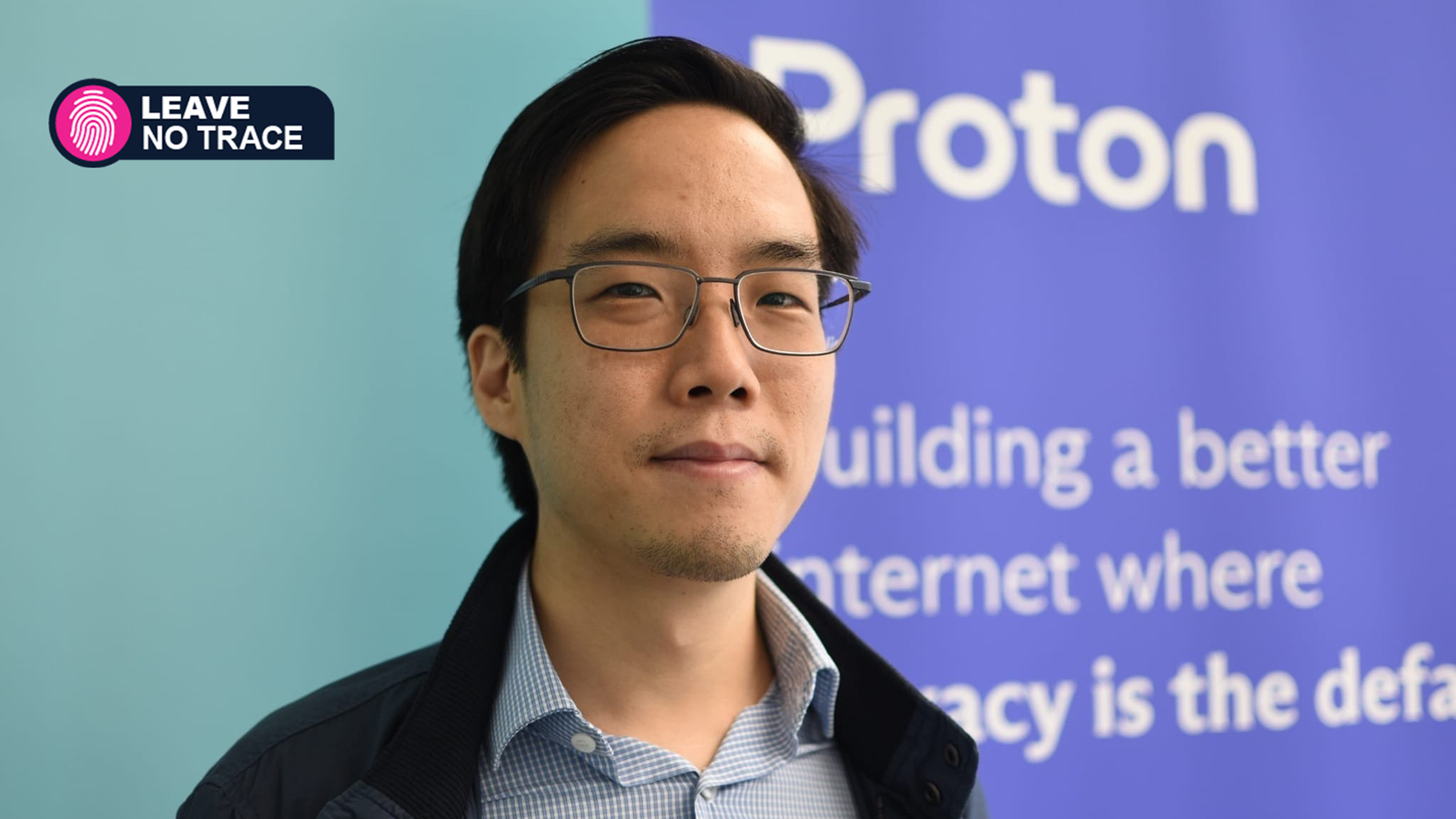
Nestled among the unusually snow-free Swiss Alps, Proton’s Geneva HQ shines in front of me on a glorious, sunny October day.
I’m here alongside journalists from the UK, France, and Germany to learn more about how the privacy-first company is creating an alternative to Google — its number one rival.
After a quick tour of the office, we make a pit-stop in the kitchen to grab a coffee before starting a long day of presentations. Some Proton staff are finishing the generous daily breakfast offered by the company, while others are perusing the lunch menu.
Proton’s Founder and CEO, Andy Yen, is the first to speak, kicking off by telling us how everything started back in May 2014 with a simple idea: building an encrypted email service. Proton VPN came next. Now, twelve years later, the company offers 11 different products, including its privacy-first AI chatbot, Lumo.
As Yen speaks, it becomes clear that Proton is no longer just focused on individual tools — it is trying to build a complete alternative to Google, OpenAI, and Silicon Valley’s model of surveillance capitalism. But can a privacy-first company really take on Big Tech across AI, web browsers, and state surveillance without stretching itself too thin?
Right before he leaves for his next meeting, I sit down with Yen to talk AI ethics, age verification, Swiss wiretapping laws, and the future of digital freedom.
The following interview has been edited for length and clarity.
When did you realize that Proton Mail was needed?
I think Snowden put the spotlight on what was going on with government surveillance, but it was already obvious back then to me that there was a bigger issue. Back then, I really didn’t want to create accounts — I just didn’t want to because I knew what they were doing with the data. There was no alternative. If you look back in those days, there was no alternative.
In fact, if you wanted a private email online without data being abused, you had to host your own server, which is, of course, very difficult to do, and even then you wouldn’t have encryption. So, at the very beginning, Proton was really about building a service that I myself wanted for an audience.
At the very beginning, Proton was really about building a service that I myself wanted for an audience
Andy Yen
What we noticed was, after opening it up — first to the first thousand users or so, really to the people who worked at CERN — people kind of caught on: “Okay, well, this is interesting.” So, apparently it’s not just me who wants this; there’s a bigger demand for this.
The turning point was probably in May of 2014. On the first day, 10,000 people joined us. Same thing on the second day as well. And then on the third day, the server crashed, which is not a great start. But that was probably the moment when I began to realize this is a broader societal issue.
It’s not just a couple of crazy privacy types that want this. There’s a bigger segment of our society that really does care, doesn’t like the way the internet is going and evolving, and there is real demand for an alternative.
So, Proton was really created to provide that alternative. We actually provide many of the same services that Big Tech does, obviously with a completely different business model and a completely different set of values.
How difficult is it to build standalone apps that can compete across multiple markets at once?
Well, it’s difficult because we have formidable competitors in every market that we operate in. Some people look at Proton and say, “Look, you’re insane to do this. Why do you enter all these markets with these big players already?” But we do things in a different way, and this is the key.
Of course, I compete with Google on email — that’s the most famous competitor — but my email is completely different. The product is different, the values are different, and the security and privacy are completely different. Even within the VPN space, it’s very difficult to know who you can trust.
It’s very difficult to understand who actually in the long run is going to uphold the values, especially in an industry where companies are getting bought and sold all the time. Maybe you like ExpressVPN or whatever, but then they got sold to somebody else. It’s a very confusing space.
And I think the stability of Proton, the adherence to the values for more than 10 years, and the consistency of what we stand for — that’s a differentiator and maybe an advantage as well.
So, I don’t fear having many giants competing in the sectors that I’m in because we do things a different way. And I think over time, customers begin to appreciate that.
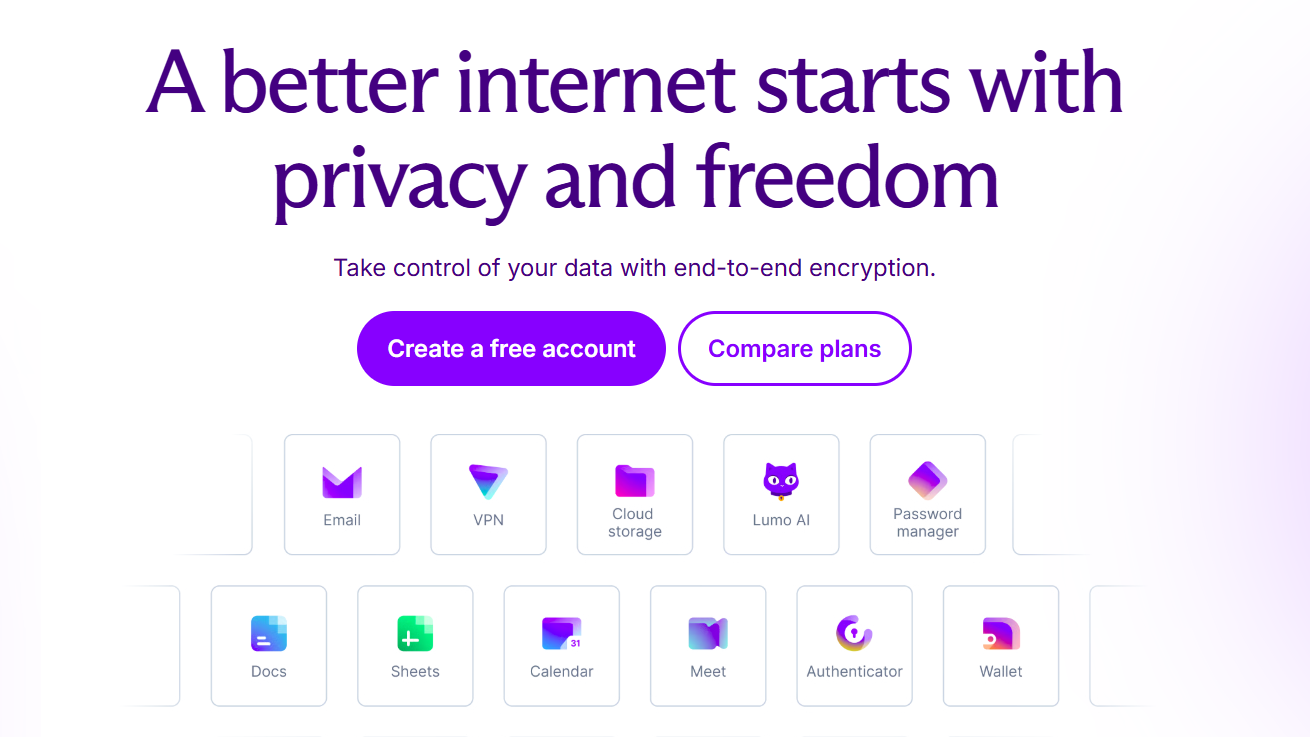
By encouraging users to adopt the full Proton suite, aren’t you asking them to compromise on data compartmentalization?
I think it’s very difficult to find 11 different companies that are all trustworthy. It’s statistically very unlikely. And if you find 11 different companies, these are probably going to be smaller businesses which may not have the same resilience and reliability. In many cases, we’re lucky in some industries just to have one company that we can trust, so finding 11 is difficult.
At the end of the day, if a user believes that their threat model means they need to compartmentalize their data across different services, I’m okay with that. I hope to be one among the 11 that they pick. But the vast majority of users — I would say probably more than half — don’t actually want to manage 11 subscriptions. They prefer to have everything in one place and to find one company they can trust, because finding one is difficult enough.
Kinda chic to give a damn about your online privacyAugust 19, 2026
So, it’s not going to be for everybody, but I do think for most people that is probably the correct approach.
We will do our part: having everything open source, providing additional security, having the controlling shareholder be a foundation as another layer of security, and relying on our long track record.
We’ve been around for more than 10 years, and doing the exact same thing for 10 years is uncommon in tech. The last factor that makes us different is that even if you look purely at financial incentives, we’re non-profit-owned, so it’s not a financially driven business. But even from a pure financial standpoint, it doesn’t make sense for us to do anything different from what we’re saying because the only reason people pay us is our privacy.
The instant we compromise that value, we lose everything. Financially, our incentives are actually aligned with our users, and that is probably the strongest guarantee — along with encryption and mathematical guarantees — that Proton will stay true to its mission in the long run. It’s a combination of all these factors together that you don’t find elsewhere in the business space.
You’re hiring web browser experts. Are you building a browser, and how do you respond to the initial pushback from your community?
To be honest, we do a lot of work with web standards and the web in general because we have to. Just because Proton is hiring someone with browser expertise should not be read from the outside as necessarily saying we’re going to build a browser. That’s not a conclusion to draw.
In terms of the comments, the overwhelming feedback I saw was people saying, “You should focus on existing products; there are already browsers, and we don’t need more products.” Because maybe they’re using one product and they just want that product to be better. I completely understand that sentiment. I want existing products to be better as well.
But the competitor we’re trying to replace in the world is Google, and we’re not going to win that fight in the long run by being better in just one or two products. The only way we will be competitive in the long run against American tech giants is an ecosystem.
I don’t build an ecosystem because I want to — in fact, that’s a very difficult thing to do and it makes our lives really difficult — it’s a lot easier to sell one product and be very good at it.
I would prefer to do that, but I can’t because it won’t allow us to change the status quo. Changing the status quo forces the ecosystem approach. I don’t like it, and the community doesn’t like it sometimes, but it’s necessary.

NEW: Leave No Trace — A weekly newsletter on digital privacy and online surveillance.
Leave No Trace investigates the companies and governments putting our digital freedom at risk — and the people fighting back.
📩 Subscribe now to get every edition delivered to your inbox every Friday, launching this September.
What was the moment you realized the market also needed a privacy-first AI assistant?
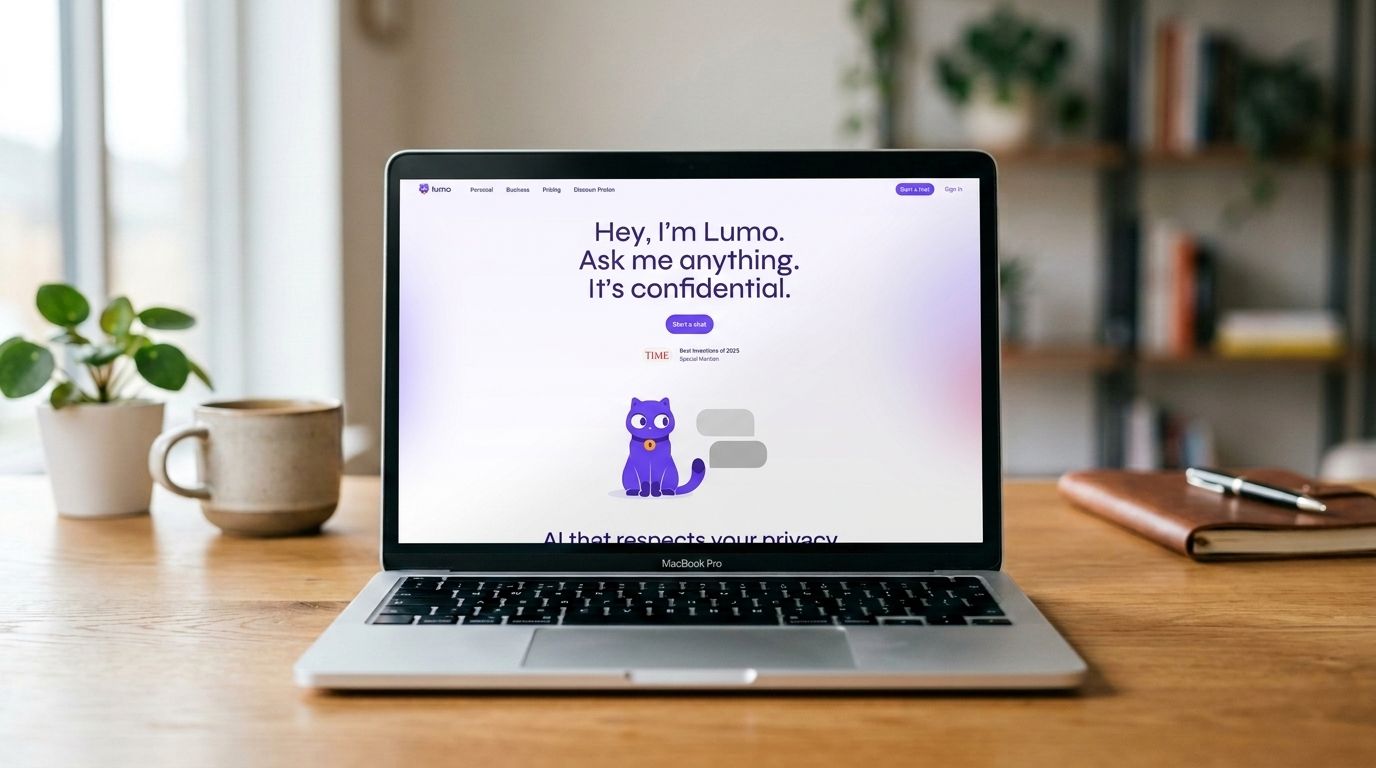
It was the same as Proton Mail 12 years ago. I wanted to use AI, but I sure as hell do not trust Sam Altman or Anthropic. I wasn’t going to use Chinese models hosted on Chinese servers either. If we didn’t build Lumo, I wouldn’t be able to enter the AI age.
I think there are many people in the same boat. They want to use AI and understand its importance for the future, but don’t trust any of the players out there.
Lumo is the only AI chatbot where your conversations are actually private. It didn’t exist until we built it.
Data collection is a significant driver of other AI products. How difficult is it to build a privacy-first AI chatbot?
You could say the same for Gmail — data collection was the main reason Google created Gmail. OpenAI is also pushing ads. But in reality, we are not constrained by their business model; we’re constrained by what is possible and what users actually want.
We showed with Lumo that it’s possible to build private AI services without surveillance capitalism. Surveillance capitalism is an artificial constraint imposed on the world by Silicon Valley, and it’s not actually a real constraint.
In technology, I think performance will be better in the long run for privacy products because we have fewer constraints. Some show ads, whereas an ad-free product is a better product.
Surveillance capitalism is an artificial constraint imposed on the world by Silicon Valley
Andy Yen
In the future, other chatbots will suggest things to buy based on ad networks, which might not be the best answer for you. A chatbot that suggests unbiased results is inherently better.
So, I think in the long run, it’s not that we have more limitations. We have more freedom to build products without limitations that better serve what customers actually want.
Why did you choose to base Lumo in Germany rather than Switzerland?
Last year, the Swiss government tried to introduce mass surveillance in Switzerland. We and much of the industry opposed it, forcing the government to reconsider.
As a business, you don’t put all your eggs in one basket; you want sufficient diversification so that if policy goes wrong in one country, you’re not in a bad situation.
Moving Lumo outside Switzerland was really a message to the Swiss government that privacy is an asset with real economic value. When we invested hundreds of millions outside the country, it showed these things have economic significance. The conversation shifted, and the economic aspect of privacy began to be considered.
After that decision, the government was obliged to make a regulatory impact assessment, which showed that persisting with mass surveillance would cost CHF 30 to 40 billion over 10 years and would have been the loss of 200,000 jobs. It shows that privacy and trust have massive economic value.
With age verification laws expanding globally, is it actually possible to verify user age without destroying digital privacy?
Before asking if you can do it, the question is whether you should do it. And I don’t think we should do it.
The reason is very simple: there’s no such thing as age verification for only children because you don’t know who’s a child and who’s an adult. The only way to age children is to age everyone. And that means essentially showing ID to use the internet. If you follow that logic down, that gets you to a very dangerous place.
So, I don’t think we should do it. But if politicians are determined to do it, are there better and worse ways to do it? Yeah, for sure. The current approach forces everyone to show ID to Facebook, which is Mark Zuckerberg’s dream.
If you want to do it right, it has to be device-only. No data should ever leave the device to go to any centralized server, and any personal information that is scanned or captured needs to sit only on the device and not be saved after the verification is done. That’s a correct way to do it. But social media companies are not incentivized to do it that way.
If we sit down five years from now, will Proton be remembered as the ecosystem that challenged Google, or as a lesson in expanding too fast?
I think if we don’t expand, we can’t fulfill our mission; but if you expand too fast, you can also die.
However, Proton is not VC-backed. We have a natural financial speed limiter built into our structure. So, the financial blowup that you see in companies that expand too quickly is impossible at Proton due to our structure.
Catching Google is difficult because of their scale and anti-competitive practices. But I do think eventually, we are going to win, and the reason comes down to what the citizens want.
Nine out of ten people prefer Proton’s vision of the internet over Google’s. It may take decades, but I do think people are eventually moving away from Big Tech.
This articles is written by : Nermeen Nabil Khear Abdelmalak
All rights reserved to : USAGOLDMIES . www.usagoldmines.com
You can Enjoy surfing our website categories and read more content in many fields you may like .
Why USAGoldMines ?
USAGoldMines is a comprehensive website offering the latest in financial, crypto, and technical news. With specialized sections for each category, it provides readers with up-to-date market insights, investment trends, and technological advancements, making it a valuable resource for investors and enthusiasts in the fast-paced financial world.