Aave struggles to bring back borrowers and lenders since the Kelp DAO hack. The DeFi protocol started a campaign to rebuild the rsETH collateral, but other vaults also stay inactive.
New loans on Aave have ground to a halt, with only an outlier of $32M borrowed as of April 28. Activity has fallen to almost negligible levels as the protocol and DeFi as a whole try to rebuild trust.
Aave total value locked slid to around $14B, down from over $25B before the hack. Fees remained at their baseline of $2.8M daily. As Cryptopolitan reported, on the busiest days after the hack, Aave saw outflows of over $15B.
Aave lending rates remain elevated
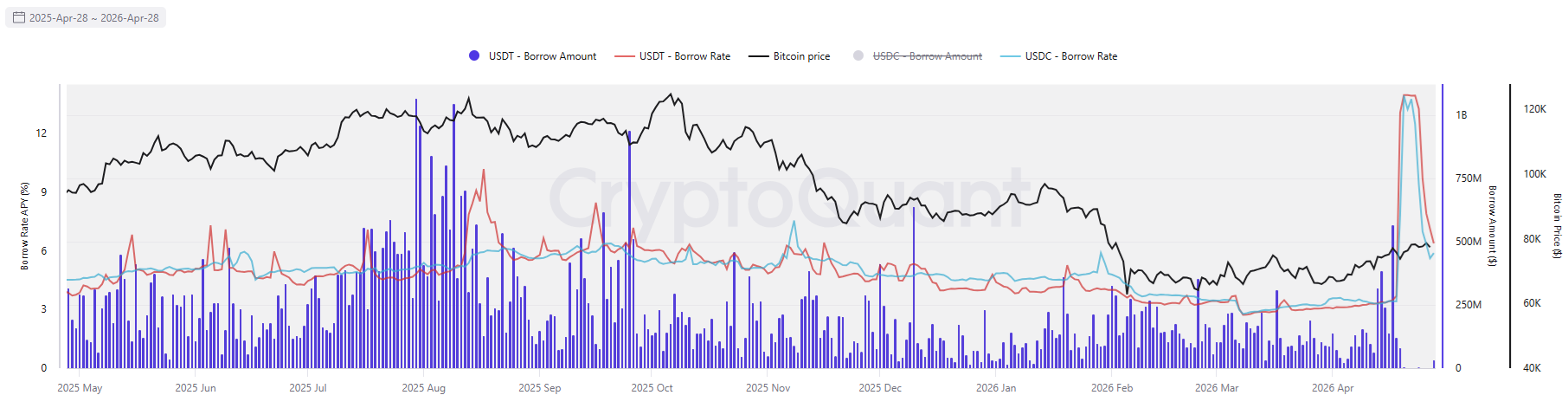
Aave lending rates remain elevated, with up to 6.38% for USDC borrowing. During the latest freeze of rsETH, the protocol offered over 13% in lending rates, but could not overcome investor fears.
USDC vaults remained at 100% utilization, discouraging other lenders to risk their funds in the aftermath of the KelpDAO hack.
As a result, Aave now offers better rates than the DeFi baseline, but lenders and borrowers are still reluctant to return.
The latest Aave V3 data show stablecoins and WETH saw the most significant breakdown of lending, with outflows of leverage. Borrowing was still active for liquid assets like USDT, USDC, and WETH, but loan events slowed down to almost zero, based on CryptoQuant data.
Based on Dune Analytics data, WETH is the most widely borrowed asset, with $6.5B in loans. $3.7B were borrowed in USDT, and $2.9B in USDC.
The recent higher lending rates suggest Aave did not see increased demand for capital, but a liquidity stress event. Borrow rates spiked, increasing their APY to over 14%. Later, rates corrected, but remained elevated at 7.12%. Lenders have become more defensive, leading to more expensive capital for DeFi.
Is another DeFi winter coming?
The recent lending crunch shows DeFi went through one of its most significant borrowing collapses. This time, Aave survived, but raised questions of the resilience of DeFi. The previous DeFi winter followed the crash of FTX and Terra (LUNA), causing a two-year slump in DeFi activity.
Some whales moved their funds immediately, shifting to Spark Protocol as one of the more secure DeFi locations.
Aave’s founder Stani Kulechov still expressed confidence in the protocol, despite the lending crunch. He remarked that Aave had survived multiple bear cycles, and would be capable of attracting liquidity again.
“For me personally, the rsETH bridge incident was unfortunate as our team and community has put so much effort into securing the protocol and seeing the exploit happening outside of the protocol smart contracts, and affecting the markets is hard to watch even when the markets had (and still have) full backing like Mainnet Core,” remarked Kulechov in a recent X post.
In the past few days, crypto influencers expressed their support for Aave and showed a readiness to return to lending and yield generation. The Aave protocol is also voting on a freeze of buybacks, until DeFi conditions improve. The vote will most probably resolve to ‘yes’ in two more days.
The slower lending still pressures the AAVE token, which slid to $93.21 in the past week.
The smartest crypto minds already read our newsletter. Want in? Join them.
This articles is written by : Nermeen Nabil Khear Abdelmalak
All rights reserved to : USAGOLDMIES . www.usagoldmines.com
You can Enjoy surfing our website categories and read more content in many fields you may like .
Why USAGoldMines ?
USAGoldMines is a comprehensive website offering the latest in financial, crypto, and technical news. With specialized sections for each category, it provides readers with up-to-date market insights, investment trends, and technological advancements, making it a valuable resource for investors and enthusiasts in the fast-paced financial world.