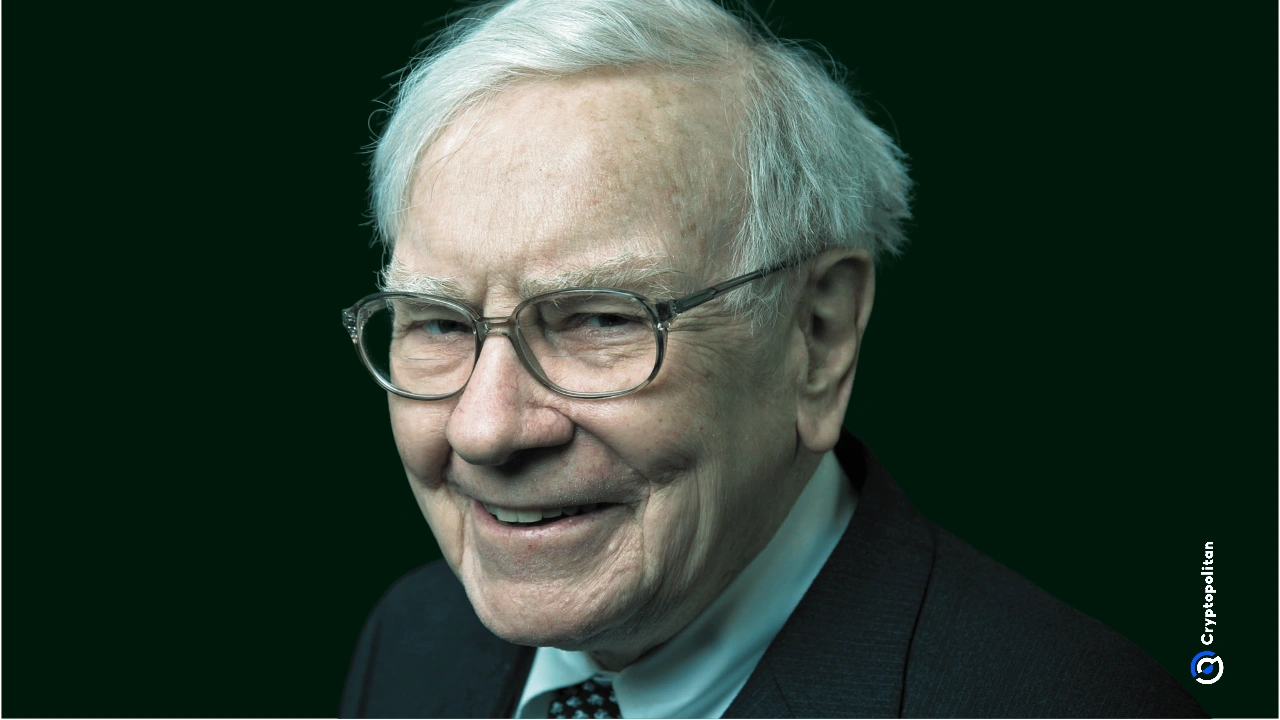
Warren Buffett’s grip on Wall Street looks less secure in 2026 because Berkshire Hathaway (NYSE: BRK.A, NYSE: BRK.B) is badly trailing the market. The company’s Class B stock is down 1.8% this year, while the S&P 500 has gained 10.7%.
Once dividends are counted, the index is up 11.4%. That puts Berkshire behind by 12.4 percentage points on price and 13.1 points on total return.
The disparity looked even worse on June 1. Berkshire was trailing the benchmark by 17.5 percentage points, the largest underperformance of the year. The recovery of June almost closed a third of the gap. However, the period has not been good for the company.
In the second quarter and the subsequent 10 days, Berkshire gained slightly more than 3%, whereas the technology-weighted S&P 500 index jumped by around 16%. At the end of March, Berkshire was leading by 1.8 points.
Berkshire falls further behind as technology stocks carry the index
This is not the first weak year for Warren and Berkshire. In 2025, the company finished 5.5 percentage points below the S&P 500 before dividends. Including payouts, the difference reached 7 points.
Two years of weaker relative returns have put more attention on Berkshire’s leadership and its ability to compete with a market now dominated by large technology companies.
Chief Executive Greg Abel and investment manager Ted Weschler were absent from a Forbes feature about the Allen & Co. conference in Sun Valley, Idaho. However, Forbes listed both men as guests.
Images taken by David Grogan of CNBC, which is owned by Comcast (NASDAQ: CMCSA), and Brendan McDermid of Reuters, part of Thomson Reuters (NYSE: TRI, TSX: TRI), also showed them at the private event.
The annual gathering brings together major business figures. This year’s names included Jeff Bezos, founder of Amazon (NASDAQ: AMZN), Mark Zuckerberg, chief executive of Meta Platforms (NASDAQ: META), and Sam Altman, who leads privately held OpenAI.
Greg and Weschler’s presence came as investors watched the handover from Warren and measured Berkshire’s results against faster-growing parts of the market.
Berkshire’s recent numbers look weak beside its record since 1965. Over that long stretch, its shares produced a 19.9% compound annual return, nearly twice the S&P 500’s pace.
Warren built that record by buying solid companies when fear pushed their prices below what he believed the businesses were worth.
Warren keeps using patience while investors question its current payoff
Warren has long argued that frequent trading hurts investors. He once said, “The stock market is designed to transfer money from the active to the patient.” He has also warned against selling simply because prices are falling. His second famous rule is just as direct: “Be fearful when others are greedy and be greedy only when others are fearful.”
The broad market’s history supports the patience behind those words. An investment of $100 in the S&P 500 in 1928 would now sit just below $1 million, even after crashes, recessions, wars, and political shocks.
Warren used that approach during the 2008 banking crisis. Berkshire put $5 billion into Goldman Sachs (NYSE: GS) while financial shares were collapsing. Berkshire received preferred stock paying a 10% dividend and warrants that allowed it to buy common shares later. The transaction eventually earned Berkshire more than $3 billion. At the time, many traders feared the entire banking system could fail.
His test during selloffs stayed simple. Warren asked whether a 30% share-price fall would reduce future demand for drinks sold by Coca-Cola (NYSE: KO) or cut card use at American Express (NYSE: AXP). When customer behavior remained steady, he treated the lower stock price as a market problem rather than a business problem.
Berkshire used the same logic with The Washington Post in 1973. During a deep selloff, it invested $10.6 million when Warren believed the shares cost only one-quarter of the company’s real value. The price dropped further after the purchase, but Berkshire held on. By 1985, that stake was worth more than $200 million, producing a gain of almost 1,900%. The bet rested on his view that panic can push a strong company far below a fair price for years.
This articles is written by : Nermeen Nabil Khear Abdelmalak
All rights reserved to : USAGOLDMIES . www.usagoldmines.com
You can Enjoy surfing our website categories and read more content in many fields you may like .
Why USAGoldMines ?
USAGoldMines is a comprehensive website offering the latest in financial, crypto, and technical news. With specialized sections for each category, it provides readers with up-to-date market insights, investment trends, and technological advancements, making it a valuable resource for investors and enthusiasts in the fast-paced financial world.