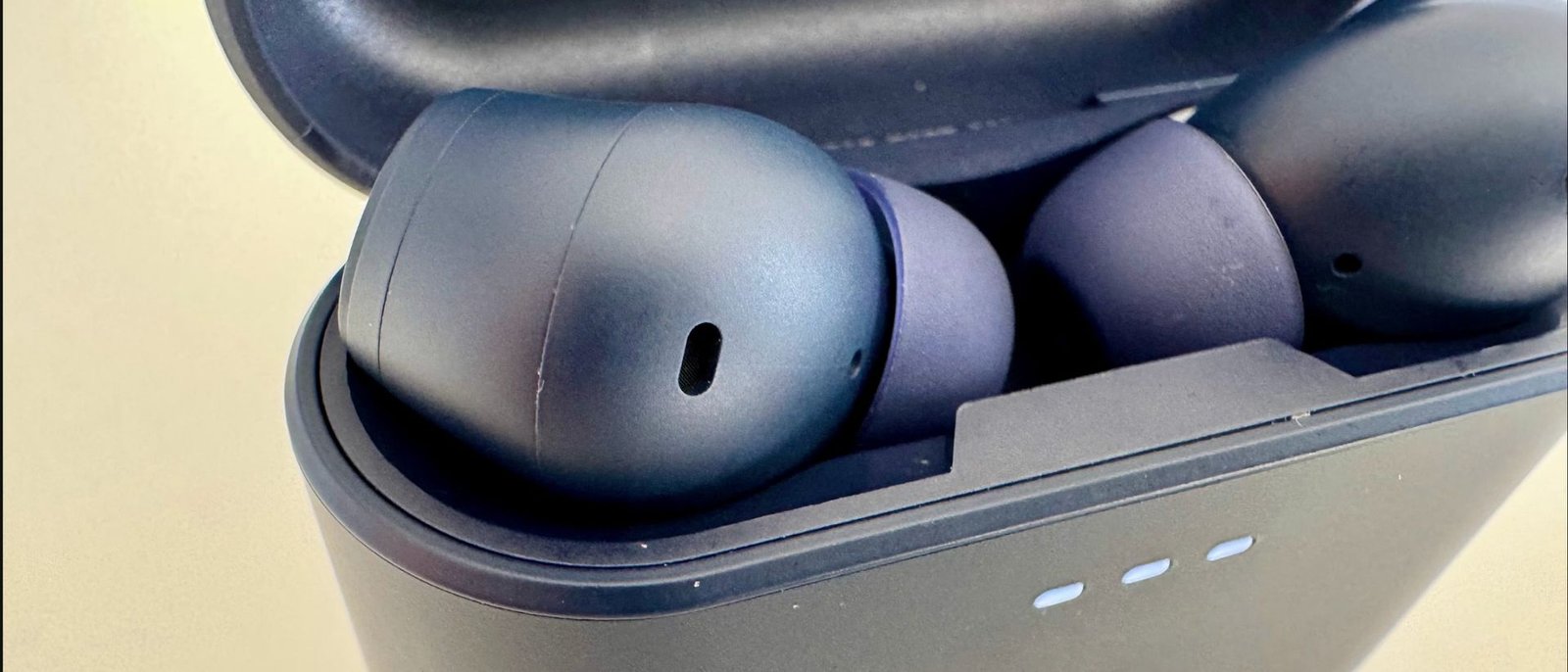
Cambridge A100 SE: Two-minute review
At a glance, not much separates the Cambridge A100 SE true wireless in-ear headphones from their older A100 stablemates — and that’s because not much does.
The most obvious difference on first acquaintance is the addition of a (very attractive) deep blue finish — and when you glance at the spec-sheet, it’s only the (admittedly not inconsiderable) addition of Dolby Audio functionality that justifies the ‘SE’ in the model name.
Which means that the A100 SE are, at the asking price, a lavishly specified pair of wireless earbuds for the the best budget earbuds market. Class A/B amplification, aptX Lossless and LDAC codec compatibility, 10mm dynamic drivers featuring a lot of recycled Neodymium, adaptive hybrid active noise cancellation, and very nearly 40 hours of battery life from the ‘buds and their charging case are high up on the list of highlights.
And in practice, the way the A100 SE perform is almost all ‘gain’ and very little ‘pain’. They are spacious and organised, control a soundstage well, offer plenty of detail, balance their frequency response and tonality pretty well, and include voice, touch and app as control options.
A price-comparable alternative such as the JBL Live Beam 4 can go even further where battery life is concerned, and have a more naturalistic way with rhythmic expression — the A100 SE are just slightly lumpy in this regard — but ultimately they’re ‘different’ rather than obviously ‘better’. Because at this sort of money, finding something obviously ‘better’ than the Cambridge A100 SE is going to prove tricky.
Cambridge A100 SE review: Price and release date
- Released on October 2, 2026
- $149 / £129 / AU$249
They’re hot off the press at the time of writing, friend! We’re publishing this review to meet their embargo. What you need to know is, the A100 SE earbuds arrived on October 2, 2026. So, they’re new — albeit very much built upon their older siblings.
And that’s a big plus. The original Cambridge Audio Melomania A100 arrived in June 2025 (Cambridge has since dropped the ‘Audio’ from its moniker and, it seems, the ‘Melomania’ from its buds) to a resounding five-star review.
So while the price of these new earbuds is hardly huge, it does mean that the older set can now be found for around $99 / £79 — being superseded by newness can have this effect. So, there’s plenty to consider…
Cambridge A100 SE review: Specs
|
Type |
True wireless in-ear |
|
Drivers |
10mm full range dynamic (Neodynium) |
|
Active noise cancellation |
Yes |
|
Battery life |
39 hours (maximum) |
|
Weight |
4.7g (earbud); 38g (charging case) |
|
Frequency response |
Not stated |
|
Connectivity |
5.4; LDAC, aptX Lossless codec compatibility |
|
Waterproofing |
IPX5 |
|
Control |
Touch; app |
Cambridge A100 SE review: Features
- Class A/B amplification2
- Bluetooth 5.4 with aptX Lossless and LDAC compatibility3
- 39 hours battery life (maximum)
There’s no need to offer any kind of ‘at the asking price’ qualification here — the Cambridge A100 SE have a very worthwhile feature set, full stop.
The use of the same Class A/B amplification that’s at the heart of the company’s well-regarded CX and EX full-size integrated amplifiers delivers a hit of hardcore hi-fi credibility. Compatibility with cutting-edge aptX Lossless and LDAC Bluetooth codecs means the biggest wireless streams possible are available from source devices that are capable of delivering it. Snapdragon Sound (complete with dual-core 240MHz Qualcomm Kalimba DSP) should mean ultra-low latency, and dual-point connectivity means content from two connected devices can be switched between seamlessly. Sound itself is delivered by a pair of 10mm full-range dynamic drivers, and they make liberal use of recycled Neodymium in their composition.
Three QualComm cVc mics per earbud handle voice assistant interaction, telephony, and the adaptive hybrid noise-cancellation system. With ANC engaged, the earbud and the charging case offer more than 21 hours of playback time between them, and if you switch ANC off this figure rises to closer to 39 hours. And you can spend these many hours in pretty much any realistic environment, thanks to the earbuds’ IPX5 rating.
- Features score: 5 / 5
Cambridge A100 SE review: Sound quality
- Open, detailed and controlled sound
- Good sense of dynamic variation
- Not the most naturalistic where rhythms are concerned
Some true wireless in-ear headphones are more in-ear than others when it comes to the sound they make — the sensation of music being inside your head can be strong with some designs, and quite oppressive it is too. That’s not the case with the A100 SE; even without their ‘Dolby Audio’ mode being engaged they’re a notably open and airy listen, and when it’s switched in they become even more spacious. It’s not like listening to loudspeakers, of course, but it’s a lot less stifling than some alternatives.
It doesn’t do any harm in this respect that the Cambridge are quite adept when it comes to creating and controlling a soundstage. They have outright scale on their side, especially when it comes to the width of the stage, and they have absolute authority over the elements on it. There’s appreciable space between instruments, but a commonality and unity to the sound at the same time — the sensation of space doesn’t compromise the idea of ‘performance’.
A listen to a big FLAC file of LCD Soundsystem’s Daft Punk is Playing at My House allows the A100 SE to demonstrate a very even-handed way with frequency response and tonality. Leave the EQ settings out of the equation and the top-to-bottom presentation of the frequency range is smooth and undramatic in the best way — there’s no sense that the earbuds want to meaningfully favour any particular area of information over any other, and the same is true of the fairly neutral tone the Cambridge adopt. In ultimate terms they hint at spotlighting and gently heating the lowest frequencies, but overall they’re significantly less coloured than quite a few price-comparable rivals.
The A100 SE handle detail retrieval well, and are alert to even quite minor variations in timbre and texture — events deep in the mix or at the outer edges of the soundstage are not overlooked, and they’re given an appropriate amount of weighting in every circumstance. Details around the dynamics of harmonics are attended to well, and the more overt dynamics of attack and intensity are made absolutely apparent.
Really, it’s only where rhythmic expression is concerned that the Cambridge are anything less than really quite assertive. They’re reasonably adept when it comes to the attack and decay of bass sounds, and they certainly don’t drag at tempos — but they’re not as straight-edged as they might be, and consequently they handle rhythms in a relatively stiff, upright manner. ‘Lurch’ is too strong a word, but ‘lumpy’ isn’t — the A100 SE are, in absolute terms, just a little lumpy in this regard.
- Sound quality: 4.5 / 5
Cambridge A100 SE review: Design
- Choice of three finishes
- App and touch control
- Dolby Audio functionality
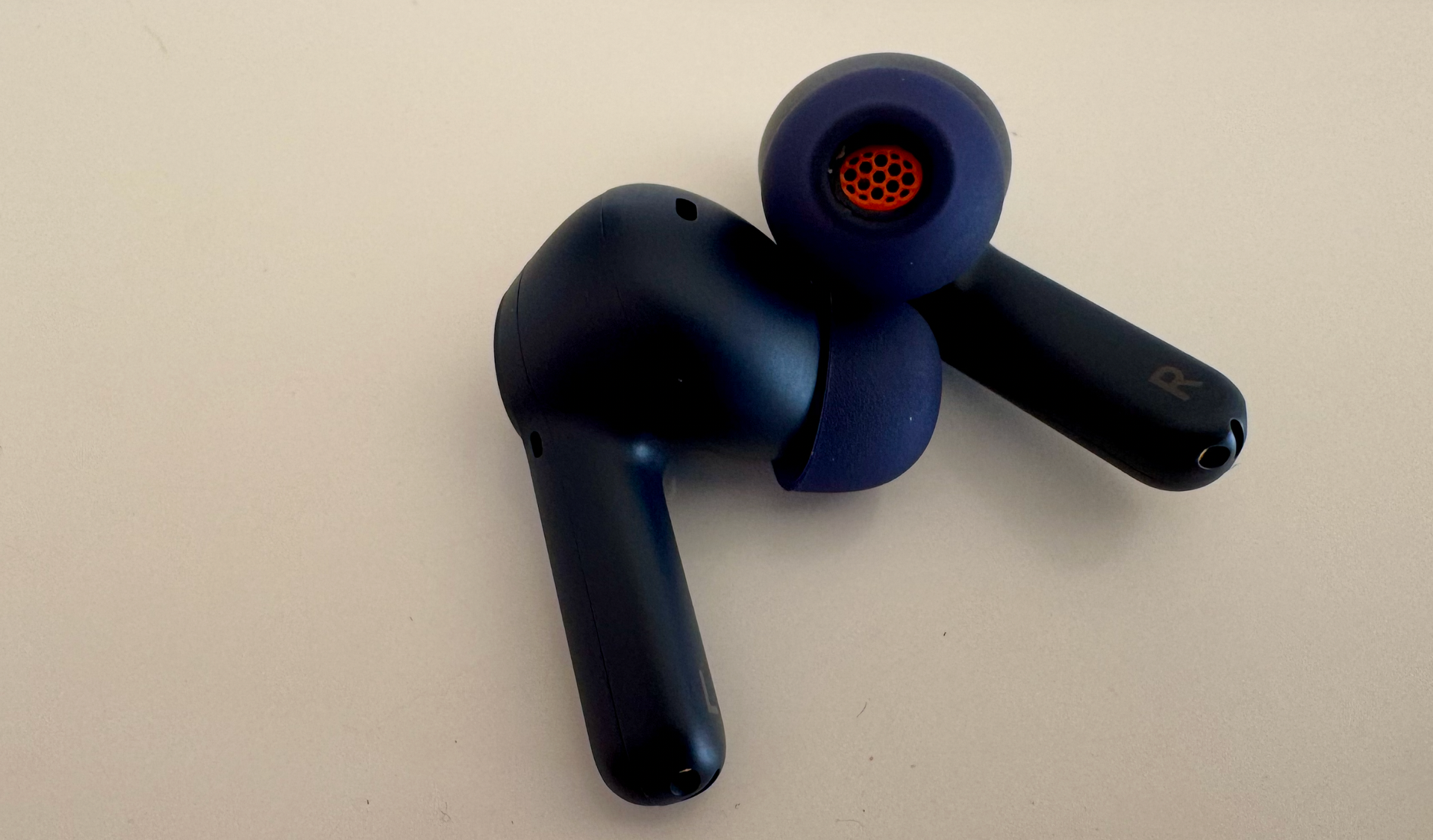
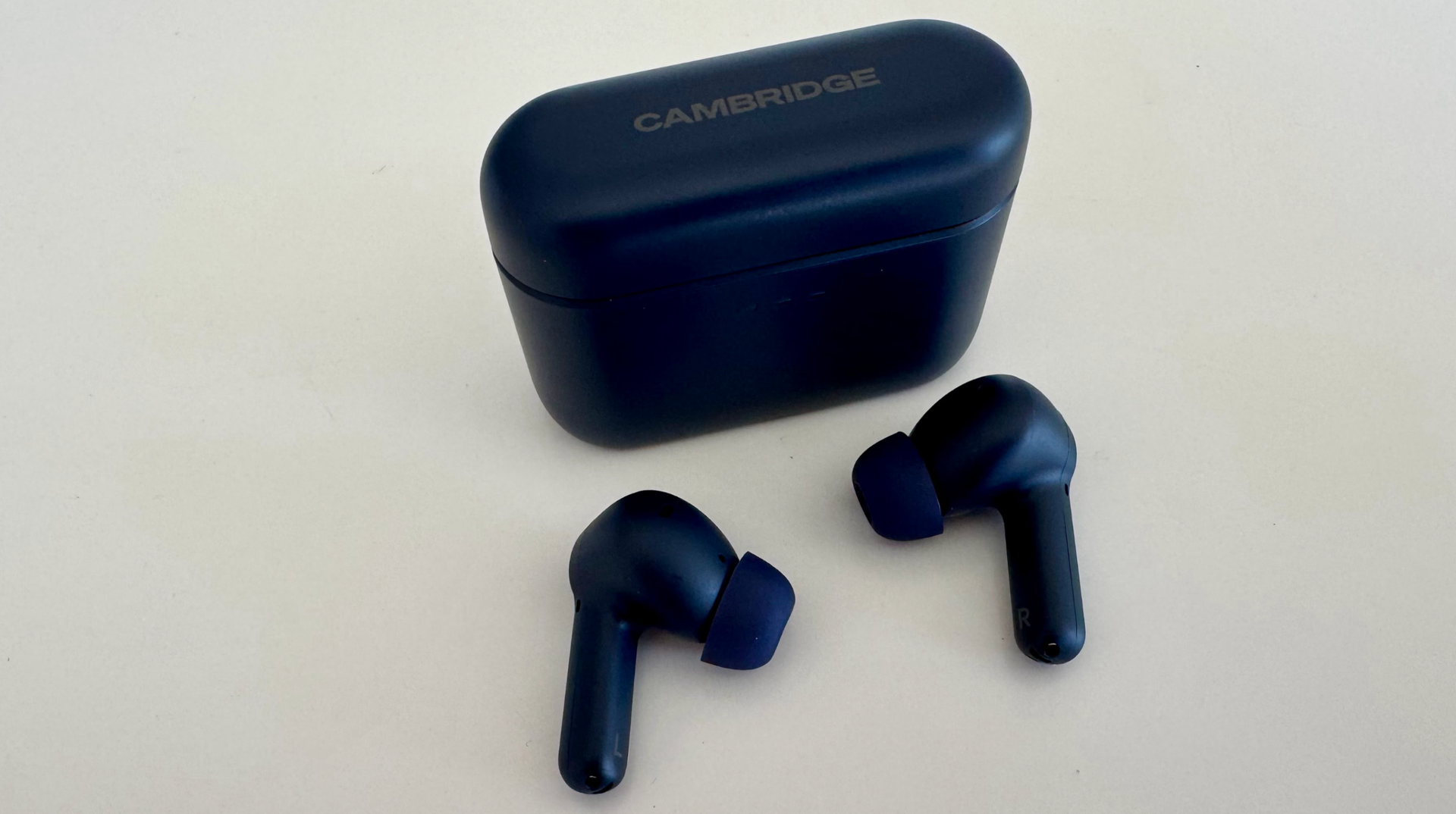
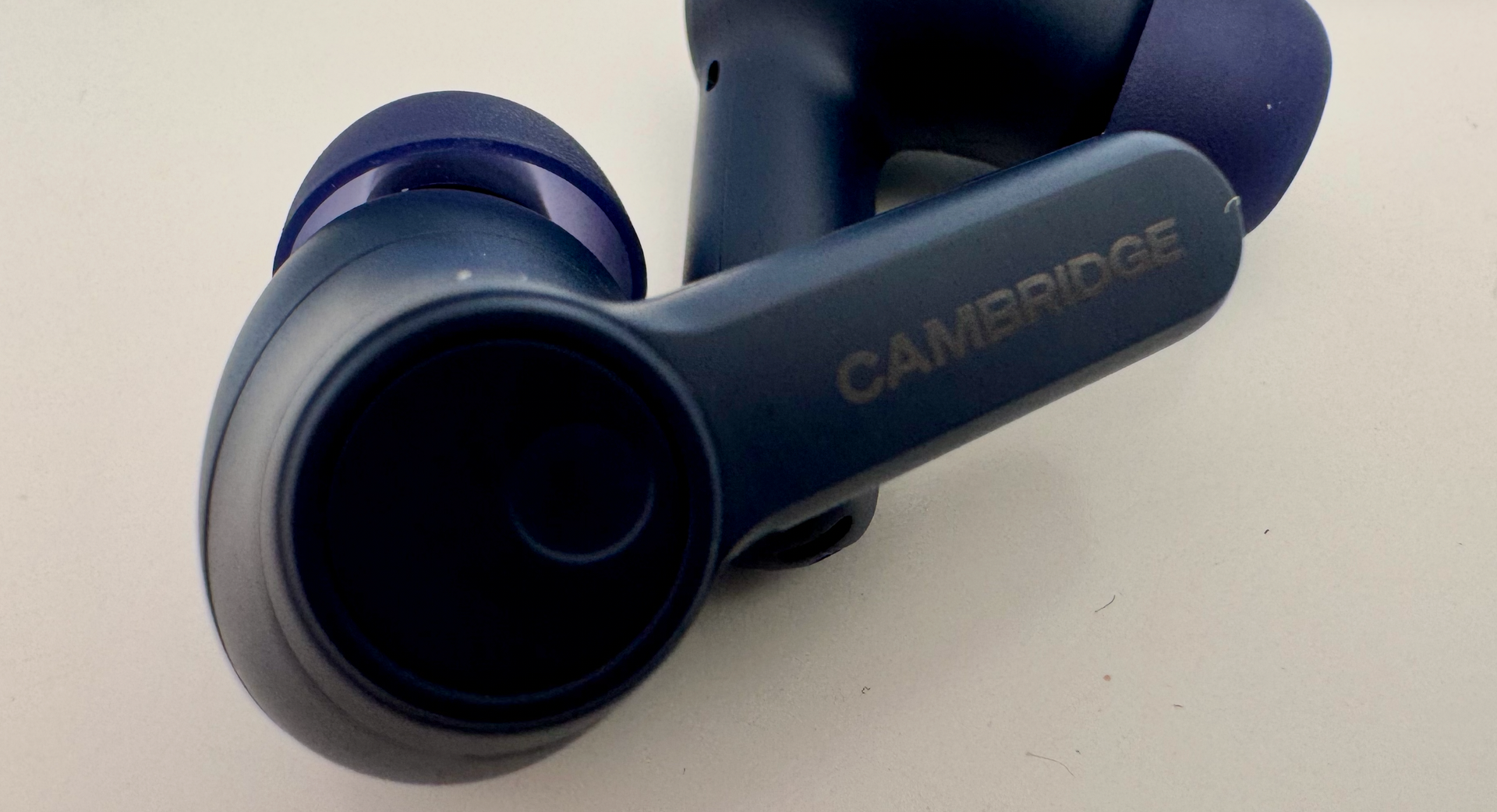
You’ve a straight choice if you’re designing a pair of true wireless in-ear headphones: either the pebble-like ‘twist to fit’ shape, or the dangly stem alternative popularised by Apple. For the A100 SE, Cambridge has gone down the second route.
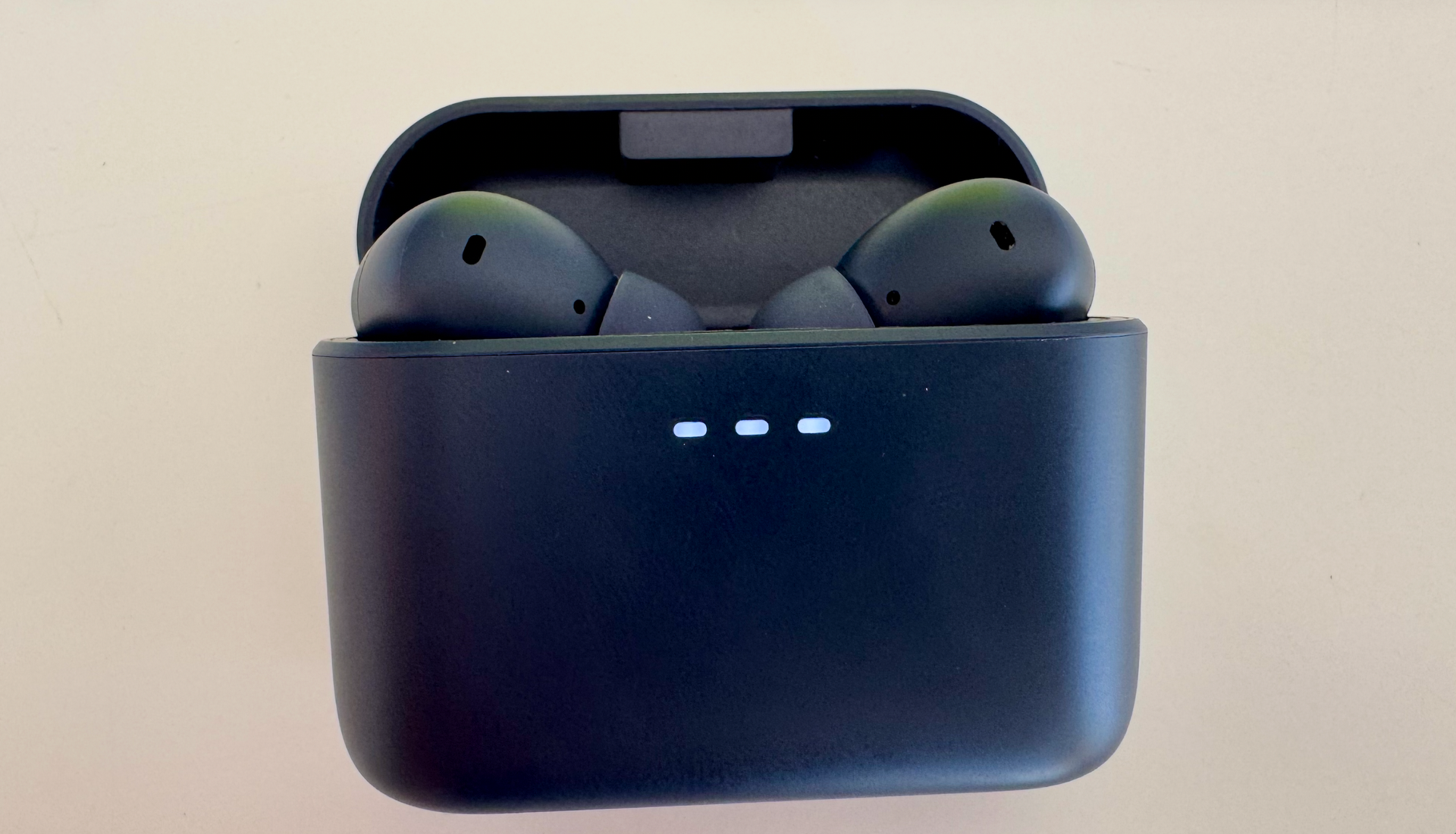
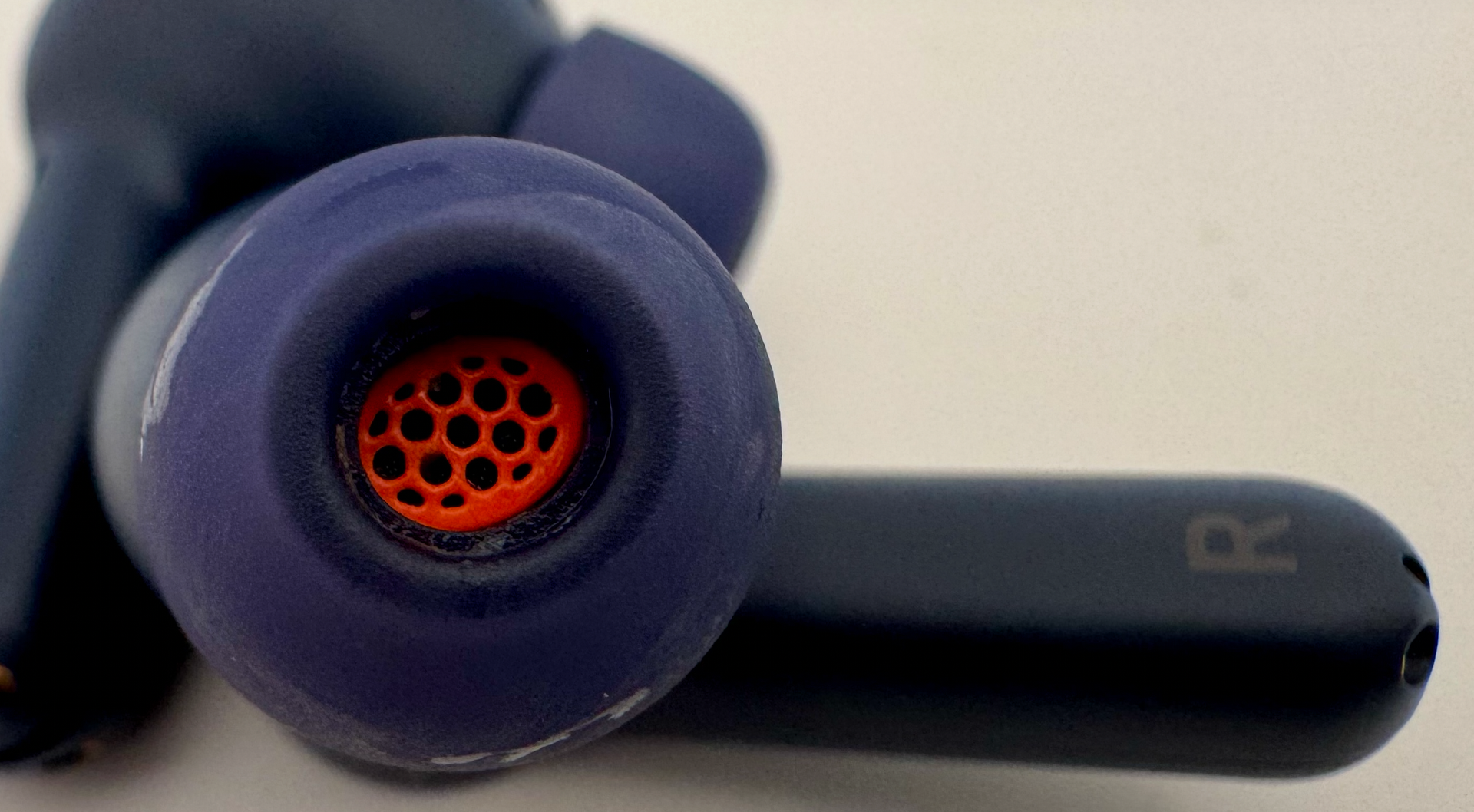
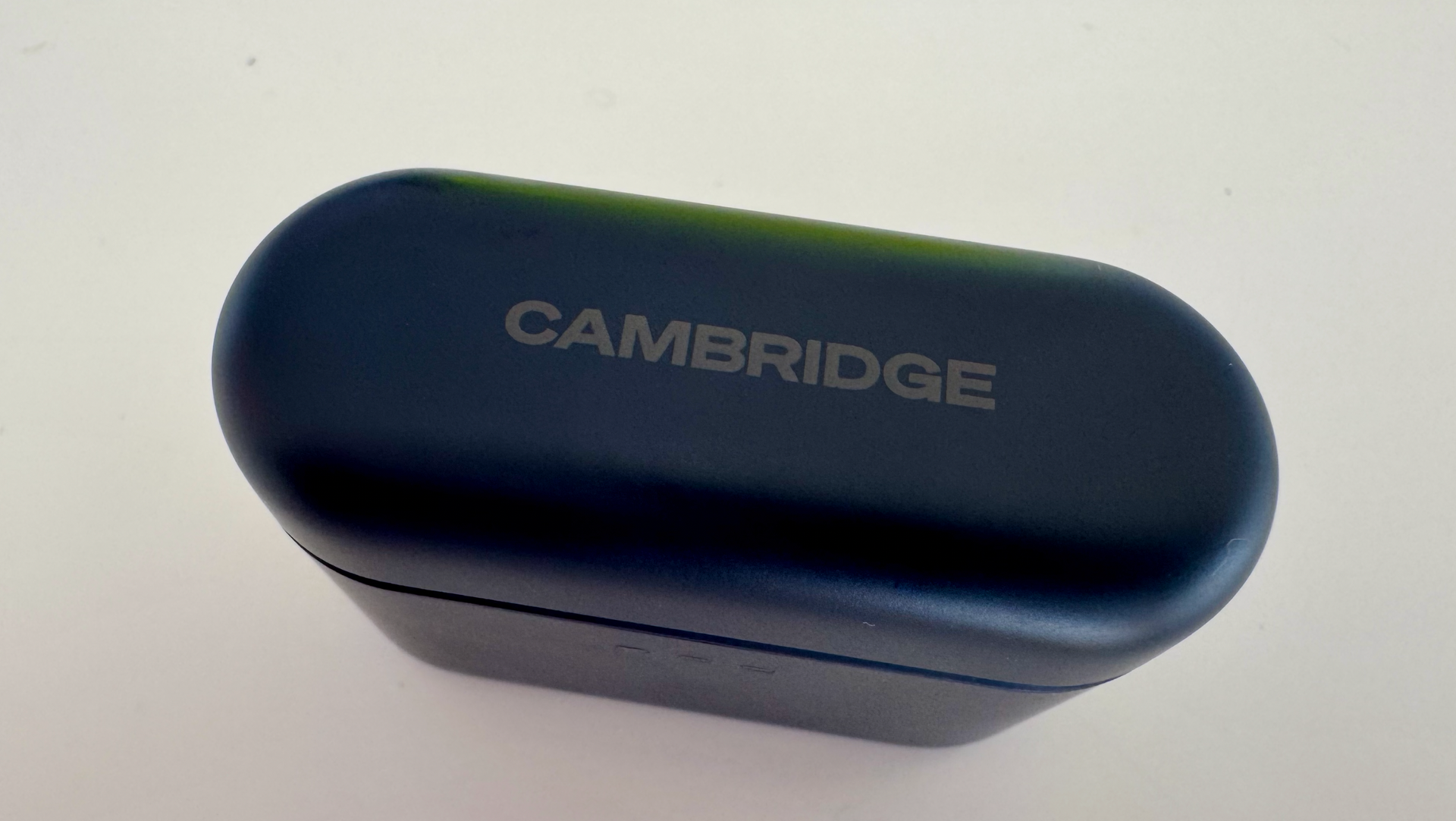
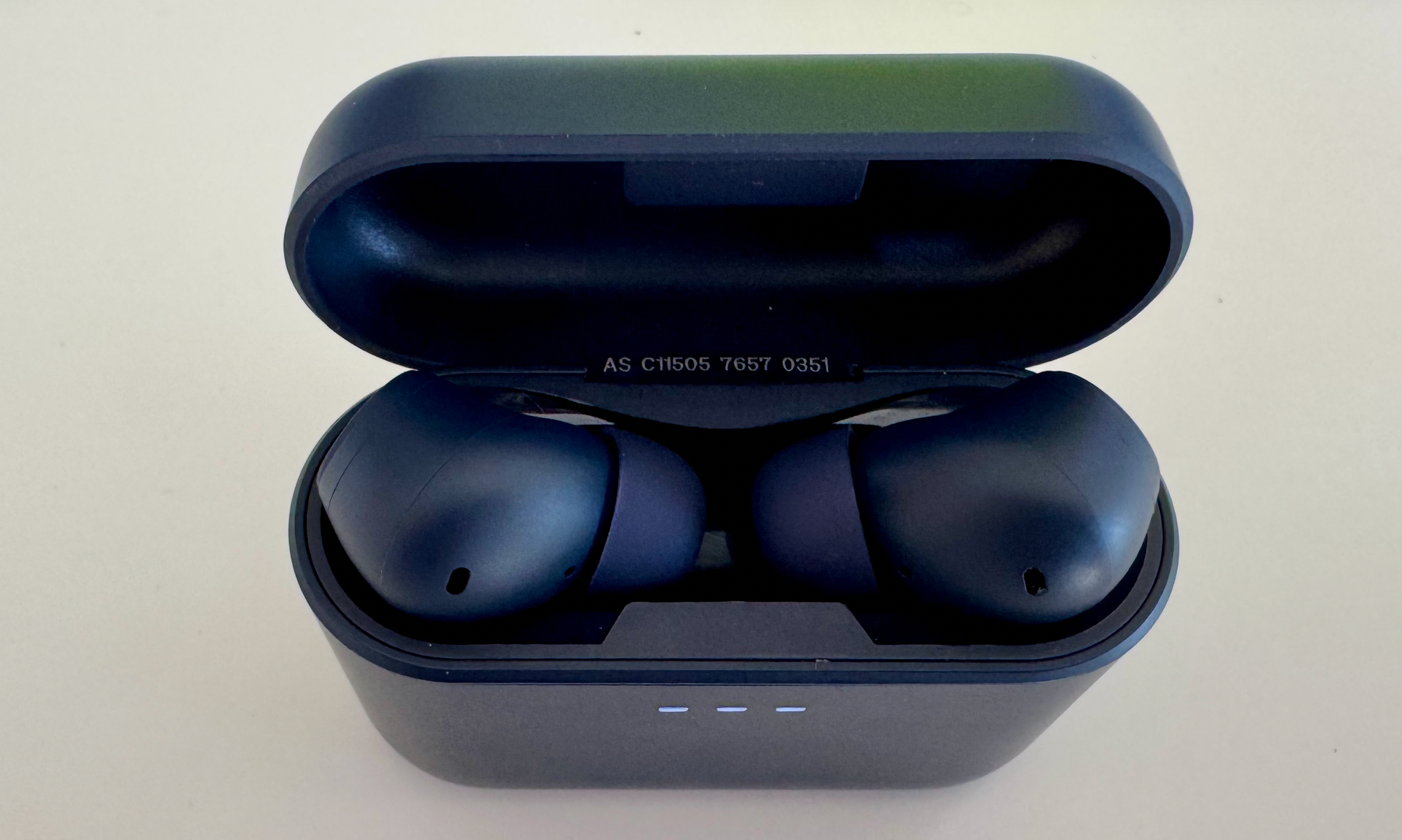
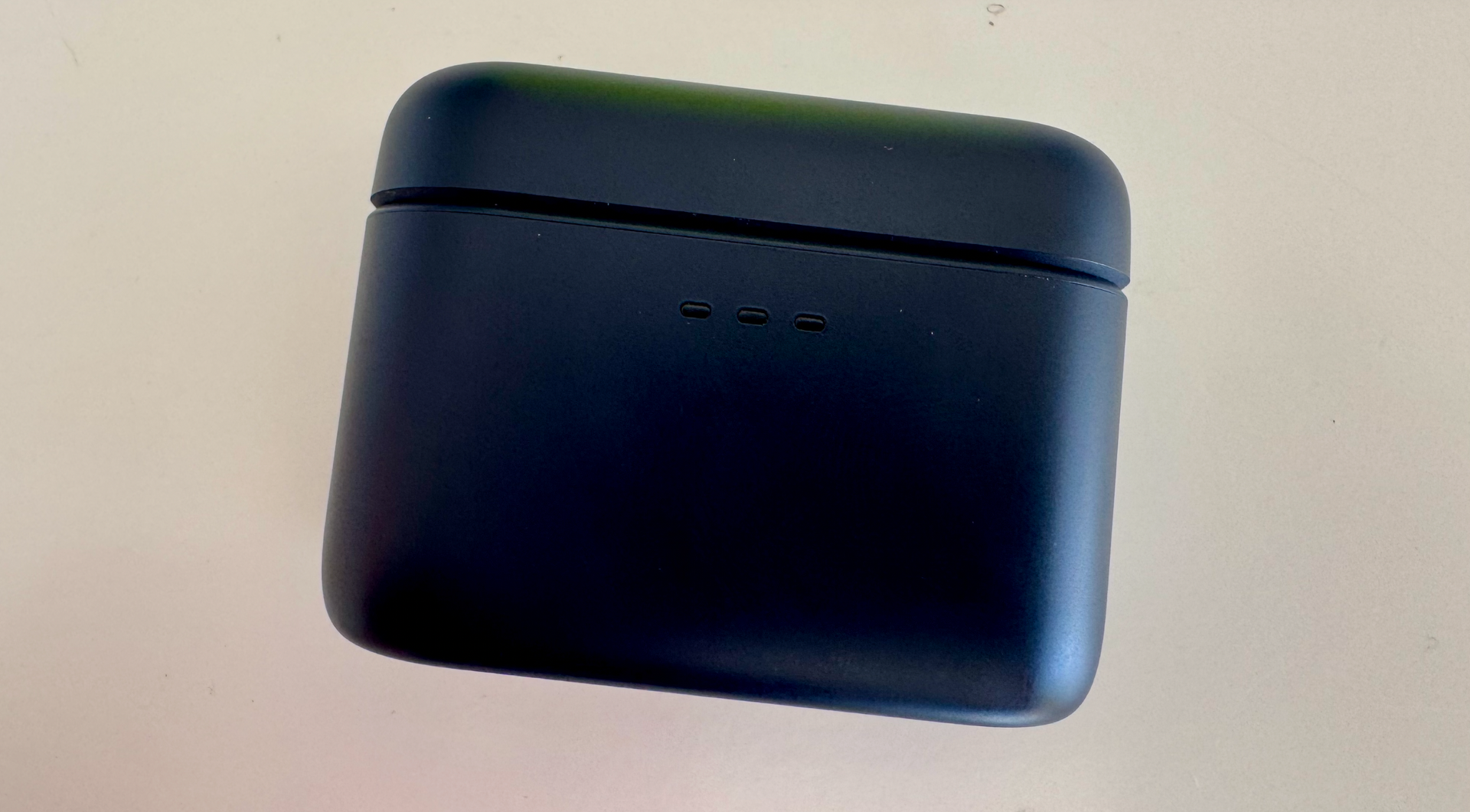
The earbuds, and the slender charging case they travel in, are made to a perfectly acceptable standard, mostly from plastic that’s unremarkable both in look and feel. My review sample is a new dark blue finish, but more usual black or white alternatives are available.
The outer section of the top of each earbud features a capacitive touch surface, and here it’s possible to control playback, to handle telephony, to cycle through your ANC options, and to summon your source device’s native voice assistant (should it have one). They’re not as reliable as they might be in operation, but patience brings its rewards. Eventually.
You can also control the A100 SE using Cambridge’s ‘Melomania Connect’ control app. It’s a fair bit more reliable than the touch controls, and as well as being where you can engage (or disengage) the earbuds’ new Dolby Audio feature (which has the very welcome knack of bring a little more space to the sound, and a little less of the ‘directly into your head’ sensation some IEMs can suffer from) it allows you to remap the touch controls to get the sequence on taps, presses and holds you prefer.
It also features a seven-band EQ — there are six presets and the option to save a few custom settings of your own. It’s also where you can switch the ‘wear detect’ function on or off, engage ‘game’ mode, check for firmware updates and, perhaps most importantly of all in this instance, select your preferred ‘audible feedback’.
Not for the first time where a pair of Cambridge wireless headphones are concerned, the usual options of ‘off’, ‘tone’ and quite a quantity of different languages are available, along with a ‘Southwark’ option which turns out to be Matt Berry really Matt Berry-ing it up. It’s a frivolous, profoundly funny option that I am nowhere near tiring of — and TechRadar’s Audio Editor agrees wholeheartedly.
- Design score: 4 / 5
Cambridge A100 SE review: value
- Great specification
- Some proper performance highlights
- Matt Berry!
This is a very competitive area of the true wireless headphones market, and Cambridge has done a lot to ensure the A100 SE can be seen to represent good value for money.
The type of amplification that’s on board, the extensive Bluetooth codec compatibility, the spacious, detailed and dynamic nature of their presentation all point to a product that’s well worth the asking price, with only the slightly hit-and-miss touch-control implementation and slightly lumpy rhythmic expression counting against them.
- Value: 4.5 / 5
Should I buy the Cambridge A100 SE?
|
Attributes |
Notes |
Rating |
|---|---|---|
|
Features |
Class A/B amplification, great call-handling, aptX and LDAC codec support |
5/5 |
|
Sound quality |
Detailed and controlled with a good sense of dynamic variation, just not the most naturalistic rhythmically |
4.5/5 |
|
Design |
Three finishes and highly functional, just a little unremarkable |
4/5 |
|
Value |
A competitive area, but nevertheless there’s great sound-per-pound value to be had here |
4.5/5 |
Buy them if…
You like open sound
There’s a proper sensation of space to the way the A100 SE present music, especially where ‘Dolby Audio’ mode is engaged.
You enjoy long listens
The Cambridge are relatively comfortable earbuds, and they have the battery stamina to let you listen right around the clock.
You appreciate a point of difference
No other manufacturer has the ability to let you hear Matt Berry gleefully over-reading “waiting to pair!” and other classics of TWS audible feedback.
Don’t buy them if…
You’re easily frustrated
The touch controls are not absolute perfect in operation, and you’ll need to remain calm at times in order to get what you’re asking for.
You’re rhythm-focused
The A100 SE are talented in many respects, but they don’t express rhythms with quite the confidence or the fluency of some rivals.
You’re expecting a premium look and feel
This Cambridge product is keenly priced, so while the quality of construction is well up to standard there’s nothing luxurious about it.
Cambridge A100 SE review: Also consider
The JBL Live Beam 4, while slightly more expensive, are probably the most impressive price-comparable rival to the A100 SE right now — and it seems fair to say that they’re slightly different, rather than obviously better or worse, than the Cambridge model.
They struggle to match the noise-cancellation the A100 SE offer, for instance, and don’t have quite as pronounced a spatial audio effect — but they hit back with a more convincing way of describing rhythms and straightforwardly impressive battery life of as much as 48 hours between charges.
Any other products of note? Yes, Apple’s new AirPods 5 with Wireless Charging are right at this level and if you own an iPhone, they certainly look competitive on paper — just not for codec support (see “if you own an iPhone”, above) or stamina. Our full review of Apple’s newest buds is incoming, but food for thought at any rate.
How I tested the Cambridge A100 SE
- With Apple and Android devices
- With file types from MP3 to DSD3
- Indoors and outdoors
I used the Cambridge A100 SE at my desk, while out walking and on public transport. I connected them to an Apple MacBook Pro, an Apple iPhone 15 Pro and a FiiO M15S hi-res player.
This allowed me to access Qobuz and Tidal music streaming services, internet radio via Airable, and hi-res content stored on the DAP’s internal memory. I listened to lots of different genres of music and plenty of spoken-word content — and I did so, on and off, for two weeks.
- First reviewed in September 2026
- Read TechRadar’s review guarantee
- Learn more specifically about how we test earbuds at TechRadar
This articles is written by : Nermeen Nabil Khear Abdelmalak
All rights reserved to : USAGOLDMIES . www.usagoldmines.com
You can Enjoy surfing our website categories and read more content in many fields you may like .
Why USAGoldMines ?
USAGoldMines is a comprehensive website offering the latest in financial, crypto, and technical news. With specialized sections for each category, it provides readers with up-to-date market insights, investment trends, and technological advancements, making it a valuable resource for investors and enthusiasts in the fast-paced financial world.