Online design tool Canva has just launched Canva Craft, its first AI image generation model that lets you make all sorts of visual content to add to the things you create. So think social media and marketing materials, lifestyle photography, digital art, characters, nature imagery and more.
If you already rely on ChatGPT or another AI tool to create visuals for you but you also regularly use Canva, it could be a good way to combine image generation and design in one. And although it may not be as powerful as ChatGPT, it might not be far off. Canva says its in-house AI lab, Canva Research, is “the world’s second most advanced lab for image generation” behind OpenAI.
I wanted to find out exactly how Canva’s new AI image generation capabilities compare to ChatGPT’s, so I put the free version of Canva and the free version of ChatGPT head-to-head with five image tests. I gave each tool prompts that were aligned with some of the examples Canva gave in its announcement, like making product photography or blog imagery, and the results are below.
Every time Canva creates an image, it presents five options. I chose the first one to make the test fair and presented that on the left of every picture here. With ChatGPT, it tends to make one image, though several times in this test it presented two side-by-side and asked me to pick my favorite to perfect the model. Again, I always went with the first and presented that on the right of every picture below.
If you want to know how each AI image generation tool compares, this should be a good starting point for working out which produces the best results and which might be the best option for you. For each prompt I chose a winner based on personal preference, taking into account whether it looked realistic, fit the prompt and whether I could imagine using it in actual design projects.
Canva Craft vs. ChatGPT
Prompt 1: Product ad image
Prompt: Create a polished product photo of a premium silver flip phone on a stone pedestal, with soft studio lighting and a clean beige background.
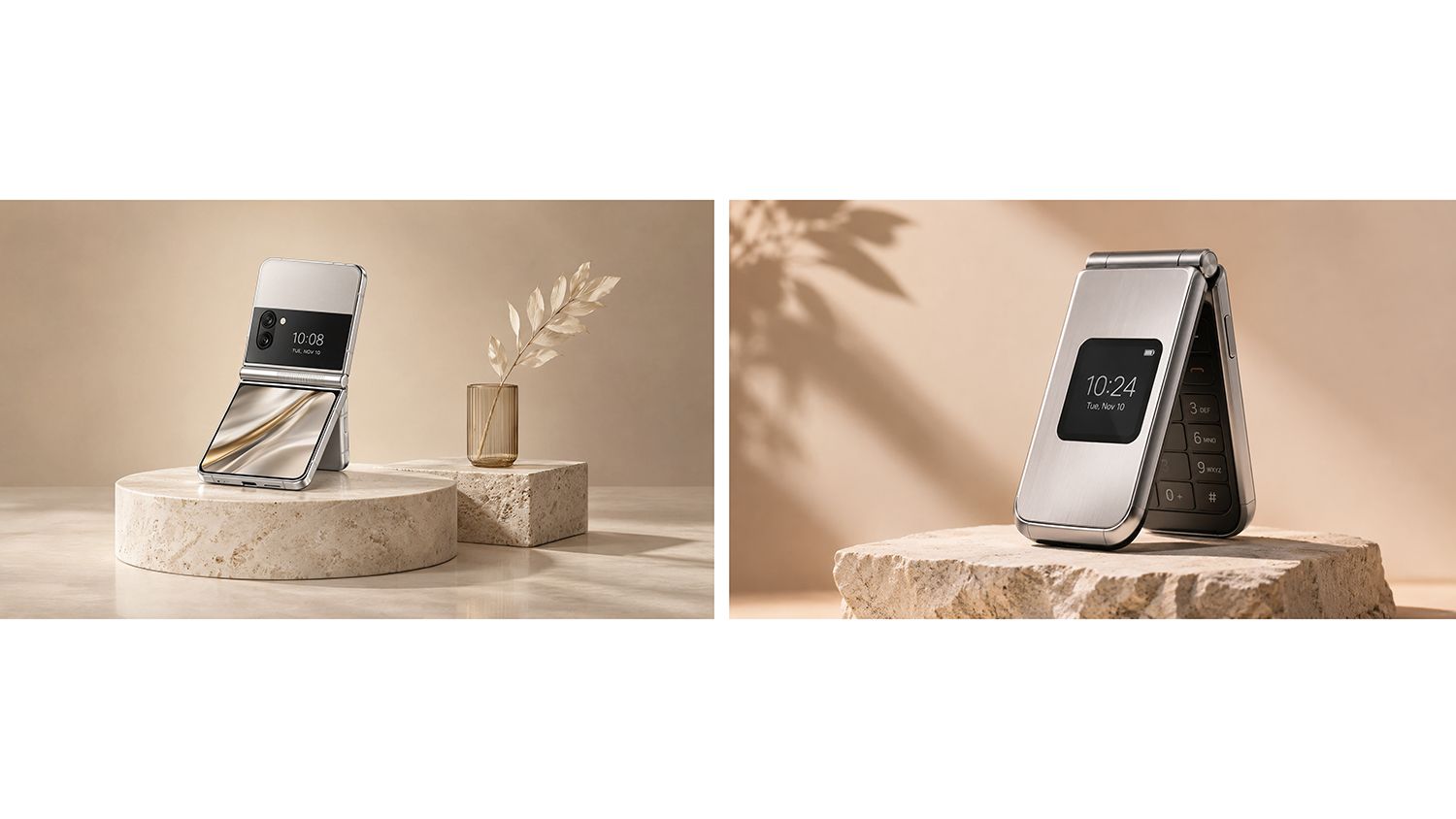
I know some people who use Canva for design mock-ups, especially for ads, websites and social media assets. Which is why I wanted to see how Canva and ChatGPT compare when it comes to creating a realistic-looking product photography.
Both Canva and ChatGPT nailed the brief with a very similar interpretation of the prompt. The lighting and textures are certainly believable and have all the hallmarks of a product photoshoot.
Of course, if you wanted to use them for a particular product, you’d have to get very specific with the prompt because in these examples these phones clearly don’t exist.
- Winner: Tied
Prompt 2: Desk flat lay
Prompt: Create a realistic flat lay of a laptop, notebook, coffee cup, phone, pen and glasses neatly arranged on a wooden desk.
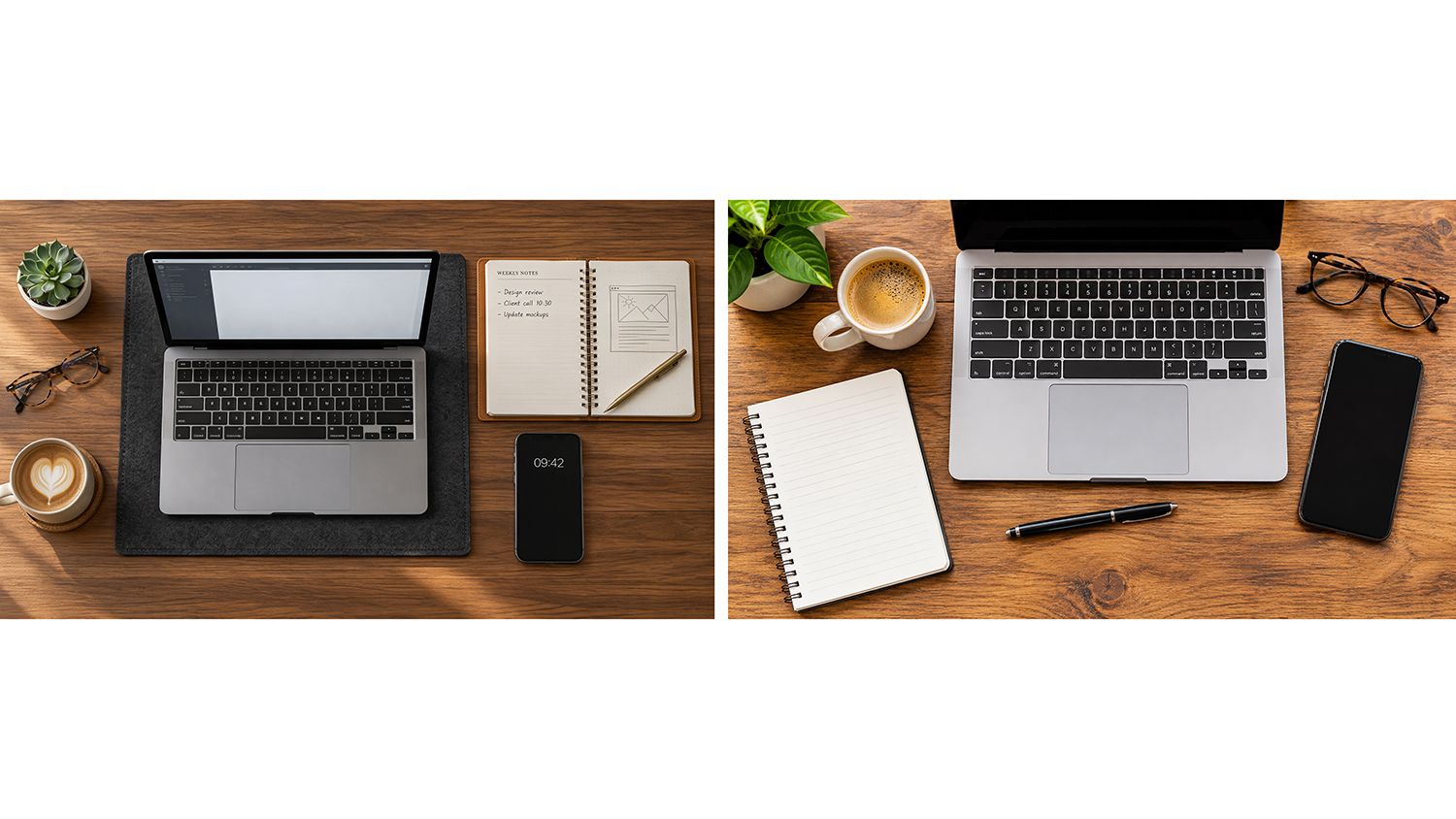
I often see people sharing pictures of their desk to add to a LinkedIn post or blog post about the way they work or creativity. A birds eye view of a desk is also a pretty standard image for websites. So I thought this would be a handy test and give us an opportunity to assess the textures and physics of the AI images.
Both of the results here looked believable enough to add to a simple blog or social media post. But zoom in and there are some differences. Mostly that the Canva version looks a little less realistic in my opinion due to the angle of the objects and the textures, especially in the coffee.
The lighting is a lot more interesting in the Canva version, though the artificial-looking lighting in the ChatGPT image actually makes the scene look more believably office-like.
- Winner: ChatGPT
Prompt 3: Lifestyle photo
Prompt: Create a realistic photo of a woman laughing outside a café on a sunny morning, with natural light and a candid editorial feel.
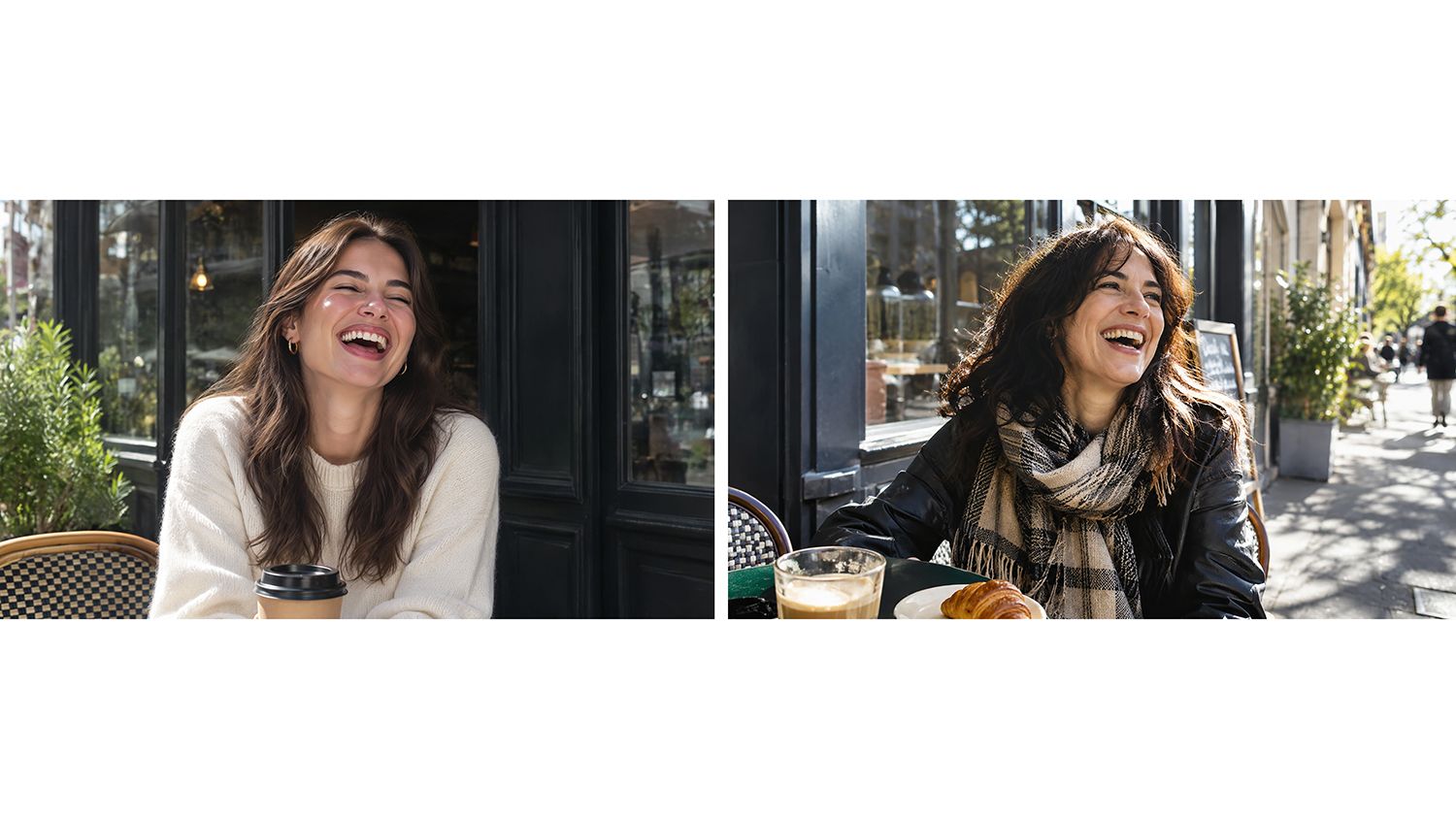
I intentionally kept this prompt loose to see how both AI tools would run with it. At first, the interpretations looked similar, same sort of café in the background, same sunny lighting and same expression.
But it didn’t take me long to see that Canva’s version was much more basic. The image it created could maybe work in a blog post at a push, but not if anyone zoomed in. The skin was overly smooth and there were some consistency issues with the woman’s mouth, which didn’t quite line up properly at the edges. It wasn’t bad, but it wasn’t great.
In comparison, ChatGPT created a woman who looked much more realistic. Her skin had texture, her expression was more natural, she looked like a regular woman rather than overly made up and I couldn’t spot any inconsistencies no matter how hard I searched for them.
- Winner: ChatGPT
Prompt 4: Exhibition poster
Prompt: Design a modern poster for an art exhibition called “The Art of Disconnecting” with bold typography, a clean layout and an image of a flip phone.
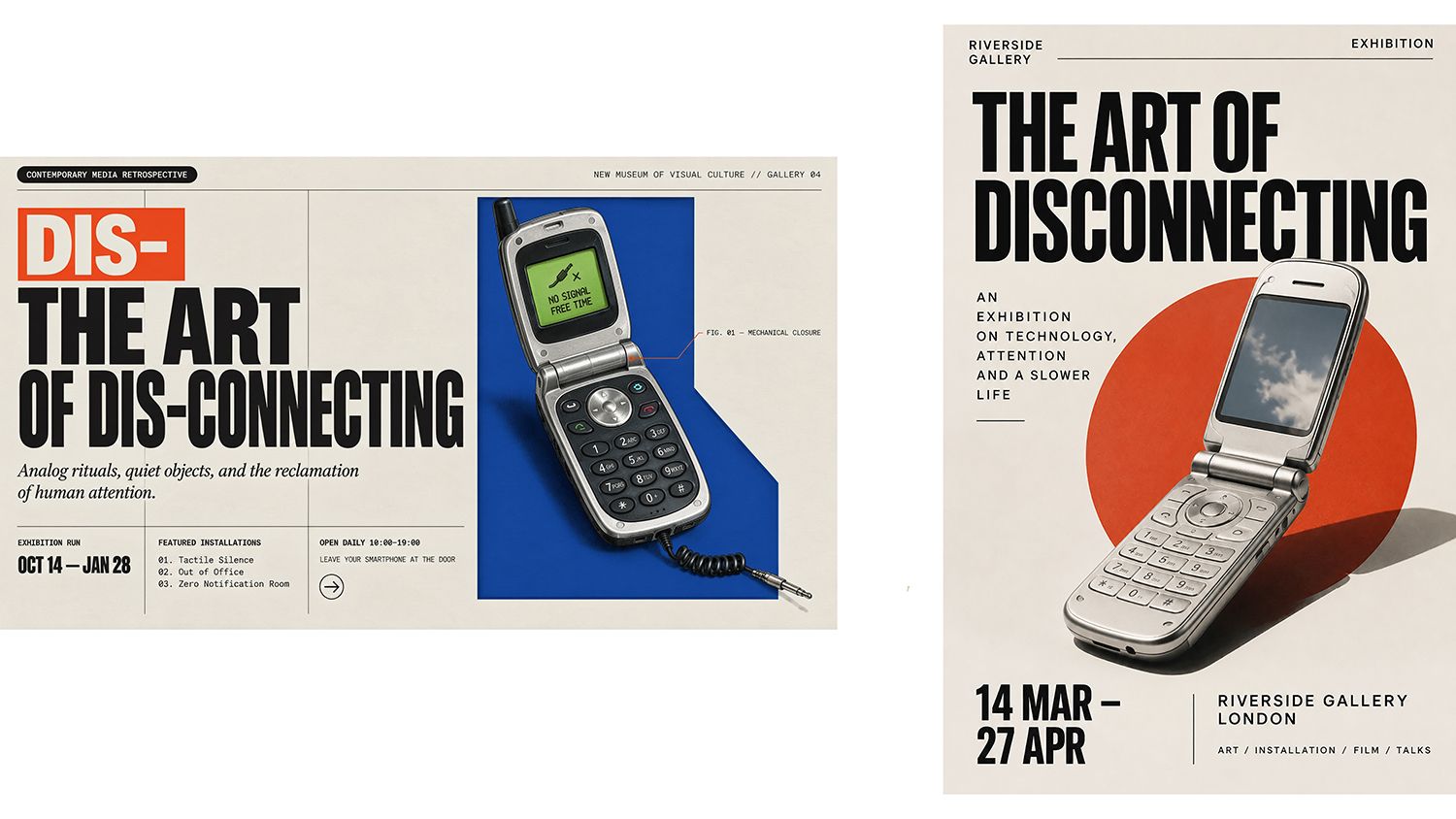
Canva already provides intuitive and granular ways to make posters. I don’t think the point of Canva Craft is to bypass that. But at the same time, I know people are using AI more and more now to whip up really quick posters and flyers, so I wanted to compare them.
Both nailed text rendering, which is expected nowadays but still good to see. It doesn’t feel like that long ago when ChatGPT was pumping out posters with nonsensical letters.
Both also picked a similar color palette and design for this prompt, which was interesting. It makes it hard to judge them as the general aesthetic is almost identical.
The Canva version added more opportunities to put details onto the poster, which is maybe more practical but made the result look a bit busy. For this reason, the ChatGPT version was a little more impactful for me. But it was close.
- Winner: ChatGPT
Prompt 5: Dream-like blog image
Prompt: Create a dream-like image of a flip phone opening into a childhood bedroom, with a nostalgic, surreal and slightly melancholic mood.
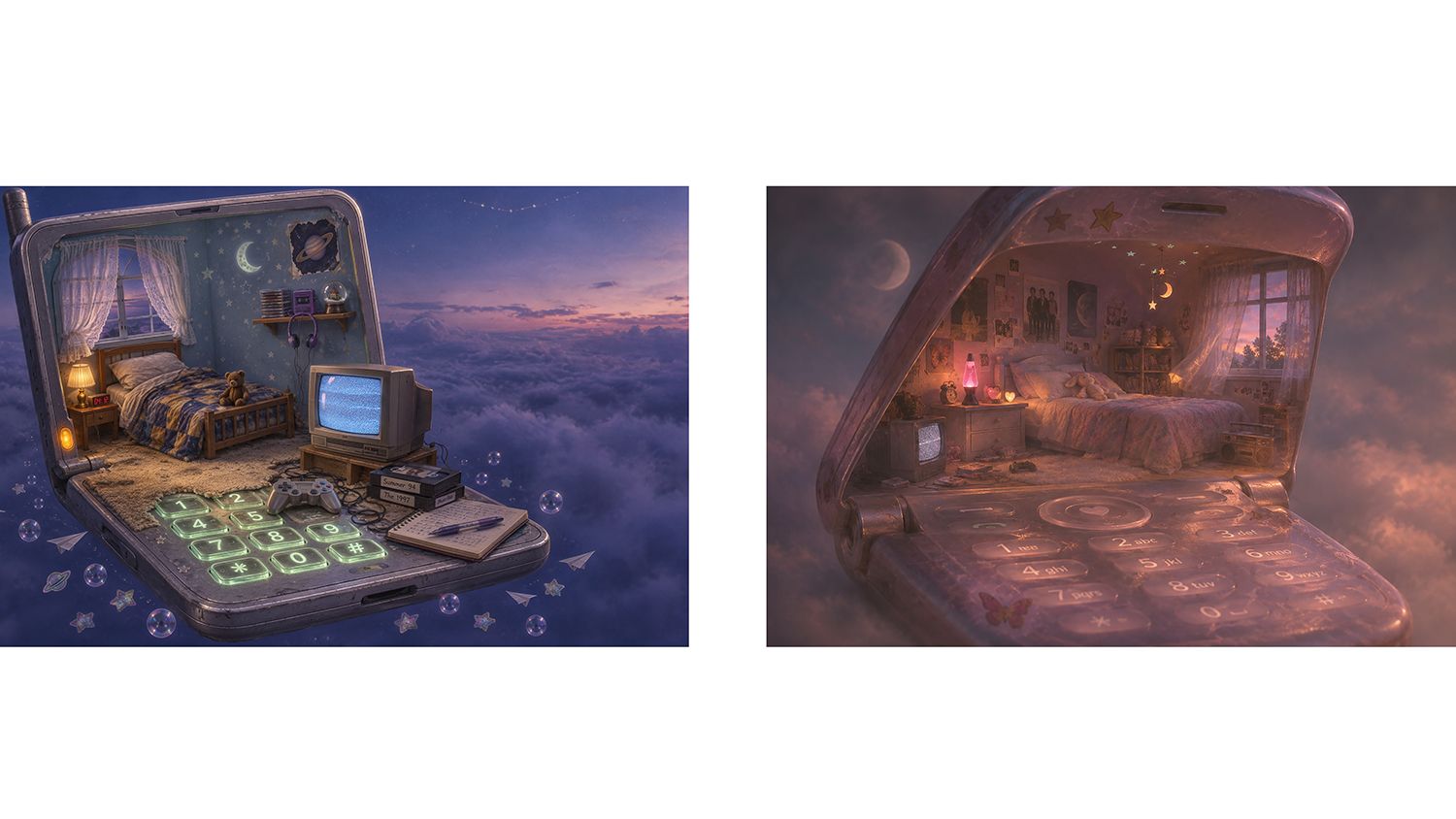
I know some people use Canva to make blog post graphics they can’t find elsewhere, so I wanted to try something a little more abstract for this final prompt. I recently wrote a newsletter about how my old phones sometimes appear in my dreams and wondered how the two tools would interpret that nostalgic and surreal sort of vibe.
It was interesting to see how they changed the tone to accommodate the dream-like prompt. In all honesty, I didn’t particularly like either and wouldn’t have used them.
But I think the Canva one was marginally better, with clearer imagery that followed the brief more than ChatGPT’s super surreal and squashed-looking effort.
- Winner: Canva
How many can you make per day?
I preferred ChatGPT’s image generation, but I was surprised at how close Canva came and how realistic-looking its results were. The big question, however, is how both tools compare on price and usage. This is where ChatGPT makes much more sense for most people, but it really depends on the plan you use.
With Canva, all users have a monthly AI allowance. If you’re on the free plan that’s really small and you can expect to max out your allowance in five prompts. Now, that is because for every results you’ll get four options. So technically speaking you can generate 20 images a month. But that’s still not many.
If you pay for Canva, the amount of images you can make will depend on your specific AI allowance. With Canva Pro ($18 / £13 / AU$20 per month) you’ll get roughly 200 per month. That goes up to about 400 on the Business plan ($25 / £18 / AU$28 per month).
With ChatGPT’s free version, it can depend from user to user. But you can usually create about five images per day. So that’s a lot more than Canva’s free tool, which only gives you that a month.
With ChatGPT Plus ($20 / £19.99 / AU$29.99 per month), again it depends as there are no official limits. But it’s not unlimited, so you can expect to make hundreds of images every few hours.
This articles is written by : Nermeen Nabil Khear Abdelmalak
All rights reserved to : USAGOLDMIES . www.usagoldmines.com
You can Enjoy surfing our website categories and read more content in many fields you may like .
Why USAGoldMines ?
USAGoldMines is a comprehensive website offering the latest in financial, crypto, and technical news. With specialized sections for each category, it provides readers with up-to-date market insights, investment trends, and technological advancements, making it a valuable resource for investors and enthusiasts in the fast-paced financial world.