The first viable powered aircraft predated the first proper runway by two decades. While it’s entirely possible to launch some planes from austere dirt or grass strips, the aviation world eventually realized that aircraft would be better off launching from a flat, paved surface.
Over the years, paving technology has gradually improved in the aviation world as it has for roads and highways. Now, there’s a project being built in Charlotte with new digital features that hopes to push the state of the art of runways even further.
Twinsies
Charlotte Douglas International Airport (CLT) serves the city of Charlotte, North Carolina. It’s by no means the most famous airport in the United States; it wouldn’t make the top 10 in notoriety despite being the 11th busiest in the country).. Still, it serves as a major hub for American Airlines, and has three operating runways that are interesting for the fact that they are all laid out parallel to each other.
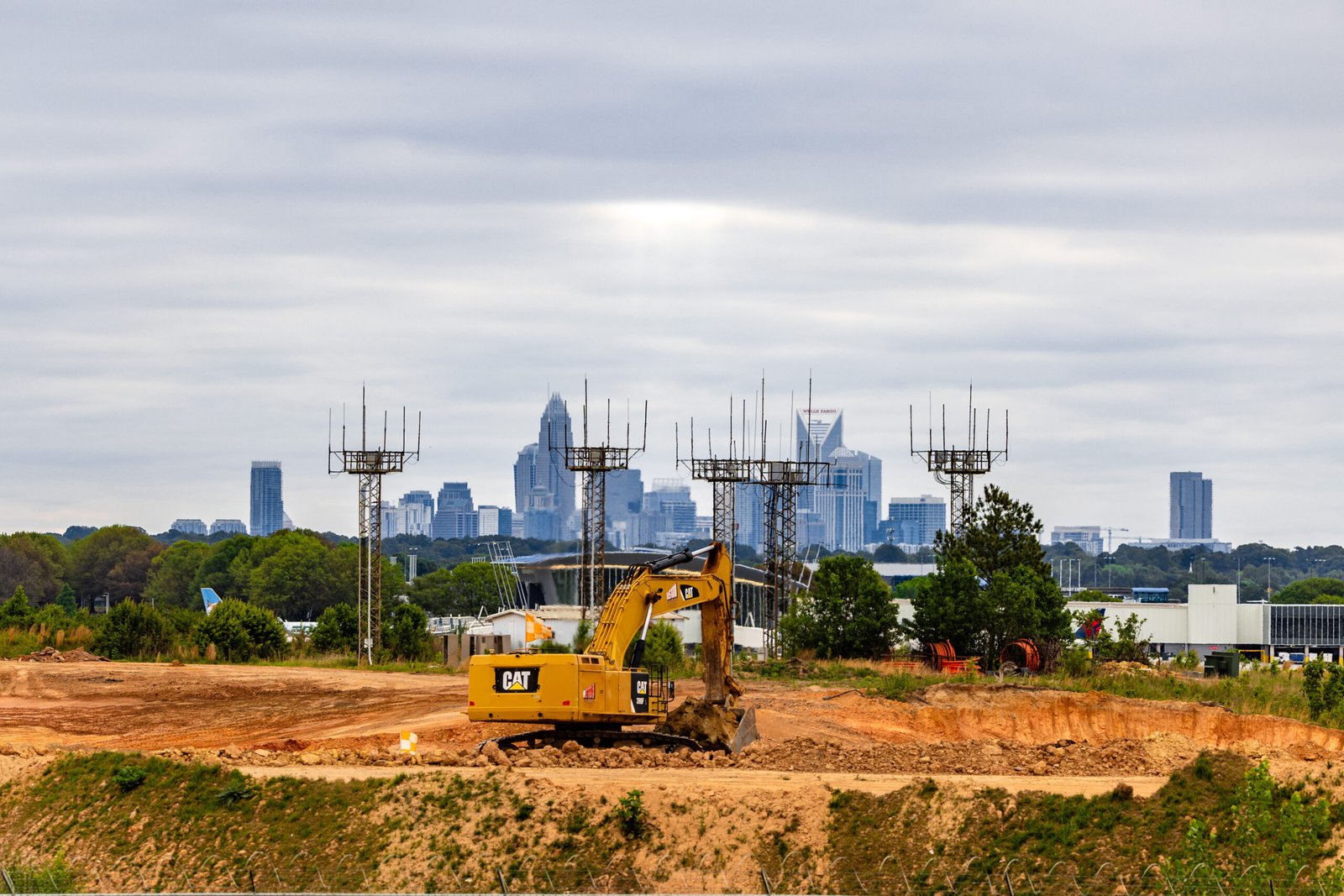
The airport’s major grand project of late has been the installation of its fourth parallel runway, with the official ground breaking taking place in June 2023. The hope is that the new 10,000 foot runway will add significant capacity for both arrivals and departures to keep the airport competitive while also adding resilience in difficult operational conditions. As the new runway is built, the existing runways have been renamed to 19R/1L, 19L/1R, and 18/36 respectively. The fourth runway will wear the designation 19C/1C.
The new Fourth Parallel Runway, as it is otherwise currently known, will be unique for its “smart runway” features. Unlike a smart fridge, smart oven, or smart bulb, it doesn’t just mean that the runway will have a pointless and annoying WiFi connection and dodgy smartphone app. Instead, it’s all about sensing and telemetry, which is intended to create a better understanding of the runway and its performance and state over time.
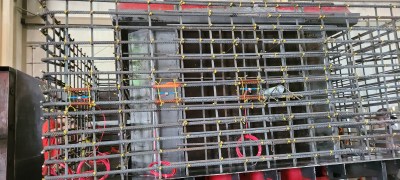
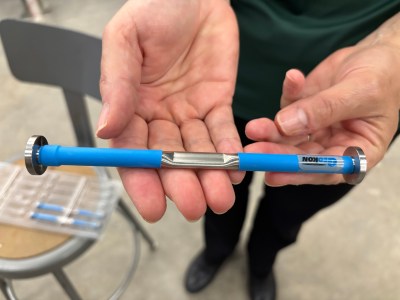
During construction, over 2,000 sensors will be installed in the 18-inch deep concrete being poured to lay out the Fourth Parallel Runway. The sensors in question will be used to measure everything from engineering basics like stress and strain, as well as tracking factors like moisture ingress, settlement, friction, and the presence of snow and ice.
The sensors are no different from those that have been deployed on highway bridges and interstates previously for similar purposes. However, this will mark the first time that a US runway has been similarly instrumented in such a way, such that the airport can create a “digital twin” of the runway.
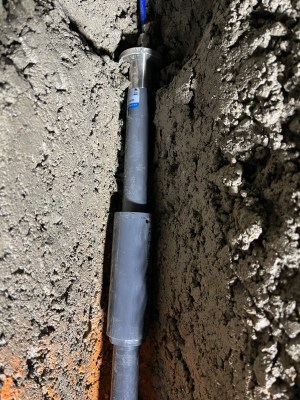
This is effectively a digital model that is fed by the sensor data and helps authorities determine the condition of the runway, both from an engineering and operational standpoint. Moisture, snow, and ice sensors can be used to guide the employment of deicing resources and what measures to take on the ground, while monitoring the stress and strain on the runway will guide maintenance decisions over the runway’s lifetime. The latter in particular will provide a very clear idea of how aircraft operations are impacting the very structure of the runway itself. The hope is that this data will be a boon for implementing predictive maintenance. In a busy airport, preventing a time-consuming runway shutdown with a little well-placed maintenance could save huge amounts of money by preventing or limiting the number of flight cancellations, to say nothing of the reduced frustrations for travellers passing through.
Of course, the problem with embedding sensors in 18 inches of concrete is that it’s not particularly easy to get at them for service or replacement purposes. The runway’s sensor system is slated for an expected life of 10 years, during which time data will be collected to better understand the runway and its performance and robustness over time. The hope is that by learning exactly what’s going on in the concrete itself, engineering lessons could be learned on how better to build runways in future. It could lead to new guidelines on concrete mixes, thickness, density, or other factors that influence how long the runway holds up under heavy use by commercial airlines. Despite the limited sensor lifetime, though, the runway itself is expected to last much longer, with the pavement itself slated for 30 to 40 years of use.
Embedding sensors into runways won’t always be a seen as a necessity. It’s perfectly possible to build a runway that doesn’t have telemetry, and just exists as a big old slab of concrete that takes a pounding from air traffic on the regular. However, where a greater understanding of the pavement is desirable, instrumentation can help. Time will tell if the lessons learned from the new CLT runway prove useful enough to justify the investment—but it’s easy to imagine that it would only take a couple of runway shutdowns to be avoided to pay for the $6.5 million project cost. Time will tell!
This articles is written by : Nermeen Nabil Khear Abdelmalak
All rights reserved to : USAGOLDMIES . www.usagoldmines.com
You can Enjoy surfing our website categories and read more content in many fields you may like .
Why USAGoldMines ?
USAGoldMines is a comprehensive website offering the latest in financial, crypto, and technical news. With specialized sections for each category, it provides readers with up-to-date market insights, investment trends, and technological advancements, making it a valuable resource for investors and enthusiasts in the fast-paced financial world.