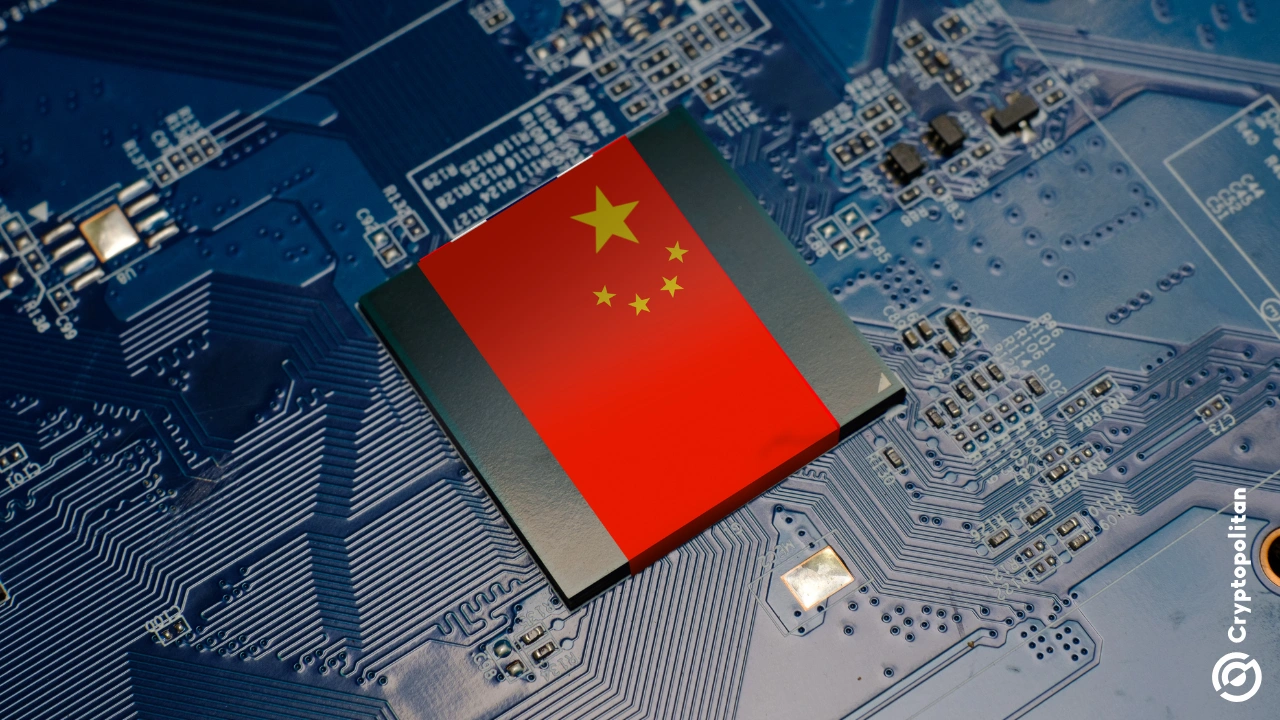
ChangXin Memory Technologies (CXMT) was reported by Omdia to have peaked at approximately 240,000 wafers monthly at the end of the previous year, but the shortage in memory found worldwide that prompted its expansion continues pushing prices up.
A hard ceiling, not a temporary lull
Those looking for increased Chinese supply to ease market conditions should think again, as statistics show the exact opposite. CXMT has been able to ramp up its wafer output to double that of 2024, but this operation has slowed down considerably. According to industry insiders quoted by ChosunBiz, production is expected to remain at the same level throughout the year.
Two issues have prevented it from moving forward: Washington’s restrictions on export of sophisticated chip manufacturing devices as well as its yield being still significantly lagging behind the leaders in the industry. According to Counterpoint Research, CXMT’s primary first-generation 10-nanometer DRAM technology still yields 42% lower than Samsung and SK Hynix have been able to achieve, keeping CXMT’s yield close to 50%.
The trader whose words ignited this week’s debate said it straight. On August 24, @MelvinInvests went on X and stated that China had “just proved it can’t out build the memory shortage,” which doesn’t bode well for everyone apart from Micron, Samsung, and SK Hynix.
The capacity figures validate that worry. Even when fully operational, CXMT’s rated production is approximately 50% of SK Hynix’s and around 30% of Samsung’s according to ChosunBiz estimates.
Contract prices keep climbing
Due to constraints in supply coming from China, the prices continue to increase. TrendForce anticipates that conventional DRAM contract prices will increase by another 13% to 18% on a quarterly basis in the third quarter of 2026, as demand for AI servers remains high along with strict production curbs observed by the biggest players in the industry.
The increase in longer-term prices is greater still. According to J.P. Morgan Global Research, prices of DRAM could go higher than 400% between the beginning of 2024 and the end of 2026—an increase that J.P. Morgan associates with the involvement of hyperscalers locking up supply with long-term supply agreements.
Pressure is now not just limited to data centers. According to Omdia, more than 50% of total semiconductor revenue is expected to come from memory chips in 2026, resulting in smartphones, PCs, and other consumer electronics facing an increase in the cost of components as manufacturers focus more on AI products having higher margins.
Stretched thin at home
That does not mean CXMT is weak. The company has gone from years of government-funded losses to becoming a meaningful pricing force, booking $7.5 billion in first-quarter revenue and completing an $8.6 billion Shanghai listing, Reuters reported.
It has also signed a five-year memory agreement worth more than $7 billion with ByteDance and, in some cases, charged Chinese buyers more than Samsung and SK Hynix. Counterpoint estimates CXMT now accounts for around 9% of global DRAM bit shipments.
But being powerful is not the same as having enough capacity. Beijing has asked CXMT to prioritize domestic customers, and its existing production is already stretched by demand at home. Goldman Sachs reported that CXMT meeting only 41% of China’s DRAM demand in 2026, rising to just 50% by 2028.
That leaves China dependent on the same foreign memory suppliers it has been trying to displace.
Rivals pour billions into new fabs
The industry’s biggest players are spending heavily to protect their lead, but meaningful new supply remains years away.
SK Hynix approved 54 trillion won, or about $38 billion, in early August to build two new fabs, as Cryptopolitan reported. Its Y2 DRAM plant, however, is not expected to reach the cleanroom stage until mid-2029.
The memory unit of Samsung just posted its highest ever quarterly revenue, noting that supply limits will remain in place until the second half of 2026. As per Counterpoint, CXMT also plans to increase output capacity up to 420,000 wafers a month by 2027 when new production plants come into operation in Shanghai and Beijing. Until then, the DRAM market will be affected by the limited availability of products.
If you’re reading this, you’re already ahead. Stay there with our newsletter.
This articles is written by : Nermeen Nabil Khear Abdelmalak
All rights reserved to : USAGOLDMIES . www.usagoldmines.com
You can Enjoy surfing our website categories and read more content in many fields you may like .
Why USAGoldMines ?
USAGoldMines is a comprehensive website offering the latest in financial, crypto, and technical news. With specialized sections for each category, it provides readers with up-to-date market insights, investment trends, and technological advancements, making it a valuable resource for investors and enthusiasts in the fast-paced financial world.