
Bitcoin fell after the May US labor report gave markets a reason to delay the next Federal Reserve easing trade, turning a stronger jobs number into a tighter-liquidity problem for crypto.
The May Employment Situation report said nonfarm payroll employment rose by 172,000 in May, while the unemployment rate held at 4.3%.
TradingEconomics release-screen data put the gain well above an 85,000 consensus estimate. That gap was large enough to push the first market interpretation toward higher Treasury yields, a stronger dollar, and pressure on assets that benefit from cheaper money.
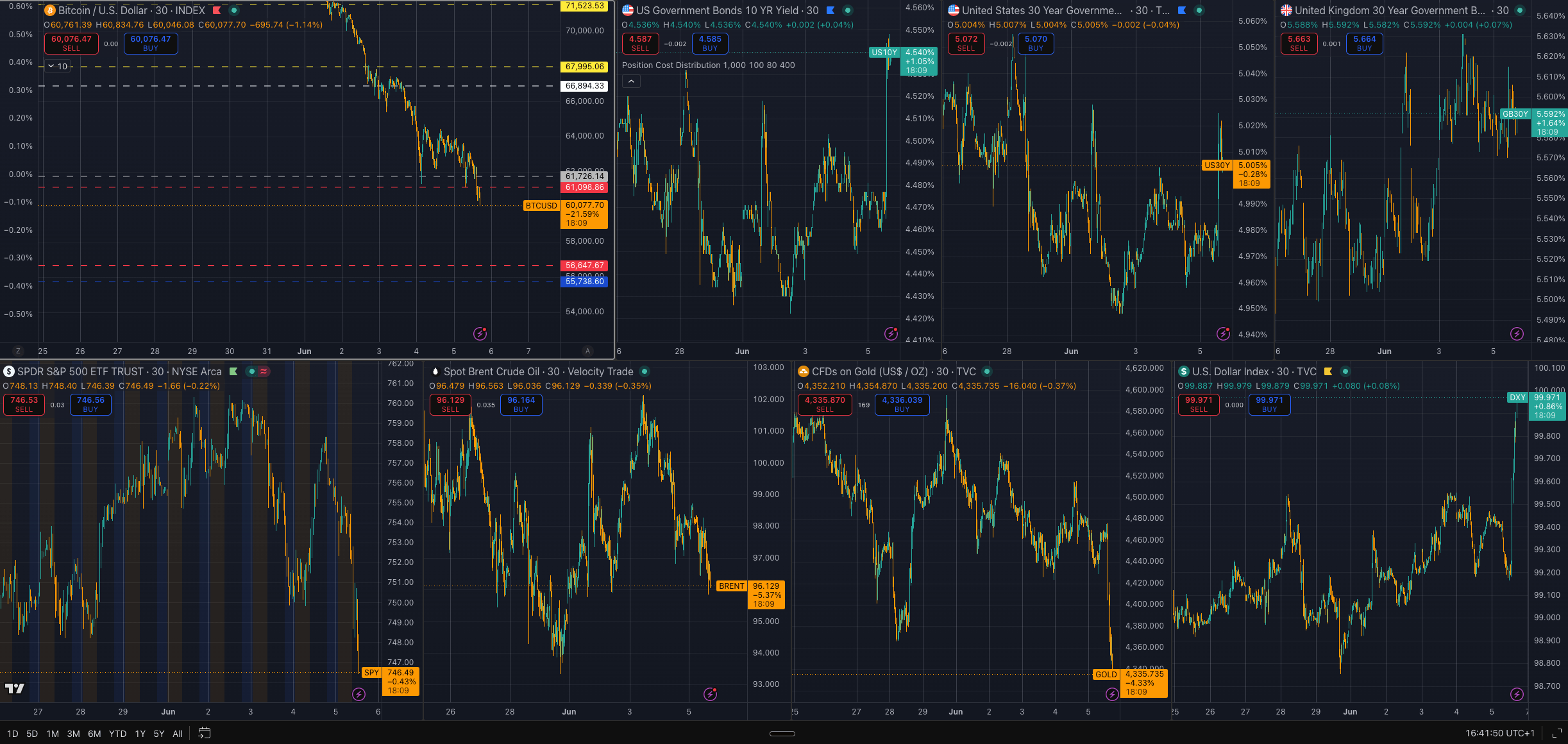
That is why Bitcoin reacted less like an inflation hedge and more like a high-duration risk asset. CryptoSlate showed BTC trading near $60,000 on June 5, down 5% over 24 hours and 17% over seven days.
The labor print added another macro shock to a market that was already fragile after its slide from the low-$60,000 range.
The key issue for Bitcoin is that the labor market looked firm enough to reduce the urgency for rate cuts, while the internal details were soft enough to keep traders debating whether the first hawkish move should last.

The jobs beat carried a catch
The headline number did the initial damage. A 172,000 payroll gain against an 85,000 consensus is the kind of surprise that usually lifts front-end yields because it weakens the argument that the Fed needs to move quickly to protect employment.
The unemployment rate staying at 4.3% added to that first reaction by removing the risk of an obvious labor-market downside shock.
For Bitcoin, the path from jobs data to price pressure is direct. Stronger labor data can keep policy rates higher for longer, which supports the dollar and raises the hurdle for speculative assets that do not produce yield.
When that happens, traders often reduce exposure first in assets most sensitive to liquidity, including long-duration technology shares and crypto.
But the composition made the report more complicated than the headline. According to the TradingEconomics calendar data, government payrolls rose by 52,000, while private payrolls were 120,000.
Private hiring remained positive and beat consensus, but it slowed sharply from the prior pace shown on the release screen.
The split changes the market interpretation because government hiring is less informative about cyclical corporate demand than private-sector payroll growth. A government-heavy payroll beat can still move yields, especially in the first minutes after release.
Discretionary traders may give it less weight than a broad private-sector acceleration.
Wage data also kept the print from looking like a clean overheating shock. Average hourly earnings rose 0.3% month over month, matching expectations, while yearly wage growth slowed to 3.4% from the prior month in the TradingEconomics screen.
That leaves the Fed without an easy case for cuts, while falling short of a wage surprise that would force a more aggressive bond selloff by itself.
Participation was steady, average weekly hours were unchanged, and the broader U-6 unemployment rate improved. Taken together, the data pointed to a labor market that is still resilient, while stopping short of a broad acceleration signal.
That is the tension markets had to price. The headline says the economy can handle tighter policy for longer. The details say private-sector momentum is cooling, yearly wage growth eased, and the payroll beat leaned heavily on public-sector hiring.

Why Bitcoin felt it first
Bitcoin has spent much of 2026 trading as a macro-sensitive liquidity asset. CryptoSlate noted earlier in the week that jobs data had become a direct test for BTC.
Cooling employment can soften the dollar and pull capital back toward risk, while strong labor data keeps the case for elevated rates intact.
Friday’s report pushed the market toward the second outcome. Chart context showed US yields and the dollar rising after the release, while Bitcoin, gold, and equities came under pressure.
That combination points to a higher-for-longer reaction instead of a recession scare.
That distinction is central to the Bitcoin reaction. A recessionary jobs report would usually push yields lower, weigh on the dollar, and potentially give gold and duration-sensitive assets a bid as traders price faster easing.
Friday’s setup was the opposite. The jobs market looked strong enough to delay the relief trade, so the dollar tightened financial conditions and Bitcoin took the hit.
The move also landed on a market already testing support. CryptoSlate’s prior coverage of Bitcoin’s $63,000 slide framed BTC as caught between ETF demand, AI equity appetite, and the need to reclaim the $66,900 to $70,000 area.
A hawkish payroll surprise makes that repair harder because it increases competition for capital and reduces the near-term case for easier financial conditions.

The report created two paths, with the first reaction following the most obvious transmission channel. Higher yields make cash and bonds more attractive at the margin. A stronger dollar tightens global liquidity.
Together, they make it harder for Bitcoin to trade as a scarce-asset story in the short run, even if that long-term narrative remains intact.
Brent’s relative resilience in the chart context also helps explain the macro message. Oil holding up while Bitcoin and gold sold off suggests traders were treating the report as growth that is firm enough to keep the Fed patient.
The second-round test
The next test is whether markets keep trading the 172,000 headline payroll beat or shift toward the softer private-sector and wage details.
If the two-year Treasury yield and DXY hold their post-release gains, Bitcoin remains under pressure from the same channel that hit it immediately after the report: fewer near-term rate-cut expectations, tighter dollar liquidity, and weaker appetite for high-beta risk.
In that scenario, the market is accepting the hawkish interpretation and BTC’s ability to reclaim its first breakdown area becomes the key signal.
If yields fade and the dollar gives back the spike, the market is likely moving to the second interpretation. That would mean traders are discounting the government-heavy portion of the payroll gain, giving more weight to the slowdown in private hiring, and treating cooling yearly wage growth as a limit on the hawkish repricing.
Both outcomes keep the signal mixed rather than cleanly bullish or bearish. The employment data reduced the urgency for Fed cuts, which is negative for Bitcoin’s liquidity setup.
The internal details also stopped short of a broad overheating message, which is why the follow-through depends on whether rates and the dollar keep confirming the first move.
For now, the labor report gave Bitcoin holders an uncomfortable answer: the economy may still be strong enough to keep the Fed patient, yet soft enough under the surface to keep doubts about private-sector momentum alive.
That leaves BTC trading the same question as the rest of risk: whether markets care more about the headline beat or the softer parts underneath it.
The post Bitcoin price craters to $60,000 as BTC bulls get jobs report they were hoping to avoid appeared first on CryptoSlate.
The May payrolls beat was hawkish enough to pressure crypto, while government hiring and cooler yearly wage growth keep the second interpretation from being one-way.
The post Bitcoin price craters to $60,000 as BTC bulls get jobs report they were hoping to avoid appeared first on CryptoSlate. Analysis, Bear Market, Featured, Macro, Market
This articles is written by : Nermeen Nabil Khear Abdelmalak
All rights reserved to : USAGOLDMIES . www.usagoldmines.com
You can Enjoy surfing our website categories and read more content in many fields you may like .
Why USAGoldMines ?
USAGoldMines is a comprehensive website offering the latest in financial, crypto, and technical news. With specialized sections for each category, it provides readers with up-to-date market insights, investment trends, and technological advancements, making it a valuable resource for investors and enthusiasts in the fast-paced financial world.