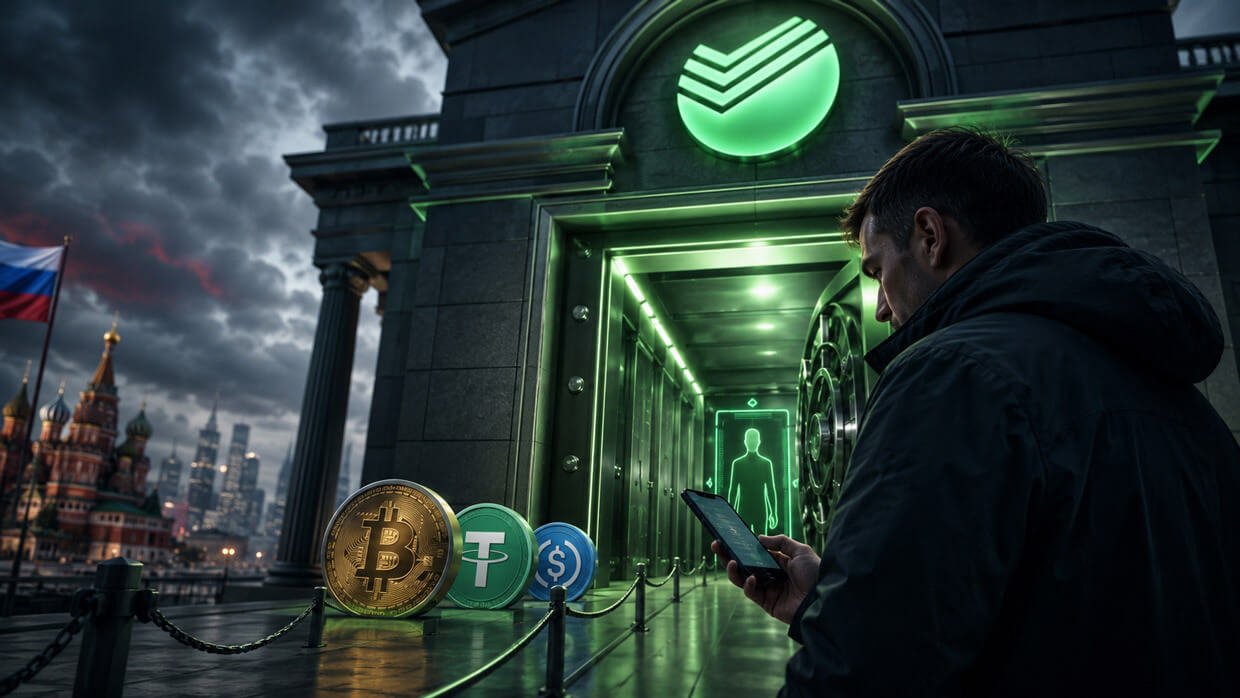
Sberbank’s December crypto wallet plan could show how far Russia is willing to bring crypto activity inside the banking system, and how much demand will still spill into offshore exchanges, peer-to-peer channels, and foreign platforms.
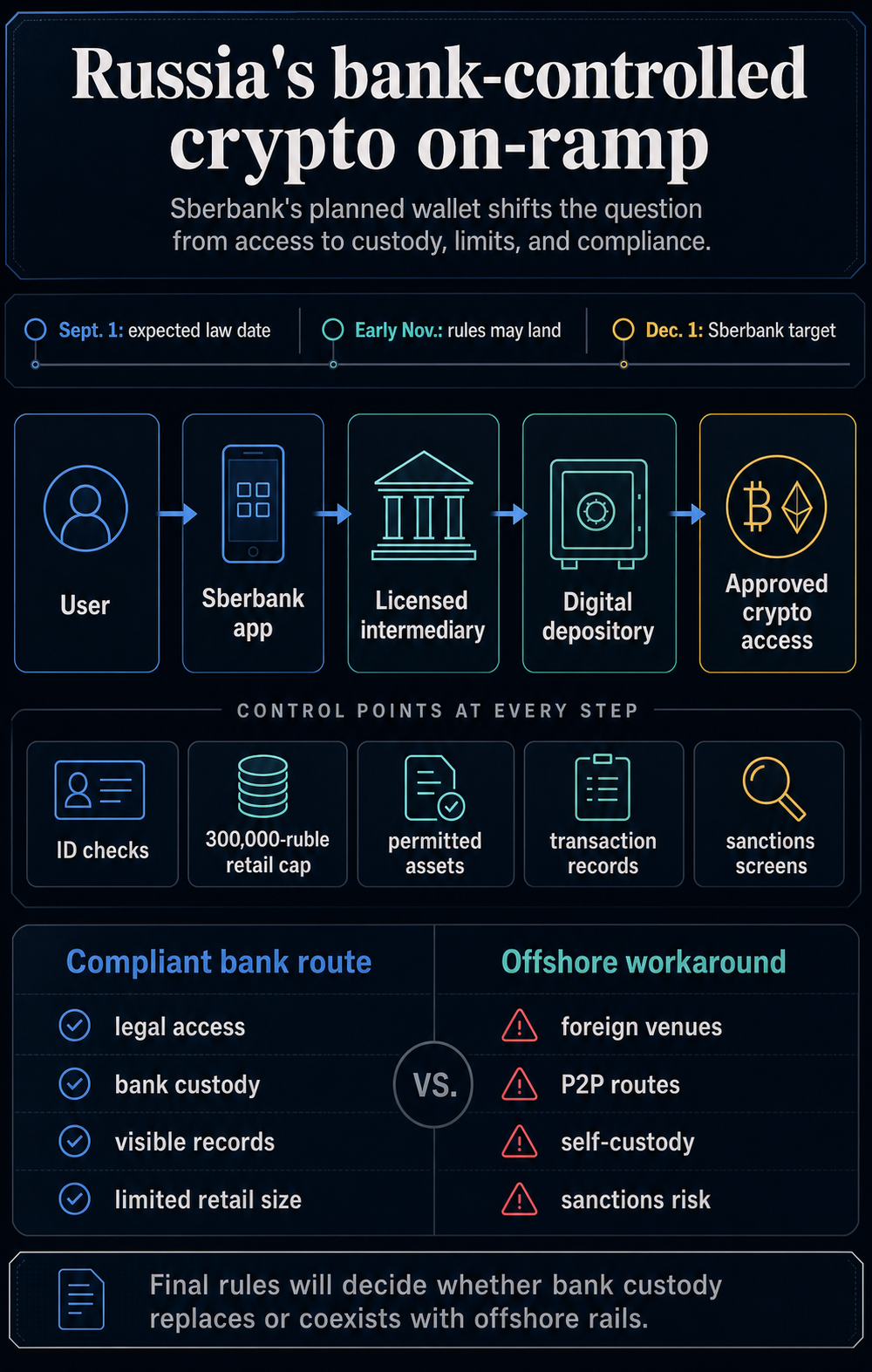
The majority state-owned bank plans to add a crypto wallet and digital depository to Sberbank Online and SberInvestments by Dec. 1, RB.ru reported, citing comments by Sberbank first deputy chairman Kirill Tsarev to RBC.
The timing remains contingent on the final text of Russia’s digital-currency law and the rules that follow. If the framework lands as expected, crypto access in Russia may increasingly run through familiar financial apps, licensed intermediaries, and digital depositories rather than informal workarounds.
A legal route with bank controls
The Bank of Russia’s current concept would allow digital currencies and stablecoins to be bought and sold while prohibiting domestic crypto payments.
It also points to a tiered market: non-qualified investors would need to pass tests and remain within a 300,000-ruble annual limit through a single intermediary, while qualified investors would receive broader access, excluding anonymous cryptocurrencies.
That design would make custody and access rules as important as the wallet itself. A Sberbank user might gain a compliant way to hold or trade crypto inside a bank app, but that access would likely come with identity checks, permitted-asset lists, transaction records, and limits that do not exist in the same form on offshore venues.
The bill is expected to take effect on Sept. 1, with implementing acts potentially ready by early November if the regulatory timetable holds, Interfax reported. That would leave banks and other market participants only a short window to convert the legal framework into usable products.
Sberbank is also considering whether it could act as an intermediary for Russians trading on foreign crypto exchanges, but that decision depends on the final domestic and foreign regulatory requirements. That is the real hinge for offshore flows.
A bank-backed route to foreign venues could pull some activity into a supervised channel. A restrictive version could leave high-volume users, sanctions-sensitive counterparties, and self-custody users on the same foreign and informal rails they already use.

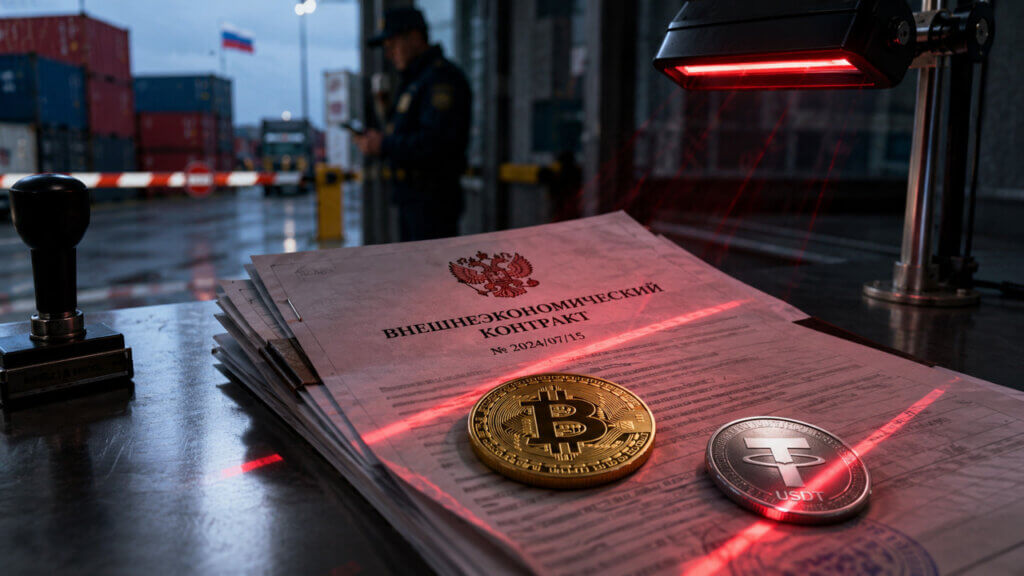
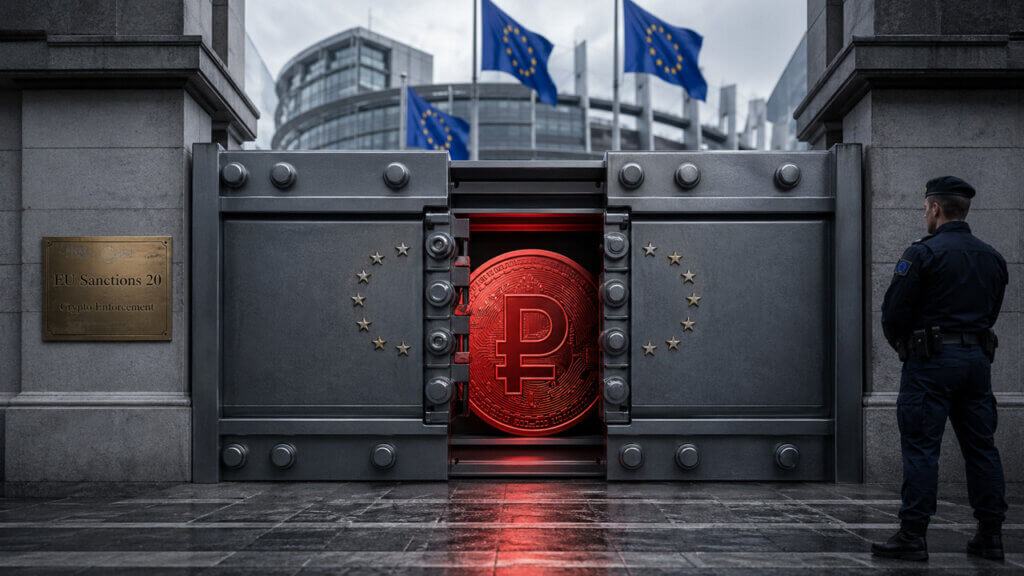
Recent CryptoSlate coverage of Russia’s cross-border crypto corridor showed the same constraint from another angle: external pressure still lands on counterparties, exchanges, wallets, stablecoin issuers, custodians, and compliance screens.
The signal to watch is whether bank custody becomes useful enough for ordinary users while remaining controlled enough for regulators. If the final rules cap retail access tightly or leave foreign-exchange routing unresolved, Russia’s new legal on-ramp may run alongside offshore workarounds for some time.
The post Russia’s legal crypto on-ramp to arrive with a state-owned bank holding the keys appeared first on CryptoSlate.
The reported December launch matters because Russia’s new rules may make custody, limits, and compliance the price of legal access.
The post Russia’s legal crypto on-ramp to arrive with a state-owned bank holding the keys appeared first on CryptoSlate. Featured, Market, Politics, Stablecoins, Wallets, Bitcoin, BTC, ETH, ethereum, Tether, usd coin, USDC, USDT
This articles is written by : Nermeen Nabil Khear Abdelmalak
All rights reserved to : USAGOLDMIES . www.usagoldmines.com
You can Enjoy surfing our website categories and read more content in many fields you may like .
Why USAGoldMines ?
USAGoldMines is a comprehensive website offering the latest in financial, crypto, and technical news. With specialized sections for each category, it provides readers with up-to-date market insights, investment trends, and technological advancements, making it a valuable resource for investors and enthusiasts in the fast-paced financial world.