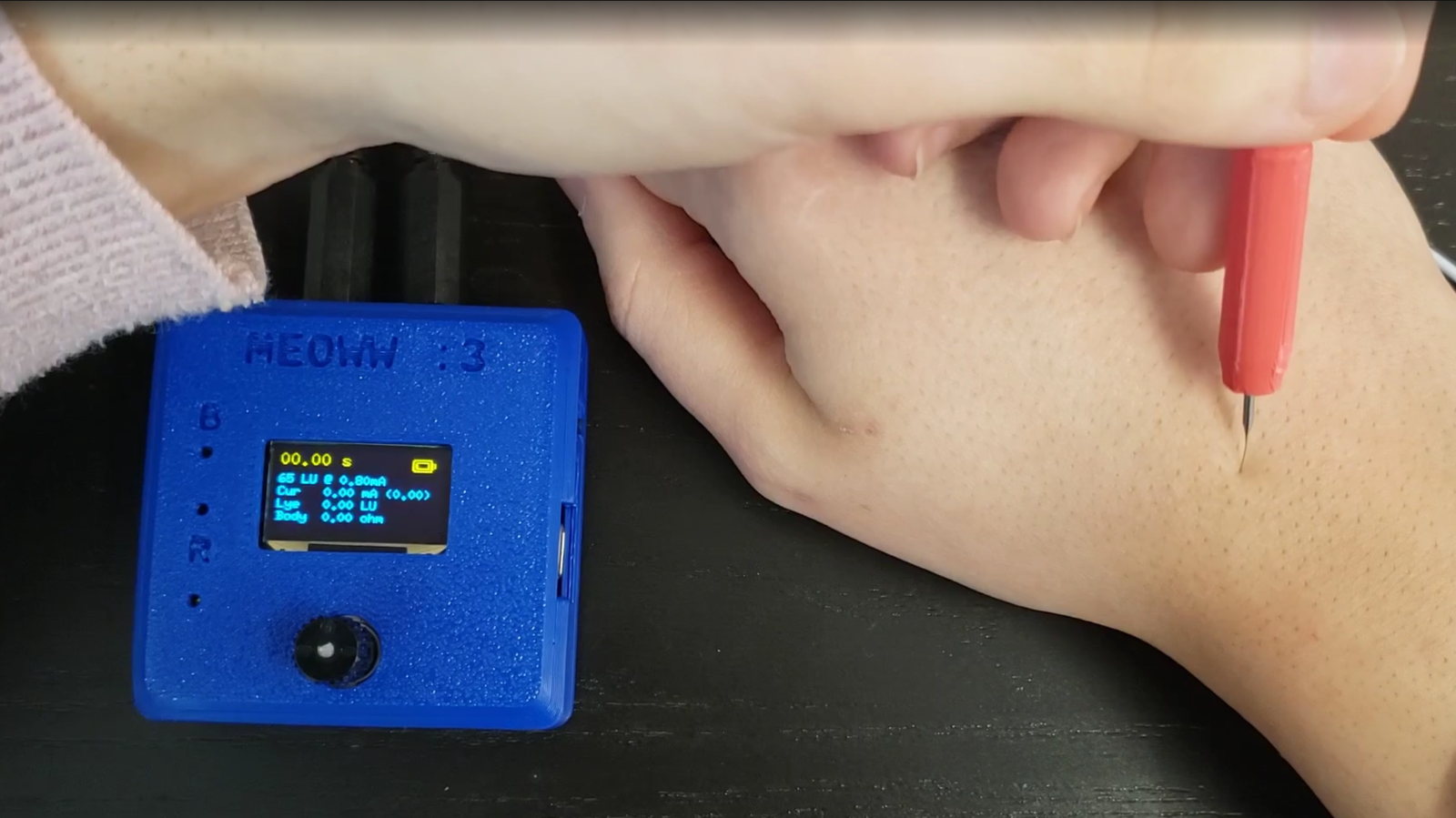
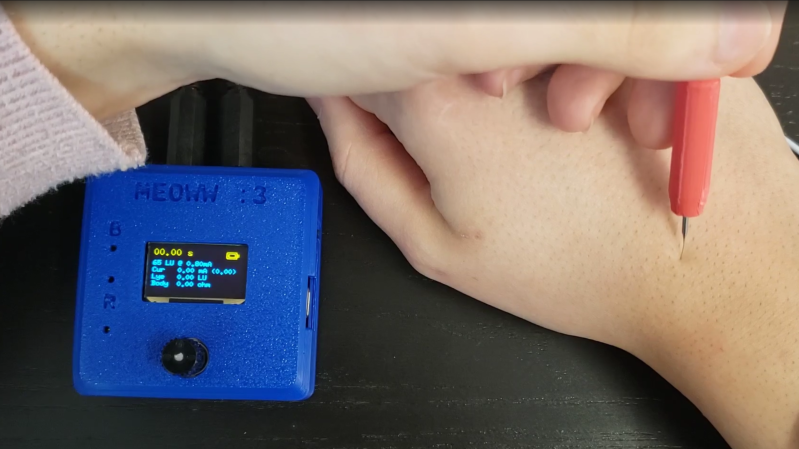
If you talk to the FDA, there’s only one permanent method of hair removal—electrolysis. This involves sticking a needle into a hair follicle, getting it very hot or running a current through it, and then letting heat and/or the lye generated kill the root of the hair dead. Normally, you’d pay someone with a commercial machine to do this for you at great expense. Or, you could do it yourself with a home-built machine, as [n3tcat] did.
Based on the available information out in the wild, [n3tcat] decided to build a galvanic electrolysis machine. This specifically passes current through a needle in the hair follicle to generate lye at the hair bulb, which kills it. The amount of lye generated depends on the amount of current and the time over which it is applied. More lye is more likely to kill a follicle permanently, though there are limits with regards to avoiding scarring, other skin damage, and excessive pain.
 [n3tcat]’s guide explains the basic theory behind galvanic electrolysis, as well as how the rig was built. An early attempt simply involved hooking up a 12-volt car battery to a standard electrolysis needle, sticking it in a hair, with the other electrode being an aluminium can held by the person being treated. The fun thing was that this allowed varying the current depending on how much contact and how stiffly the person grabbed the can.
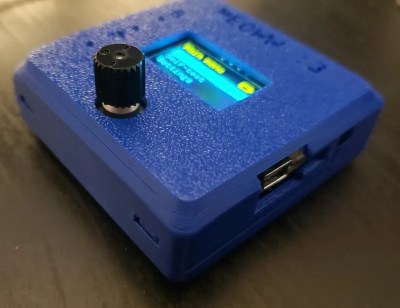
After a few successful hair removals this way, [n3tcat] decided to build a better rig. An RP2040 microcontroller was enlisted to run the show, powered by a 3.7-volt lithium rechargeable battery. An OLED screen and a rotary encoder were selected to serve as the interface, while a foot pedal was added for firing off current. A boost converter was used to push the battery voltage up to the vicinity of 15 volts for delivery to the needle, set up to avoid excessive current delivery for safety. A DAC was paired with an LM358 op-amp feeding into a MOSFET to control the current passed to the needle for accurate, controlled treatment, with the RP2040 monitoring the current level via a dedicated ADC. The needle itself got a D-printed pen-like handle for better ergonomics, easing the process of slotting the needle into a hair follicle. Everything was then assembled on a cute PCB, and wrapped up in a nice 3D printed housing. The files are available for the curious.
Electrolysis is a process that can cost many thousands of dollars depending on how much hair you hope to remove. Thus, it’s easy to see the appeal in having a rig that lets you do it at home. It’s just one of those things where you have to take the proper precautions to ensure you’re not unduly hurting yourself. Stay safe out there, hackers!
This articles is written by : Nermeen Nabil Khear Abdelmalak
All rights reserved to : USAGOLDMIES . www.usagoldmines.com
You can Enjoy surfing our website categories and read more content in many fields you may like .
Why USAGoldMines ?
USAGoldMines is a comprehensive website offering the latest in financial, crypto, and technical news. With specialized sections for each category, it provides readers with up-to-date market insights, investment trends, and technological advancements, making it a valuable resource for investors and enthusiasts in the fast-paced financial world.