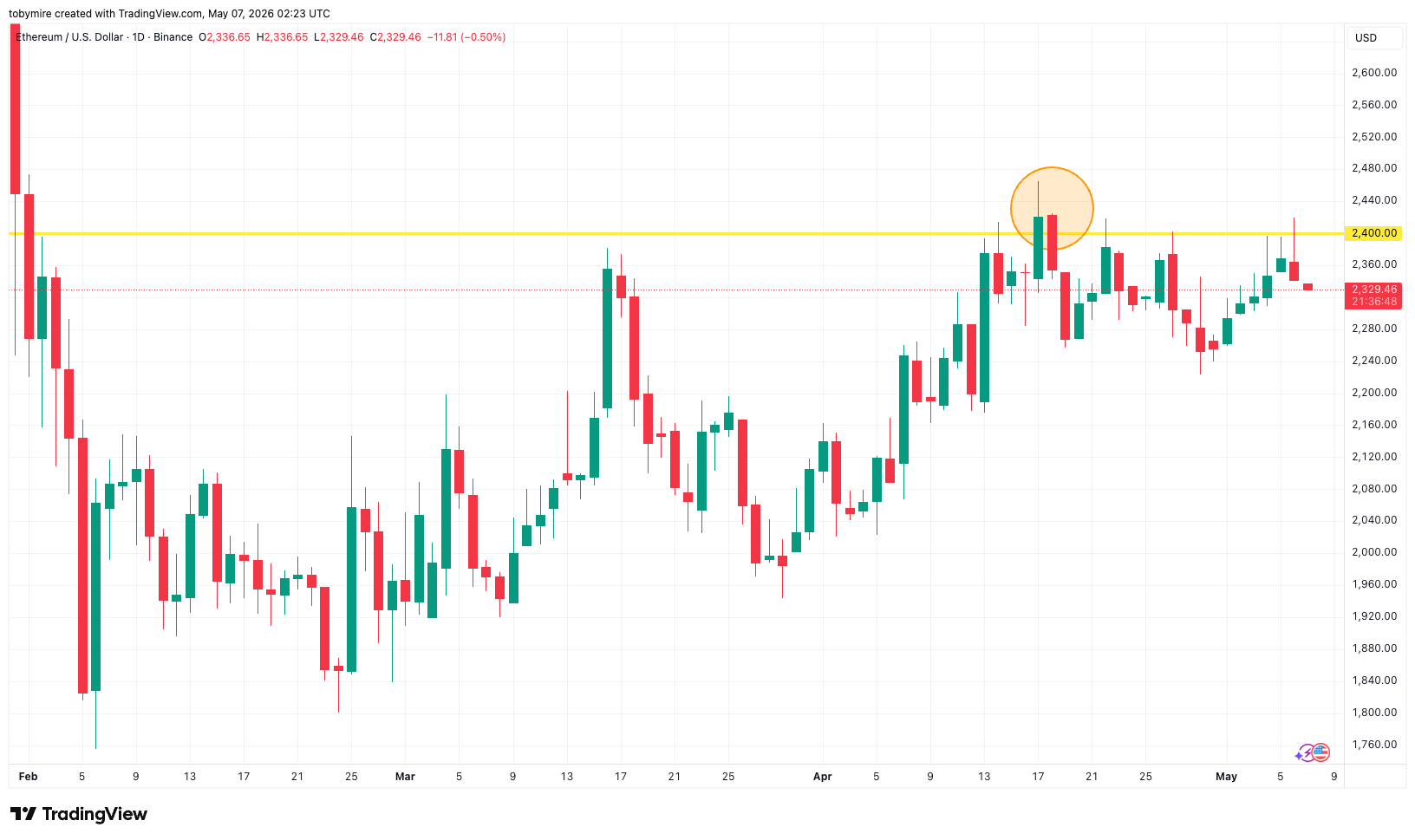
Ether has been stuck below the $2,400 level for three months, with year-to-date losses of 21% against an 11% drop in total crypto market cap.
Decentralized exchange volume on Ethereum has dropped about 53% over the past six months. DApp revenue has fallen about 49%. Solana and Hyperliquid combined now account for roughly 42% of DApp revenue market share, even though Ethereum’s total value locked (TVL) remains six times larger than its nearest competitor.
The cooling memecoin market and a decline in new token issuance have pulled trading activity from Ethereum-based decentralized exchanges, while cheaper rival blockchains have absorbed the rest.
Hacks and competition both ate into trader sentiment
Crypto-related exploit losses hit roughly $630 million in April alone. KelpDAO and Drift Protocol accounted for more than 80% of that figure. Cybersecurity firm Hacken tied the attacks to North Korea-linked actors.
As Cryptopolitan reported in late April, the KelpDAO exploit alone triggered $13 billion in Aave TVL outflows within days, with bad debt at the lending protocol estimated at $177 million before recovery efforts began.
The hack-driven erosion of trust compounded the structural shift.
Solana and Hyperliquid have not just attracted speculative volume. They have been steadily winning DApp revenue share that historically sat with Ethereum, particularly in derivatives and high-frequency trading workflows, where lower fees and faster confirmation matter more than pure decentralization.
BitMine’s $1.4 billion paper loss tests the ETH treasury thesis
BitMine, the largest publicly traded corporate holder of Ether, paid roughly $12.2 billion for its position. The current value sits near $10.8 billion, leaving an unrealized loss of $1.4 billion.
The company holds 5.18 million ETH, about 4.12% of the circulating supply, with 73% of those tokens staked. Annualized staking revenue runs near $264 million.
BitMine has not signaled any intent to sell. Tom Lee, who chairs the company, has framed ETH as being in the “final stages of the mini-crypto winter.”
But the paper loss weakens the argument that ETH can serve as a stable corporate treasury reserve asset, particularly when Strategy’s Bitcoin treasury model is also showing strain.
Two large crypto-treasury models built on different chains are both reckoning with the gravity of their underlying assets in the same week.
The next test for Ethereum sits in the Glamsterdam hard fork, expected to improve base-layer scalability and throughput.
Finally, the block building pipeline.
In Glamsterdam, Ethereum is getting ePBS, which lets proposers outsource to a free permissionless market of block builders.
This ensures that block builder centralization does not creep into staking centralization, but it leaves the…
— vitalik.eth (@VitalikButerin) March 2, 2026
Whether that upgrade reverses the migration to Solana and Hyperliquid or accelerates the shift toward layer-2 economics is the question the upgrade has to answer.
The current pattern says investors are increasingly paying attention to network activity and revenue rather than betting on token prices. Ethereum’s data does not yet support the bet.
If you’re reading this, you’re already ahead. Stay there with our newsletter.
This articles is written by : Nermeen Nabil Khear Abdelmalak
All rights reserved to : USAGOLDMIES . www.usagoldmines.com
You can Enjoy surfing our website categories and read more content in many fields you may like .
Why USAGoldMines ?
USAGoldMines is a comprehensive website offering the latest in financial, crypto, and technical news. With specialized sections for each category, it provides readers with up-to-date market insights, investment trends, and technological advancements, making it a valuable resource for investors and enthusiasts in the fast-paced financial world.