Hollywood has a lot to answer for when it comes to “silencers” on firearms. On screen, a suppressed pistol makes a pinging thud, and the bad guy in the next room flops to the floor. Real life is rather less cinematic. A suppressor takes the edge off the report, but it’s by no means quiet or silent. Hence why the term “silencer” is more of a colloquialism, and why “suppressor” is more appropriate.
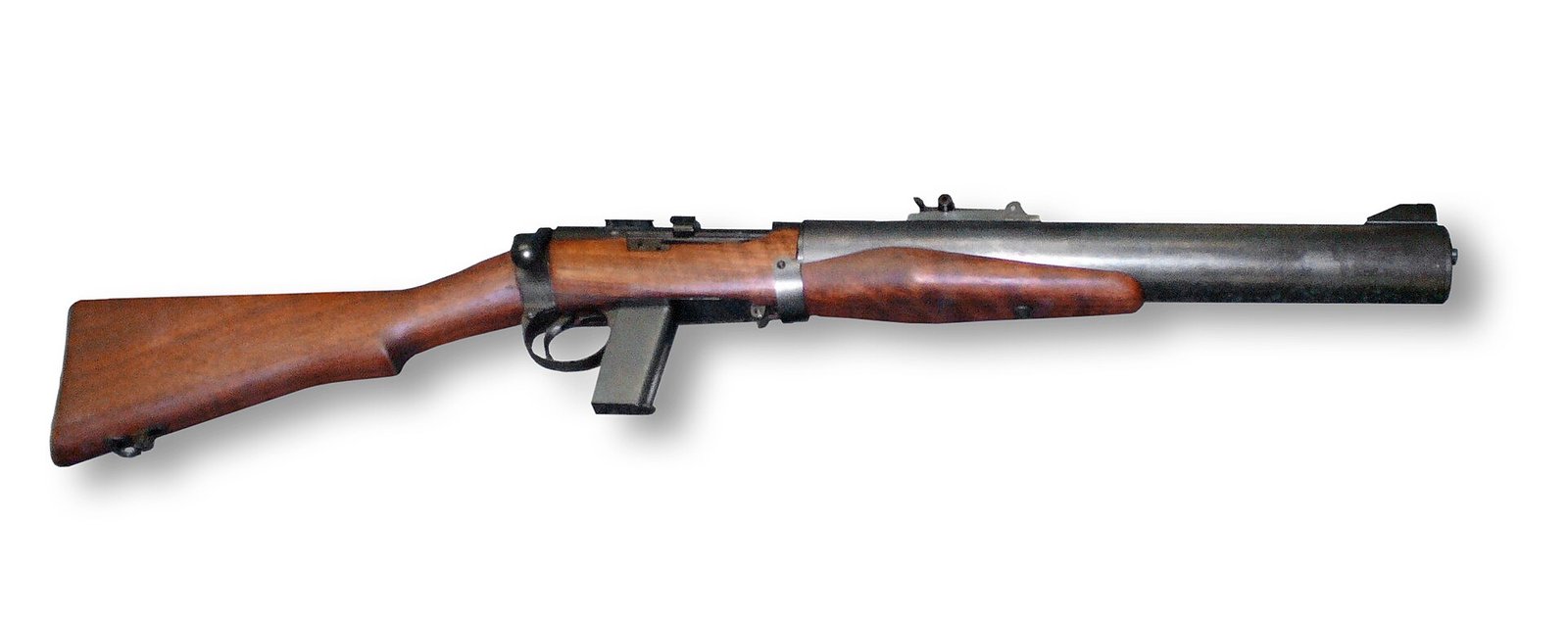
Every so often, though, someone gets remarkably close to the movie version. The best-known example is probably the De Lisle carbine. A British commando weapon from the Second World War, it was cobbled together from bits and pieces and ended up being a stellar performer in the world of clandestine operations.
Softly
William Godfray De Lisle was an engineer who worked at the Air Ministry during the period in which the United Kingdom found itself embroiled in the tumult that was World War II. He happened to be a capable weaponsmith, and during the war, he put together a rather unique carbine in .22 calibre as a personal project. Based on a short-magazine Lee-Enfield Mk III, it had the unique feature of having a sizable suppressor integrated into the very design of the weapon itself. The homebrew project was field tested on rabbits and small game at De Lisle’s property, with the spoils of the hunt proving most welcome at a time when heavy rationing was in place.
Soon enough, De Lisle was invited to demonstrate the weapon for examination by Major Sir Malcolm Campbell of Combined Operations HQ, and De Lisle’s design would prove remarkable with its performance in testing. The 1940s were rather a different time to today, without so many concerns around health, safety, or flinging bullets in the vicinity of the public. Thus, a simple trial was designed. The rifle was fired from the top of the Adelphi Building directly into the Thames River, and it was noted that passers by did not appear to hear it firing or respond to the shots at all. It was a ringing endorsement that the De Lisle design did what it was supposed to do.
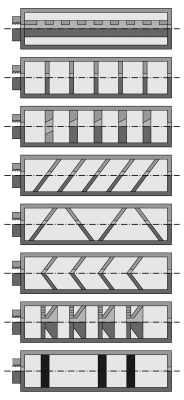
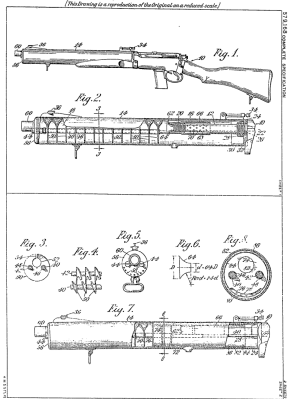
The gun’s success was heavily down to the integrated suppressor. It was inspired by the basic Maxim design, made popular by Hiram Percy Maxim, son of the creator of the famed Maxim machine gun that was so popular in the previous World War. At two inches in diameter, it used two expansion chambers, with a spiral system of baffles inside to absorb and diffuse the energy of the shot, reducing the sound output at the source. By virtue of its large size, it was capable of accepting a high volume of gases when fired, aiding its performance. The suppressor was highly effective at both reducing noise and cutting muzzle flash, both of prime interest to commandos involved in covert operations.
As it stood, however, De Lisle’s carbine wasn’t quite ideal for wartime use in its prototype form. The .22 cartridge was plenty for hunting small game, but rather titchy for the job of taking down German sentries. It was thus requested that a 9 mm version be produced, against De Lisle’s advice.
The following prototype was unsuccessful both ballistically and in terms of the noise it made—in part due to the supersonic nature of the 9 mm ammunition. De Lisle instead pushed ahead with a redesign chambered for .45 ACP, which had the benefit of increased stopping power and subsonic muzzle velocity for a quieter report when fired.
It proved ideal for the job, and soon enough, the new ultra-quiet carbine was in the hands of commandos conducting missions in occupied France. While a handful of handmade pre-production units were already taking part in the war, official range test were further proving the value of the new gun. Where a contemporary Sten gun was hitting 125 dB, and a silenced version sounding off at 89.5 dB, the De Lisle was besting that with a 85.5 dB report even despite firing a much larger round. It was considered effective out to a range of approximately 200 meters.
The De Lisle carbine was soon enough given a manufacturing contract for 500 units, though it would never be produced in such numbers. The final count was just 130 examples, with the majority being delivered directly to Combined Operations HQ. Beyond the suppressor, the gun was still effectively assembled from bits and pieces even in its production form. The heart of the weapon was the short-magazine Lee-Enfield Mk III, donating its bolt-action mechanics, but it had been hacked to accept a modified Thompson submachine gun barrel suitable for the .45 ACP cartridge. The six-groove barrel was also ported to help control the venting of gases into the suppressor assembly, which stretched from the back of the barrel to several inches in front of the muzzle. The receiver accepted modified magazines from the M1911 pistol.
The weapon would eventually see combat with commando units around the world. During World War II, the gun saw service with British commandos disrupting German operations on the continent, and would eventually turn up in the Burma campaign for use against Japanese forces, too. The weapon remained in service with British forces through the Korean war and Malayan Emergency, too. There are vague reports that examples of the weapon may later have popped up in the Vietnam War as well, in the hands of US Special Forces, though as with all clandestine operations, details are thin at best.
Overall, the De Lisle carbine proved the value of focusing a design around a single specific purpose. It was intended to be an ultra-quiet weapon that was designed around the suppressor, to great success. Contrast this with other designs which fitted suppressors after the fact to existing guns, which delivered less impressive results. The gun stood out from its rivals because it was designed differently from the outset, and it proved valuable for this very reason.
Featured image: “De Lisle carbine” by [Atirador]
This articles is written by : Nermeen Nabil Khear Abdelmalak
All rights reserved to : USAGOLDMIES . www.usagoldmines.com
You can Enjoy surfing our website categories and read more content in many fields you may like .
Why USAGoldMines ?
USAGoldMines is a comprehensive website offering the latest in financial, crypto, and technical news. With specialized sections for each category, it provides readers with up-to-date market insights, investment trends, and technological advancements, making it a valuable resource for investors and enthusiasts in the fast-paced financial world.