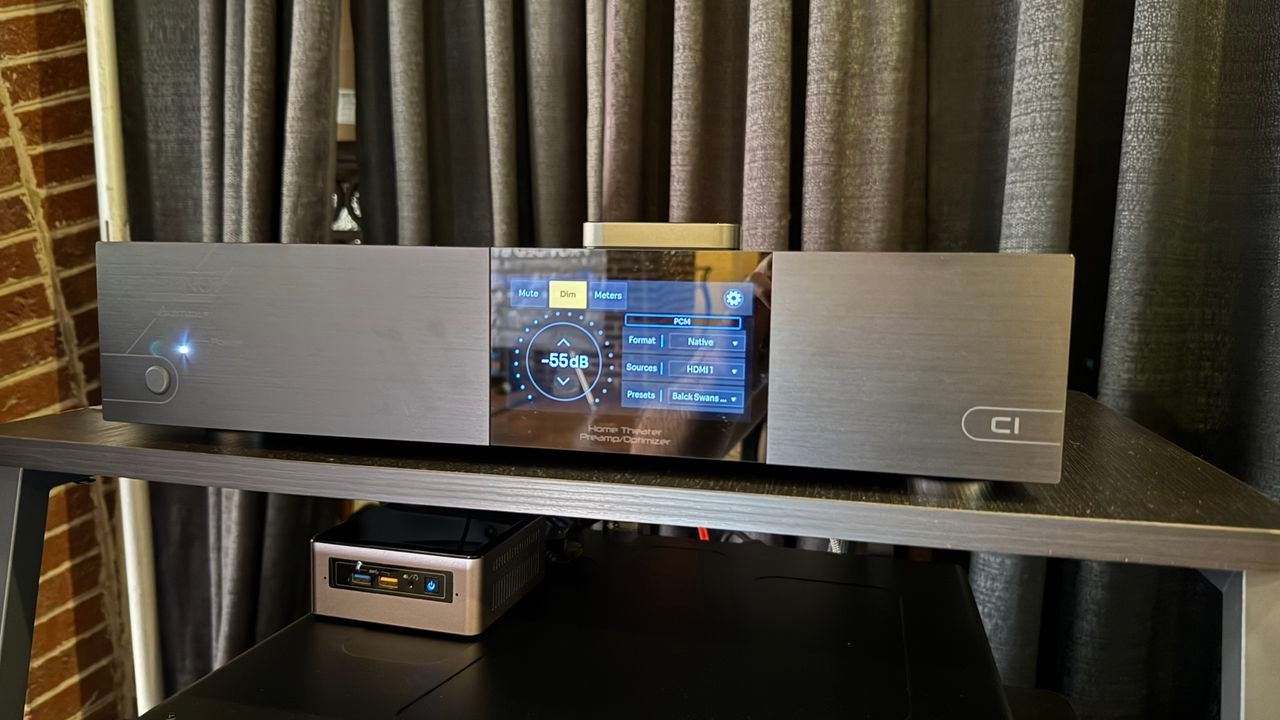
I want to tell you about the Trinnov Altitude CI AV processor. And I want to tell you about it because it’s essentially an Intel computer posing as a processor with scalable channels and a software-based platform that is constantly being updated.
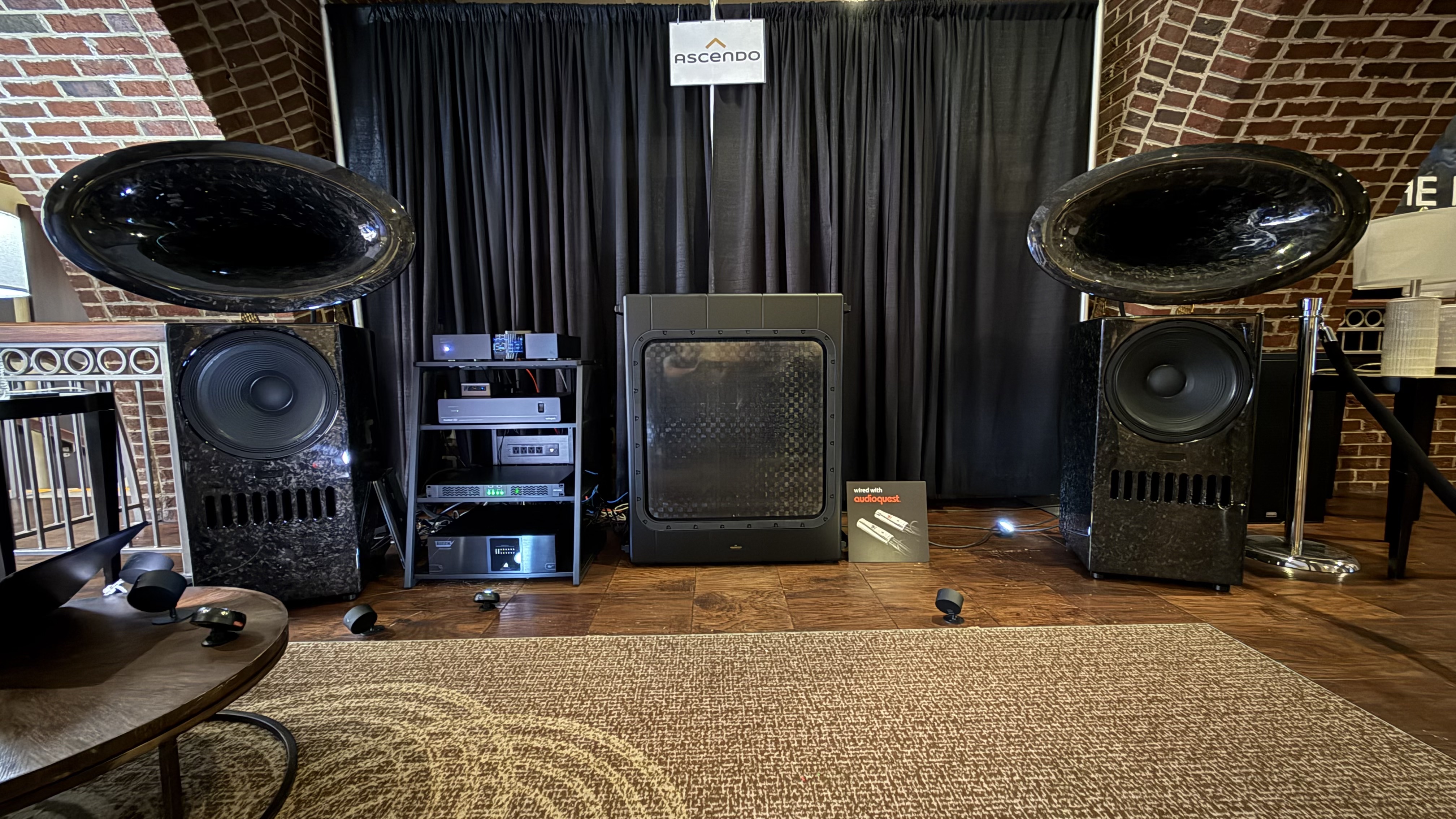
But I need to tell you about how Trinnov was able to make a pair of ASCENDO Black Swan speakers sound good in what was essentially an elevator lobby, at Audio Advice Live 2026.
The Black Swan Active Ext speakers are excellent two-way speakers that can get loud with a 132dB peak. They even come with their own DSP. After all, the ones showcased at the event, which were in a custom finish, retail around for around $40,000 each (so around £29,550 / AU$ 56,200) and there’s more going on than just an asymmetrical horn. It’s also worth mentioning that a $36,000 ASCENDO subwoofer was in the mix as well.
It’s not ASCENDO’s DSP doing the work in this particular situation though, it’s the Trinnov Altitude CI. Using Trinnov’s unique and patented Waveforming and Optimizer technology — there’s also a 3D mic for getting measurements — the audio, whether it was Stevie Ray Vaughn, Kamasi Washington (I did get a request in), or even some EDM, was as pristine and clear across all frequencies as if I were listening in a dedicated room.
Now, I’m describing the sound within about ten feet of the speakers where some seating had been set up to appreciate all that was on offer. It did start to get a little diffuse when over by registration, about thirty feet to the right, or at the elevators, thirty feet back, but those were not intended listening areas. The ability and fine tuning of Trinnov’s DSP is hard to beat.
Can you imagine creating a listenable space in a room with high-arched ceilings, walkways in either direction and a wall of elevators on the far end? Now, imagine what the Trinnov Altitude CI can do in a more ideal space.
The Room Correction
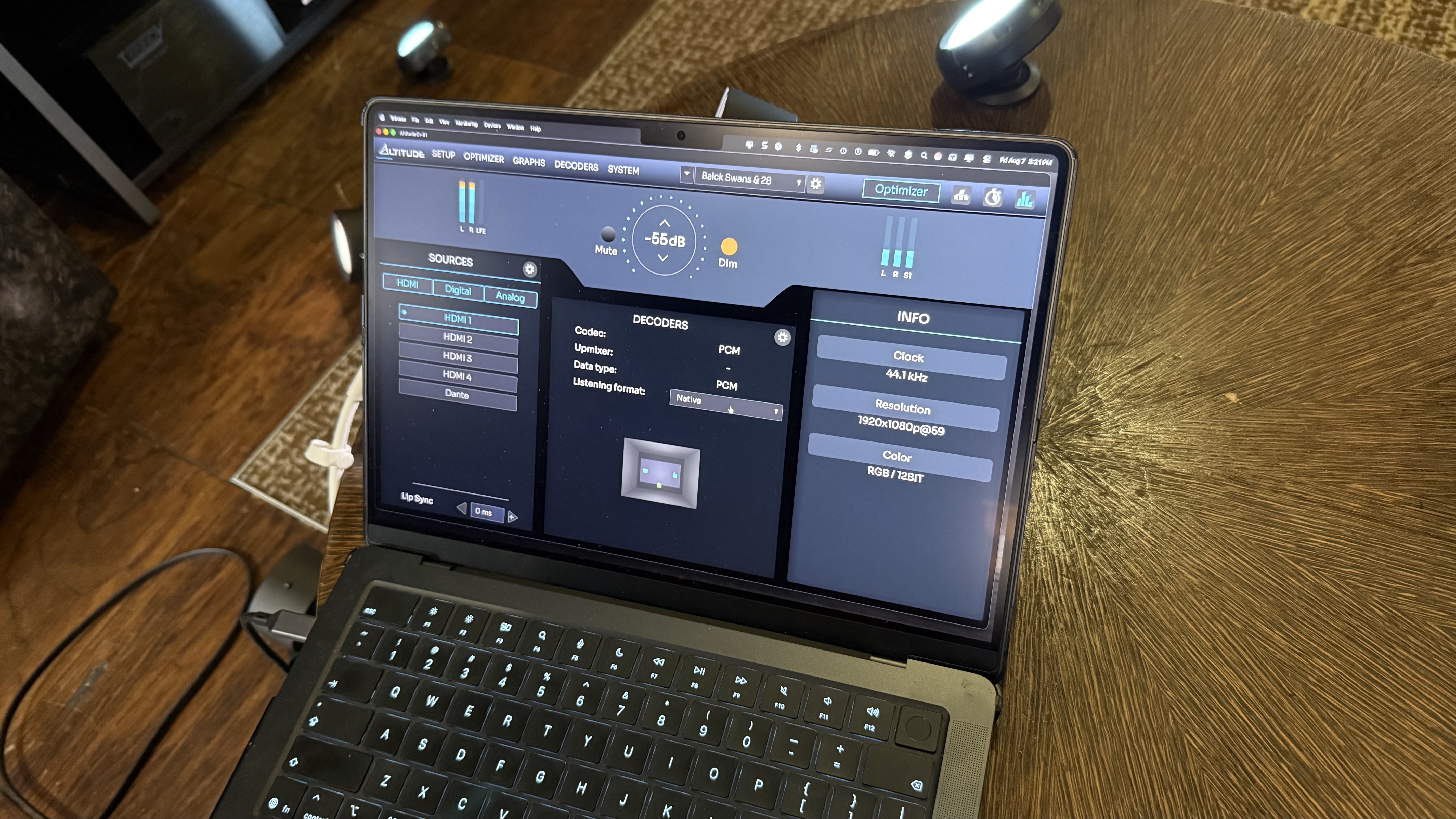
There are a few things going on with the Trinnov Altitude CI (and really and of the Altitude series) that get the room out of the equation and allow a set of speakers to sing. One of the main components of the company’s renowned room correction is its patented Optimizer, which, using a 3D mic, takes accurate measurements of what the room is hearing and adjusts accordingly. You can even do vertical and horizontal adjustments via the software to compensate for non-ideal speaker placement.
Trinnov also has its Waveforming technology, introduced in 2023 when researching a way to prevent standing waves instead of fixing them. Speaker and subwoofer placement as well as EQ were the traditional way of trying to mitigate the effects of standing waves, but you still get cold and hot spots throughout the room. And unless you only want to listen to music by yourself — this is less important for that one seat situated in the sweet spot — you would want to get rid of those standing waves as much as possible.
By implementing Waveforming, you get much better seat-to-seat consistency. And you’ll remove the muddiness from the low-end for a clearer sound and more dynamic contrast (there’s usually a standing wave around 50Hz). It also surprisingly makes dialogue easier to hear if you’re using the Trinnov Altitude CI for a Home Theater setting as well (or listening to a podcast through your Hi-Fi speakers for some reason).
Looking under the hood
Earlier I called the Trinnov Altitude CI an Intel computer, and it’s true. It uses an actual CPU and has a heavily modified Linux base for its software. What this means is that Trinnov doesn’t have to wait for someone to make a special DSP chip for them to build around as the internal processor is more than powerful enough. And that by making the processing software-based, the company can roll out any updates to Dolby Atmos, DTS:X, Dante, or anything else with a software update that just requires a press of a button and a few minutes.
This means that if you own any Trinnov AV processor, they will stay up to date for the foreseeable future so you won’t need to go replacing hardware every time there’s something new under the sun.
On the hardware side, the only moving target these days is HDMI. With the Trinnov Altitude CI, the HDMI ports are all separated on their own piece of hardware that can be removed for an updated one that you would get from the company so that your processor can support the new standard. Beats buying a whole new AV processor.
The one thing that really sets the Trinnov Altitude CI apart from the Altitude 16 or 32 is that it has scalable channels. So when you purchase this processor, it includes eight channels in that initial price tag of about $12,000 / £8,870 / AU$16,960 and you can add channels two at a time after until you get to 32 channels, and it’s about $28,000 / £20,700 / AU$39,560 for the Altitude CI fully loaded. You’ll have to reach out to your local Hi-Fi dealer for exact pricing, but the Trinnov Altitude CI offers a more affordable entry point into the Trinnov ecosystem.

Become a TechRadar Insider by simply clicking ‘Join Now’ at the top of this page. Have a question? Please email membership@techradar.com
This articles is written by : Nermeen Nabil Khear Abdelmalak
All rights reserved to : USAGOLDMIES . www.usagoldmines.com
You can Enjoy surfing our website categories and read more content in many fields you may like .
Why USAGoldMines ?
USAGoldMines is a comprehensive website offering the latest in financial, crypto, and technical news. With specialized sections for each category, it provides readers with up-to-date market insights, investment trends, and technological advancements, making it a valuable resource for investors and enthusiasts in the fast-paced financial world.