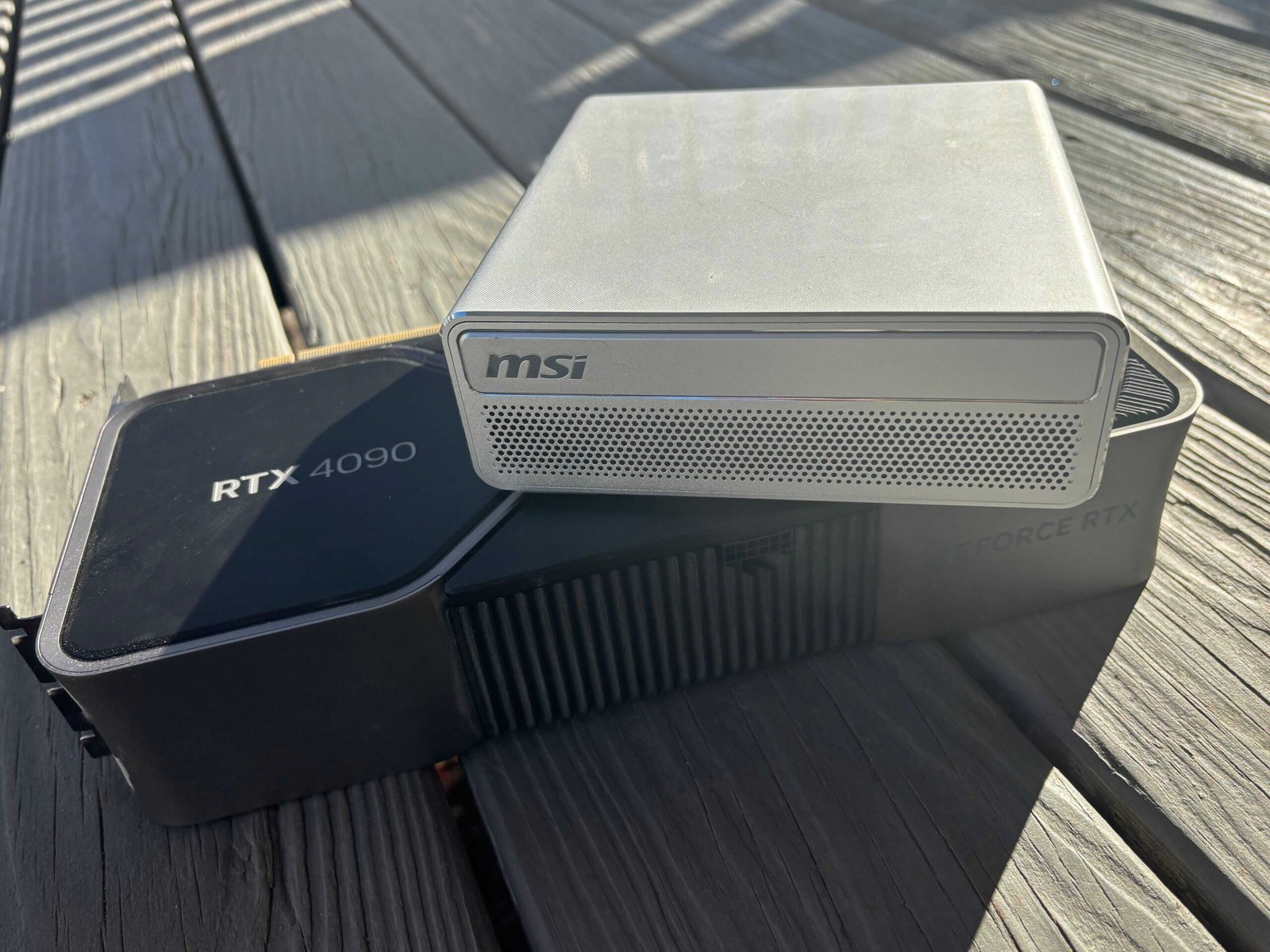
A couple of weeks ago, I made a $7,000 Nvidia RTX Spark laptop chew through 220,202 AI tokens in 13 minutes because I wanted to see what would happen. Then I started wondering what would happen if I did it again. And again. And again. You know, like that Goofy meme.
My experiments with Asus’ ProArt P16 RTX Spark laptop showed me how liberating it is to stop paying for every AI token. But MSI’s tiny EdgeMesa RTX Spark desktop has me thinking about something even bigger. I’ve turned this $8,000 mini PC with 128GB of unified RAM into a dedicated AI research machine that keeps working after I’ve walked away.
I’m not just asking my computer to do things anymore. I’m giving it a job, and actively pondering what additional headaches I can offload on local intelligence. None of this was possible before the rise of systems like RTX Spark, and that’s exciting as hell.
From AI experiments to an AI research assistant
My personal AI research project, Betting With Receipts, digs into sporting events and player performance, looking for things the betting markets might have missed. It uses AI to investigate promising leads, challenge its own conclusions, and discard anything that doesn’t hold up. If 55 percent of your sportbook bets hit, you’re considered an above average bettor; through the early NFL season, BWR’s hit rate looks closer to 70 percent. It’s the project that inspired my original 220,000-token experiment, which examined 403 potential NFL candidates in a single research run.
But that was one point-in-time investigation. A serious research system needs to keep working as conditions change.
Players get injured. Coaches reveal new information. Betting markets move. New opportunities emerge while old ones disappear. Understanding what’s actually happening requires repeatedly collecting evidence, investigating potential developments, and challenging conclusions that looked promising a few hours earlier. Finding the right info at the right time can mean the difference between a big profit or a missed opportunity.
Doing that with frontier AI models in the cloud gets expensive fast, especially since my research expands beyond football. Even when the cost is manageable, manually initiating every investigation limits how much ground you can cover, while scheduling tasks with ChatGPT Plus or another AI subscription faces usage limitations.
So I’ve been rebuilding parts of that research infrastructure on MSI’s $7,999 RTX Spark-powered EdgeMesa. I rushed to get basic NFL collection and research capabilities working in time for this review as a real-world benchmark of sorts, with other sports and much more sophisticated analysis still to come.
The EdgeMesa now runs scheduled jobs that collect NFL news and player-prop market information, preserve snapshots, compare observations, and feed selected material into locally running AI models. During my initial testing, seven captures accumulated 1,739 market observations and identified 114 changes in the collected data in just half a day of harvesting info — something I could never do with ChatGPT’s scheduled tasks.
Those aren’t 114 betting opportunities. They’re raw observations that need verification and analysis before they’re useful. My real goal isn’t to have AI mindlessly react whenever a number changes. It’s to recognize when new information might change our understanding of what’s likely to happen, investigate why, and discard the vast majority of apparent opportunities that don’t survive scrutiny.
That requires much more sophisticated intelligence than my current local setup possesses, though the ‘lil guy is certainly trying his best. But the MSI EdgeMesa is already accumulating evidence and escalating key discoveries for further research without needing me to supervise every step.
I’ve configured regular research and market sweeps throughout the day, along with a late-night integrity report. I can leave the machine running, go about my day, and return to information that wasn’t there when I walked away.
And crucially, all of the data I collect is stored permanently on my SSD — a vital improvement after discovering that the more I use cloud AI, the less I trust it. With local AI, I control the fate of my files.
When computing becomes an ongoing experiment
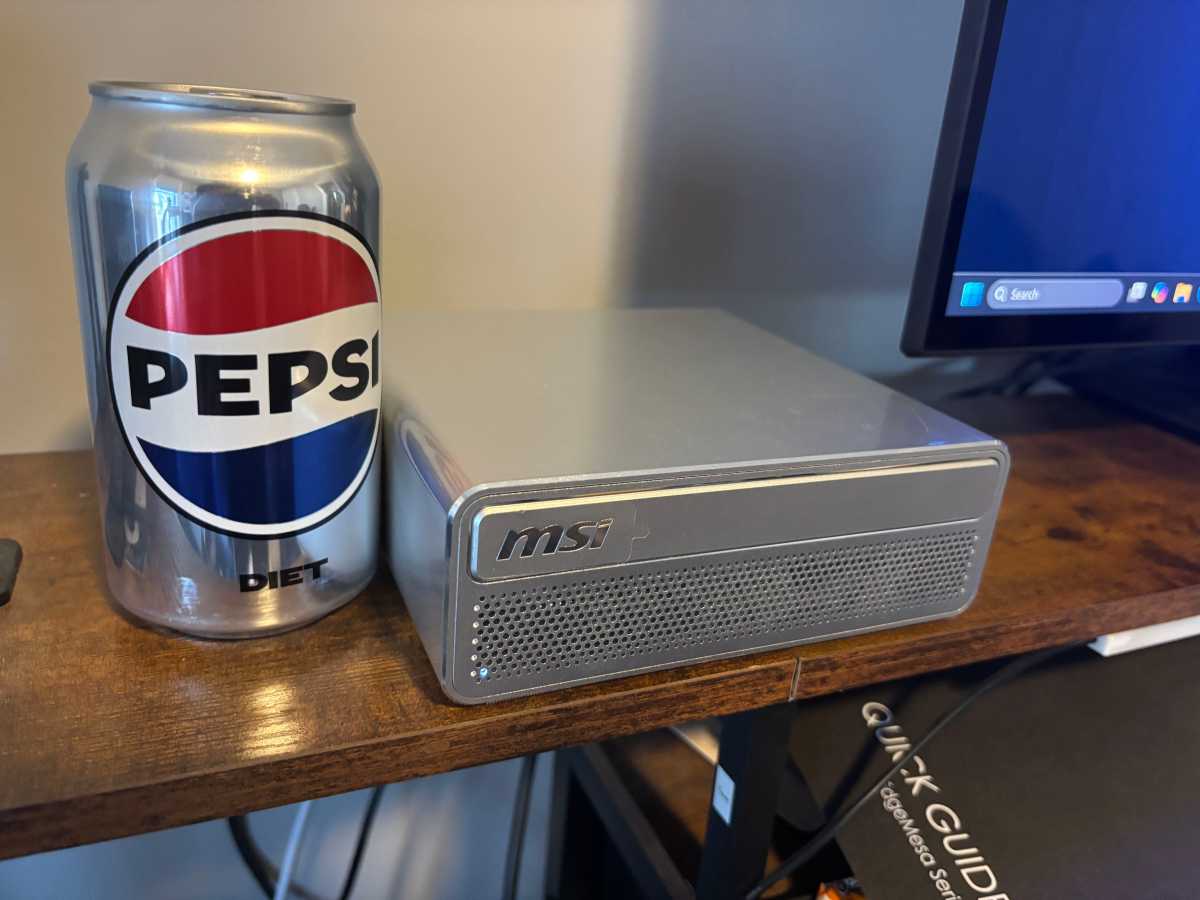
Brad Chacos/Foundry
Most of us use AI in discrete sessions. We open ChatGPT or another assistant, ask a question, get an answer, and move on. Even elaborate AI research usually happens in sessions that somebody needs to initiate.
Owning the hardware changes the economics of those sessions. Giving that hardware a permanent job opens up possibilities that weren’t practical before.
I’m no longer thinking solely about how many tokens a local model can process in one sitting. I’m thinking about what happens when it can repeatedly examine new information, revisit earlier assumptions, and pursue leads across hours, days, or weeks. It’s a big difference from doing it all in the cloud, where data permanence is frustratingly iffy at best and the right (wrong?) research prompt can soak through my five hour ChatGPT token allowance in mere minutes.
The eventual goal for BWR is much more ambitious than this first NFL pipeline. I want to extend the research across multiple sports, with deeper source collection, better understanding of sporting conditions, and independent AI reviewers challenging conclusions before anything gets promoted as worth acting on. That’s the full scope of my project in the cloud.
A full NFL research run previously consumed more than 220,000 tokens. Imagine repeating investigations of that scale whenever meaningful new information arrives, across football, basketball, hockey, and other sports. You could chase weak signals that lead nowhere, pit competing approaches against the same evidence, and revisit conclusions as conditions change—all without watching an annoying cloud API meter relentlessly tick upward.
And sports research is just my particular obsession. The same approach could apply to monitoring scientific literature, tracking changes in software projects, following developments in a specialized industry, or investigating whatever rabbit hole captures your imagination. The fun part of playing with computers is experimenting with them, and the RTX Spark platform unlocks a lot of room for fun.
There’s a catch: Local AI still needs a brain
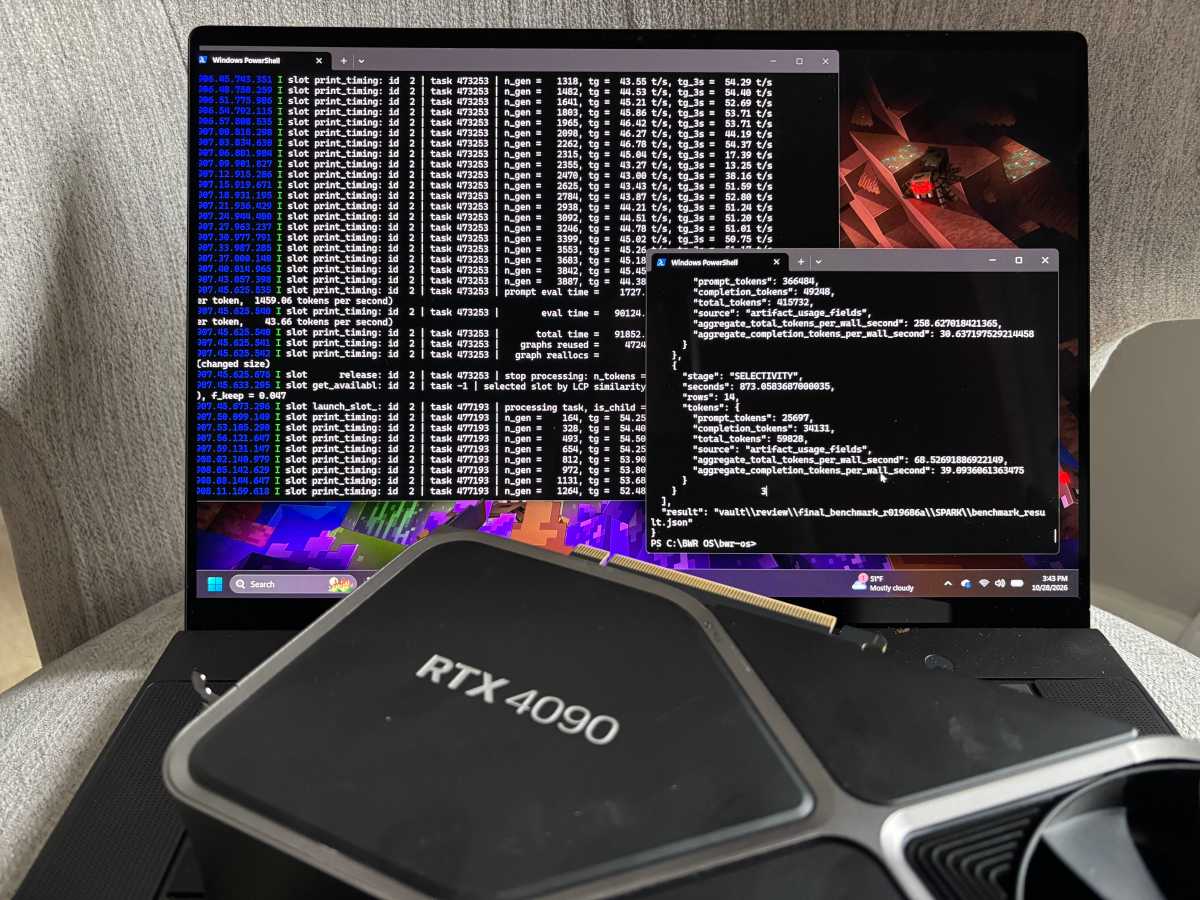
Getting local AI running is easily. Tailoring local AI to fit your specific task needs is much, much more finicky, as illustrated here on the Asus ProArt 16 RTX Spark laptop.
Brad Chacos/Foundry
But building an autonomous research system is a lot harder than loading a giant AI model and telling it to get cracking.
I’ve experimented with Qwen models and OpenAI’s gpt-oss-20b and gpt-oss-120b. Their ability to run locally is impressive. Their ability to independently conduct the sophisticated sporting investigations I’ve developed using frontier AI models? Not so much.
In one early EdgeMesa test, a local model examined 12 sports articles against 187 player-market keys without establishing a single connection. It generated five findings, but only one passed a basic source-excerpt validation check. Another test processed six NFL news items, recognized a potentially interesting injury-related development, then utterly failed to investigate it further.
Some shortcomings reflect the models themselves. Others come from the rudimentary research pipeline I’ve assembled so far. Either way, loading a 120-billion-parameter model doesn’t magically give it the investigative chops of a frontier AI.
Improving that will be the next major challenge after I get the broader sporting infrastructure running. I’ll need better source retrieval, reliable player and team information, stronger research instructions, smarter ways to divide complicated investigations into manageable tasks, and independent AI reviewers capable of catching mistakes. Then I’ll need to test whether those changes actually improve the conclusions rather than simply making the AI sound more convincing.
With the right training, local models could become much more ferocious about performing initial intelligence. I suspect frontier models will remain part of the process, particularly for difficult reasoning and adversarial evaluation. But if I can shift the enormous volume of routine collection, preliminary investigation, and repeated experimentation onto hardware I already own, that alone could transform how much research I’m able to conduct.
Why a tiny desktop makes more sense than a $7,000 laptop
Brad Chacos/Foundry
I loved the Asus ProArt P16. Running enormous AI models on a thin laptop feels like witchcraft, and its gorgeous OLED display makes it a pleasure to use. But sustained AI workloads hammer its battery and send the fans into overdrive.
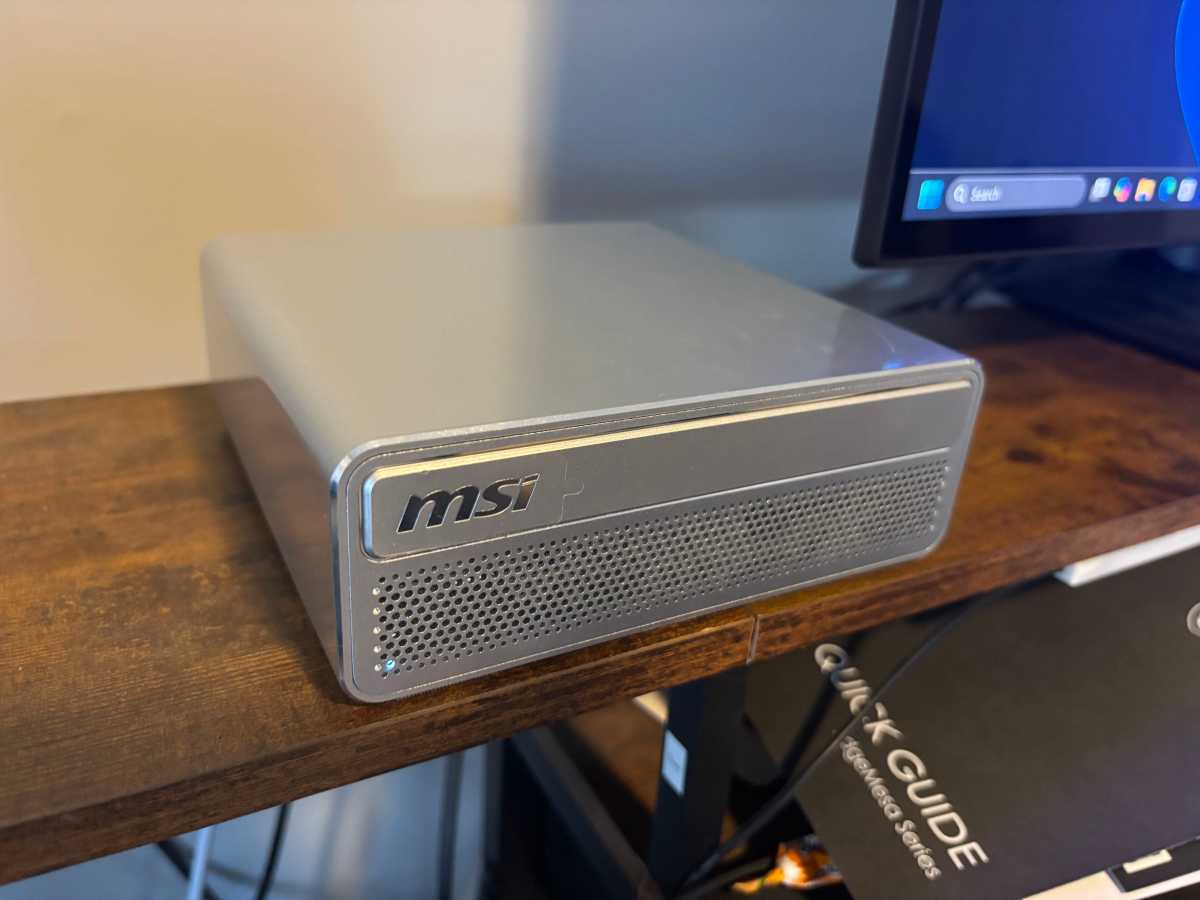
MSI’s EdgeMesa N1x is a more natural fit for the way I’m using RTX Spark now. It’s a tiny, gloriously quiet computer that can sit beside my network equipment, connected to Ethernet and power, running research jobs without tying up my primary PC (though the Spark can still be used while performing AI tasks). Its square power brick hilariously has a footprint almost as large as the actual computer. I don’t need a screen, keyboard, or battery for a computer whose whole job is to keep working when I’m not using it.
Inside, the EdgeMesa combines Nvidia’s 20-core Grace CPU, a 6,144-core Blackwell GPU, and 128GB of unified memory. I’ve configured 96GB for GPU use through Nvidia’s app, giving me enough room to run quantized 120-billion-parameter models locally.
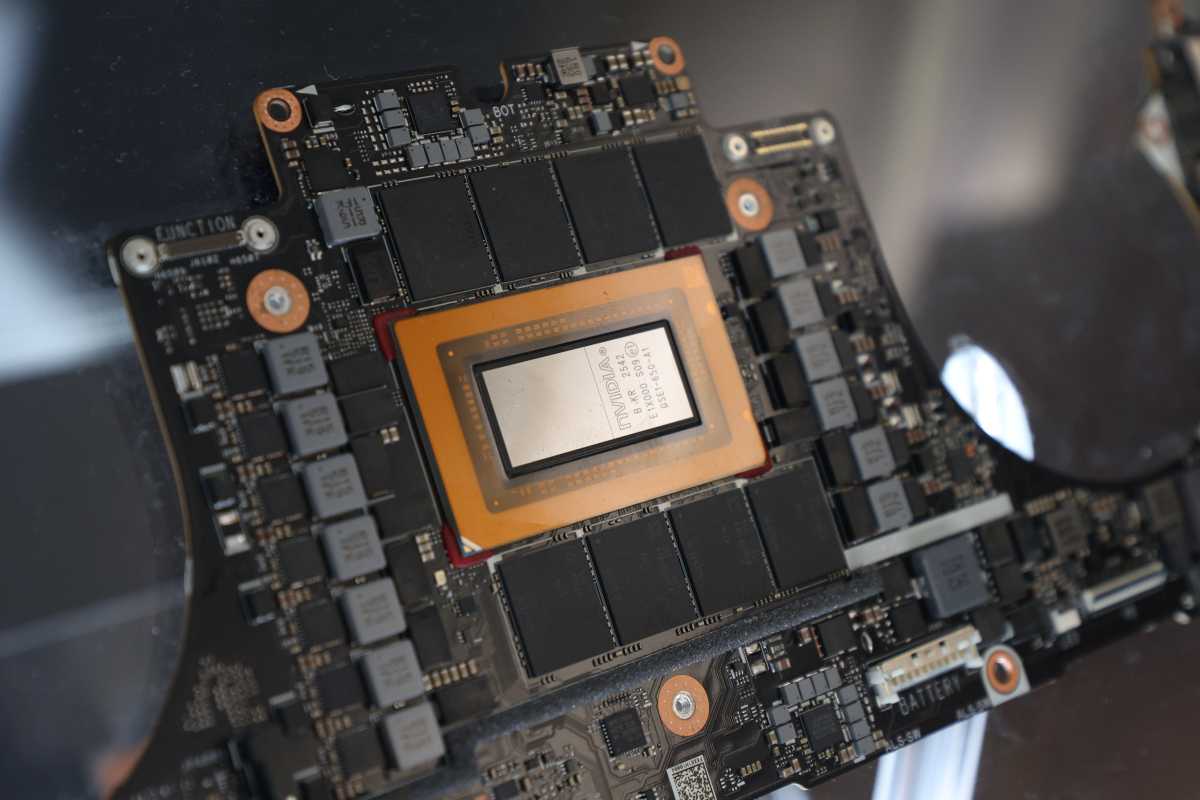
The RTX Spark chip embedded in a laptop motherboard.
Adam Patrick Murray / Foundry
That massive memory pool is why you can’t simply build an equivalent RTX Spark PC by stuffing more RAM into a conventional desktop. In my original testing, the ProArt finished a research benchmark involving 472,084 total tokens in 33 minutes and 13 seconds, compared with 52 minutes and 51 seconds on my RTX 5090 desktop. The 5090 has vastly more raw graphics horsepower, but its 32GB of VRAM becomes a liability when a giant AI model doesn’t fit.
I’ve since run my local BWR benchmark across the ProArt, EdgeMesa, and RTX 5090 systems. The EdgeMesa finished roughly 12 percent faster than the ProArt, consistent with Nvidia’s expected 10 to 15 percent advantage for the RTX Spark’s desktop form factor. In separate single-run inference tests, gpt-oss-20b delivered about 77 effective output tokens per second, while gpt-oss-120b managed roughly 55, including prompt-processing overhead. That’s plenty responsive for the work I’m building.
Unfortunately, MSI seems to have forgotten that people buying desktop computers might want to plug desktop peripherals into them. Its ports consist of tightly packed USB-C connections and HDMI, without traditional USB-A or DisplayPort. My expensive USB-A peripherals require bulky dongles that barely fit together; my keyboard has already disconnected twice because the connection is so precarious. C’mon, man. This is a desktop PC.
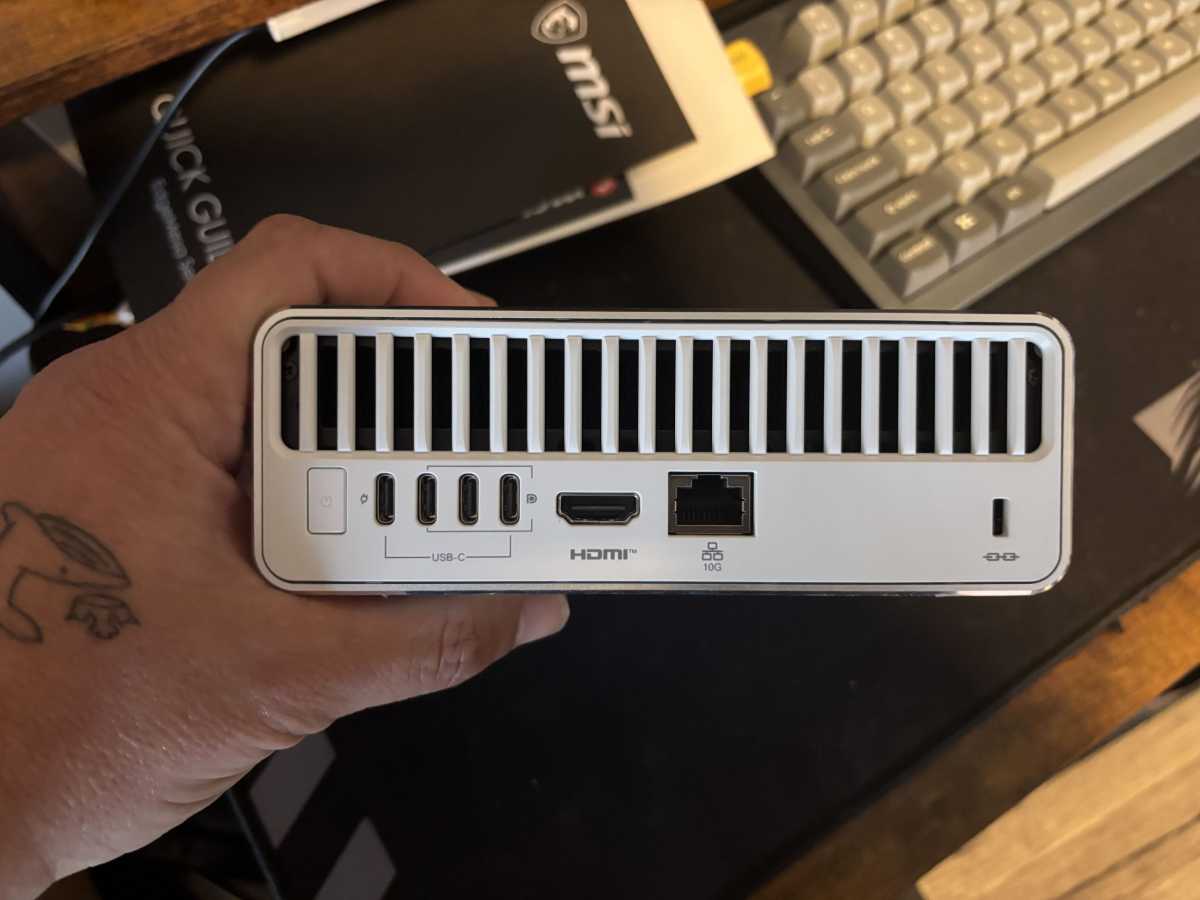
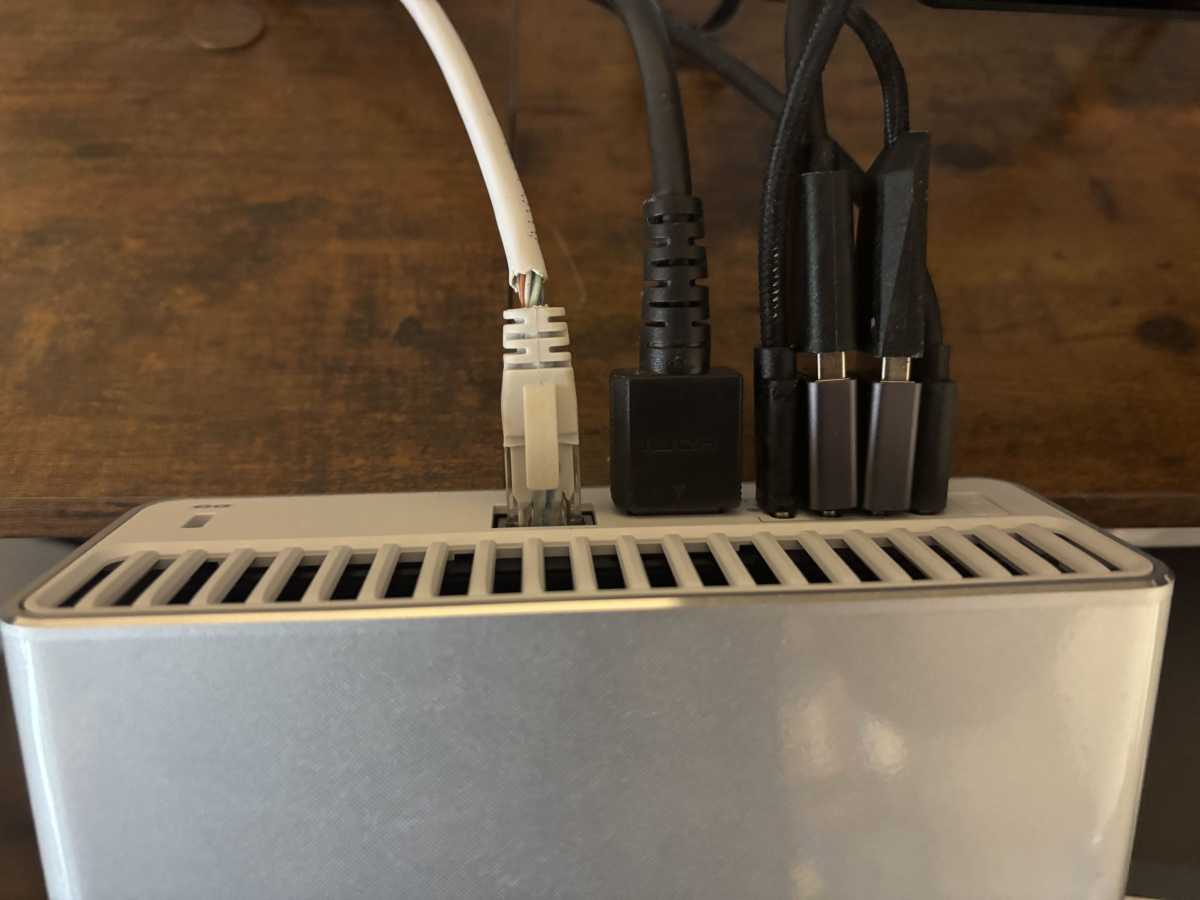
The EdgeMesa and other RTX Spark devices also lack the ConnectX-7 high-speed networking found on Nvidia’s Linux-based DGX Spark systems, which enthusiasts interested in connecting multiple Spark machines for larger AI workloads should consider. For my purposes, ordinary wired Ethernet is enough, and the ability to leave the machine quietly working on my network is far more valuable than being able to cobble a string of these $8,000 systems together.
Of course, this little box costs a whopping $7,999. I wouldn’t recommend spending that kind of money unless you have a specific AI workload capable of generating meaningful financial returns or valuable intelligence. If you’re simply interested in running a personal chatbot locally for privacy, you can do that on dramatically cheaper hardware. You don’t need 128GB of unified memory and a specialized Nvidia AI processor to ask a local model questions or summarize sensitive documents. Hell, Betting With Receipts makes me real money and I still don’t think I’d feel comfortable investing $8,000 in taking its capabilities local, no matter how much the Spark supercharges my research and intelligence capabilities.
RTX Spark is for people who want to push enormous models, conduct serious research, or build AI systems that can do economically valuable work. It’s specialized hardware for specialized ambitions, not a sensible upgrade for the average PC enthusiast. I’ve argued before that RTX Spark laptops make sense only for particular workloads, and MSI’s EdgeMesa mini PC reinforces that conclusion. The desktop form factor simply makes much more sense for the kind of sustained research I’m exploring.
A different way to use your PC
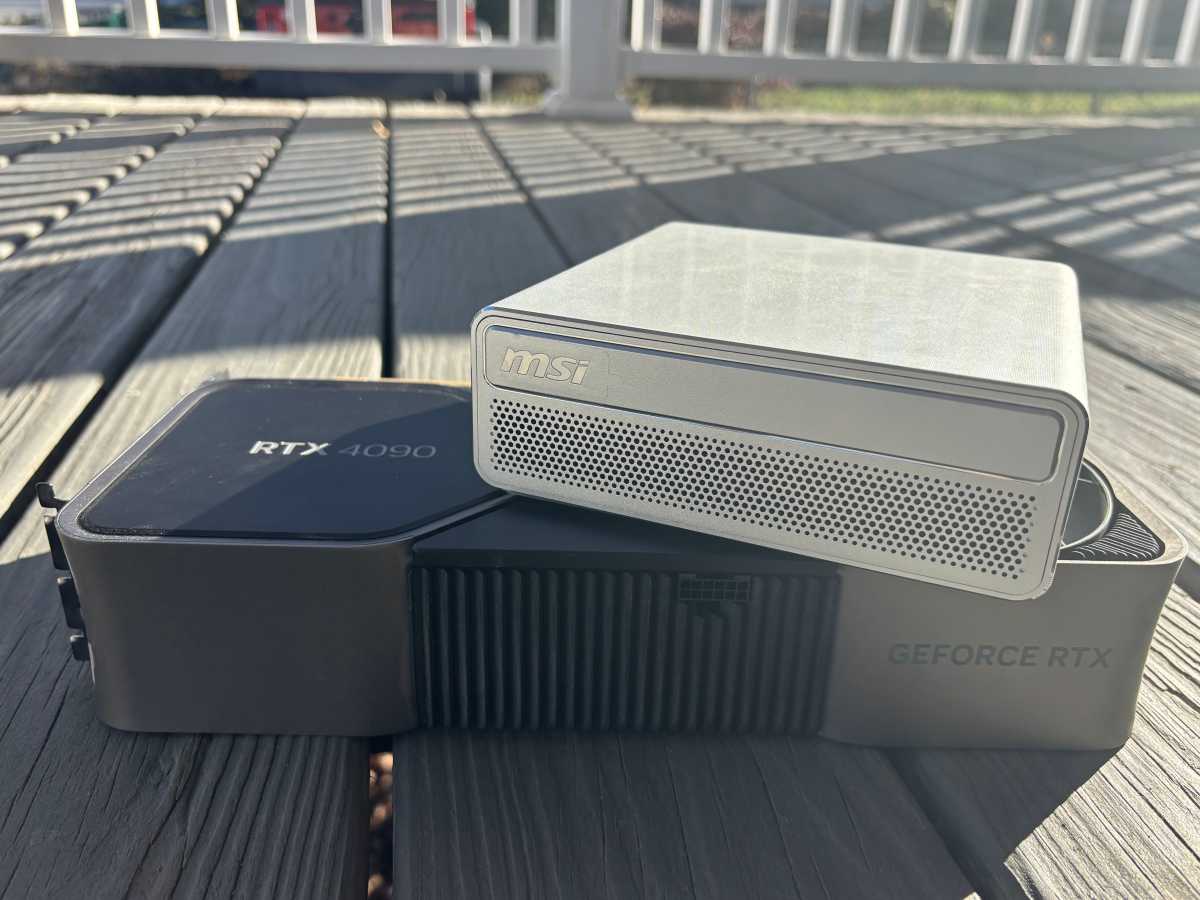
Brad Chacos/Foundry
My local research system is nowhere near finished. The NFL collection pipeline is only the beginning, the other sports still need to be integrated, and the local models have a long way to go before I trust them with difficult investigations. But I’ve already gone from launching an enormous AI experiment manually to owning a little machine that gathers evidence, tracks changes, and prepares and processes intelligence for further investigation while I’m doing something else.
That’s the part I keep coming back to. The most interesting thing about this $7,999 computer isn’t how quickly it answers my questions (though RTX Spark is delightfully blistering at local AI tasks). It’s that I’ve started giving it real, complex work to do when I’m not around to ask those questions. That’s very different from the relationship I’ve had with computers over the last 40 years — and something that wasn’t possible before the rise of memory-infused systems like RTX Spark. We live in interesting times.
This articles is written by : Nermeen Nabil Khear Abdelmalak
All rights reserved to : USAGOLDMIES . www.usagoldmines.com
You can Enjoy surfing our website categories and read more content in many fields you may like .
Why USAGoldMines ?
USAGoldMines is a comprehensive website offering the latest in financial, crypto, and technical news. With specialized sections for each category, it provides readers with up-to-date market insights, investment trends, and technological advancements, making it a valuable resource for investors and enthusiasts in the fast-paced financial world.