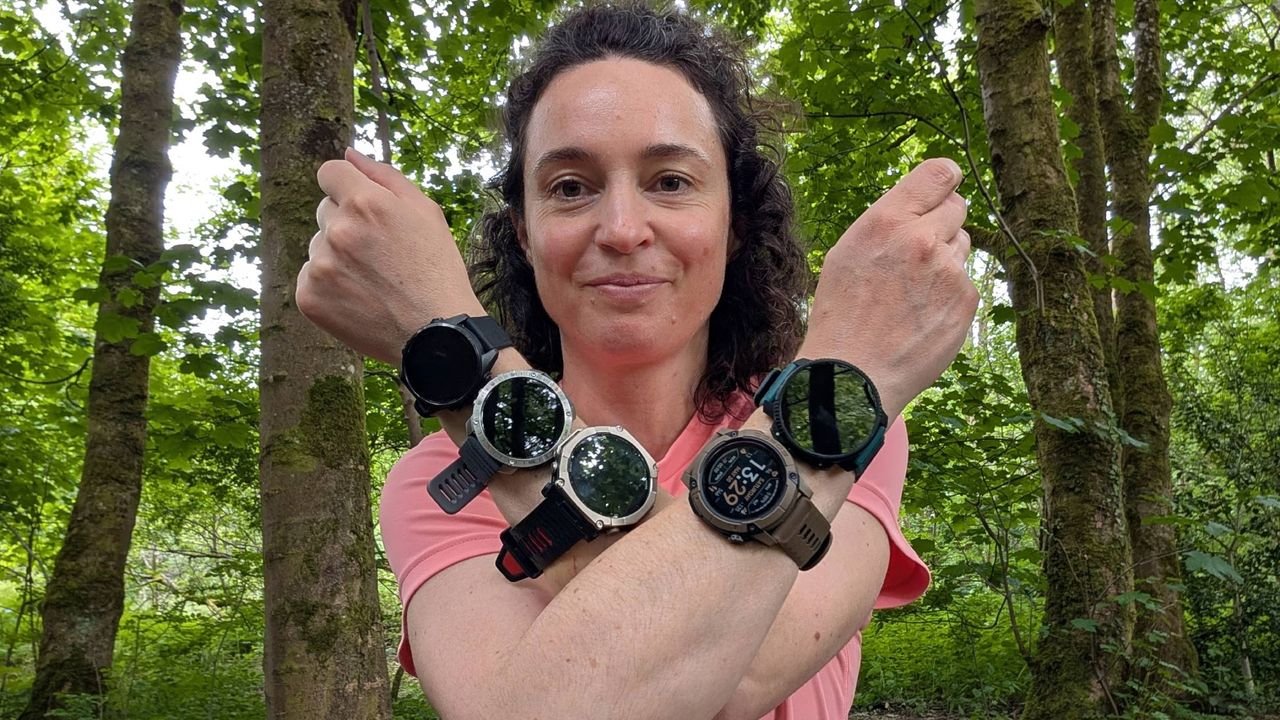
Hiking is all about getting away from screens and into the healing embrace of nature, sure, but over the past few years I’ve often embraced the help of a GPS watch when I hit the trail.
These crafty devices have banished my trusty map and compass into the deepest recesses of my hiking backpack, only to be pulled out in dire circumstances. Their offline maps and handy turn-by-turn navigation have me blowing past every trail junction without slowing down, and never again do I have to wonder how far I’ve walked or how much ground I still have to cover.
Not every smartwatch feature matters for hiking – I personally don’t need a reminder every time I receive a text, and training tools like Race Predictor on the best Garmin watches are only depressing, as handy as they are for trail runners – but a watch with offline maps, a great battery life and a flashlight is like gold when I’m taking the long road.
Over the last few years, I’ve tested dozens of GPS watches on trails from the Highlands to the Himalayas to find out which are best for trekking adventures.
Best premium GPS watch: Garmin Fenix 8
- Maps: Full color topo maps preloaded
- Torch: LED
- Display: AMOLED
- Materials: Titanium bezel, Power Sapphire lens, fibre-reinforced polymer case
- Battery life: Up to 28 hours in GPS mode
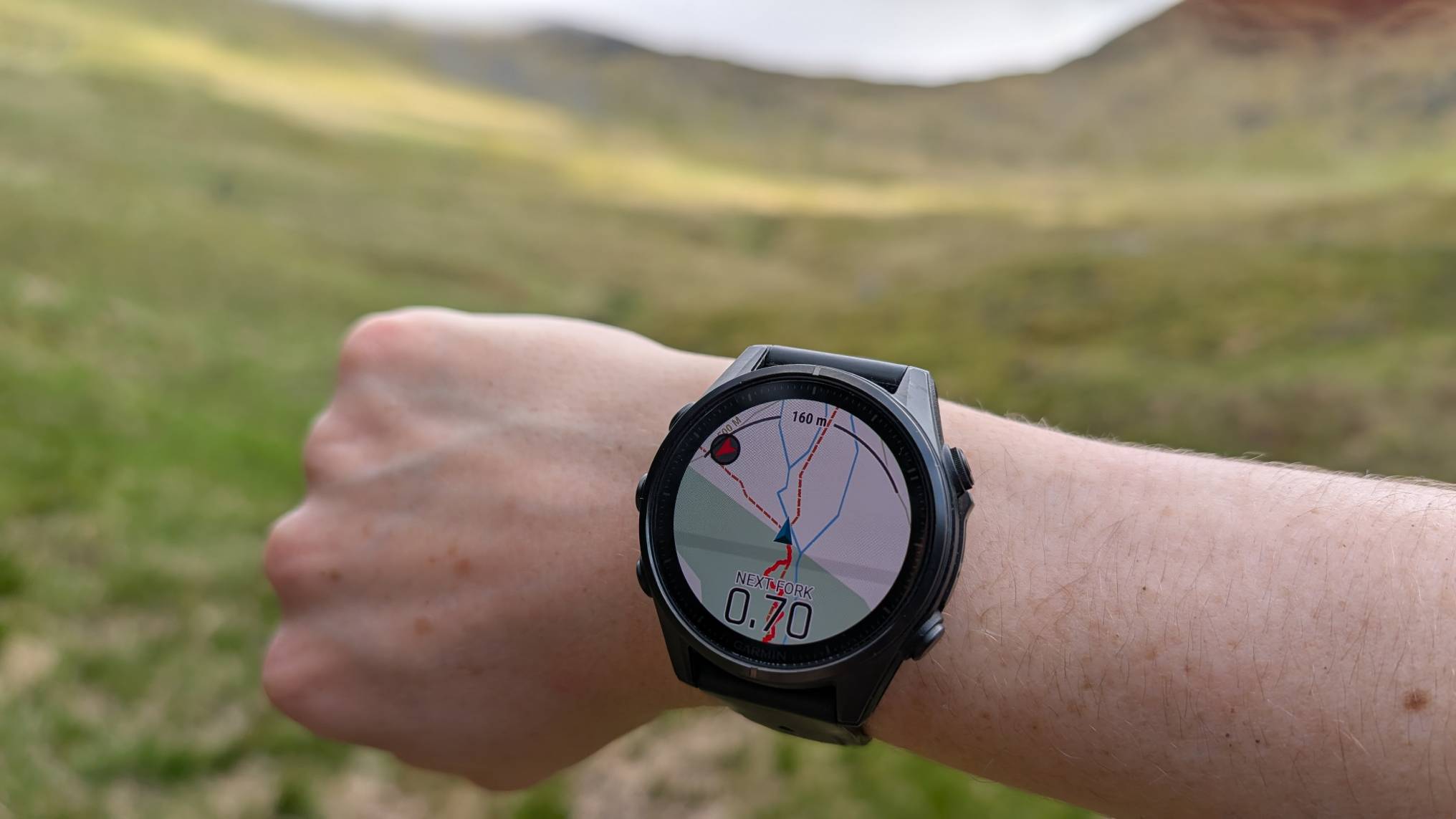
The fully-featured Garmin Fenix 8 is one of the absolute best GPS watches that money can buy, it’s true. But don’t think its inclusion here is merely a lazy catch-all – I wore this watch all the way to Everest Base Camp and back to find out whether or not it really has the chops for hiking. Suffice to say, it’s nearly perfect for intrepid adventures.
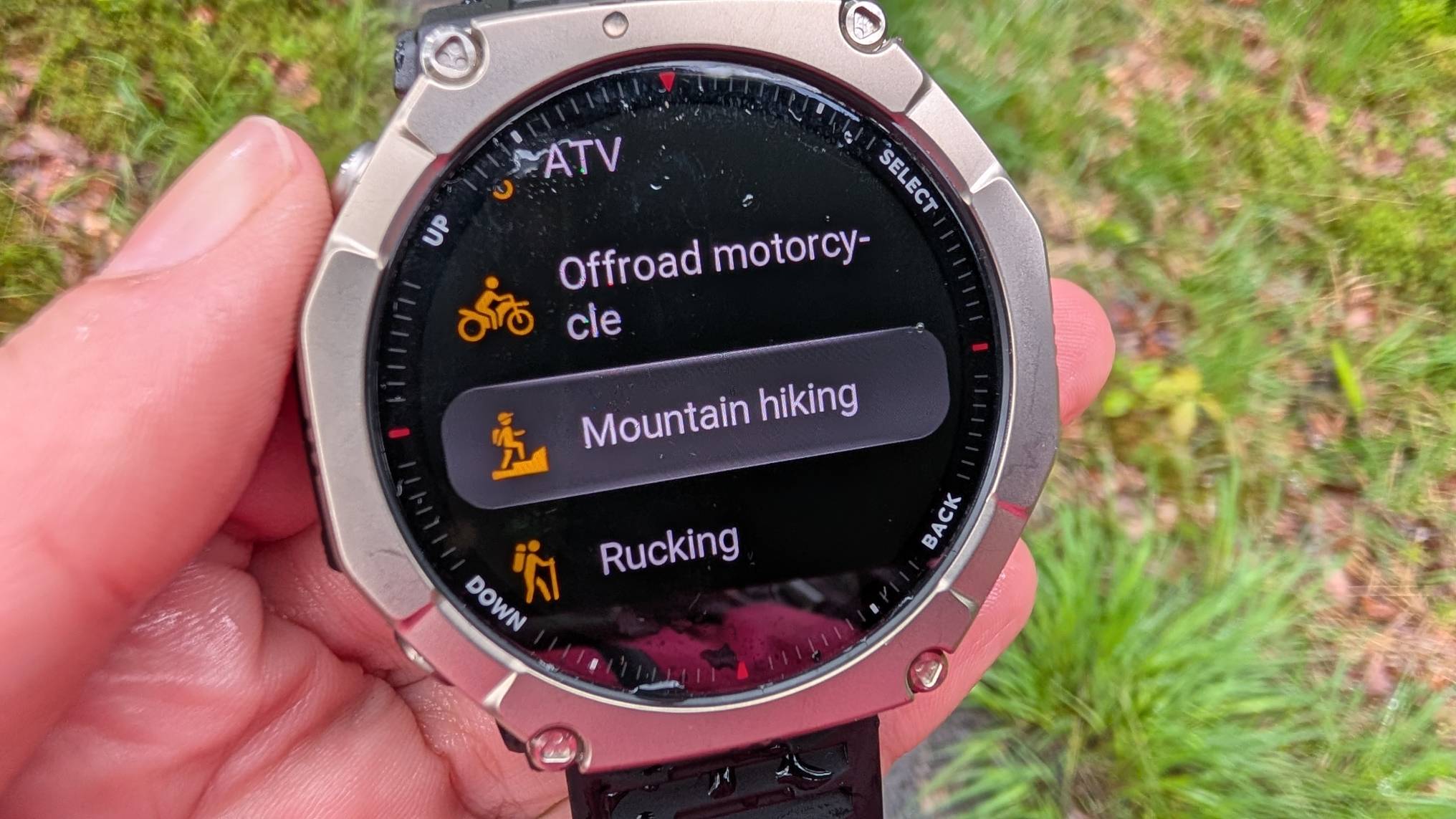
For my 11-day trek, I played around with both Mountaineering mode, which gave me precise altitude readings that were really helpful as we climbed up to 5,364m, and Rucking mode, which allowed me to input my exact pack weight for more accurate fitness tracking and calorie counting.
In the Nepalese teahouses, the LED torch was ideal for midnight trips to the loo, and on a pre-dawn hike up Kala Patthar to watch the sun rise over Everest, the red light function proved more useful than my super bright headtorch.
The Fenix 8 comes with full colour maps already preloaded, and with 32GB of storage, it holds up to 100 GPX routes, far more than I’d ever need. I trekked with a guide in the Himalayas, so I didn’t need to download the route, but a few months later, I wore it for a five-day hike of the Cumbria Way, and the route was lightning-quick to render and meant I barely had to break my stride if I came across an unmarked trail junction.
The only gripe I can find is the battery life, which is more than suitable for regular day hikes, but lacks a little on multi-day treks. On adventures where I’m using the Fenix 8 in GPS mode for 6-8 hours a day, I typically have to charge it every third day.
If you’re planning on going very far off-grid, consider the Garmin Fenix 8 Pro, which adds the ability to make an SOS call when you’re out of service and need help.
- Who should buy it: Hikers with a big budget who don’t want to compromise on quality or features.
Best for multi-day treks: Suunto Vertical 2
- Maps: Full color topo maps available for download
- Torch: LED
- Display: AMOLED
- Materials: Sapphire crystal screen with a choice of stainless steel or titanium aluminium alloy bezel
- Battery life: Up to 65 hours in GPS mode
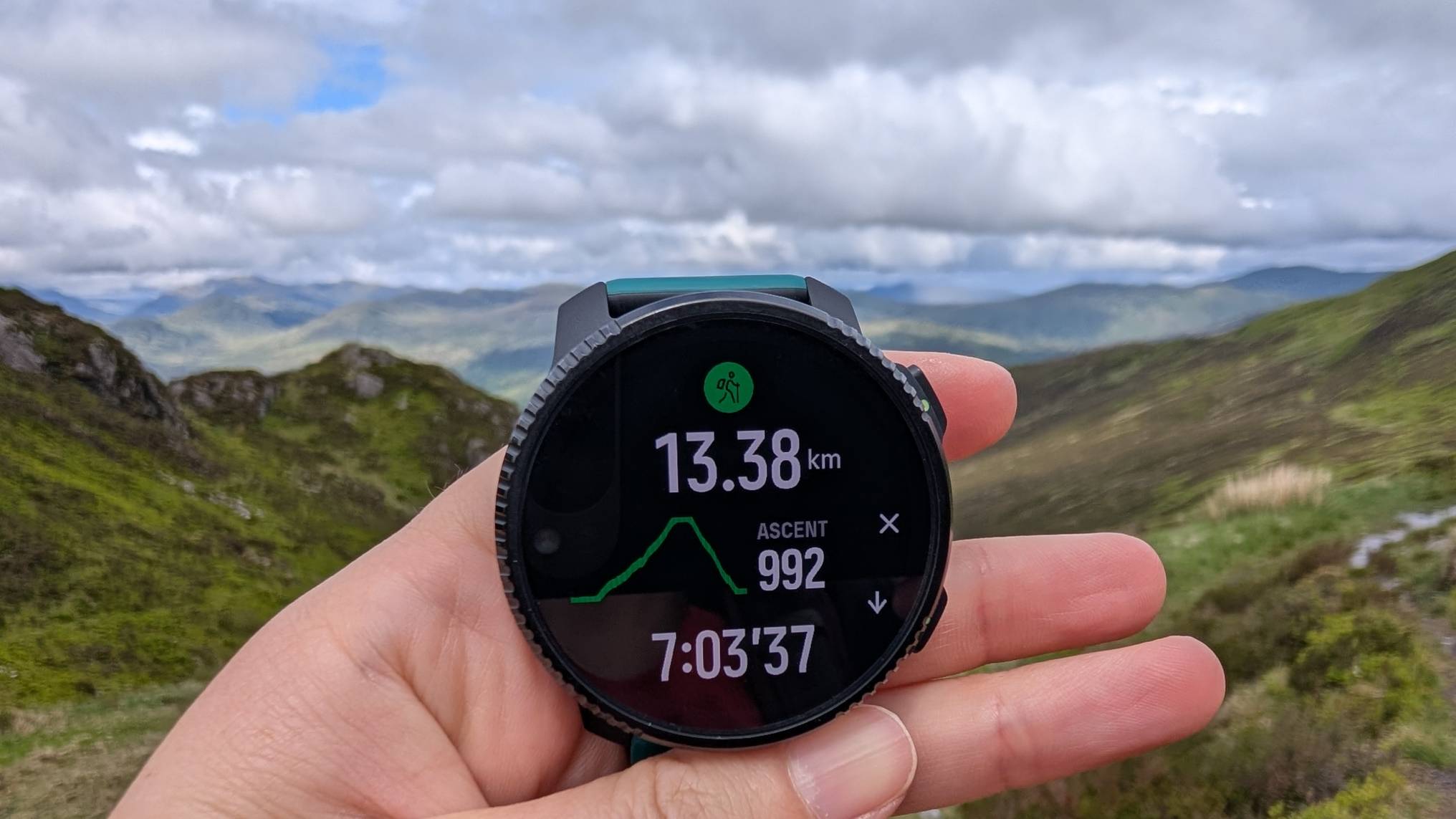
If the price of the Fenix 8 makes you wince, but you’re not willing to compromise on quality and performance, allow me to introduce you to the Suunto Vertical 2.
This watch doesn’t boast the full suite of smart and training features that let the Fenix 8 leapfrog over the competition, but if it’s a reliable navigation and training watch you’re after, this high-quality watch checks a lot of boxes.
I first tested it out on a five-day solo trek along the St Cuthbert’s Way, which covers a lot of remote ground. I was doing it in late fall when the days were short, so I didn’t want to take any wrong turns if I could help it.
I had to download the map of the UK before I set off, but after that it was all straightforward. The map rendered quickly each morning and was really clean and easy to follow on the giant, bright screen. I opted for the watch’s Nordic Walking mode since I hike with poles, and it gave me more accurate readings.
The LED torch really came in useful on the longer days, where I ran out of daylight before reaching my lodging, and it gave me comfort knowing that I had a backup light source.
It only holds 15 routes at a time, which means I do have to operate a strict one-in, one-out policy, but that’s not a dealbreaker by any means and enough for most people.
But the real showstopper here is the Vertical 2’s incredible battery life, which makes it a better choice than the Fenix 8 if your adventures don’t stop at dinner time. Until this watch came along, an AMOLED screen meant a tradeoff in battery life, but Suunto turned that narrative around with a whopping 65 hours even in Accurate Mode. I started the St Cuthbert’s Way with it fully charged, used it for 6-8 hours a day for five days, and I still had more than 50% battery life remaining when I was done.
- Who should buy it: Thru-hikers and backpackers who want a battery that can last as long as their legs and don’t prioritise smart capabilities.
Best mid-range: Amazfit T-Rex Ultra 2
- Maps: Full color topo maps available for download
- Torch: LED
- Display: AMOLED
- Materials: Sapphire glass screen, titanium bezel and back panel
- Battery life: Up to 50 hours in GPS mode
Do you want everything but the kitchen sink from your GPS watch? You have two choices: spend a lot of money on a Garmin, or accept the quirks of the cheaper Amazfit T-Rex Ultra 2.
I recently hiked nine Munros in the Scottish Highlands and islands over a two-week period, and I thought it would be a great opportunity to test out this burly, fully-featured watch. Per the name echoing the world’s most famous dinosaur, it’s by far the biggest watch on this list, which does make it a bit of a pain to wear with hiking layers, but in the summer months, this doesn’t pose much of an issue.
Amazfit says the watch comes with preinstalled maps, but I had to download the map of Scotland before using it for the first time. The watch has a massive 64GB of storage and holds up to 50 GPX routes, so I had no issues storing everything I needed before I left the house.
Once I got out on the trail, the maps looked great and provided lots of detail, like trails showing up as dotted lines to differentiate them from roads. The extraordinarily comprehensive Points of Interest feature lets me search for and navigate to just about everything nearby, from coffee shops and water sources to police stations and parks. But when I’m following a route, some aspects are a little sluggish. It’s often slow to update my distance remaining or elevation, and despite ongoing promises of an automatic rerouting feature, it always fails to recalibrate when I change course.
Interestingly, the LED torch has a green light function instead of the usual red light, which survival experts say provides better clarity in the dark (red light is kinder on your eyes). There’s also an option to long-press the bottom left button to record a voice memo during an activity, which can be nice for taking notes along the way. The Coros Nomad also has this feature, called Voice Pin.
The T-Rex Ultra 2 has full smartwatch functionality, so it’s a good option if you want (or need) to stay connected on trails, but it can mean a lot of annoying notifications if not. I get around this by keeping it on Do Not Disturb when I hike.
- Who should buy it: Hikers who want a lot of bang for their buck, and don’t mind a few pain points.
Best value for money: Coros Nomad
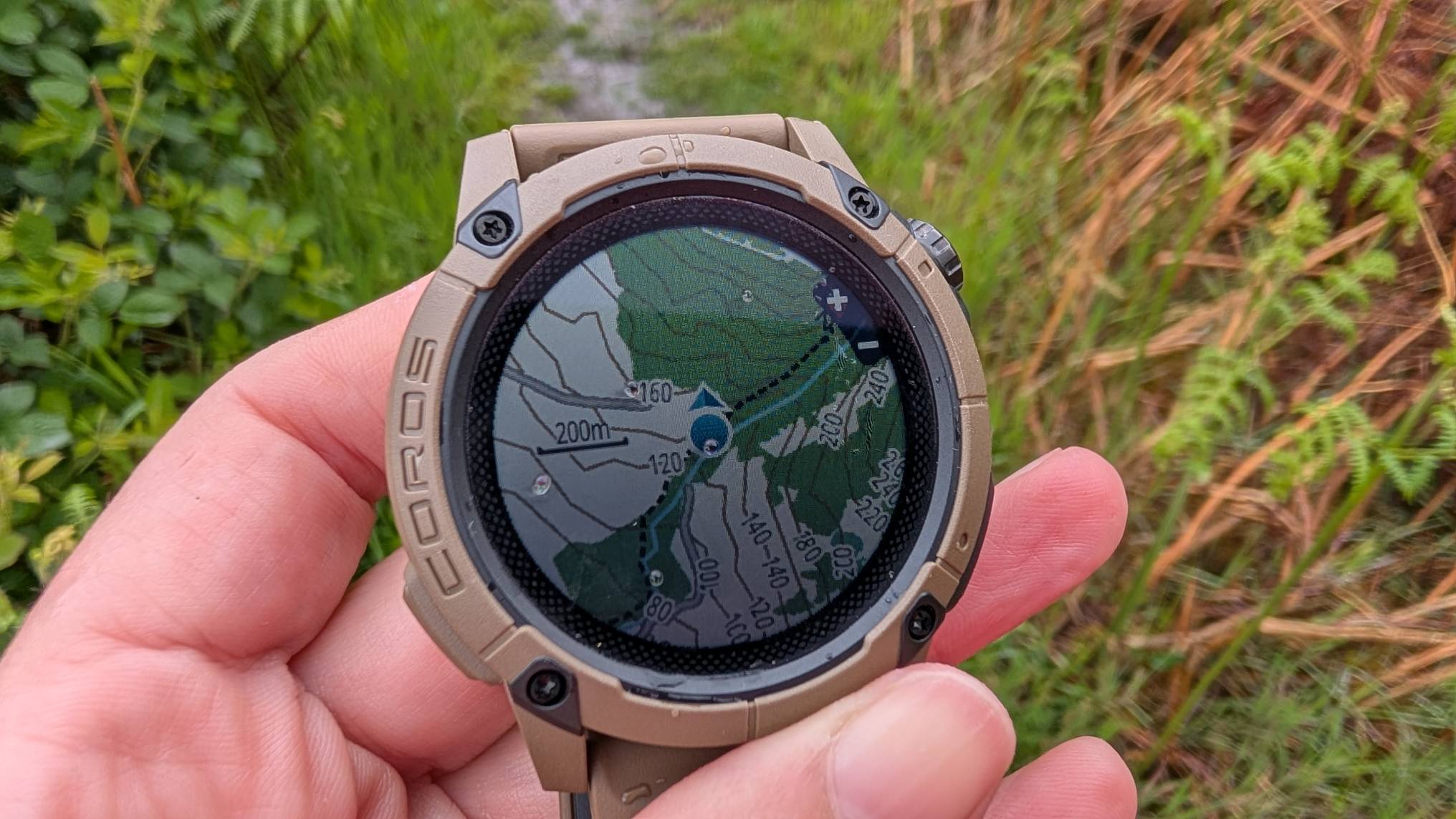
- Maps: Full color topo maps available for download
- Torch: White screen
- Display: MIP
- Materials: Hardened mineral glass screen and aluminium alloy bezel
- Battery life: Up to 50 hours in GPS mode
Are you allergic to bright screens, bells and whistles? If so, the no-nonsense Coros Nomad is a great choice on a smaller budget.
Its memory-in-pixel (MIP) display might look a little dated next to the now-standard AMOLED models, but MIP displays are generally more battery efficient, so remain good choices for long trips. I took it to Eryri National Park (Snowdonia) for a week of hiking, and I was impressed.
I had to download color maps before my trip, and I think they’re some of the best on this list. They’re really quite detailed with distinguished trail markings, Points of Interest, and mountain peaks and show up really well in all light conditions, even when I’m wearing polarised sunglasses. The device holds up to 100 routes, matching the capacity of the Fenix 8, and they render quickly.
Once I hit the trail, I really liked how easy it is to zoom in (up to 50ft) using the digital crown, and the GPS is as accurate as any watch on this list. I used it in Mountain Climb mode, which takes altitude changes into account to track true 3D distance.
There is a reason that it’s inexpensive, and it’s not just down to cheaper materials and a low-power MIP display. There’s no LED torch, and there’s no in-watch rerouting, so when I do decide to go off-route, it keeps vibrating to let me know, which gets a little annoying. Also, the Back to Start function is buried in the settings menu, instead of being an option when I pause the activity. It’s not make-or-break stuff, but it does show the difference between a budget watch and a more premium model.
What you do get for the sacrifice of some features is a very good battery life, thanks in part to that display. I didn’t have to charge it once during my trip to Wales and would feel confident taking this on a multi-day trek without carrying a battery pack. A nice addition is the Adventure Journal, which lets me drop a pin, add a photo or record a voice memo to a route during a hike, and I do find it really useful for record-keeping as an outdoors journalist.
There is an Emergency Safety Alert system that could be of interest to hikers, but it’s a bit limited. You can set up designated emergency contacts in the app and then send an instant SOS with your live location coordinates by long-pressing the digital crown. However, you need a mobile signal for this to work, so while it could save your life if you fall down a cliff and drop your phone, it’s not really a substitute for a Garmin InReach or other satellite connectivity feature in the wild.
- Who should buy it: Hikers on a budget looking for a no-frills, but reliable watch.
Best for fitness: Polar Grit X2 Pro
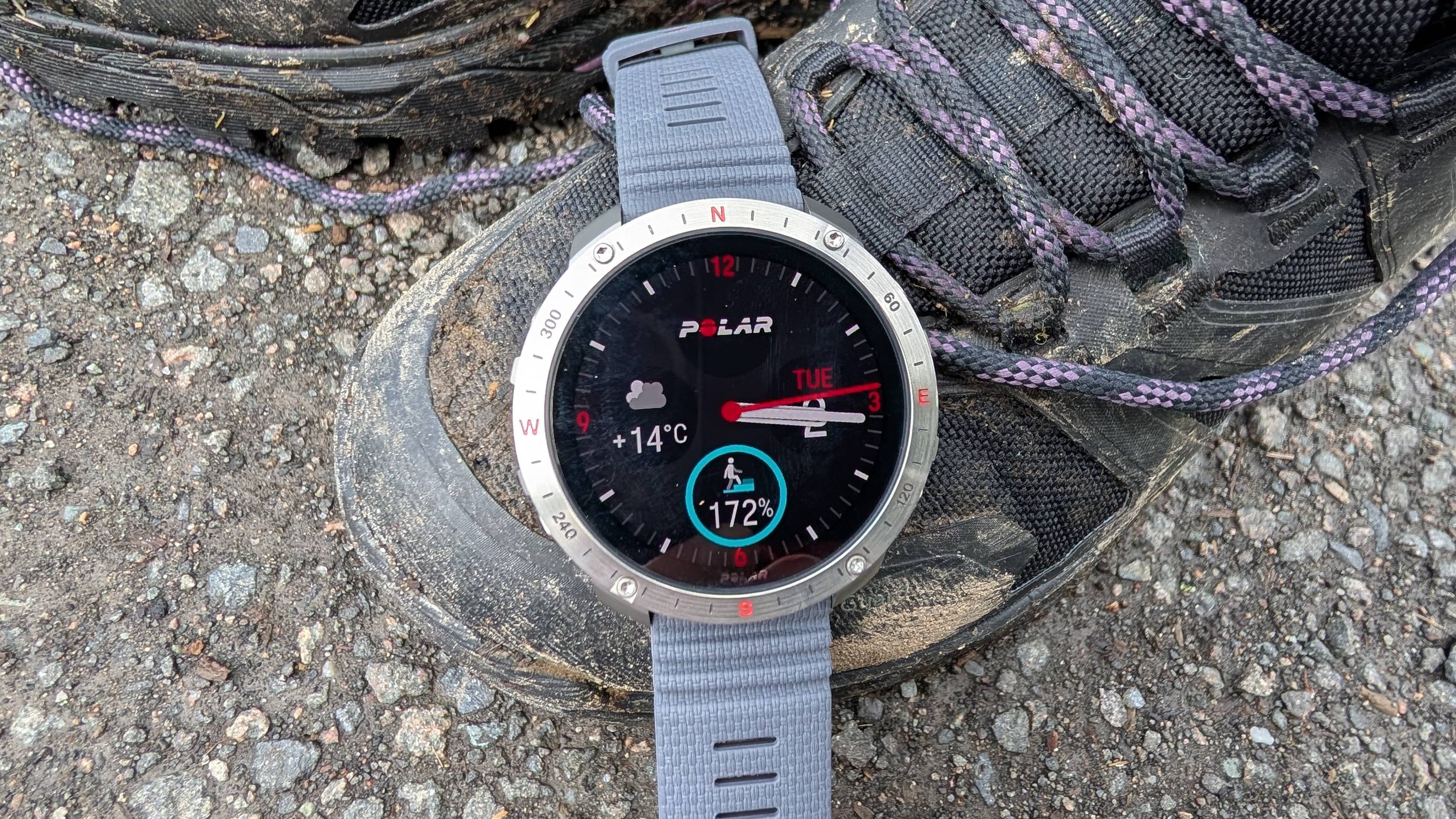
- Maps: Full color maps preloaded for Europe (UK needs to be downloaded)
- Torch: White screen
- Display: AMOLED
- Materials: Stainless steel bezel, sapphire glass lens
- Battery life: Up to 43 hours in GPS mode
If you’re interested in training science or preparing for a feat of endurance that might entail weeks or months on the trail, the Polar Grit X2 Pro offers some of the best research-backed metrics and guidance.
I’ve been testing out the Nordic Walking and Rucking modes on this watch around Scotland for a few weeks, and I’ve found it to be a high-quality and distraction-free design.
You will need to download UK maps, and the watch doesn’t have WiFi, so maps and routes need to be dragged over on your laptop, which is a little nostalgic to say the least, and I do have to be a little more organised about where I want to go, but it’s all fairly painless. On the trail, the GPS accuracy has been as good as any, and the maps are nice and clear, although if you’re looking for turn-by-turn guidance, you’ll need to use maps from Komoot, and you do have to calibrate the compass before every hike, which I find a little frustrating.
The battery life is on par with the Fenix 8. In GPS mode, it gets about 40 hours from a full charge, which means you’ll want to bring a battery pack for multi-day treks, and that does slightly negate its worth for endurance efforts.
What makes this watch stand out is its training and recovery tools. Every time I finish a hike, I get an immediate report of the energy sources I’ve used (carbohydrates, protein and fat). With the FuelWise feature, I can receive customised carb and drink reminders during long treks, which is really valuable as I’m terrible at remembering to eat enough on long days.
The Finnish brand really prides itself in training research; Polar’s Research Library features over 17,000 peer-reviewed references, and it shows in this watch. This watch boasts lots of hiking-specific tools, such as Vertical Speed to track your climbing rate, 3D Speed, which is a separate feature which factors in horizontal movement and vertical elevation changes, and Hill Splitter, which automatically detects and breaks down every uphill and downhill on your route.
While this watch doesn’t really stand head and shoulders above the rest, its recovery tools and sleep tracking are excellent, and it excels in cold weather, so for big efforts and those who want distraction-free data, it’s a solid contender.
- Who should buy it: Data-driven endurance hikers who miss the olden days when a walk in the wild meant no one could reach you.
What makes a good hiking watch?
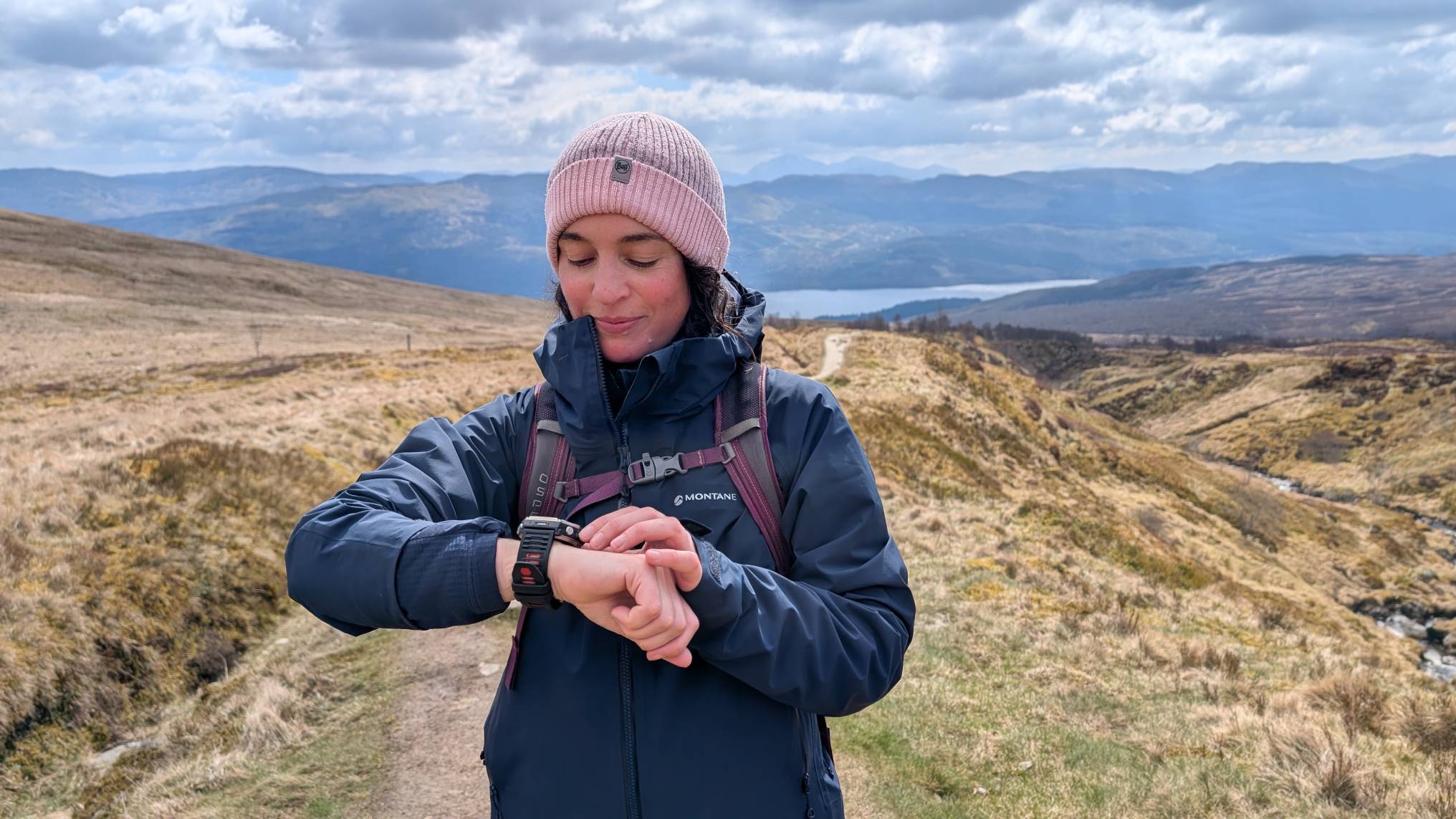
These days, any good GPS watch will provide you with some level of navigation, fitness and health tracking and smart features. But not all are created equally, and not all are built with hikers’ needs in mind. For a watch to be great for hiking, it should have the following features:
Offline maps
Though you can get by with breadcrumb navigation, for a watch to be considered one of the best for hiking, it first and foremost needs to have offline maps that you can use to create routes or follow GPX files. These should be colour, with topographical lines as an option, and show lots of detail.
Clear display
It’s best if a hiking watch has a big and bright display since you’ll be looking at it frequently if you’re using it for navigation, in every possible weather condition, and often while wearing sunglasses. That said, if it’s too high-profile, it can be tricky to wear with hiking layers and gloves, so the biggest isn’t necessarily the best.
Rugged build
Because you’re going to be exposing your hiking watch to all of the elements in every season, it needs to be rugged, so look for something that operates within a wide range of temperatures (-20°C to around 50°C) and has a waterproof rating of at least 10ATM. The most robust materials to look for include a sapphire crystal lens and a titanium or stainless steel bezel.
Big battery
Your hiking watch needs to stand up to the test of time, and by that I mean a robust battery life. An Apple Watch that needs charging every 24 hours is fine for gym use or short, half-day hikes, but if you’re going to be on the trail for a week, choose a watch that’s not going to die on you halfway.
Multiple hiking modes
Activity modes beyond Hiking and Walking are useful, and they should do more than just categorise your activities. Modes like Nordic Walking should take into account the additional energy expenditure from pole use, and if a watch offers Rucking mode, you should be able to input your pack weight for more accurate metrics.
Light source
Finally, though this is certainly an optional extra, most of the best hiking watches have an LED torch. Not to say that you should ditch the headtorch altogether, but when you just need a little illumination for a short distance, it’s preferable to be able to press a button on your watch than stop and dig around for your torch.
This articles is written by : Nermeen Nabil Khear Abdelmalak
All rights reserved to : USAGOLDMIES . www.usagoldmines.com
You can Enjoy surfing our website categories and read more content in many fields you may like .
Why USAGoldMines ?
USAGoldMines is a comprehensive website offering the latest in financial, crypto, and technical news. With specialized sections for each category, it provides readers with up-to-date market insights, investment trends, and technological advancements, making it a valuable resource for investors and enthusiasts in the fast-paced financial world.