Budget PC gamers have had little to celebrate in 2026. Intel may be trying to change that.
It’s hard not to feel despondent about the state of PC building right now. Data centers are sucking up memory, prices for parts are climbing higher than ever, and all the major players seem more interested in AI revenue than anything else. Gamers would be forgiven for feeling abandoned, as companies move to class PC parts as part of their “edge AI” strategy rather than a core component of their business.
Yet while Nvidia is trying to get everyone to throw their annual budgets at AI and AMD is slow-rolling its upscalers to older hardware, Intel has been sending quiet signals that it’s still prioritizing gamers, enthusiasts, and even the budget segments of the market. Intel’s consumer-focused approach offers hope that someone still cares.
This isn’t just speculation. I reached out to Intel’s VP of Enthusiast Channel Business, Robert Hallock, and asked him all about the company’s changing approach in recent years.
Budget blind
Cost has been a big problem—even the biggest problem—for enthusiasts who want to engage with their hobbies lately. Thanks to AI data center projects buying up all the memory and encouraging memory makers to switch to more profitable High Bandwidth Memory (HBM) production for enterprise AI buildouts, the cost of memory and storage has skyrocketed several hundred percent just in the past year.
That has sent graphics card prices higher, too, as VRAM costs mount. Consoles, laptops, tablets, phones, and everything else have also followed suit—so much so that Gartner predicts 2026 will see the biggest contraction in PC sales in over a decade.
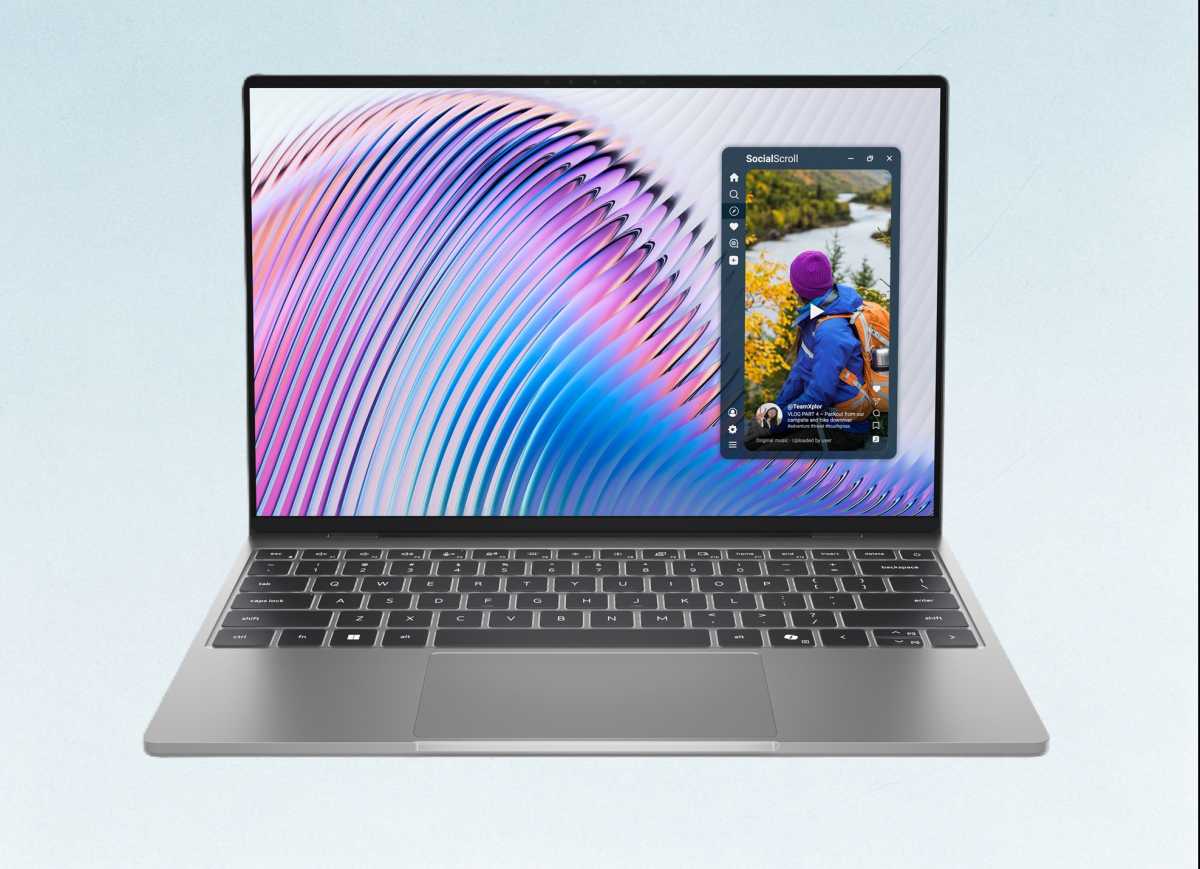
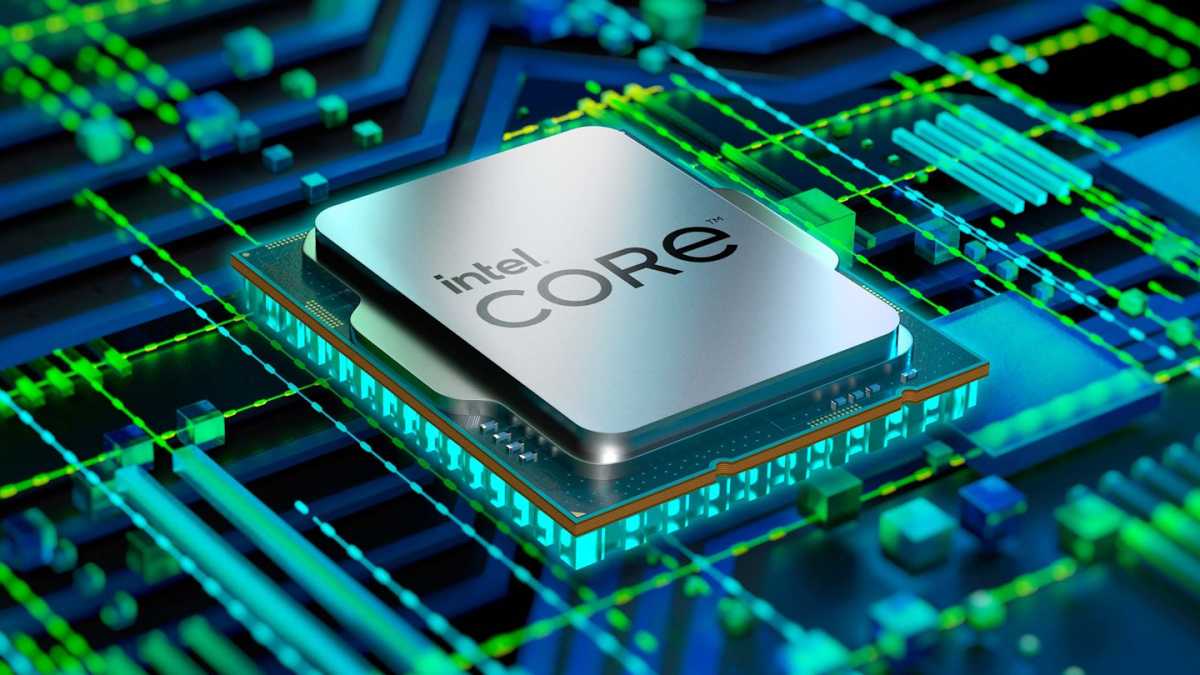
And yet, whereas AMD is debuting a $900 flagship X3D CPU, Intel is: launching Wildcat Lake, a lineup of budget-conscious Core 300 CPUs with capable on-board graphics; extending multi-frame generation support to older Arc GPUs; refreshing Arrow Lake 250K and 270K CPUs that are competitive everywhere and top out at only $300.
Dell
“I don’t really think we can separate ‘enthusiasts’ from budget-conscious buyers,” Hallock told PCWorld. “Especially nowadays when the PC ecosystem is under so much price pressure. I take the personal view that PC enthusiasm is a state of mind, not a dollar amount.”
Although he clarified there would always be a healthy product stack of halo-level products and more “budget-maximized SKUs,” budget will always be important and that’s something Intel wants to cater to. “The overwhelming majority of PC users—even diehard enthusiasts—don’t have unlimited budgets to work with in their builds.”
While all of this might be fine words that are easy to wave away as corporate demands shift, it’s still notable to hear a major chip company representative talking like this in 2026. Not about AI revolutions, or multi-billion-dollar data center deals, or the benefits of scarcity. The needs of everyday PC enthusiasts, and especially PC enthusiasts who don’t have a ton of money to sling around.
What Intel is actually doing
In March, Hallock mentioned in an interview with Club386 that he saw a future where Intel would offer longer socket support lifespans for its motherboards. Instead of one or two generations, maybe three or four—similar to how long AMD chipsets tend to last.
In an interview with PC Games Hardware in April, Hallock said that enthusiasts with tighter budgets also deserve high-end features. That includes overclocking, something Intel has historically limited to its premium ZX90 motherboards and K-series CPUs.
“It’s extremely important to [Intel] that we deliver the best possible performance and platform features possible for the desktop market as a whole,” Hallock told PCWorld when I asked about these hints.
Intel
“A great product is only a great product if people can actually get access to it. We’re doing everything we can to incorporate the feedback we’ve gotten from the global desktop community over the past several years to deliver technologies and transistors that are modern, helpful, and reflective of contemporary PC gaming.”
These statements are encouraging, but it’s easy to say things like this. Will Intel actually follow through? Time will tell, but we can look to the company’s recent activity for clues. While its Arc discrete GPUs haven’t quite impacted the GPU market as much as Intel hoped, that additional competition is still out there. And the past year has seen continued driver updates that have given Intel GPUs more of that fine-wine feel that has previously only been attributed to AMD.
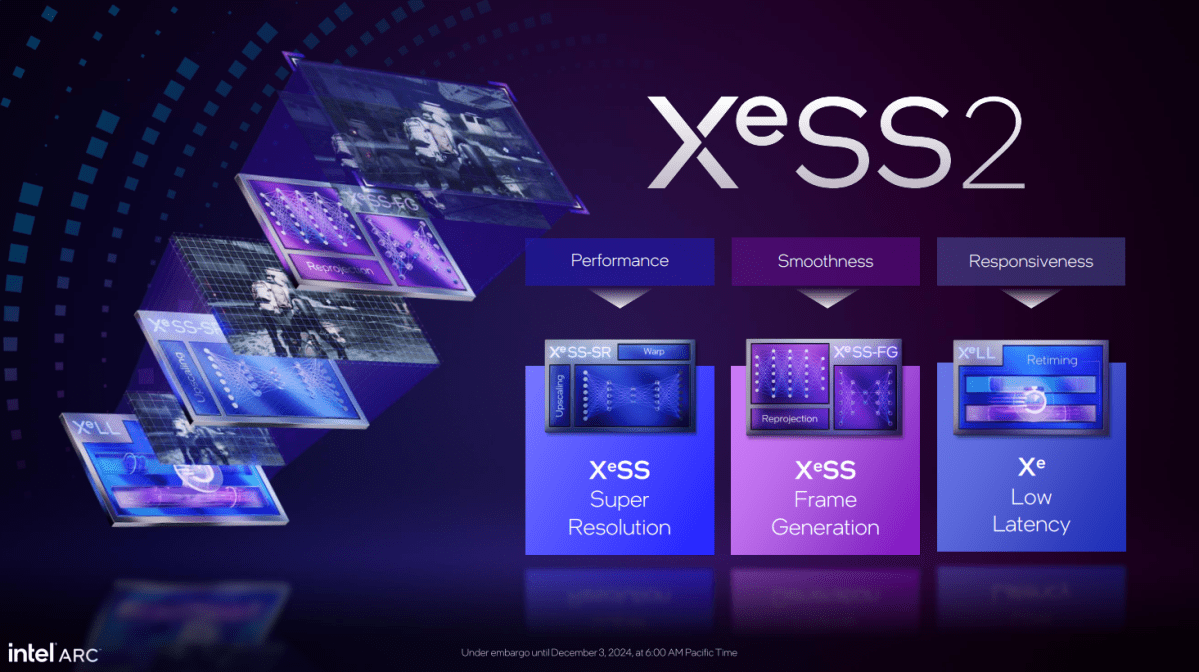
Intel has also extended its XeSS frame generation to older GPUs, which introduces AI frames between natively rendered frames to simulate a higher frame rate. This is huge news when Nvidia gatekeeps its own solution behind RTX 40- and 50-series cards and AMD is dragging its feet on expanding FSR4 support to older generations until 2027. It’s mostly older and underpowered cards that really benefit from performance-enhancing features, so wider XeSS support is a real boon for gamers struggling to upgrade in a post-AI market.
Intel
There’s also Intel’s pre-compiled shaders, which are helping to reduce massive first-boot game load times by downloading optimized shader files directly from Intel when you download the game and Intel graphics drivers. With shaders cached locally, you don’t have to wait for them to compile when launching a game. Sure, the list of supported games isn’t extensive, but it’s growing all the time.
Hallock himself seems to recognize the importance of these software advances, suggesting in this April interview that there’s some serious performance optimization on the table that gamers aren’t aware of. A key example appeared in our recent review of the Arrow Lake refresh 270K Plus, which performed notably better with Intel’s Binary Optimization Tool (i.e., specific optimizations for specific games) and was able to net a few extra frames per second just by turning it on.
A new team of actual gamers
All of this feels like a world away from the Intel of the 2010s, which kept reselling the same Skylake quad-cores and told us to be happy with it. This about-face may well have come from an overhaul of Intel’s teams and structure. In 2025, the company brought in a new CEO in Lip-Bu Tan, but he’s not the only new face at Intel in recent years.
“There’s a new product management team. There’s a new business team. There’s a new marketing team. There’s a new engineering team for these gaming CPUs,” Hallock told Club386.
I asked him about that changing of the guard in our interview, and though he wouldn’t be drawn into discussing the executive arm of the company, from his side of the equation at least, things are looking rosy.
“I’m personally very excited about where we are right now and what the future holds for our desktop business,” he said. “We’ve got a super talented team in place, with a great balance of Intel veterans and folks newer to the company that ensures we’re making the right product decisions with a diversity of inputs in the decision-making process.”
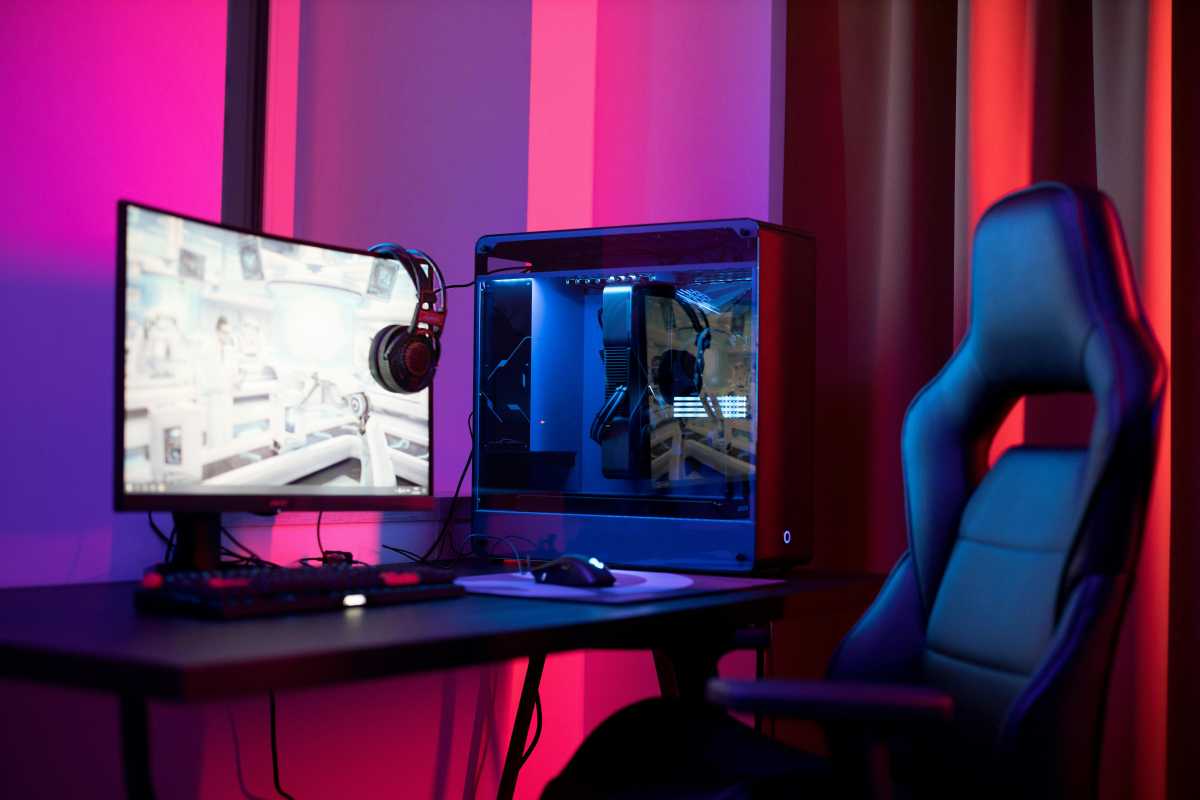
Pexels: Ron Lach
That mix of new and old may have the right focus for this kind of enthusiast chip division. “I, my team—we are ourselves, first and foremost, PC builders and enthusiasts. Every single one of us has built their own PC, games on that PC. That was not always the case at Intel,” he told Club386. It might be what’s making a real difference.
“The overlap between gamers, creators, and professionals gets bigger by the day, and it’s important our products address the unique compute needs of all the relevant workloads included in that Venn diagram,” Hallock told PCWorld. “Building products that reflect this reality is important to my team, and our singular focus is on delivering a roadmap that’s legitimately exciting to enthusiasts.”
Again, it’s good to exercise caution here. Intel is in bed with both Nvidia and a US government that’s doing little to halt the rampant inflation of enthusiast hardware. In many ways, they’re accelerating it. But there are real people working at Intel—and it sounds like Intel has built a much more enthusiast-friendly group of workers in key positions.
We’ll see if Intel means it
Being optimistic about anything PC-related feels naive at best right now. But I’m not a fan of giving into nihilism and I very much believe that the DIY hardware market is one that’s still worth defending—and for companies, still worth capturing.
It might not have the same scale as the AI industry, and PC enthusiasts may now be competing for silicon with weapons manufacturers as much as data center builders, but it’s not nothing. There are still millions of PC gaming fans all over the world who are excited about what comes next and what they might be able to do with it.
In this landscape, Intel could emerge as an unlikely champion. With Nova Lake just over the horizon and promising huge performance gains, big-cache chips, and improved socket longevity, Intel’s rebrand from “monopolistic overlords” to “underdog who’s listening” may be right around the corner. The real test comes when Nova Lake lands—if the cache gains are real and the socket longevity promise holds.
This articles is written by : Nermeen Nabil Khear Abdelmalak
All rights reserved to : USAGOLDMIES . www.usagoldmines.com
You can Enjoy surfing our website categories and read more content in many fields you may like .
Why USAGoldMines ?
USAGoldMines is a comprehensive website offering the latest in financial, crypto, and technical news. With specialized sections for each category, it provides readers with up-to-date market insights, investment trends, and technological advancements, making it a valuable resource for investors and enthusiasts in the fast-paced financial world.