
Good lord, it’s been a bad week for gaming. You don’t need to be a news hound or a Nostradamus to see where the problems are coming from: AI. From hardware to software to platforms to funding, “AI” is causing nothing but headaches for most gamers, and anyone else connected to the industry.
Welcome to the Boost Mode newsletter. Every week I share my insights on PC gaming, desktop setups, and hardware optimization. I also track down some of the most interesting PC and nerd news from around the web, plus a PC game pick you might not have seen elsewhere. Want this newsletter to come directly to your inbox? Sign up on our website!
The billionaires want your RAM
Over a couple of cheeky pints with a fellow CEO, ChatGPT’s chief Sam Altman said the quiet part out loud: Your computer’s RAM would be far better utilized in one of OpenAI’s data centers. He was talking specifically about running AI models — which is possible to do on local hardware, especially on newer designs like Nvidia’s RTX Spark chips — but the sentiment follows for gaming PCs and consoles, too.
From Altman’s perspective as a billionaire profiting off the AI boom, yeah, of course all that hardware would be better in his hands, rented back to corporations and consumers one token at a time. The sentiment comes off as unimaginably elitist, even if it makes cold, robotic sense for pure allocation. One of the richest people on the planet thinks he should have powerful hardware, not you.
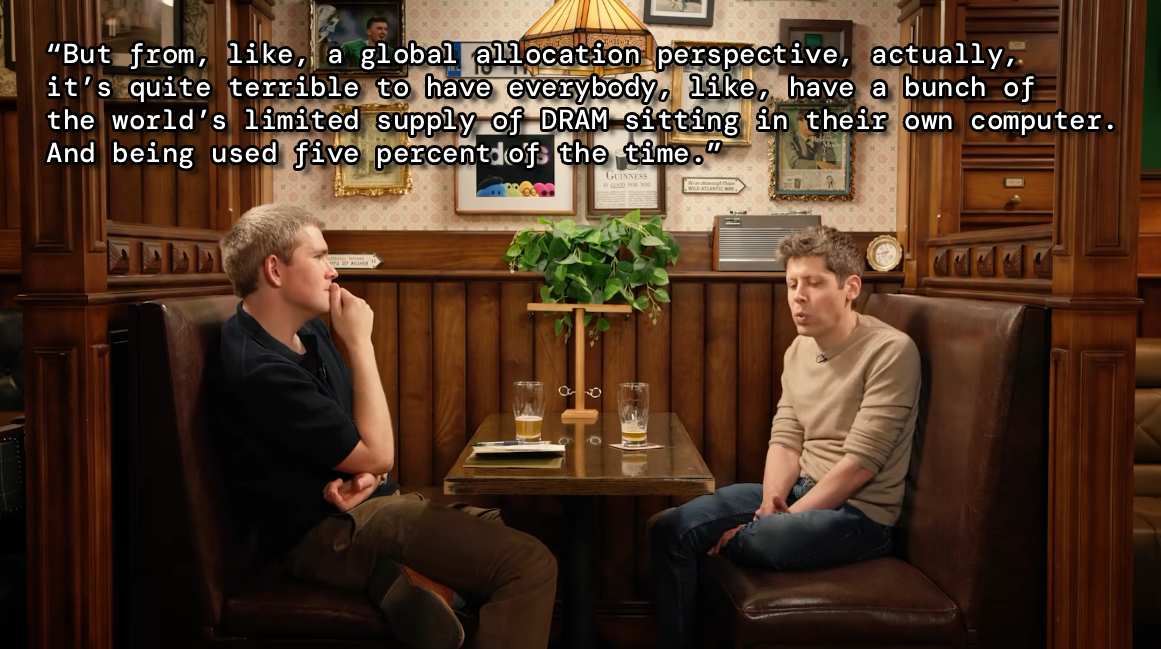
And that sure seems to be the way the market is trending, with RAM in laptops and phones going backward for the first time in recent memory, even as every new device crows about AI capability. Remember that big push Microsoft had for “Copilot+” laptops that met a minimum spec, a minimum that its latest (and still very expensive) Surface devices can’t even meet?
It’s kind of ironic that Microsoft is having so much trouble with its Xbox platform. The cheapest Xbox is now $500, and the next-gen “Helix” model is projected to cost $1,200 to $1,800 to produce. Microsoft has been struggling to keep Xbox competitive for over a decade, but it’s hard to feel bad for the company that’s also pushing AI in every one of its products, so much that it had to apologize to Windows users.
Pity Sony and Nintendo, at least theoretically, as their price increases are beyond their control. Pity Framework and Valve for trying to make cool hardware at the worst time imaginable. But don’t shed a tear for Microsoft — it has sewn the wind.
AI slop floods the game platforms
CEOs being out-of-touch elitists isn’t new (here I’ll mention Epic CEO Tim Sweeney for a very specific reason), and we’ve been dealing with a nightmare of hardware prices for a year or so. But Steam’s recent Next Fest event highlighted how the AI problem is affecting the software side, too.
Next Fest has become a calendar event for gamers, a time when developers and publishers release demos for their exciting upcoming titles. But this year, with Steam absolutely infested with AI slop, things felt a little different. Though there was plenty of new stuff to try for PC gamers. But some developers are now wary of publishing demos, for fear that their games will be used as templates for vibe-coded copycats.
The fears are not unfounded. While shovelware and clones have always been a part of the gaming market, being able to point an LLM at an existing game is a new problem. It’s not as if you’re just slapping the cover into a Xerox machine and getting an instant, perfect copy…but it’s not so far removed from that, either. Fraudulent copies of games have already appeared on Steam and other platforms, and developers have been sent extortion messages threatening to use AI to copy their games if they don’t pay up. The problem is so widespread that Anthropic added more stringent, game-specific copyright protections to its Claude LLM.
Steam has moderation tools to stop outright fraud and intentional customer confusion. And Steam, more than other platforms, has at least made token attempts to inform players when generative AI is being used. But Valve has stopped short of allowing end users to filter out projects that are partly or mostly built with generative AI.
Valve is either unwilling or unable to be the slop police. It’s trying to walk a fine line between quality control and developer freedom. On one side, you get a walled garden that’s inaccessible to indie developers. On the other…well, you get the hellscape of slop that open platforms like Itch.io are turning into. New games and programs are flooding the market, growing exponentially, and almost all of it appears to be low-quality, vibe-coded garbage. It’s only accelerating the problem of discoverability.
Big games are becoming unsustainable
The problems don’t end with the smaller side of the game industry, either. Even while hardware becomes unaffordable, the trend of ballooning costs for AAA game development is making those games harder and harder to make. As graphics and game scope are pushed ever higher, reaching a possible pinnacle with the upcoming GTAVI, big games are getting the same budgets and gambles as Hollywood blockbusters. And it’s becoming a higher ratio of losses to wins.
Nowhere is this more evident than Mass Effect. After spending years in development, the much-anticipated sequel to the sci-fi RPG series was cancelled. EA also shut down its subsidiary Bioware, a legendary developer that struggled to deliver hits in the age of live services. It came shortly after the publisher went private, acquired by a private equity firm. EA seems to want lucrative sports games (and their associated gacha gambling) and more bankable IP like Star Wars. And, yeah, that also mirrors Hollywood woes.
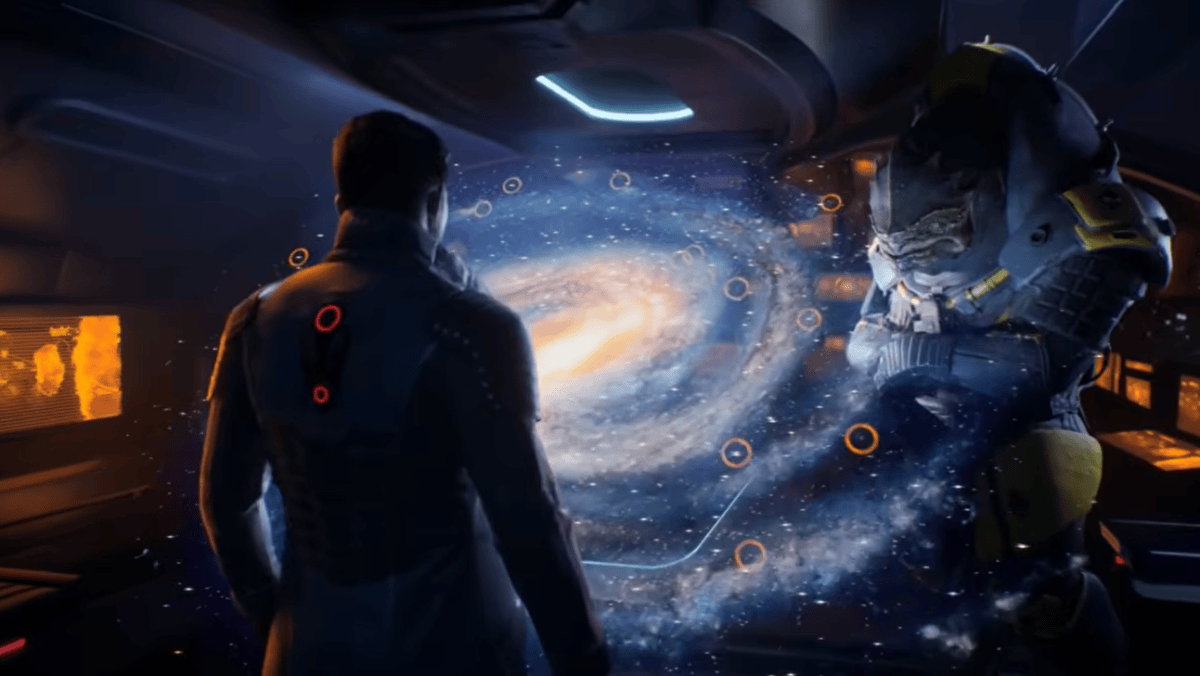
EA
But Mass Effect isn’t the only recent casualty. Microsoft returns to this tale of woe, as Gears of War: E-Day is estimated to have cost half a billion dollars to develop, yet sold less than half a million copies. Highguard, Saros, and Vampire: The Masquerade Bloodlines 2 are all examples of recent releases for massively ambitious games that flopped hard enough to result in massive layoffs.
AI is a factor here, too. Aside from the bubble taking up room in terms of pure investment, publishers appear to be pointing to AI as a means of cutting headcount. The game development industry has been a bloodbath of layoffs for years, and it only seems to be accelerating, as companies like Nvidia and Epic promise they can pump out AAA-quality titles for a fraction of the cost by utilizing AI. Generated assets are starting to appear consistently in games as big as Fortnite and Call of Duty.
But those tokens aren’t free, and they’re getting more expensive. It remains unclear whether AI code and assets can consistently deliver returns for game developers big and small, no matter how hard the CEOs try to will them into being. This means the trends will continue, and accelerate. There will be more consolidation around existing, bankable franchises like GTA and Madden, and fewer new ideas coming from the biggest developers with the most resources.
No light at the end of the tunnel
Here’s where I offer a ray of hope to you, newsletter reader. Or at least it’s where I should offer that ray of hope. In a typical editorial, we’d place the good news here.
But I can’t. Because as amazing as some parts of the game industry have so recently become, the bad far outweighs the good. There is no ready solution to a tidal wave of AI slop making platforms unusable. No reining in CEOs who want to own everything of value and deliver as little as possible to consumers. No reversing the trend that drives creation costs higher and higher, and sends developers into unemployment lines.
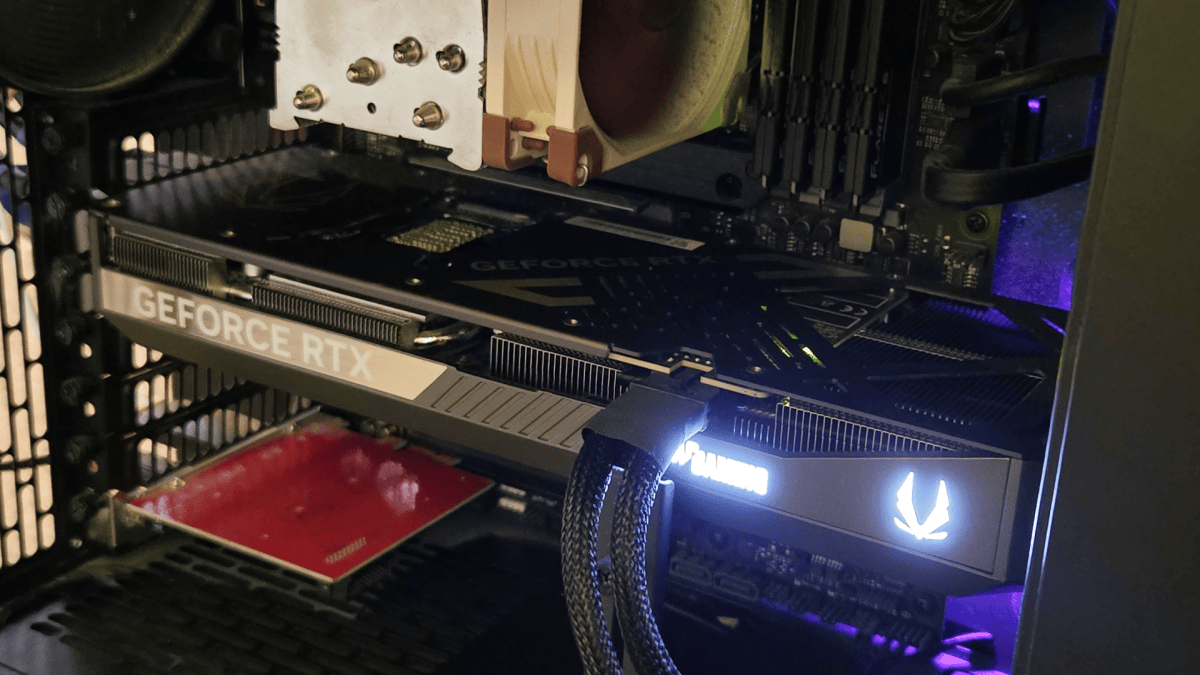
Michael Crider/Foundry
The natural end to all of this is a crash, reminiscent of the video game industry collapse in the 1980s or the dot-com bubble pop of the early 2000s. With prices for the next generation of consoles looking more like used cars than entertainment devices, that crash seems almost inevitable. PC gamers would be spared that particular tribulation, but would find cold comfort as gaming hardware remains unaffordable, and the industry shifts further towards integrated graphics.
All of that may be academic, as the more likely catalyst for a game industry collapse is just the pop of the AI bubble. That would have catastrophic fallout for electronics in general and the economy as a whole.
Happy holidays.
Cool stuff from around the web
- MacBooks have touchscreens now. That only took, what, almost 30 years? And a whole lot of money, naturally. I try to avoid this sort of thing, but I have to admit to a bit of schadenfraude for Apple on this one.
- One of my favorite creators made a retro MP3 player based on his daughter’s drawn design. He modeled it in CAD and printed it out, adding the low-powered guts to make a touchscreen interface. Adorable.
- Star Trek Online players mourn Patrick Stewart and Walter Koenig. In what’s become a touching tradition every time a Trek veteran passes, the legendary Captain Picard and Ensign Chekov actors got tributes in the long-running massively multiplayer game. Make it so.

- The latest phone chips are powerful enough to emulate GTAV, at about the same level as a GTX 1650 graphics card. Crazy. What’s really insane is that it’s more than 1000 percent more efficient in terms of pure electricity.
- Ray tracing performance could get a gigantic boost from new DirectX tech. According to Microsoft’s latest update, the preview version can cut memory use by almost 90 percent in at least some tests, though that won’t be a straight translation to game FPS.
Game pick of the week: Tricky Madness
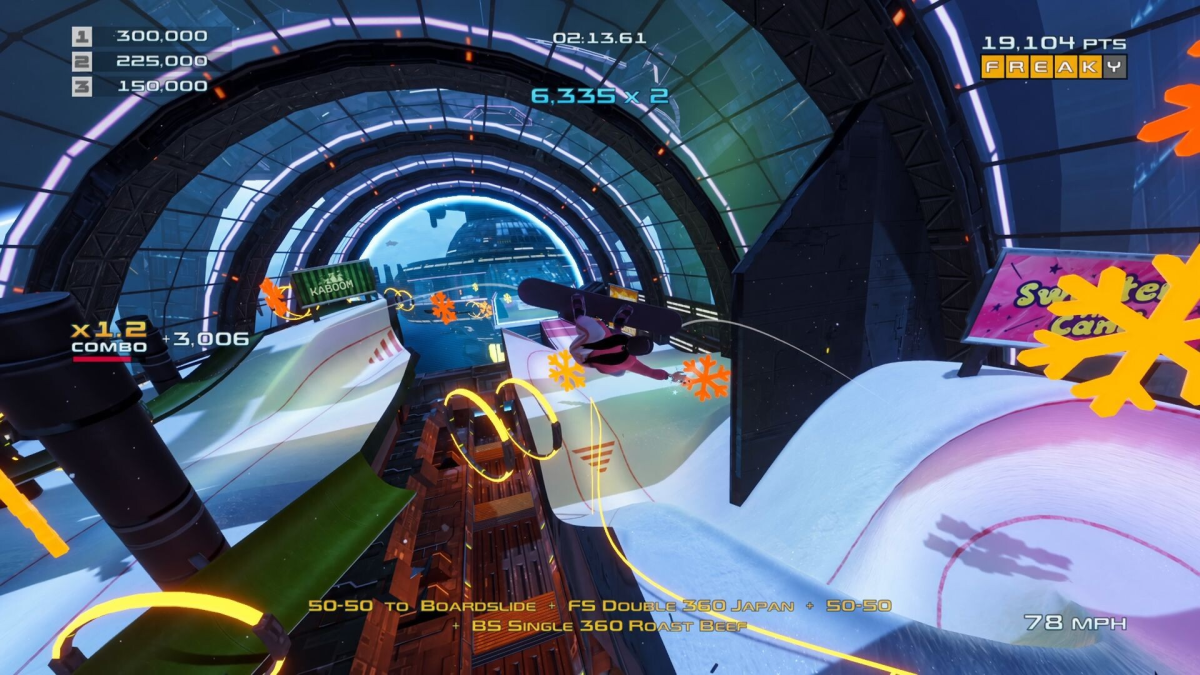
I confess, this week’s pick is a chance for me to engage in some blatant nostalgia bait. If you’re old enough to remember the launch of the PS2, then you might be a big fan of SSX, the jaw-dropping snowboarding game. Tricky Madness is pretty much just an indie Unity copy of SSX, more specifically its sequel. Since the series hasn’t seen a release in over a decade, I figure it’s a fine endeavor.
The game nails the feel of the original, with its long, visually spectacular tracks and easy tricks. You can also play aggressively, smacking your fellow racers around instead of focusing on pure speed or acrobatics.
Tricky Madness is still in early access, and I do mean early — there’s no multiplayer or campaign mode, and at the time of this writing there are only four characters to choose from. But it’s only $8 on Steam, and that’s pretty fair for a nostalgia trip. I hope the developer keeps at it.
That’s all for this week. To get my editorials, news picks, and game recommendations delivered straight to your inbox, you can sign up for Boost Mode on the PCWorld Newsletter hub. Also check out The Full Nerd for more enthusiast-focused goodies, Prompt Mode for AI tips, Safe Mode to keep your PC and gadgets secure, and Smart Mode to boost your productivity.
This articles is written by : Nermeen Nabil Khear Abdelmalak
All rights reserved to : USAGOLDMIES . www.usagoldmines.com
You can Enjoy surfing our website categories and read more content in many fields you may like .
Why USAGoldMines ?
USAGoldMines is a comprehensive website offering the latest in financial, crypto, and technical news. With specialized sections for each category, it provides readers with up-to-date market insights, investment trends, and technological advancements, making it a valuable resource for investors and enthusiasts in the fast-paced financial world.